Research Progress On The Mechanisms And Applications Of Salvia Miltiorrhiza (Danshen) And Its Pharmaceutical Combinations In The Treatment Of Chronic Prostatitis (CP)
Jul 24, 2026
Abstract
Salvia miltiorrhiza (Danshen) was first documented in the Shennong Bencao Jing. In Traditional Chinese Medicine (TCM), it is classically used to promote blood circulation and remove blood stasis, cool the blood, and resolve abscesses, making it a core TCM herb for chronic prostatitis (CP) patterns characterized by pelvic discomfort and "blood stasis" manifestations. Modern research indicates that its active constituents may exert effects by regulating Nrf2, NF-κB, and the PI3K/Akt pathway, contributing to antioxidant, anti-inflammatory, and anti-fibrotic actions.
Clinically, Danshen is commonly prescribed based on different CP patterns:
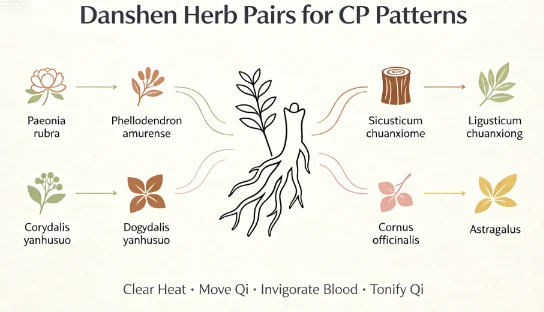
For damp-heat with blood stasis, it is paired with Paeonia rubra and Phellodendron amurense to clear heat and activate blood circulation (a TCM herb strategy for urinary irritation, burning discomfort, and pelvic heaviness).
For qi stagnation with blood stasis, it is paired with Ligusticum chuanxiong and Corydalis yanhusuo to regulate qi and invigorate blood (often applied as a TCM herb approach for pelvic pain and pressure).
For kidney deficiency with blood stasis, it is paired with Epimedium and Cornus officinalis to tonify the kidneys and activate blood circulation (commonly used as a TCM herb strategy for fatigue, low back soreness, chronic weakness with pelvic symptoms).
For qi deficiency with blood stasis, it is paired with Astragalus to tonify qi and activate blood (frequently used as a TCM herb direction for low energy, recurrent symptoms, slow recovery).
This article systematically reviews the mechanisms and formula applications of Danshen and its herbal combinations for CP, aiming to guide clinical and product-development thinking.
Keywords: Salvia miltiorrhiza; herb pairs; combination therapy; chronic prostatitis; mechanisms; research progress; TCM herb for pelvic pain; TCM herb for urinary discomfort
1. Botanical, TCM Identity, and Modern Chemistry of Danshen
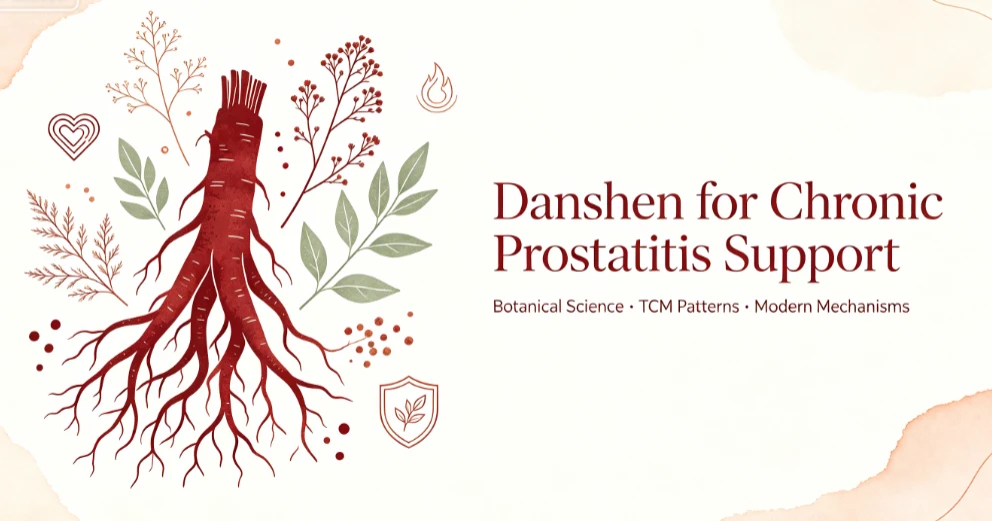
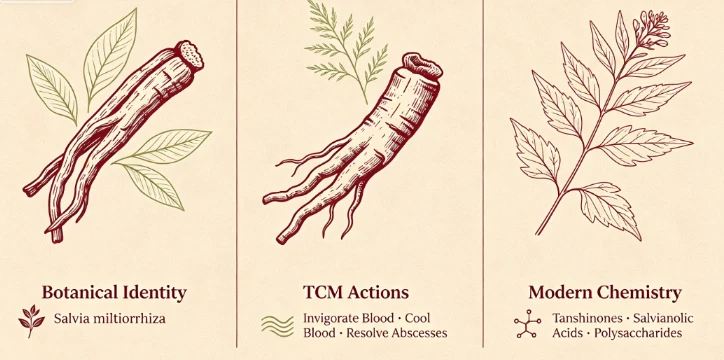
Danshen (Salvia miltiorrhiza), from the Lamiaceae family, is the dried root and rhizome. Common aliases include "Da Hong Pao," "Xue Shen Gen," and "Hong Gen." In TCM it is bitter and cold, entering the Heart and Liver channels. Its core functions include:
Invigorating blood and dispelling blood stasis
Unblocking channels and relieving pain (a classic TCM herb concept for persistent pelvic pain)
Clearing Heart heat and relieving irritability
Cooling the blood and resolving abscesses
Modern pharmacology shows that Danshen contains tanshinones, phenolic acids (e.g., salvianolic acids), polysaccharides, and inorganic salts, with reported activities including anti-inflammatory, anti–oxidative stress, and anti-fibrotic effects [1].
2. Chronic Prostatitis (CP): Epidemiology and Modern & TCM Understanding
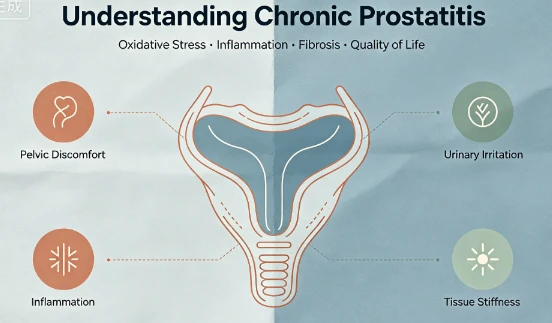
An estimated 2%–16% of men globally suffer from chronic prostatitis (CP). Key clinical manifestations include urinary dysfunction and/or pelvic-region pain and discomfort, and some patients may experience sexual dysfunction, psychological symptoms, and male infertility [2]. Current research suggests CP is associated with oxidative stress, apoptosis, tissue fibrosis, and autoimmunity [3].
In TCM, CP corresponds to categories such as "Jing Zhuo," "Lin Syndrome," and "Bai Zhuo." The disease evolution is commonly described as:
Early stage: predominance of damp-heat
Chronic persistent stage: qi stagnation and blood stasis
Long-term course: consumption of kidney qi, leading to kidney yin/yang deficiency, often with a mixed excess–deficiency pattern [4]
Clinically, CP often presents as complex, mixed patterns. Primary patterns include blood stasis and damp-heat, with accompanying patterns such as liver qi constraint, kidney yin deficiency, and middle-qi deficiency [5]. Treatment principles typically emphasize invigorating blood and dispelling stasis, clearing damp-heat, while addressing the accompanying pattern components.
The Shennong Bencao Jing records Danshen as bitter and slightly cold, used for internal accumulations, "breaking" fixed masses, relieving fullness and vexation, and benefiting qi-forming a classical basis for its use. Danshen is widely regarded as a core herb in TCM formulas for CP, centering on its functions of invigorating blood, cooling blood, resolving abscesses, and relieving pain [6].
3. Modern Pharmacological Mechanisms of Danshen in CP-Related Pathophysiology
3.1 Anti–Oxidative Stress (TCM herb for oxidative stress–related pelvic discomfort)
Oxidative stress occurs when reactive oxygen species (ROS) generation exceeds antioxidant capacity. Excess ROS can damage prostate cell lipid membranes and compromise structural integrity [7]. Phenolic acids in Danshen exhibit strong antioxidant potential.
Zhou M et al. [8] reported that salvianolic acid B (Sal B) can bind to Keap1 (Arg415), disrupting the Keap1–Nrf2 interaction. This stabilizes Nrf2, promotes nuclear translocation, and enhances binding to ARE, thereby increasing transcription of downstream phase II detoxification and antioxidant enzymes, such as NQO1 and HO-1, clearing excess ROS and improving oxidative stress status.
Guo C et al. [9] confirmed that sodium danshensu (SDSS) can directly bind and activate Nrf2, promoting nuclear translocation and transcriptional activity, upregulating SLC7A11, GPX4, FTH1, and HO-1. SDSS also improved mitochondrial structure. In Nrf2-deficient mice, SDSS's protective effects were partially reversed, demonstrating strong dependence on the Nrf2 pathway.
Product-development translation: For Western readers, this supports the concept that Danshen functions like a "TCM herb for antioxidant defense", relevant to CP where oxidative stress is implicated in discomfort and chronic inflammation.

3.2 Anti-Inflammatory and Immunomodulatory Actions (TCM herb for chronic inflammatory pelvic pain)
In pathological conditions, the immune system may misidentify prostate tissue or secretions as antigens, generating persistent non-infectious inflammation [10–11]. Tanshinones and salvianolic acids can modulate inflammation via multiple targets and pathways.
Ning F et al. [12] proposed an "intestine–prostate axis" mechanism: in an EAP rat model, total tanshinones (T-Tan) reshaped disordered gut microbiota, reduced LPS production/translocation, inhibited the local prostatic LPS–TLR4 pathway, thereby reducing neuro-immune inflammation and pain and improving CP symptoms.
SDSS may increase miR-200a-3p in macrophages, which targets MEKK3 3'UTR and suppresses MEKK3 expression, blocking downstream NF-κB activation and reducing TNF-α and IL-1β, ultimately inhibiting macrophage inflammatory responses [13].
Zhou C et al. [14] found tanshinone IIA (Tan IIA) simultaneously inhibited activation of TLR4/MyD88, phosphorylation/degradation of IκBα, and phosphorylation of NF-κB p65, reducing inflammatory signal transmission and transcription-highlighting the multi-target advantages often emphasized in botanical medicine research.
Keyword framing: Danshen can be presented educationally as a TCM herb for pelvic pain and inflammatory discomfort, via pathways commonly discussed in inflammation research (TLR4/NF-κB).
3.3 Regulation of Abnormal Apoptosis (TCM herb for tissue-protective support)
Apoptosis is programmed cell death; dysregulation may cause excessive prostate cell apoptosis or insufficient immune cell apoptosis, leading to tissue damage and persistent inflammation [15]. Danshen constituents may regulate key signaling nodes to inhibit pathological apoptosis and protect tissue structure.
A meta-analysis by Rong Y et al. [16] suggested Tan IIA can increase the Bcl-2/Bax ratio and reduce caspase-3, improving apoptosis-related outcomes. Proposed mechanisms include:
Downregulating GRP78, inhibiting ER stress pathways (PERK/eIF2α/CHOP, IRE1α/JNK, ATF6) and reducing pro-apoptotic signals, ultimately increasing Bcl-2 and decreasing Bax [17–18].
Activating PI3K/Akt, increasing Bcl-2 and decreasing Bax [19].
Inhibiting the caspase execution cascade, particularly preventing activation of caspase-3 [20].
Zheng Q et al. [21] developed a polydopamine nano-delivery system targeting cryptotanshinone (CTS) to mitochondria, activating cGAS/STING, reprogramming lipid metabolism, increasing oxidative/metabolic stress, promoting mitochondrial outer membrane permeability and cytochrome C release, activating caspase-9 and caspase-3, and initiating mitochondrial apoptosis-demonstrating how Danshen-related compounds can be engineered for targeted mechanistic outcomes.
3.4 Anti-Fibrotic Actions (TCM herb for chronic hardening/scarring processes)
Chronic inflammatory microenvironments can activate fibroblasts. Persistent oxidative stress, inflammation, and apoptosis may increase extracellular matrix deposition (collagen, fibronectin, laminin), ultimately leading to prostatic fibrosis [22]. Danshen has broad anti-fibrotic effects across organs prone to fibrotic changes.
Li Z et al. [23] found CTS inhibited STAT3 phosphorylation and nuclear translocation, downregulating CPT1A/CPT1B, blocking fatty acid oxidation (FAO) required for cellular activation, causing ATP and acetyl-CoA shortage and suppressing fibrosis.
Wang R et al. [24] reported Sal B increased miR-6499-3p, targeting and degrading pro-fibrotic lncRNA ROR, blocking NF-κB activation and alleviating fibrosis.
Tao X et al. [25] found Sal B exerts bidirectional anti-fibrotic effects by:
Inhibiting TGF-β1/Smad2 phosphorylation to block pro-fibrotic signaling
Activating Nrf2/HO-1 antioxidant defenses
These pathways synergize to counter oxidative-stress–driven tissue injury.
3.5 Modulation of Sex Hormones (supporting endocrine balance)
Hormonal status is closely related to CP, particularly the dynamic balance between estrogen and androgen; appropriate androgen levels support normal prostate epithelial secretion and barrier integrity [26]. Danshen may have mild endocrine regulatory effects via the HPG axis and local microenvironments.
A study by Li Canqiang et al. [27] found Tan IIA increased Bcl-2, decreased Bax, inhibited apoptosis in spermatogenic cells after testicular torsion-detorsion injury, reduced pathology, and helped maintain serum testosterone (T), FSH, and LH.
Oxidative stress and chronic inflammation are important triggers for gonadal tissue injury and reduced hormone synthesis [28]. By reducing ROS, inhibiting inflammatory cytokines (e.g., TNF-α, IL-6), improving microcirculation, and increasing blood perfusion, Danshen may protect Leydig and spermatogenic cell structure and function, supporting hormone secretion capacity.
4. TCM Rationale of Danshen for CP
TCM does not describe CP in "bacteria-only" terms. Instead, it frames chronic pelvic symptoms through pattern differentiation, commonly involving:
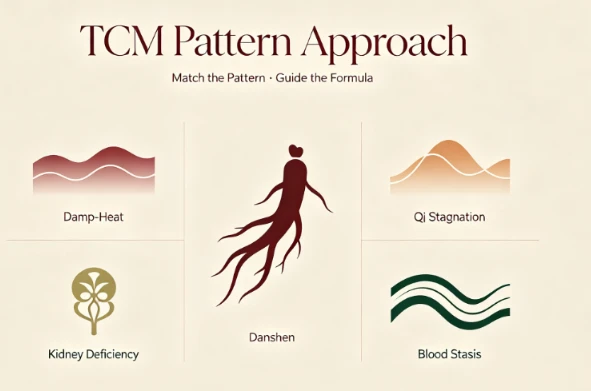
Damp-heat (often aligning with burning, urgency, thick/discolored secretions)
Qi stagnation (often aligning with pressure, distension, mood-related fluctuations)
Blood stasis (often aligning with fixed pain, chronicity, "stuck" symptoms)
Kidney deficiency (often aligning with chronic weakness, low back soreness, recurrent course)
Classical texts provide pattern-to-symptom logic:
Jin Gui Yao Lue describes urinary difficulty and lower abdominal tension/pain, aligning with early "Lin syndrome" descriptions of CP-like urinary irritation.
It also notes presentations consistent with kidney qi insufficiency, offering the strategy of "tonifying kidneys to support transformation" plus "invigorating blood to unblock the lower burner."
Ben Cao Gang Mu states Danshen can "break old blood and generate new blood," similar in overall action to classical blood-nourishing and blood-moving formulas, supporting its use in male disorders where stasis and deficiency coexist.
Keyword-style interpretation: Danshen as a TCM herb for pelvic pain, a TCM herb for urinary discomfort, and a TCM herb for chronic inflammatory patterns-when matched to the right pattern.
5. Common Herb-Pair Combinations of Danshen for CP
5.1 Danshen–Chishao (Paeoniae Radix Rubra)
Chishao is slightly cold and bitter, entering Liver and Spleen channels, with functions of clearing heat, cooling blood, and dispersing stasis to relieve pain [29]. The pair Danshen–Chishao is a classic choice for damp-heat + blood stasis CP, addressing "heat + stasis + pain" while considering chronicity and yin injury.
Modern findings: Chishao contains terpenes, flavonoids, and tannins, with anti-inflammatory, antioxidant, and immunoregulatory activities [30]. Paeoniflorin (PF) may inhibit TLR4/NF-κB, regulate Akt/GSK3β, suppress NLRP3 inflammasome, and activate Nrf2/HO-1 antioxidant genes [31].
Zhang C et al. [32] reported Congrong Shujing Granules containing PF, Sal B, and Tan IIA regulated the IP3R–VDAC–MCU complex at mitochondria–ER contacts, reducing mitochondrial calcium overload, preventing membrane potential decline, lowering ROS, and reducing apoptosis.
Clinical report: You Chuanjing et al. [34] used Danshen 15 g + Chishao 15 g (1:1) in Qingzhuo Decoction for damp-heat + stasis CP with asthenospermia, reporting improvement in NIH-CPSI and semen liquefaction parameters.
Keyword emphasis:
TCM herb pair for urinary burning/urgency + pelvic heaviness: Danshen–Chishao
TCM herb pair for inflammatory oxidative stress burden: Danshen–Chishao
5.2 Danshen–Taoren (Persicae Semen)
Taoren is bitter/sweet and neutral, entering Heart, Liver, and Large Intestine, and is classically used to invigorate blood and dispel stasis [29]. Danshen nourishes and moves blood gently; Taoren more strongly breaks stasis and unblocks the collaterals-useful for stasis-dominant damp-heat CP patterns.
Modern studies suggest Taoren contains volatile oils, cyanogenic glycosides, and flavonoids, with anti-inflammatory, immune-regulatory, and anti-fibrotic activity [35]. Network pharmacology/transcriptomics suggest synergy between Tan IIA and quercetin affecting inflammation pathways and fibrosis targets [36]. Amygdalin may modulate Nrf2/NF-κB, increasing SOD and GSH and lowering MDA, while decreasing TNF-α and IL-6 [37].
Clinical report: Yuan Shaoying et al. [38] used Danshen 20 g + Taoren 10 g in Danhong Tongjing Formula, reporting reductions in NIH-CPSI and TCM symptom scores, possibly via lowering SIgA and VCAM-1.
Keyword emphasis: TCM herb for chronic pelvic pain with "stasis" pattern: Danshen–Taoren.
5.3 Danshen–Huangbo (Phellodendri Cortex)
Huangbo is bitter and cold, entering Kidney and Bladder, used to clear heat and dry dampness-a key strategy for lower-jiao damp-heat presentations [29]. Danshen + Huangbo combines "clear damp-heat" with "move blood stasis," matching damp-heat–stasis CP patterns while balancing "clear without further stagnation" and "move without adding heat."
Modern findings: Huangbo alkaloids are widely studied for anti-inflammatory, antioxidant, antimicrobial, and anti-apoptotic actions [39]. Some integrated omics studies describe synergy of Tan IIA with alkaloids (e.g., berberine) on apoptosis/inflammation-related networks [40–41].
Clinical report: Zhang Haitao et al. [42] used Huangbo 10 g + Danshen 15 g (1:1.5) as a retention enema for damp-heat + stasis CP, reporting improvements in NIH-CPSI, semen liquefaction time, and sperm motility indices.
Keyword emphasis: TCM herb for urinary discomfort/irritation with damp-heat: Danshen–Huangbo.
5.4 Danshen–Chuanxiong (Ligusticum chuanxiong)
Chuanxiong is warm and acrid, entering Liver, Gallbladder, and Pericardium, with actions of invigorating blood, moving qi, and relieving pain [29]. This pair is classically chosen for qi stagnation + blood stasis CP, especially when pain/distension is prominent.
Modern research: Chuanxiong constituents (alkaloids, volatile oils, organic acids) have anti-inflammatory, antioxidant, and analgesic actions [43]. Ligustrazine may influence macrophage polarization and modulate TGF-β/Smad pathways, with potential synergy with Danshen components. Senkyunolide A may act via SIRT6/Nrf2 signaling [45].
Clinical report: Wan Wenjun [46] used Danshen 20 g + Chuanxiong 10 g (2:1) in a formula for qi stagnation + blood stasis CP, reporting reductions in VAS and NIH-CPSI and improved prostatic lecithin bodies.
Keyword emphasis: TCM herb pair for pelvic pressure/pain: Danshen–Chuanxiong.
5.5 Danshen–Yanhusuo (Corydalis yanhusuo)
Yanhusuo is bitter/acrid and warm; it enters Liver, Spleen, and Heart and is renowned for moving qi and blood to stop pain [29]. This is a classic pair for stubborn pelvic pain in qi stagnation + blood stasis CP patterns.
Modern studies suggest Corydalis alkaloids can modulate inflammatory pathways (e.g., TLR4/MyD88/NF-κB/NLRP3) and neuroinflammation. Tetrahydropalmatine shows analgesic effects via DRG signaling pathways involving TNF-α/uPA/PAR2/TRPV1 [50], providing a modern explanation for rapid pain relief ("treating the branch") while Danshen supports the deeper stasis/inflammation environment ("treating the root").
Clinical experience reports note this pair as high-frequency in qi stagnation + blood stasis CP [51–52].
Keyword emphasis: TCM herb for pelvic pain: Danshen–Yanhusuo.
5.6 Danshen–Shanzhuyu (Cornus officinalis)
Shanzhuyu is sour/astringent and slightly warm, entering Liver and Kidney, used to tonify liver and kidney and secure essence [29]. Combined with Danshen, it supports "nourish/secure" while still moving stasis-often used for yin deficiency with blood stasis.
Modern research indicates Cornus components have anti-apoptotic, anti-inflammatory, and antioxidant activity [53]. Iridoid glycosides (morroniside, loganin) may interact with Keap1/Nrf2 and upregulate NQO1/HO-1 [54]. Some studies suggest endocrine-modulatory relevance via HPG-axis related indices [55].
Keyword emphasis: TCM herb pair for chronic recurrent pelvic symptoms with deficiency background: Danshen–Shanzhuyu.
5.7 Danshen–Gouqizi (Lycium barbarum)
Gouqizi is sweet and neutral, entering Liver and Kidney, used to nourish liver and kidney, benefit essence and blood [29]. With Danshen it forms a "nourish + move" strategy suited to yin deficiency with blood stasis, especially where essence/blood depletion is prominent.
Modern research: Lycium polysaccharides and flavonoids show antioxidant and anti-inflammatory activity [57], including Nrf2 activation and mitochondrial support [58–59], as well as NF-κB pathway modulation in inflammatory contexts [60] and supportive effects on Sertoli cells/androgen receptor-related signaling [61].
Clinical report: Hou Pinlian et al. [62] used Danshen 10 g + Gouqizi 15 g in a formula (often via enema retention) for CP, reporting improvements and good safety.
Keyword emphasis: TCM herb for prostate comfort + vitality support: Danshen–Gouqizi.
5.8 Danshen–Yinyanghuo (Epimedium)
Yinyanghuo is acrid/sweet and warm, entering Liver and Kidney, used to tonify kidney yang and support urinary function [29]. With Danshen it is used for yang deficiency with blood stasis, combining "warm yang" with "move blood," often relevant in cold-type, low-energy chronic presentations.
Modern research: Icariin may modulate Nrf2 and NF-κB, increasing SOD/GPX activity and reducing TNF-α and other cytokines [64–66], and may influence HPG-axis-related pathways [67–68].
Clinical report: A formula centered on Danshen + Epimedium reportedly reduced NIH-CPSI, recurrence, and inflammatory markers in relevant cohorts [69].
Keyword emphasis: TCM herb pair for fatigue + chronic pelvic discomfort: Danshen–Epimedium.
5.9 Danshen–Bajitian (Morinda officinalis)
Bajitian is sweet/acrid and slightly warm, entering Kidney and Liver, used to tonify kidney yang, strengthen bones/tendons, and dispel wind-dampness [29]. With Danshen it provides a gentler warming–moving approach compared with stronger yang-tonics, suitable for milder yang deficiency with stasis.
Modern studies suggest Morinda oligosaccharides may modulate SIRT1/NF-κB, calcium signaling, antioxidant enzymes (HMOX1, NQO1, Nrf2), and apoptosis-related factors [71–72], and may influence gut microbiota and IGF-1/PI3K/mTOR signaling related to sperm motility [73].
Keyword emphasis: TCM herb approach for chronic recurrent symptoms + low vitality: Danshen–Bajitian.
5.10 Danshen–Huangqi (Astragalus)
Huangqi is sweet and slightly warm, entering Lung and Spleen, used to tonify qi, secure the exterior, raise yang, and promote tissue recovery [29]. Danshen + Huangqi is the classic "tonify qi + move blood" combination for qi deficiency with blood stasis-a pattern often characterized by low energy, lingering symptoms, and poor circulation.
Modern data: Astragaloside IV combined with Tan IIA may activate PI3K/Akt and suppress TLR4/NF-κB [76]. Astragaloside IV may also act on Keap1/Nrf2/HO-1, increase GPX4, reduce MDA and cytokines, and inhibit ferroptosis in CP-related experimental contexts [77]. Network pharmacology suggests this pair may influence AGEs/RAGE/MAPK signaling [78].
Clinical experience references highlight this pair as foundational in some "support qi + move blood + resolve toxin" approaches [79–80].
Keyword emphasis:
TCM herb pair for fatigue + chronic pelvic symptoms: Danshen–Astragalus
TCM herb for immune balance + recovery support: Danshen–Astragalus
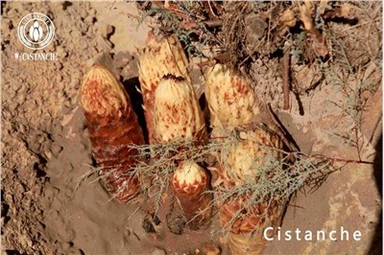
6. Where Cistanche (Rou Cong Rong) Fits-Evidence-Consistent Integration for Product Development

Your source text already cites Congrong Shujing Granules (苁蓉舒痉颗粒) containing PF, Sal B, and Tan IIA and describes mitochondrial/ER contact regulation and reduction in ROS/apoptosis [32]. This provides a legitimate anchor point to incorporate Cistanche (Rou Cong Rong) into a CP-focused narrative-especially for Western audiences who understand CP/CPPS as a complex condition involving inflammation, oxidative stress, pelvic pain, and quality-of-life burden.
Practical Western-facing positioning (non-drug claims)
Cistanche (Rou Cong Rong) as a botanical traditionally used in TCM for vitality, kidney-yang support, and reproductive health, and in modern wellness language as:
"supports healthy inflammatory balance"
"supports antioxidant capacity"
"supports male vitality and pelvic wellness"
Suggested "bridge phrases" you can reuse as SEO/keyword lines
Cistanche extract: a TCM herb for vitality and resilience in chronic pelvic discomfort
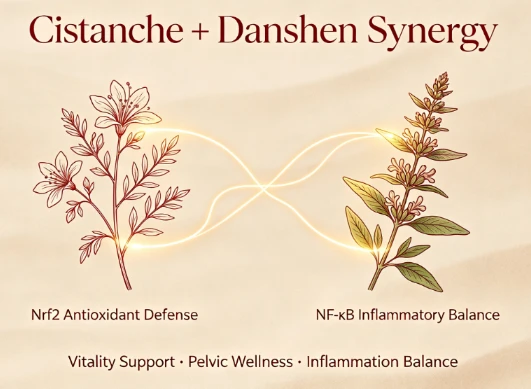
Cistanche + Danshen: botanical synergy for oxidative stress and inflammation pathways (Nrf2/NF-κB)
TCM herb for pelvic pain support: Danshen + Corydalis; daily vitality support: Cistanche
7. About Us (Factory Information) - Cistanche (Tubulosa) Extract, High-Actives Focus
We are a manufacturer specializing in Cistanche tubulosa (管花肉苁蓉) extract, with a focus on higher active-compound content-a key quality advantage when developing evidence-aligned botanical products for Western markets (capsules, powders, drink mixes, or functional blends).
Company introduction: click to see


Science/education article for inflammation understanding (useful for content marketing and consumer education): Related Cistanche Products Made By Wecistanche


Why "Cistanche tubulosa" matters: Compared with general "Cistanche" sourcing, tubulosa-focused extraction is commonly positioned around stronger active profiles (your core differentiation). In marketing copy, emphasize:
standardized extraction
active-content focus
traceability and manufacturing capability
suitability for formulation and OEM/ODM collaboration (if applicable)
8. Conclusion
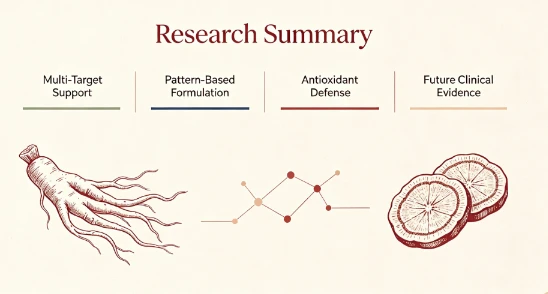
Danshen is a core botanical in TCM approaches to CP due to its traditional actions of invigorating blood, resolving stasis, cooling blood, resolving abscesses, and relieving pain. Its clinical value is not only in single-herb use, but in precise herb-pair compatibility aligned with pattern differentiation, enabling multi-target intervention for complex CP presentations.
Modern pharmacology supports plausible mechanistic relevance across:
Oxidative stress (Nrf2/ARE, HO-1, NQO1)
Inflammation and immune signaling (TLR4/NF-κB, cytokines)
Apoptosis regulation (Bcl-2/Bax, caspases, ER stress, PI3K/Akt)
Fibrosis (TGF-β/Smad, STAT3, FAO-related metabolism)
Endocrine balance support (HPG-axis-related indices in some contexts)
However, limitations remain:
Many mechanistic studies rely on cellular/animal models; high-quality large RCTs are limited.
The deeper synergy mechanisms of herb pairs are not fully elucidated.
Many clinical reports involve compound formulas, and independent efficacy/safety evaluation of specific herb pairs needs strengthening.
Future work should focus on multicenter RCTs by core herb pairs, multi-omics mechanistic mapping, and dose–effect optimization to improve standardization and precision.