Traditional Chinese Medicine (TCM) Understanding Of Male Reproductive Aging And The Current Landscape Of TCM-Based Interventions — Optimized For People Seeking Herbal Support And Companies Developing Products
Jul 31, 2026
Abstract
In the TCM framework, male reproductive aging is understood with male fertility potential as the central focus. It includes (1) natural aging of male reproductive function, (2) premature reproductive aging, and (3) diseases associated with reproductive aging. The core pathogenesis is kidney deficiency (肾虚), and the pathological trajectory reflects a gradual decline of yin–yang, essence, and qi stored in the kidney-from fullness to depletion and ultimately exhaustion.

In both clinical practice and basic research, TCM and Chinese herbal medicine have explored aging-related male reproductive disorders in depth, primarily by treating related diseases to slow the decline of male reproductive function. This article systematically summarizes TCM cognition of male reproductive aging and organizes key clinical and experimental literature, aiming to provide a theoretical TCM foundation and research/development directions for investigators and product developers working on herbal solutions for age-associated male sexual and reproductive decline.
Keywords: male reproductive aging; premature male reproductive aging; fertility potential; TCM cognition; TCM interventions; Organic Herb Extract for libido decline; Organic Herb Extract for nocturia and weak urinary flow; Organic Herb Extract for andropause symptoms; Organic Herb Extract for prostate-related urinary discomfort; Organic Herb Extract for fatigue and vitality support; Cistanche (Rou Cong Rong); Cistanche tubulosa extract; echinacoside; acteoside/verbascoside.
1. Background: Why Male Reproductive Aging Has Become a Public-Health and Market Topic
In recent years, the age at first marriage in China has been delayed, while demand for later-life childbirth has increased-making reproductive aging a growing public health issue. Modern medicine views male reproductive aging as involving degenerative changes across multiple systems: testes and accessory glands, germ cells, reproductive endocrine metabolism, and immune function. Clinically it may present as declining semen quality, sexual dysfunction, and psychological symptoms, reflecting reduced testicular endocrine secretion and spermatogenic capacity. Male reproductive aging is regarded as a major contributor to male infertility.
Although classical TCM does not name "male reproductive aging" as a standalone disease category, it contains many discussions about how aging affects male reproductive physiology and pathology. TCM also reports meaningful clinical outcomes in aging-related reproductive system disorders, accumulating practical formulas and methods that may help delay functional decline.
2. TCM Cognition of Aging and Health Preservation (养生调摄)
TCM summarizes the human life process into five stages: growth, flourishing, maturity, aging, and decline. Classical texts emphasize that normal life follows the movement of qi (ascending/descending, entering/exiting). Aging is therefore part of the natural life trajectory. TCM also distinguishes natural aging from premature aging: natural aging is a normal life process; premature aging is early systemic degeneration.
Classical descriptions of aging signs include facial withering, hair loss, teeth deterioration, greying hair, heaviness and instability in movement, sensory decline, increased sleepiness, and notably reproductive decline such as "Tian Gui exhaustion and reduced essence" and "no offspring."
To prevent early decline and reduce disease risk, TCM emphasizes prevention and lifestyle regulation such as:
aligning with yin–yang rhythms,
dietary moderation,
regular sleep and routines,
avoiding excessive exertion,
mental/emotional stability,
and avoiding uncontrolled sexual indulgence .
For reproductive health, classical principles like "seven harms and eight benefits" are referenced as sexual health-preservation rules.
3. What "Male Reproductive Aging" Means in a TCM-Informed Modern Definition
Because male reproductive decline can be subtle and historically under-emphasized, a clearer concept has formed only in recent years. Based on classical cognition and modern research showing aging alters the microenvironment of male reproduction, the TCM-informed scope of male reproductive aging can be defined as fertility-centered and includes:
3.1 Natural male reproductive aging
A gradual process, usually beginning around "four eights" (32 years old) in the classical timeline, continuing slowly into old age. Symptoms can be mild and may include lowered libido, softening of external genital function, mild prostate enlargement, etc. Fertility may weaken but not disappear; with proper lifestyle and TCM regulation, fertility can often improve.
3.2 Premature male reproductive aging
"Not old yet, but declining early": reproductive aging signs appear before 32, excluding other medical causes. It is often identified during preconception evaluation or physical exams and is frequently linked to lifestyle and psychosocial factors (chronic sleep deprivation, alcohol/tobacco, sedentary habits, long-term stress, excessive masturbation/sexual overuse, etc.). It may be reversible with targeted TCM intervention.
3.3 Aging-related male reproductive disorders
These are conditions secondary to aging with more obvious symptoms affecting quality of life, accompanied by reproductive functional decline or organ aging. Classical categories include infertility ("no offspring"), urinary obstruction syndromes, enuresis, erectile dysfunction, premature ejaculation, and deficiency fatigue syndromes. In modern terms, conditions often discussed include:
late-onset hypogonadism / andropause-like syndrome,
age-related male infertility (e.g., oligoasthenozoospermia),
benign prostatic hyperplasia (BPH),
erectile dysfunction.

4. Core Mechanism in TCM: Kidney Deficiency (肾虚) as the Root
Even though the term is modern, its theoretical mechanism is long-established. Two key explanatory layers:
4.1 Decline of kidney yin–yang, essence, and qi
TCM texts describe that after midlife, yin and yang gradually decline. Kidney qi is considered the initiating material basis of decline from maturity to aging, and kidney is viewed as the first organ to show aging tendency. With time, "Tian Gui exhaustion" signals the late stage of reproductive decline.

4.2 Multi-organ involvement + complex pathogenic factors
Classics also state "the five zang decline," indicating that besides kidney, liver, spleen, heart, and lung can participate. Contemporary TCM theories (e.g., "brain–heart–kidney–reproductive chamber axis") interpret aging as involving regulation of spirit and governance of reproductive function, with kidney as the foundation.
Synthesis: Kidney deficiency is the core, often combined with liver depression, spleen deficiency, damp-heat, blood stasis, phlegm/fluid retention, etc. Early stages may be single-pattern and mild (often kidney qi deficiency), but chronicity leads to mixed deficiency/excess and multi-organ decline.

5. Cross-Learning from Gynecology to Andrology (方药互鉴)
Historically, TCM gynecology has more extensive documentation on reproductive aging (e.g., menopause as a clear boundary). Male reproductive aging lacks an obvious "cutoff," yet both share similar mechanisms-location, meridians, deficiency pattern, developmental biology parallels, and hypothalamic–pituitary–gonadal axis resemblance. Therefore, formulas from gynecology have been adapted clinically for male aging-related reproductive disorders with good outcomes (e.g., Wen Jing Tang, Er Xian Tang, Xiao Yao San, Zi Shui Qing Gan Yin, etc.).
6. How TCM Interventions Aim to Slow Functional Decline
6.1 Late-onset hypogonadism / andropause symptoms
Clinical discussions often describe a core pattern of "kidney essence gradually damaged, Tian Gui declining," with multi-organ involvement. Formulas such as Er Xian Tang, Zi Shui Qing Gan Yin, Liu Wei Di Huang Tang modifications, and others are reported to improve symptoms and sometimes testosterone-related markers. External therapies (acupuncture, moxibustion, ear acupressure, combined exercise) are also used for symptom relief and balance restoration.
6.2 Aging-related male infertility
Historical and clinical evidence frequently uses kidney-warming and essence-supplementing approaches. Classical and modern practices include kidney-tonifying and blood-activating strategies, with formulas and single herbs used to improve semen parameters and libido.
TCM herb for prostate health

6.3 Aging-related BPH
BPH is strongly age-related, beginning around 30–40 with progressive growth. TCM reports include internal formulas and external methods (moxibustion, acupoint applications, enema-based herbal interventions) aimed at relieving nocturia, weak stream, residual urine sensation, and improving quality of life.
6.4 Aging-related erectile dysfunction
Aging is a major risk factor for ED. TCM approaches often emphasize kidney tonification, especially kidney yang warming, combined with spleen support, qi regulation, and blood circulation strategies. Some reports note improvements in penile blood flow and symptom scales.
7. Biological Evidence Directions
Modern biomedicine highlights cumulative molecular/cellular damage in reproductive aging (oxidative stress, DNA damage, autophagy dysregulation, inflammation). TCM research explores how herbal formulas may improve oxidative stress status, testicular microenvironment, cell aging markers, and regulatory signaling pathways. This helps create mechanism narratives useful for R&D teams-while still requiring robust clinical validation.
8. Industry-Oriented Herbal Opportunity: Integrating Cistanche (Rou Cong Rong) for Male Aging-Related Sexual/Urinary Decline
8.1 Why Cistanche is positioned as "Desert Ginseng" in TCM wellness
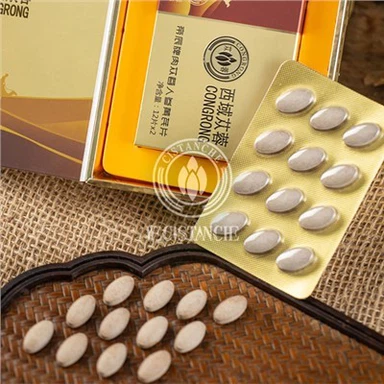
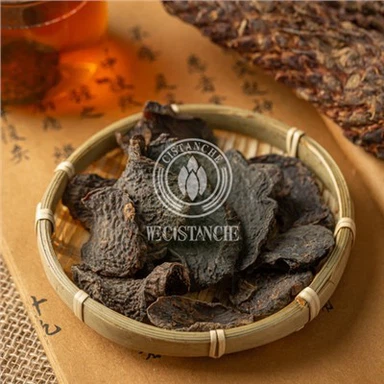
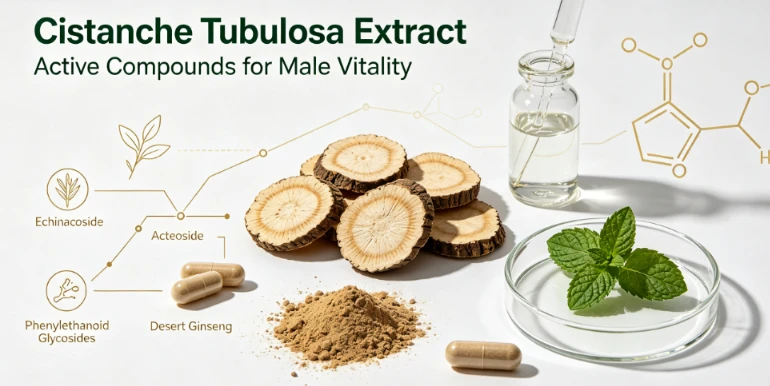
Wecistanche describes Cistanche (Rou Cong Rong, 肉苁蓉) as a classic TCM tonic herb valued for gentle, steady support rather than fast effects. In materia medica, it refers to the dried fleshy stem of Cistanche deserticola or Cistanche tubulosa, mainly produced in Inner Mongolia, Xinjiang, and Gansu, and traditionally used raw or wine-processed (wine-steamed/braised). It is also traditionally used for:
kidney yang deficiency / essence-blood weakness patterns (low libido/sexual weakness, low back and knee weakness, tendon/bone weakness),


Wecistanche Photograph, All Rights Reserved
dry constipation related to fluid depletion or age-related dryness.
8.2 R&D/marketing relevance: Cistanche tubulosa and prostate/urinary positioning
In the prostate-focused, Wecistanche frames BPH progression (nocturia → weak stream/hesitancy → retention/incontinence/hematuria) and then presents TCM pattern classification and formula logic, repeatedly highlighting Cistanche tubulosa as supportive in long-term conditioning and "kidney nourishment + stasis resolution" approaches. It also includes two "clinical case" narratives (80-year-old severe BPH with catheterization; 59-year-old chronic prostatitis/nocturia) describing symptom resolution after TCM formula strategies incorporating low-dose Cistanche tubulosa. The company also claims Hotan-origin Cistanche tubulosa has higher echinacoside and acteoside concentrations and emphasizes certifications and compliance statements.

8.3 Product developer summary: active markers + dosage format ideas
From the "Cistanche for Kidney disease" product page you provided, Wecistanche describes:
raw material: Cistanche tubulosa
active ingredients: echinacoside, verbascoside/acteoside, phenethyl alcohol total glycosides, flavonoids
suggested dosage: 3–5 g per day
claims: anti-fatigue, anti-oxidation, "treatment of kidney disease," improve immunity (note: companies should be careful with disease-treatment claims depending on jurisdiction).
They also describe tea, congee, soup/stew, and infused liquor as common "food-style" use cases (from the Desert Ginseng article), which can inspire consumer-friendly product formats (instant tea granules, sachet slices, extract powder, functional beverage bases), while keeping claims compliant.


9. Keyword
For readers searching for solutions and for companies planning landing pages, here are keyword angles aligned with the article's themes and the provided Cistanche content:
Organic Herb Extract for male vitality support
Organic Herb Extract for age-related libido decline
Organic Herb Extract for nocturia and sleep disruption (male urinary function)
Organic Herb Extract for weak urine stream / urinary hesitancy support
Organic Herb Extract for prostate health maintenance (BPH support)
Organic Herb Extract for fatigue and low energy in middle-aged men
Organic Herb Extract for "kidney yang" support (TCM pattern)
Organic Herb Extract for dry constipation in older adults (gentle bowel support)
Cistanche tubulosa extract echinacoside acteoside
Rou Cong Rong desert ginseng tea / slices / extract powder
10. Supplier/Source Credibility Points
Click To Visit Our Cistanche Base And Extract Factory

Chengdu Wecistanche Bio-Tech Co., Ltd established 2003;
industrial chain coverage including seed breeding, cultivation, collection/storage, and GMP processing;
focus on Hotan/Xinjiang Cistanche tubulosa;
certificates mentioned: SC, HACCP, SOCA/NOP, organic-related certifications;

14 patents related to cistanche inventions including membrane separation technology;
collaborations with universities and a chief scientist profile;
social responsibility donations described.
References / Sources
[1] Office of the Leading Group of the Seventh National Population Census of the State Council. China Population Census Yearbook 2020 [M]. Beijing: China Statistics Press; 2022.
[2] Li Xiangping, Deng Chunhua. A multi-perspective understanding of characteristics of male reproductive aging [J]. Journal of Sun Yat-sen University (Medical Sciences); 2022; 43(6): 871–877.
[3] Deng Chunhua, Zhang Chi, Xie Yun, et al. Current status and prospects of research on testicular aging [J]. Chinese Journal of Andrology; 2020; 26(4): 291–296.
[4] Wang Shixun. Zhang Jingyue's development of longevity concepts in the "Inner Canon" (Neijing) [J]. Sichuan Journal of Traditional Chinese Medicine; 1996; 14(3): 7–8.
[5] Li Bonan, He Qinghu, Zhou Xing, et al. Influence of the Mawangdui medical manuscripts on contemporary clinical treatment and nursing/health management of andrological diseases [J]. Journal of Traditional Chinese Medicine; 2018; 59(16): 1435–1437.
[6] Deng Chunhua, Liu Hanchao, Zhang Chi, et al. Aging and male health [J]. Journal of Clinical Urology; 2020; 35(10): 767–770.
[7] Snyder PJ. Male Reproductive Aging [M]. In: Yen and Jaffe's Reproductive Endocrinology. Amsterdam: Elsevier; 2019: 357–364.e2.
[8] Wu Yongrong, Gao Ruisong, He Qinghu, et al. Analysis of key points for prevention of male infertility based on the "preventive treatment of disease" concept in the Huangdi Neijing [J]. Chinese Journal of Traditional Chinese Medicine; 2020; 35(11): 5536–5538.
[9] Zhao Xiujun. Mechanisms by which oxidative stress and chronic inflammation affect senescence of testicular Leydig (interstitial) cells [D]. Shijiazhuang: Hebei Medical University; 2013.
[10] Abudureyimu Rouzi, Abudureyimu Yusufu. Research progress on anti-aging effects of Chinese medicines and Uyghur medicines [J]. Journal of Xinjiang Medical University; 2013; 36(10): 1424–1428.
[11] Wang Renyuan, Zeng Yin, Han Qiang, et al. Medication analysis for late-onset hypogonadism based on the "brain–heart–kidney–sperm chamber axis" theory [J]. China Rational Drug Use Exploration; 2023; 20(4): 63–67.
[12] Ning Gang, Wu Hui, Zhou Xing, et al. A brief analysis of the relationship between Tian Gui and testosterone [J]. Journal of Hunan University of Chinese Medicine; 2022; 42(1): 73–77.
[13] Min Xiao. Characteristics of TCM syndromes in late-onset hypogonadism and diagnostic/treatment approaches integrating TCM and Western medicine [D]. Beijing: Beijing University of Chinese Medicine; 2017.
[14] Ma Wenjun. Investigation of TCM syndrome distribution and risk factors in male infertility [D]. Beijing: Beijing University of Chinese Medicine; 2015.
[15] Pan Xiaodong. Syndrome classification and key points of pattern differentiation for benign prostatic hyperplasia [D]. Zhengzhou: Henan University of Chinese Medicine; 2017.
[16] Wei Chuang. Literature-based and clinical research on distribution patterns of TCM syndromes in erectile dysfunction [D]. Hangzhou: Zhejiang University of Chinese Medicine; 2017.
[17] Min Xiao, Xie Shenglin, Jiao Yongzheng, et al. Ideas and methods for TCM treatment of late-onset hypogonadism [J]. Journal of Traditional Chinese Medicine; 2017; 58(6): 479–481.
[18] Wu Xi, Zou Xinyu, Feng Quansheng, et al. Clinical experience of Master TCM physician Liu Shangyi in gynecology and andrology syndrome treatment [J]. Chinese Journal of Traditional Chinese Medicine; 2018; 33(7): 2876–2879.
[19] Sun Yiming, Yu Changfei. Discussion on treating andrological diseases using TCM gynecology principles, methods, formulas, and medicinals [J]. Chinese Journal of Andrology; 2015; 21(4): 291–293.
[20] Zou Hede, Tao Yi, Li Bolin, et al. CiteSpace visual analysis of research trends on late-onset hypogonadism in China over the past 20 years [J]. Chinese Journal of Andrology; 2023; 37(2): 28–34.
[21] Zhou Xing, Tang Xue, Zhou Qing, et al. TCM and Western medicine perspectives on late-onset hypogonadism and possible mechanisms of TCM interventions [J]. Chinese Journal of Traditional Chinese Medicine; 2020; 35(3): 1327–1331.
[22] Ma Jianxiong, Chen Wangqiang, Wang Bin, et al. Analysis of herb pairs used by Li Yueqing in treating late-onset hypogonadism [J]. Chinese Journal of Traditional Chinese Medicine; 2020; 35(10): 5015–5019.
[23] Tang Xue, Li Bonan, Zhou Hailiang, et al. Effects of Xiongcan Yishen Formula on testicular histomorphology and antioxidant activity in rats with late-onset hypogonadism [J]. Journal of Hunan University of Chinese Medicine; 2020; 40(8): 951–956.
[24] Yang Ming, Zhu Shoulun, Ding Chunyan, et al. Efficacy evaluation of Erxian Decoction for kidney-deficiency type partial androgen deficiency syndrome in men: 75 cases [J]. New Journal of Traditional Chinese Medicine; 2009; 41(2): 53–54.
[25] Chen Zhong, Liu Nawin. Case reports on Erxian Decoction for late-onset hypogonadism [J]. Tianjin Journal of Traditional Chinese Medicine; 2020; 37(2): 206–208.
[26] Huang Ling. Modified Zishui Qinggan Decoction for male climacteric syndrome: 56 cases [J]. Fujian Journal of Traditional Chinese Medicine; 2006; 37(1): 41.
[27] Zhang Tingyu. Clinical observation of Yishen Shugan Decoction for late-onset hypogonadism of kidney-deficiency and liver-depression type [D]. Harbin: Heilongjiang University of Chinese Medicine; 2021.
[28] Xie Jianming. Integrated TCM and Western medicine treatment for male climacteric syndrome: 50 cases [J]. Clinical Journal of Chinese Medicine; 2012; 4(19): 75–76.
[29] Wang Xikun. A controlled clinical study of modified Liuwei Dihuang Decoction for partial androgen deficiency syndrome in middle-aged and elderly men [J]. New Journal of Traditional Chinese Medicine; 2008; 40(6): 43–44.
[30] Shang Kun, Yao Jinfu, Wang Deyou, et al. Clinical efficacy of Ningxin Gengnian Tablets in male climacteric syndrome [J]. Chinese Journal of Gerontology; 2014; 34(24): 7112–7113.
[31] Ding Yi, Zhao Jianhua, Zhai Xinyu. Yougui Capsules combined with low-dose testosterone undecanoate and its impact on quality of life in kidney-yang deficiency type PADAM patients [J]. Journal of Shanghai University of Traditional Chinese Medicine; 2016; 30(6): 30–33.
[32] Yao Zhemin, Huang Shuangshuang, Shan Yunfeng. Clinical study of Compound Xuanju Capsules in treating late-onset hypogonadism [J]. New Journal of Traditional Chinese Medicine; 2023; 55(15): 105–109.
[33] Wang Xuemin, Zhang Xiuwen, Liu Lihui, et al. Efficacy of Compound Xuanju Capsules for subclinical late-onset hypogonadism and effects on cardiovascular-related indicators [J]. Modern Journal of Integrated Traditional Chinese and Western Medicine; 2016; 25(18): 1990–1992.
[34] Yan Bin, Guo Jun, Gao Qinghe, et al. Progress in the application of Qilin Pills in andrology from the perspective of "different diseases treated with the same method" [J]. Chinese Journal of Human Sexuality; 2020; 29(4): 108–111.
[35] Zheng Xuefeng, Li Pei. Clinical thinking on acupuncture treatment for partial androgen deficiency in middle-aged and elderly men [J]. Shanghai Journal of Acupuncture and Moxibustion; 2006; 25(4): 28–29.
[36] Su Ning. Ginger-partitioned moxibustion combined with herbal medicine for male climacteric syndrome: 50 cases [J]. Shaanxi Journal of Traditional Chinese Medicine; 2010; 31(6): 729–730.
[37] Liu Zhe, Wang Gaimei, Yang Kui. Acupuncture plus auricular seed-pressing therapy for male climacteric syndrome: 46 cases [J]. Correspondence Course Communications of Traditional Chinese Medicine; 1994; 12(5): 41–42.
[38] Song Lianzhu, Li Hui, Ge Jianqiang, et al. Clinical observation of acupuncture combined with aerobic exercise for male climacteric syndrome [J]. Liaoning Journal of Traditional Chinese Medicine; 2005; 32(5): 467.
[39] Jin Dongming, Han Fuqiang, Chen Ling. Observation of Erxian Decoction combined with acupuncture for kidney-deficiency type male climacteric syndrome: 56 cases [J]. Zhejiang Journal of Traditional Chinese Medicine; 2010; 45(11): 793–794.
[40] Liu Anping. A data-analysis-based study of aging-related medical case records [D]. Wuhan: Hubei University of Chinese Medicine; 2017.
[41] Fu Wei, Li Qixin, Yuan Gengyan, et al. Research and clinical discussion on syndrome differentiation and treatment of male infertility in the Ming and Qing dynasties [J]. Shanxi Journal of Traditional Chinese Medicine; 2016; 32(10): 55–57.
[42] Tao Aien, Zhao Feiya, Qian Jinfeng, et al. Advances in materia medica, pharmacological actions, and efficacy-related substances of Polygonatum plants for diseases related to kidney essence deficiency [J]. Chinese Traditional and Herbal Drugs; 2021; 52(5): 1536–1548.
[43] Zhang Junhui, Wang Nan, Cao Shuang, et al. Application of goji berry (Lycium barbarum) in male infertility [J]. Chinese Journal of Andrology; 2008; 14(3): 279–281.
[44] Zeng Xiaoyan, Li Yongping, Tong Li. Application of Rubus chingii (Fu Pen Zi) in male infertility [J]. Information on Traditional Chinese Medicine; 2020; 37(5): 110–113.
[45] Li Zhanmin, Hu Shilong, Liu Tiejun, et al. Observation of efficacy of Yishen Huoxue Formula in treating advanced-age male infertility of kidney deficiency and blood stasis type [J]. Chinese Journal of Andrology; 2021; 27(6): 530–534.
[46] Guo Zhongliang, Wang Hetian. Clinical study of Shizi Yuchun Pills for male infertility with oligospermia/asthenospermia due to kidney deficiency and essence depletion [J]. Beijing Journal of Traditional Chinese Medicine; 2006; 25(10): 582–585.
[47] Fan Shengkai, Wu Jiankun, Wang Hetian, et al. Clinical observation of Shizi Yuchun Pills for late-onset hypogonadism: 61 cases [J]. Beijing Journal of Traditional Chinese Medicine and Pharmacy; 2018; 37(8): 789–791.
[48] Li Jin, Ma Yueguang. Discussion on Qibao Meiran Dan: anti-aging and infertility treatment effects and dosage-form reform [J]. Zhejiang Journal of Integrated Traditional Chinese and Western Medicine; 2000; 10(3): 148–149.
[49] Jia Jinming. Revisiting the pathogenesis and treatment of benign prostatic hyperplasia (BPH) from an integrated TCM–Western medicine perspective [C]// Proceedings of the 5th National Academic Conference on Integrative Andrology (TCM & Western Medicine) and Andrology Training Course. Jinan: Chinese Association of Integrative Medicine; 2007: 8–16.
[50] Zhang J, Wang YH, Li S, et al. Efficacy and safety evaluation of transurethral resection of the prostate versus plasmakinetic enucleation of the prostate in the treatment of massive benign prostatic hyperplasia [J]. Urologia Internationalis; 2021; 105(9–10): 735–742.
[51] Chen Kezhong, Zheng Baozhong, Jing Xinwen, et al. Clinical and experimental study of Qianlieshu Pills in senile benign prostatic hyperplasia: analysis of 106 cases [J]. Pharmacology and Clinics of Chinese Materia Medica; 1991; 7(3): 35–36.
[52] Wu Guozheng. Clinical observation of 26 cases of prostatic hypertrophy treated with blood-activating and stasis-resolving therapy [J]. Chinese Journal of Ethnomedicine and Ethnopharmacy; 1996; 2(S1): 49.
[53] Wang Di, Shang Xiaoling. Liuwei Dihuang Pills for prevention and treatment of geriatric diseases [J]. Chinese Journal of Gerontology; 2011; 31(3): 524–527.
[54] Liao Qixun, Hou Bonan, Luo Xiaoguang, et al. Clinical effect observation of Jinkui Shenqi Pills for senile benign prostatic hyperplasia [J]. Pharmacology and Clinics of Chinese Materia Medica; 2016; 32(5): 96–98.
[55] Fu Fangzhi, Yang Yang, Zhang Lie, et al. Exploring treatment of senile BPH using Shenqi Pills combined with Guizhi Fuling Pills based on the "main disease–main formula" theory [J]. Chinese Journal of Human Sexuality; 2022; 31(11): 119–122.
[56] Huang Xiaolong. Observation of therapeutic effect of Zegui Longshuang Capsules on senile BPH and its influence on liver function [J]. New Journal of Traditional Chinese Medicine; 2016; 48(6): 80–81.
[57] Sun Xiao, Han Lu, Xue Lu, et al. Clinical observation of ginger-partitioned moxibustion on the Ren and Du meridians for senile BPH [J]. Modern Journal of Integrated Traditional Chinese and Western Medicine; 2020; 29(30): 3327–3330, 3335.
[58] Dong Ying, Xue Lu, Wu Runze, et al. Clinical study of Du-moxibustion (half-moxibustion method) for senile BPH of kidney-yang deficiency type [J]. Journal of Hebei Traditional Chinese Medicine and Pharmacology; 2021; 36(3): 28–32.
[59] Wang Ting, Xiong Bingjian, Xue Chang, et al. Study on intervention effects of acupoint massage and foot reflexology combined with Chinese medicine in elderly patients with BPH [J]. Journal of Hunan University of Chinese Medicine; 2019; 39(3): 381–384.
[60] Jiang Yu, Hu Jinxia. Clinical efficacy analysis of herbal acupoint application combined therapy for senile BPH [J]. Xinjiang Journal of Traditional Chinese Medicine; 2020; 38(1): 27–29.
[61] Feng Jianmin. Twenty cases of senile BPH treated with Chinese herbal enema [J]. Inner Mongolia Journal of Traditional Chinese Medicine; 2018; 37(2): 90–91.
[62] Li Yueqing, Li Haisong, Wang Bin. Expert consensus on treating erectile dysfunction based on the "penile stroke" theory [J]. Chinese Journal of Andrology; 2020; 34(6): 3–5, 23.
[63] Su Denggao. Study on the application of the kidney-tonifying method based on "A Century of Clinical Experience of 100 Famous TCM Physicians in China" [D]. Beijing: China Academy of Chinese Medical Sciences; 2019.
[64] Huang Junshan, Wu Chenghan, Zhou Xiaoxuan, et al. Expert consensus on TCM preventive treatment (Zhi Wei Bing): erectile dysfunction in elderly men [J]. Journal of Traditional Chinese Medicine (Zhongyi Xuebao/Journal of Chinese Medicine); 2020; 35(1): 67–71.
[65] Shi Junping. Etiology and pathogenesis of senile erectile dysfunction and a clinical study on Pi-Shen Huanyang Decoction [D]. Shenyang: Liaoning College of Traditional Chinese Medicine; 2003.
[66] Guo Jing, Chen Hongdong, Zhou Qiang, et al. Tong Xiaolin's clinical experience using Epimedium (Yin Yang Huo) [J]. Shandong Journal of Traditional Chinese Medicine; 2016; 35(4): 336–338.
[67] Xu Ruiqian. Clinical examples of using Guizhi Jia Longgu Muli Decoction in andrological diseases [J]. Practical Journal of Traditional Chinese Medicine; 2003; 19(5): 263.
[68] Zhuang Baojun. Clinical observation of Hangu Chunnsheng Decoction combined with a vacuum erection device for erectile dysfunction of Mingmen fire decline type [D]. Harbin: Heilongjiang Academy of Traditional Chinese Medicine Sciences; 2019.
[69] Yu Chao, Zhao Youkang, Cao Hongwen, et al. Clinical observation of "Fu moxibustion" (summer treatment for winter disease) combined with Baduanjin guidance exercise for late-onset hypogonadism-related erectile dysfunction [C]// Proceedings/Handouts of the 12th National Conference on Integrative Andrology (TCM & Western Medicine) and related training program; also 2017 annual meeting materials of relevant Shanghai societies. Shanghai: Chinese Association of Integrative Medicine; 2017: 231.
[70] Beard JR, Officer A, de Carvalho IA, et al. The World report on ageing and health: a policy framework for healthy ageing [J]. The Lancet; 2016; 387(10033): 2145–2154.
[71] Chang Yanyu. Effects of Wuzi Yanzong Pills on impairment of the blood–testis barrier in naturally aged mice and mechanism exploration [D]. Yichang: Three Gorges University; 2023.
[72] Li Zhuoheng. Correlation between EPO and kidney-deficiency–related male reproductive dysfunction and the ameliorative effects of Yougui Decoction [D]. Chongqing: Southwest University; 2020.
[73] Kou Suru. Effects of Heshouwu Drink on sperm quality in naturally aged rats [D]. Baoding: Hebei University; 2014.
[74] Wang Lili. Protective effects of resveratrol on oxidative stress injury during sperm selection [D]. Xinxiang: Xinxiang Medical University; 2016.
[75] Han Guifang. Effects of total flavonoids of Epimedium on functional decline of Sertoli cells in the aging testis and mechanism study [D]. Yichang: Three Gorges University; 2018.