Ten Kinds Of Traditional Chinese Medicine With The Same Origin Of Medicine And Food
May 17, 2023
"The same origin of medicine and food" means that many foods are medicines, and there is no absolute dividing line between them. Ancient medical scientists applied the theory of "four natures" and "five flavors" of traditional Chinese medicine to food, thinking that each food also has "Four Natures" and "Five Flavors". "The same origin of medicine and food" means that Chinese medicine and food originated at the same time.
Click to buy TCM Cistanche herb
"Huainanzi Xiuwu Xun," said: "Shen Nong tasted the taste of hundreds of herbs, and the sweetness and bitterness of water springs, so that the people knew what to avoid. At this time, seventy poisons were encountered in one day." It can be seen that in the Shennong era, medicine and food were not distinguished. , Those who are non-toxic can stay, and those who are poisonous should avoid it.
1. Jujube
Jujube, also known as jujube, is the ripe fruit of the deciduous shrub or small tree plant jujube of Rhamnaceae. Jujube is sweet in taste, warm in nature, and has the functions of invigorating the middle and Qi, nourishing blood and calming the nerves, and alleviating the medicinal properties. Jujube is good at treating a deficiency of Qi in the middle, weakness of the spleen and stomach leading to fatigue, lack of food and loose stools; blood deficiency and chlorosis, and women's irritability; used together with strong drugs can alleviate the properties of the drugs.
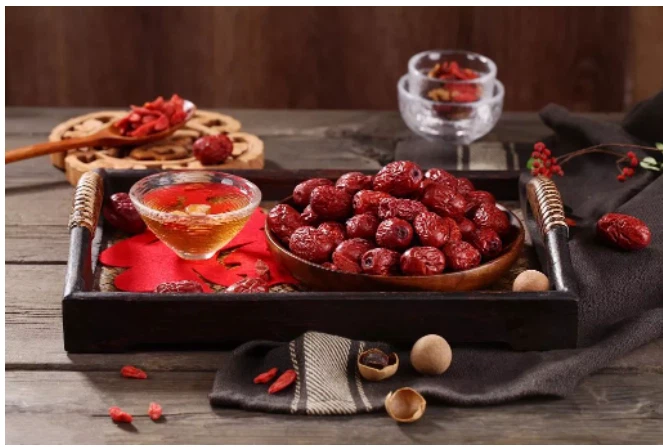
The use of jujube as medicine was first seen in "Shen Nong's Materia Medica", which said that it "restores the mind, calms the stomach, clears the nine orifices, nourishes the little qi and hundreds of medicines. Long-term use, light body, and prolonged life."
According to modern scientific determination, the vitamin C contained in fresh jujube is the crown of all fruits. Every 100g jujube contains 3.3g protein, 0.4g fat, 72.8g sugar, calcium, phosphorus, iron, carotene, niacin, vitamins B1, B2, C, P, etc. have the functions of enhancing physical fitness and delaying aging.
Note: jujube helps dampness and heat, which makes people feel full. Therefore, it should not be taken if dampness is prevalent, abdominal distension, food accumulation, insect accumulation, dental caries pain, phlegm heat cough, etc.
2. Rehmannia glutinosa
Rehmannia glutinosa is the fresh or dry tuber of Rehmannia glutinosa of Scrophulariaceae. Fresh Rehmannia is commonly called "fresh Rehmannia", the dried product is called "raw Rehmannia", and processed Rehmannia is called "Rehmannia glutinosa". Rehmannia glutinosa has the functions of clearing away heat and cooling blood, nourishing yin, and promoting body fluid, and is suitable for thirst and excessive drinking.

Rehmannia glutinosa has the function of nourishing blood, nourishing yin, replenishing essence, and marrow, and is suitable for blood deficiency, chlorosis, dizziness, palpitations, insomnia, irregular menstruation, metrorrhagia; hot flashes, night sweats, nocturnal emission, and thirst caused by deficiency of kidney yin; Symptoms such as weakness of the waist and knees, dizziness, tinnitus, and deafness.
"Shen Nong's Materia Medica" lists Rehmannia glutinosa as the top grade "long-term use, light body, not old". "Kaibao Materia Medica," says it: "replenishes the deficiency of internal injuries of the five internal organs, unblocks blood vessels, and benefits energy." "Compendium of Materia Medica" contains Rehmannia glutinosa "long-term use turns white and prolongs life". Modern Chinese medicine often uses Rehmannia combined prescriptions to treat menopausal syndrome, such as Liuwei Dihuang Pills, Baihe Dihuang Decoction, Dihuang Yinzi, etc. People with spleen and stomach deficiency and cold, loose stools should not use it, and people with excessive heat and dampness, chest tightness, and inability to eat should not use Rehmannia glutinosa alone.
3. Polygonatum
Polygonatum is the rhizome of Polygonatum Polygonatum, a perennial herb of the family Liliaceae. Polygonatum is flat in nature and sweet in taste, and has the functions of nourishing qi, nourishing the lungs, and strengthening bones and muscles. It is mainly used to treat diseases such as weak spleen and stomach, cough due to lung deficiency, rheumatic pain, wind leprosy, and diabetes.
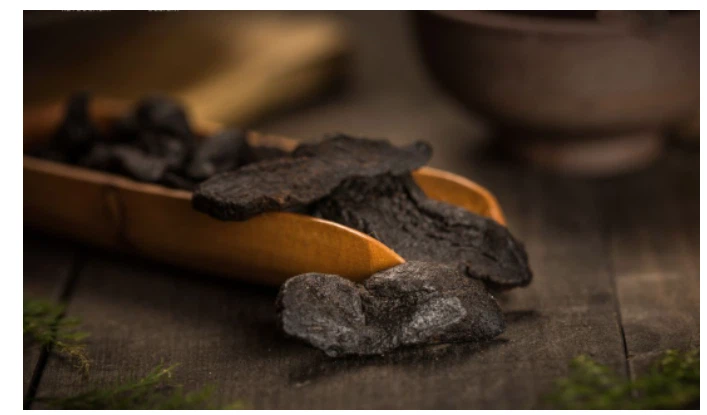
Modern pharmacological experiments have proved that Polygonatum can promote the formation of immunoglobulins, improve the immune function of the human body, and have anti-fatigue and anti-aging effects.
4. Astragalus
Astragalus, also known as Astragalus and Dai Grits, is the root of the perennial herbaceous plant Astragalus and Inner Mongolia Astragalus. Astragalus membranaceus is suitable for fatigue and internal injuries, weakness of the five internal organs, old age and physical weakness, long-term illness, and weakness, palpitation and shortness of breath, spontaneous sweating and weakness, weak spleen and stomach, skin swelling, sores and ulcers that do not regenerate muscle and close mouth, loss of appetite, qi deficiency and edema, sequelae of stroke, Diabetes, and chronic diseases, all signs of Qi deficiency and blood deficiency.

Modern studies believe that Astragalus mainly contains glycosides, polysaccharides, amino acids, and trace elements, etc., which can enhance the body's immune function, diuretic, anti-aging, protect the liver, lower blood pressure, eliminate nephritis proteinuria, enhance myocardial contractility, and promote estrogen. Hormone-like effects and a wider range of antibacterial effects. Among them, Astragaloside A has the effect of lowering blood pressure and stabilizing the red blood cell membrane.
Note: Astragalus tends to be warm, and long-term use of a single flavor can damage the Yin fluid. Therefore, those with a Yin deficiency constitution, thready pulse, and red tongue should be used together with Yin-nourishing medicine.
5. Lycium barbarum
Lycium barbarum is a small shrub that grows on the sunny slopes of mountains. Its ripe and dry fruit is used medicinally. Lycium barbarum root bark named Digupi is also a commonly used medicine.
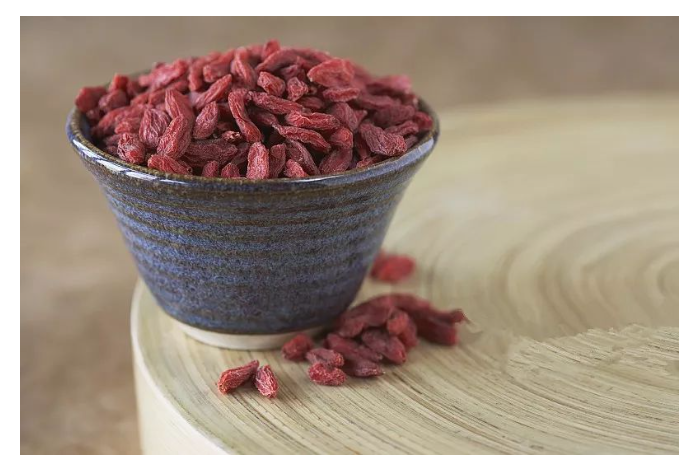
Lycium barbarum is sweet in taste and flat in nature and belongs to the liver, kidney, and lung meridians. Function nourishes the liver and kidney, improves eyesight, and moistens the lungs. It can be used for asthenia and essence deficiency, sore waist and knees, dizziness and tinnitus, internal heat and thirst, blood deficiency and chlorosis, dizziness, and other diseases.
"Shen Nong's Materia Medica" lists wolfberry as the top grade, saying that it "maintains five internal evils, quenches thirst in heat, and prevents Zhou Bi. Long-term use, strengthens muscles and bones, makes the light body, and does not age." bright. Li Shizhen's "Compendium of Materia Medica" contains: "Goji berry tastes sweet and calm. It replenishes all deficiencies in essence and energy, changes color, turns white, improves eyesight and calms the nerves, and makes people live longer."
Modern research has confirmed that wolfberry is very rich in nutrients. It not only contains wolfberry polysaccharide, protein, free amino acid, taurine, etc. but also contains a lot of mineral elements. It has various functions such as regulating immunity, lowering blood sugar, lowering blood fat, and anti-fatigue. It is a good health medicine for people with weak constitutions and poor resistance.
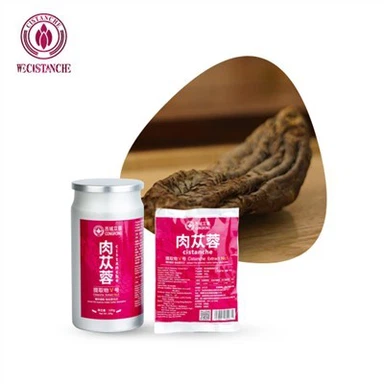
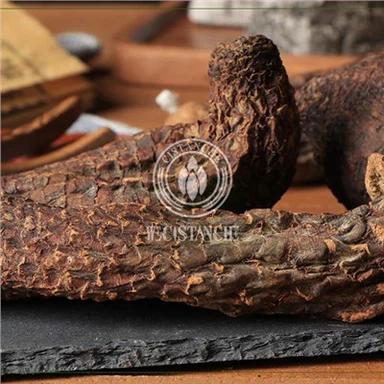
6. Cistanche
Cistanche, also known as Dayun, Sha Zhongxian, Dan Dayun, etc., belongs to the parasitic herbaceous plant of Liedanceae. The functions of Cistanche deserticola mainly include tonifying the kidney and yang, moistening the intestines, and laxatives. It can be used to treat impotence, premature ejaculation, nocturnal emission, polyuria, frequent urination, muscle, and bone flaccidity, constipation due to yin deficiency and dryness of the intestine, etc. "Compendium of Materia Medica" records: "Cistanche deserticola, the key medicine for nourishing essence and blood,... long-term use will make you fat and healthy and lighten your body, and it also has the effect of nourishing kidney, liver, and blood."

Modern scientific research shows that Cistanche deserticola mainly contains columbine, enzymes, sugar and fatty oils, trace alkaloids, and crystalline neutral substances, and is a good nourishing and strengthening medicine.
7. Shouwu
Shouwu is the dry root tuber of Polygonum multiflorum, a perennial herb of Polygonaceae. Polygonum multiflorum is divided into two types: Shengshouwu and Zhishouwu. After the roots of the plant Polygonum multiflorum are excavated, washed, and dried, they are called Shengshouwu. Mix raw Shouwu with black bean juice and steam it. Soak the whole black bean juice in raw Shouwu, take out, and dry it to make Shouwu.

Shouwu is suitable for symptoms such as menstrual essence and blood deficiency, dizziness, premature graying of beard and hair, sore waist and legs, nocturnal emission, and belt collapse. Raw Shouwu is suitable for carbuncle sores, malaria, scrofula and intestinal dryness, and constipation.
Modern medical research has confirmed that the main components of Polygonum multiflorum are anthraquinone compounds, lecithin, crude fat, carbohydrates, and various vitamins and minerals. Polygonum multiflorum extract has anti-aging effects, can prolong the life of cells, enhance the body's ability to repair the damage, increase the activity of antioxidant enzymes, and reduce the content of lipid peroxide in the blood.
8. Antler
Antler is the unossified and hairy young horn on the head of the vertebrate deer family sika deer or red deer. Antler has the functions of invigorating kidney yang, nourishing essence and blood, and strengthening bones. "Compendium of Materia Medica" contains an antler saying: "Growing essence and nourishing marrow, nourishing blood and benefiting yang, strengthening muscles and bones, and curing all deafness, deafness, dark eyes, dizziness, and weakness." dysentery".

Scientific researchers have determined various elements in velvet antler by emission spectroscopy and volumetric method, mainly including calcium, phosphorus, magnesium, sodium, potassium, iron, selenium, copper, cobalt, manganese, aluminum, barium, strontium, chromium, zinc, carbon, Hydrogen, etc. Some trace elements such as zinc, iron, selenium, copper, cobalt, etc., participate in the formation and activation of enzymes, vitamins, and hormones in the body, and play an important role in the material metabolism, growth, and reproduction of the body.
9. Ganoderma lucidum
Ganoderma lucidum is known as "immortal grass" and "auspicious grass", and is known as a treasure that can be used for both food and medicine and prolong life. Ganoderma lucidum is the general name of red lucidum and Huangzhi fungi of the genus Ganoderma lucidum of the basidiomycete Polyporaceae family. It is a saprophytic fungus that is annual or perennial, and its fruiting bodies are commonly used. Ganoderma lucidum is sweet in taste and warm in nature. It has the functions of nourishing the heart, calming the nerves, invigorating the middle, strengthening the muscles and bones, invigorating the stomach, and promoting blood circulation. It can prevent and treat various diseases and delay aging.

"Shen Nong's Materia Medica" lists Ganoderma lucidum as the top grade, and believes that it "maintains deafness, sharpens joints, protects the mind, benefits essence, strengthens muscles and bones, and good color. Long-term use, light body, not old, and prolonged life." "Compendium of Materia Medica" records that Ganoderma lucidum "benefits color after long-term eating, and will not change until old age, making people not hungry, less urine and stool, improving eyesight and improving essence".
Modern pharmacological research believes that the main component of Ganoderma lucidum is polysaccharides, which can effectively regulate the internal environment of the human body, improve human immune function, promote metabolism, purify the blood, improve microcirculation, and comprehensively improve body functions, thereby achieving the effects of enhancing physical fitness and delaying aging.
10. Ginseng
Ginseng is also known as human title, god grass, earth essence, and so on. It is the root of the Araliaceae plant ginseng. Ginseng is sweet and slightly bitter in taste, warm in nature, and belongs to the spleen and lung meridian. Ginseng can be used to treat qi deficiency, insufficiency of the spleen, deficiency of lung qi, thirst and thirst in fluid wounds, restlessness of the heart and kidney, insomnia and dreaminess, blood deficiency, impotence,, and other syndromes.

Ginseng was first recorded in "Shen Nong's Herbal Classic". "Shen Nong's Materia Medica" lists ginseng as the top grade, saying that it "mainly nourishes the five internal organs, calms the spirit, calms the soul, relieves palpitations, eliminates evil spirits, improves eyesight, makes people happy, and improves intelligence. Long-term use can lighten the body and prolong life."
"Compendium of Materia Medica", "New Revised Materia Medica", and "Compendium of Materia Medica" all contain ginseng can "lighten the body and prolong life", clearly pointing out that ginseng has the effect of tonifying deficiency and prolonging life. Although taking ginseng should not be abused and used for a long time, it should not be used for those with excess symptoms, fever, and deficiency of righteousness. There is also a saying in traditional Chinese medicine that "Don't use ginseng". Modern medicine has also proved that ginseng can promote the secretion of gonadal hormones, which can lead to precocious puberty in children.