The Art Of Going: How Cistanche Tubulosa Restores Natural Bowel Rhythm Without Harsh Laxatives
Sep 15, 2026
There is a conversation that happens in whispers, if at all. It is about the discomfort of a sluggish gut-the bloating, the straining, the feeling of incomplete elimination that lingers like a cloud over the entire day. Occasional constipation affects nearly everyone at some point, and chronic constipation plagues an estimated 14–16% of adults worldwide, with rates rising sharply after age 60. The solutions most people reach for-stimulant laxatives like senna or bisacodyl-work quickly but at a cost. They irritate the intestinal lining, force contractions, and, with repeated use, can leave the bowel dependent and less capable of functioning on its own. A fundamentally different approach-one that works with the body's own physiology rather than against it-is found in an ancient desert plant. Cistanche tubulosa, officially recognized in the Chinese pharmacopoeia for "moistening the intestines and relieving constipation," offers a gentle, restorative path to regularity. Its active ingredients echinacoside and acteoside, along with its unique polysaccharide fraction, address the root causes of constipation: dryness, inflammation, and dysbiosis.
Why the Bowel Slows Down
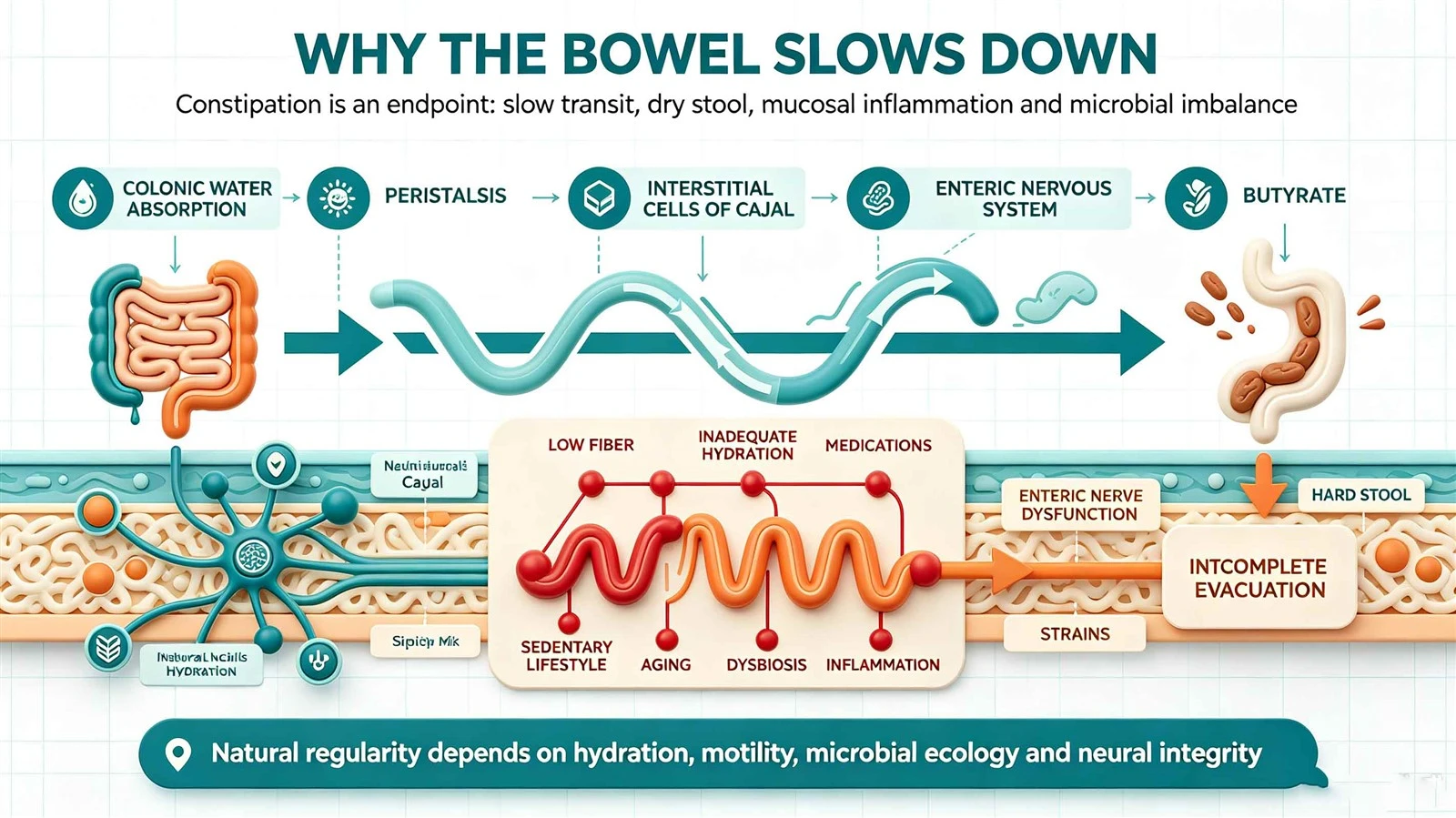
Constipation is not a single condition. It is the endpoint of multiple physiological disturbances. The colon's primary job is to absorb water and electrolytes from the waste material that enters it, transforming liquid stool into a semi-solid form for elimination. When transit through the colon is too slow, too much water is absorbed, and the stool becomes hard and difficult to pass. This slow transit can be caused by a low-fiber diet, inadequate hydration, sedentary lifestyle, aging, certain medications, or dysfunction of the enteric nervous system-the network of neurons that governs gut motility.
Inflammation and dysbiosis compound the problem. Chronic low-grade inflammation in the gut wall damages the interstitial cells of Cajal, the pacemaker cells that generate the electrical waves coordinating peristalsis. An imbalanced gut microbiome-characterized by a loss of beneficial bacteria and an overgrowth of potentially harmful species-produces fewer short-chain fatty acids, particularly butyrate, which is the primary fuel for colon cells and a key regulator of motility. The result is a gut that is not only slow but also inflamed and metabolically compromised.
An ideal intervention for constipation would therefore do four things: lubricate and hydrate the stool, calm intestinal inflammation, restore a healthy microbiome, and support the enteric nervous system that coordinates elimination. Cistanche tubulosa's unique phytochemical profile addresses all four.
How Cistanche Tubulosa Restores Regularity
1. Lubricating and Hydrating the Stool
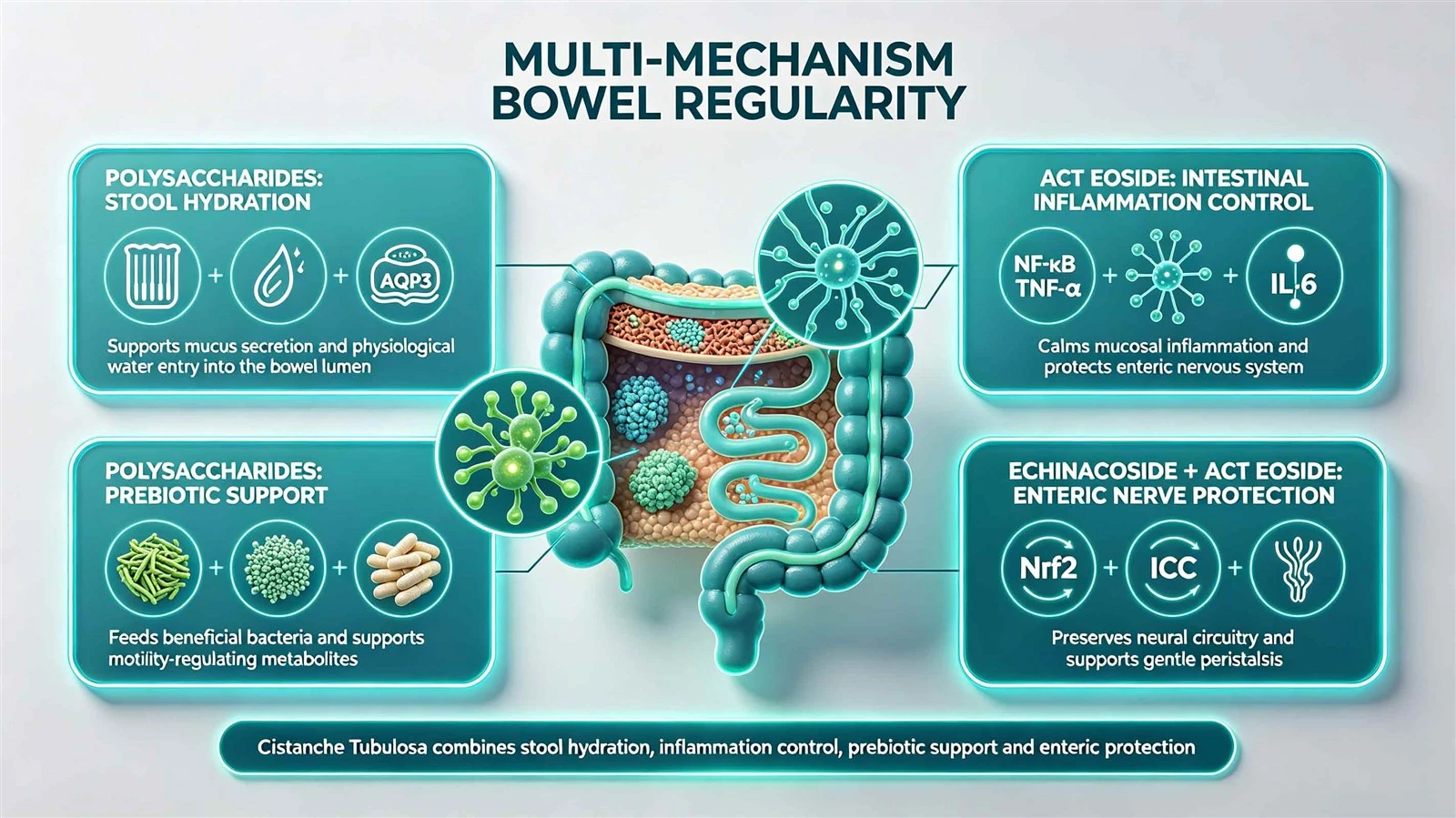
The polysaccharides in Cistanche tubulosa are the primary drivers of its intestinal moistening effect. These complex carbohydrates stimulate goblet cells in the intestinal lining to secrete mucus, which coats the stool and reduces friction during passage. Simultaneously, they upregulate the expression of aquaporin water channels in the colonic epithelium-specifically aquaporin-3-allowing more water to be drawn into the bowel lumen. This dual action of mucus and moisture transforms hard, dry stool into soft, lubricated stool that passes without straining. Unlike osmotic laxatives, which pull water into the bowel through an osmotic gradient that can cause cramping and bloating, Cistanche's effect mimics the body's own physiological process of hydration. It is gentle, predictable, and does not cause urgency or electrolyte imbalance.
2. Calming Intestinal Inflammation
Chronic intestinal inflammation is a major driver of constipation. Pro-inflammatory cytokines activate NF-κB in the gut wall, which damages enteric neurons and impairs smooth muscle function. Acteoside, through its potent NF-κB inhibition, suppresses the production of TNF-α, IL-6, and IL-1β in intestinal tissue. By calming the inflammatory environment, it helps preserve the integrity of the enteric nervous system and the interstitial cells of Cajal, maintaining the neural circuitry that drives peristalsis. This anti-inflammatory action is particularly relevant for individuals whose constipation is accompanied by bloating, discomfort, or symptoms of irritable bowel syndrome.
3. Nourishing the Gut Microbiome
The gut microbiome plays a central role in regulating bowel motility. Beneficial bacteria, particularly Bifidobacterium and Lactobacillus species, ferment dietary fibers into short-chain fatty acids that stimulate the release of serotonin from enterochromaffin cells. Serotonin activates the enteric nervous system to initiate the peristaltic reflex. Cistanche polysaccharides function as prebiotics, selectively nourishing these beneficial bacteria. By increasing the abundance of SCFA-producing species and the production of butyrate, Cistanche helps restore the microbial ecosystem that governs healthy bowel function. This prebiotic effect is a long-term investment in gut health, not a quick fix.
4. Protecting the Enteric Nervous System
The enteric nervous system contains over 500 million neurons-more than the spinal cord. These neurons coordinate peristalsis, secretion, and blood flow, and they are vulnerable to oxidative damage and inflammation. Echinacoside, through Nrf2 activation, upregulates the antioxidant enzymes that protect enteric neurons from oxidative stress. Acteoside's anti-inflammatory effects reduce the cytokine-mediated damage that accelerates enteric neuron loss with age. By preserving the neural circuitry of the gut, Cistanche supports the body's intrinsic capacity for regular, comfortable elimination.
5. Supporting Gentle Peristalsis
Cistanche's phenylethanoid glycosides have demonstrated calcium-modulating effects in smooth muscle that may gently promote peristalsis without the forceful, cramping contractions triggered by stimulant laxatives. By modulating calcium influx, they support the natural rhythm of colonic muscle contraction and relaxation, facilitating orderly movement of stool through the colon.
A comprehensive 2022 review in Frontiers in Pharmacology catalogs the prebiotic, anti-inflammatory, and gut-protective properties of Cistanche tubulosa, confirming its multi-mechanism support for digestive health and bowel regularity. (Frontiers in Pharmacology review)
The Active Ingredients for Digestive Regularity
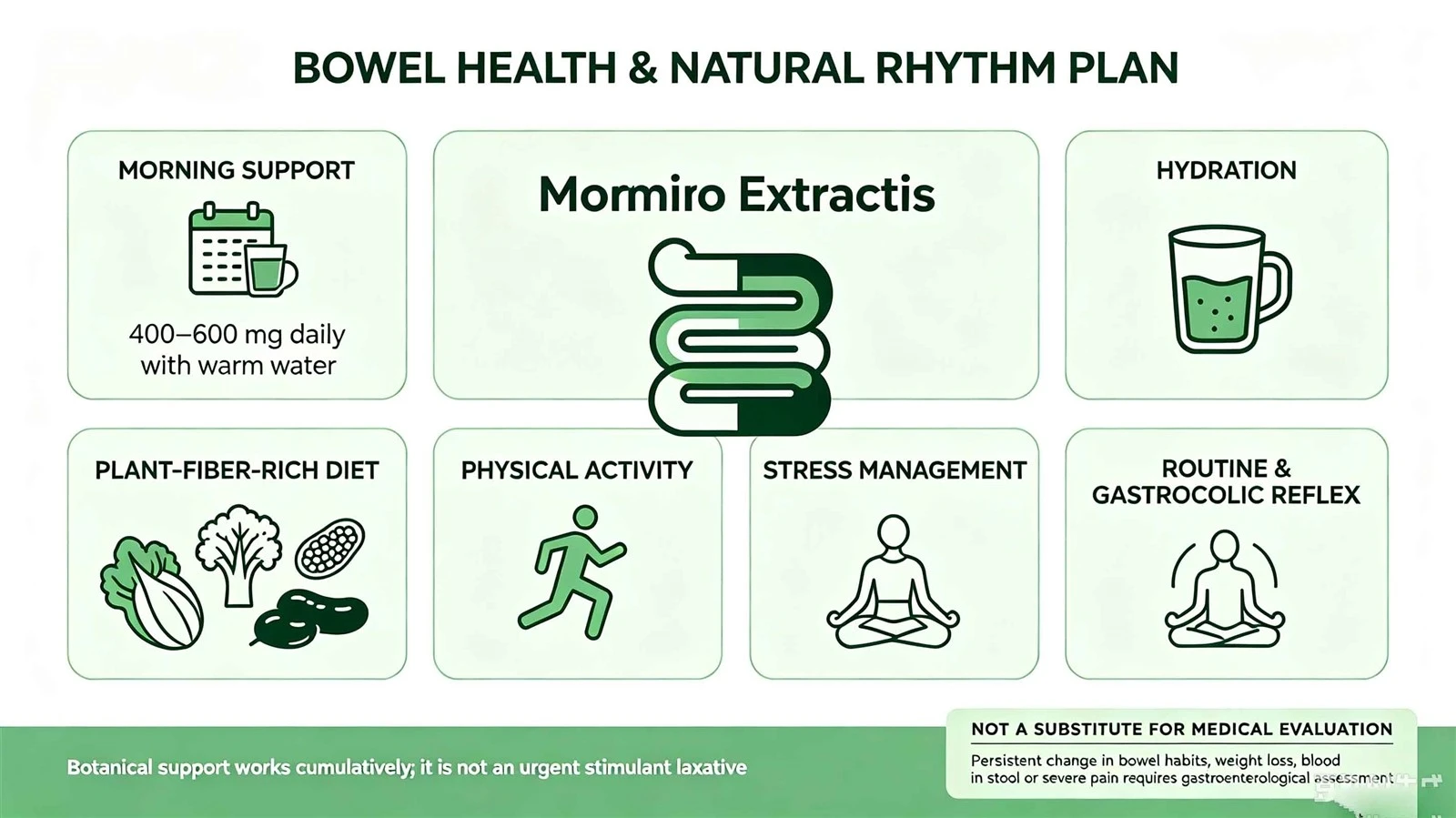
The bowel-normalizing effects are driven by two complementary fractions. The polysaccharides are the intestinal lubricants and prebiotics-they stimulate mucus and fluid secretion, hydrate the stool, and feed the beneficial bacteria that produce motility-regulating short-chain fatty acids. The phenylethanoid glycosides-echinacoside and acteoside-provide the anti-inflammatory and antioxidant protection that preserves the enteric nervous system and calms the mucosal inflammation that impairs motility. A high-quality Cistanche extract should retain both the polysaccharide and phenylethanoid glycoside fractions. The evidence-informed dose for constipation relief is 400–600 mg daily.
Integrating Cistanche for Bowel Regularity
For constipation relief, Cistanche is best taken in the morning with a full glass of warm water. This timing leverages the body's natural gastrocolic reflex-the tendency of the colon to become more active after waking and after eating. The warm water activates the polysaccharides' moistening properties and supports hydration of the stool. Cistanche is not a quick-fix laxative. It works cumulatively over days to weeks, gradually re-establishing a natural rhythm. Users typically describe a return to comfortable, complete daily elimination-not the urgent, cramping evacuation of a stimulant laxative. It pairs well with other bowel-healthy practices: adequate hydration, a diet rich in diverse plant fibers, regular physical activity, and stress management. Unlike stimulant laxatives, Cistanche is not habit-forming and does not cause electrolyte imbalances or cathartic colon.
For those seeking reliable, research-grade digestive support, we offer Cistanche tubulosa extract products with verified active ingredient content.
Safety and Medical Context
Cistanche tubulosa is well tolerated with a centuries-long safety record. However, chronic constipation can sometimes indicate underlying conditions-hypothyroidism, neurological disorders, or colonic structural abnormalities-that require medical evaluation. Any significant change in bowel habits, especially accompanied by weight loss, blood in the stool, or severe pain, warrants gastroenterological assessment. This botanical is a gentle, restorative tool for functional constipation, not a substitute for medical diagnosis or treatment.