

The Climatic Conditions For The Growth Of Cistanche Deserticola in Xinjiang
Jun 11, 2024
The climate of the Haloxylon desert in the Junggar Basin is different from that in Inner Mongolia. The climate in Xinjiang is characterized by high intensity and variability, with drastic temperature changes ranging from year to year, day to day, and interannual. The climate in the Suosuo Desert area of the Gar Basin is low in the north and high in the south, low in the mountains and high in the plains. The surrounding areas of the plains are also lower than the center, as shown in Figure 2-1. The annual average temperature in plain areas is positive, with 5-9 ℃ in northern Xinjiang and 10-11 ℃ in southern Xinjiang.

Cistanche deserticola Y.C.Ma
The average temperature in the hottest month (July) is 20-25 ℃ in northern Xinjiang and 25-30 ℃ in southern Xinjiang. Winter is extremely cold, with an average temperature of -15~-20 ℃ in northern Xinjiang and -7~-15 ℃ in southern Xinjiang in January. The annual sunshine hours range from 2600 to 3600 hours, with an average sunshine percentage of 60% to 80% and a maximum of 70% to 90%. In southern Xinjiang, the accumulated temperature of ≥ 10 ℃ reaches 3500 to 4500 ℃. The negative accumulated temperature in southern Xinjiang ranges from -400 ℃ to -1000 ℃, for only 80-100 days. The precipitation also varies significantly among different regions, with a distribution trend of more in northern Xinjiang and less in southern Xinjiang, more in mountainous areas, and less in basins. Due to the obstruction of the western Junggar Mountains, the northern foothills of the Tianshan Mountains receive very little precipitation, less than 200 millimeters. In Fukang, from Jimusar to Qitai and its eastern areas, there is less precipitation, less than 200 millimeters. The central part of the Junggar Basin is the least rainy area in northern Xinjiang, with an annual precipitation of only about 100 mm, as shown in Figure 2-2 and Figure 2-3.

Cistanche deserticola Y.C.Ma
The vegetation climate characteristics of the Suoshuo Desert in Junggar are similar to those of Inner Mongolia, where summer rain is concentrated, spring and autumn rain is less, and winter rain is present. A lack of rain in spring and autumn is not suitable for the growth and cultivation of short-lived plants. They can only develop shrubs, small shrubs, and plants with a one-year growth period that are nutritious in summer. Under the climatic conditions of this area, there are small semi-shrub deserts that grow shrubs and annual plants with long nutrient periods. The shrubs in the growth areas of Inner Mongolia's salt-living Cistanche deserts include the Sihemu Desert, the Red Sand Desert, the Bawang Desert, the Pearl Chai Desert, the Suo Suo Desert, the Sand Holly Desert, and the White Thorny Desert.

Cistanche deserticola Y.C.Ma
In the Suo Suo Desert of Xinjiang, desert deserticola parasitizes. The plant composition of the Suo Suo Desert is mainly composed of salt-secreting small shrubs such as Pipa Chai (red sand), Salt Claw Claw, Leafless False Equisetum, Salt Ear Wood, Camel Lilium, Artemisia plants, Goji berries, and Salsola.

Cistanche deserticola Y.C.Ma
The climate of Tarim Basin belongs to the typical Mongolian type, which has two prominent characteristics: first, the spatial distribution of water and heat is unbalanced; The second reason is that precipitation in the same region is mostly concentrated in the hottest season, causing water and heat to focus together in time. The trend of heat distribution is that it gradually increases from northeast to southwest. At the same time, the water volume gradually decreases from northeast to southwest, resulting in areas with abundant heat having less water. In contrast, areas with low heat have more rainfall, forming completely different water and heat combination conditions. As a result, the growth and development of plants in different regions are often limited by heat or water factors, which cannot fully exert their effective effects. As the annual precipitation in southern Xinjiang is extremely low and concentrated in summer, the plants of Cistanche deserticola in the distribution area of southern Xinjiang are mostly dominated by the tamarisk community.
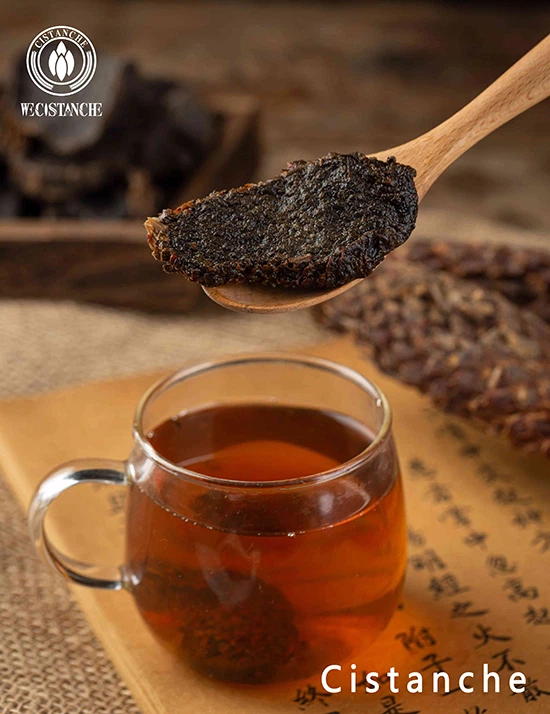
Cistanche deserticola tea
Click here to view Cistanche deserticola tea products
【Ask for more】 Email:cindy.xue@wecistanche.com / Whats App: 0086 18599088692 / Wechat: 18599088692
You Might Also Like
-

Seaweed Extract Powder
-

Cistanche Tubulosa Supplement Improve Memery
-
Enhnche Memory Funciton Cistanche Tubulosa Supplement
-

Cistanche Dietary Supplement Cognitive Function Improveme...
-
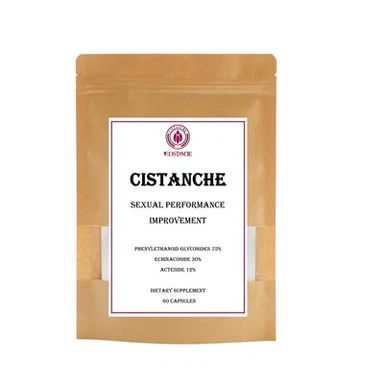
Cistanche Dietary Supplement Sexual Performance Improveme...
-

Cistanche Dietary Supplement Anti-Oxidation Support Pheny...