The Effective Treatment For Vascular Dementia: Cistanche Total Glycoside
Mar 12, 2022
Contact: joanna.jia@wecistanche.com / WhatsApp: 008618081934791
Vascular Dementia (VD) is an acquired intellectual impairment syndrome with cognitive impairment mainly caused by various cerebrovascular disease factors. It is one of the main types of senile dementia. VD is prominently manifested in the decline of temporal and spatial ability, memory, calculation ability, etc., which gradually affects the daily life of patients. With the aging trend of the social population and the decline in post-stroke mortality, the incidence of Vascular Dementia has increased significantly. Therefore, it has practical significance for the clinical and experimental research of Vascular Dementia.

Cistanche can improve immunity and prevent cardiovascular and cerebrovascular diseases
Studies have found that ischemic stroke, hemorrhagic stroke, cerebral ischemia, and hypoxia can all lead to vascular dementia (VD). The elderly, smoking, family history of dementia, history of recurrent stroke, and hypotension are susceptible to vascular dementia. Among the many cerebrovascular diseases that cause VD, ischemic cerebrovascular disease is the most common. After cerebral ischemia-reperfusion directly or indirectly damages neurons in the hippocampus and other limbic brain areas, the body will initiate a variety of mechanisms to regulate learning, The functional activity of memory.
Epidemiological survey results show that the prevalence rate of vascular dementia in people over 65 years old in my country is 1.1%, which accounts for about 30% of the total prevalence of dementia[. Therefore, it is necessary to explore the pathogenesis of vascular dementia and different drug treatment methods. The efficacy of vascular dementia. Cistanche, as a good tonic Chinese medicinal material that protects cardiovascular and cerebrovascular damage, is widely used in the treatment of memory loss and anti-senile dementia. Studies from traditional medicine to modern pharmacology have confirmed that Cistanche total glycoside, the main component of Cistanche, can play a very good neuroprotective effect.
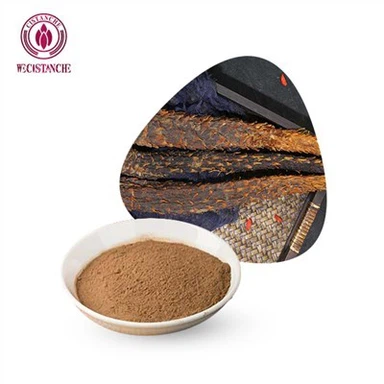
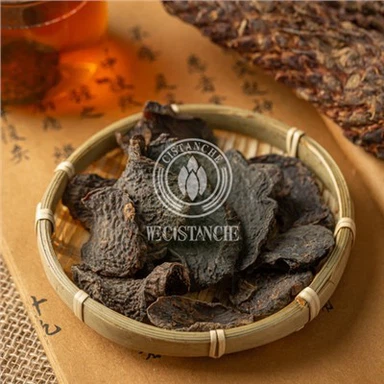
Cistanche is a parasitic plant that lives in the desert. Its main active ingredients include phenylethanoid glycosides, polysaccharides, and flavonoids. Studies have confirmed that cistanche is a strong antioxidant, which can effectively remove free radicals in the body, ultimately exert neuroprotective effects and promote the recovery of nerve function. A large number of clinical studies have confirmed that the drug has a variety of neurological diseases.

Animal experiments show that cistanche total glycosides can improve the learning ability of Alzheimer's disease model mice. Analysis of its mechanism of action includes increasing the activity of free radical scavenging enzymes, reducing lipid peroxidation, and reducing calcium content in brain tissue. Quinolinic acid induces the amount of brain cell apoptosis and its inhibitory effect; A related study of β-amyloid peptide-induced Alzheimer's disease mouse model found that Cistanche total glycoside can improve the learning and memory ability of mice in the model group and effectively improve blood vessels The cognitive function and ultrastructure of patients with sexual dementia suggest that cistanche can delay brain aging and degeneration. The conclusions are consistent.
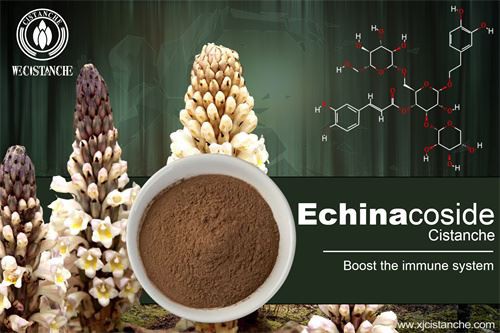
The mechanism of Cistanche total glycoside effectively treating the VD that was found by researchers is that the cistanche total glycosides have the effect of reducing serum p-tau protein levels. Tau protein is a phosphorylated protein. Under pathological conditions, abnormal phosphorylation and loss of the function of maintaining microtubule transport. It is deposited in cells in the form of phosphorylation (p-tau), forming neurofibrillary tangles, which ultimately leads to impaired cognitive function. Studies have shown that abnormally elevated levels of p-tau indicate the formation of neurofibrillary tangles in the brain parenchyma. A number of clinical studies have confirmed that the concentration of p-tau protein in the cerebrospinal fluid of VD patients is significantly higher than that of healthy people; other studies have shown that the reduction of p-tau protein level can not only improve the cognitive function of VD patients but also reduce epilepsy patients Symptoms.