The Magical Plant in The Desert, Cistanche Deserticola
Nov 08, 2024
1, Overview of Cistanche deserticola
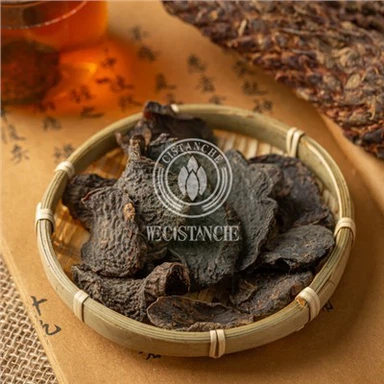
As a precious traditional Chinese medicine, Cistanche deserticola is known as the "desert ginseng". It has extremely high medicinal value and has a long historical record in China.
Cistanche deserticola has a sweet and salty taste, and a warm nature, and belongs to the kidney and colon meridians. Its main functions include tonifying kidney yang, nourishing essence and blood, moistening intestines, and promoting bowel movements. It has good therapeutic effects on diseases such as impotence, premature ejaculation, infertility, lower back and knee pain, and weakness in both lower limbs caused by kidney yang deficiency and insufficient essence and blood; It can also be used to treat Yang deficiency and dry stool. Modern pharmacological research has also shown that Cistanche deserticola not only has the effects of tonifying the kidney and strengthening yang, moistening the intestines, and promoting bowel movements, but also has anti-fatigue, anti-aging, enhancing the body's immunity, and improving memory.

Harvest of Cistanche deserticola
Cistanche deserticola was first recorded in the "Shennong Bencao Jing" and is classified as a top grade. In ancient times, Cistanche deserticola was highly praised for its excellent efficacy. The "Compendium of Materia Medica" records: "This is a tonic that is warm but not hot, nourishing but not steep, warm but not dry, smooth but not leaking, hence it is called calm." Cistanche deserticola comes from the dry and scaly fleshy stems of Cistanche deserticola or Cistanche tubulosa in the family Ledaceae, mainly produced in Inner Mongolia, Xinjiang, Gansu, and other places.
Cistanche deserticola has a long history of application in China. It has the characteristics of mild sexual taste, moderate strength, and not too strong in enhancing physical strength and anti-fatigue. Due to its nourishing effects comparable to ginseng, and without the "heat up" and "dryness" of ginseng, it is known as "desert ginseng". However, as a medication, people with weak gastrointestinal function and loose stools, as well as those with excessive internal heat, should still use it with caution to avoid worsening the condition.
As a traditional precious traditional Chinese medicine, Cistanche not only has rich medicinal value but also carries a long history of traditional Chinese medicine culture in China. Its value and efficacy have also been increasingly recognized and studied in modern medicine.

benefits of cistanche tubulosa
2, Growing environment
(1) Natural conditions
Cistanche deserticola mainly grows in extremely unique natural environments. The climate here is extremely dry, and the annual precipitation is pitifully low, usually less than 250 millimeters. The strong sunlight makes the earth feel as if it is constantly being roasted, with drastic temperature changes. During the day, it may be unbearably hot, but at night, it can be extremely cold. The wind is strong and the sand is abundant, often sweeping through the sand and dust, creating a unique Gobi desert landscape. Poor soil development, mainly gray-brown desert soil and brown desert soil, neutral or slightly alkaline, and lacking organic matter. However, even in such harsh environments, Cistanche deserticola tenaciously grows. It adapts to high salt soil environments and roots in medium fine sandy soils with high salt content. This special growth environment endows Cistanche deserticola with unique medicinal value and tenacious vitality.
(2) Host demand
Cistanche deserticola is a parasitic plant with specific requirements for its host. Its main hosts are plants such as Haloxylon ammodendron and Salix matsudana. These hosts usually grow in semi-fixed or fixed sandy or desert sandy areas with high groundwater levels and mild salinization. Cistanche deserticola often parasitizes the root system of its host at a depth of 30-100 centimeters and has low requirements for soil and water. The parasitic mode of Cistanche deserticola is unique, as it obtains water and nutrients from the host's root system to maintain its growth and development. For example, in the desert of Qiemo County, Xinjiang, Cistanche deserticola grows on the Haloxylon ammodendron tree and relies on its highly developed root system to deeply absorb water underground. When the desert is short of water, Cistanche deserticola also provides water to Haloxylon ammodendron in reverse, forming a special symbiotic relationship between the two. When the seeds of Cistanche deserticola come into contact with the roots of Haloxylon ammodendron, they will combine to form parasitic buds, grow block-shaped suction cups, and then grow Cistanche deserticola plants, completing the parasitic process.

Cistanche deserticola florescence
3, Growth cycle
The growth cycle of Cistanche deserticola is generally around three years. In these three years, it has gone through five unique growth stages.
(1) Parasitic stage
The seeds of Cistanche deserticola are very small, usually around 0.5-3 millimeters in diameter. Seeds will hibernate in the soil for 2-3 years and only germinate when the environment is suitable. Once germinated, the apical part of the embryonic root-like structure of Cistanche deserticola will swell and form hair-like protrusion cells, known as primary suckers. In the presence of young roots in the host (such as the shuttle), the primary suckers quickly adhere to the host's young roots and develop secondary suckers that are connected to the host's vascular tissue. Through the secondary suckers, differentiation and development with the plant body are completed, and parasitic life begins.
(2) Growth stage
After successful parasitism, Cistanche deserticola begins to enter the growth stage. In general, Cistanche deserticola plants grow underground for the first and second year, gradually absorbing nutrients and water from the host root system to continuously strengthen themselves. At this stage, the growth of Cistanche deserticola is relatively slow due to its harsh environment, with mainly gray-brown desert soil and brown desert soil, which are neutral or slightly alkaline and lack organic matter. But with its tenacious vitality, Cistanche deserticola adapted to such an environment.
(3) Flowering stage
After two years of underground growth, in the third year, if buried relatively shallowly, Cistanche deserticola can grow out of the ground. The flowering period is usually from May to June. The inflorescence of Cistanche deserticola is spike-shaped, with a length of up to 15-50 centimeters and a diameter of 4-7 centimeters. The corolla is cylindrical and bell-shaped, with varying colors, appearing light purple or pale yellow-white, and the edges are usually slightly curled outward. At this stage, Cistanche deserticola requires suitable temperature and soil temperature. Generally, the suitable temperature for inflorescence growth is 20-30 degrees Celsius, and the soil temperature is 15-20 degrees Celsius.

superman herbs cistanche
(4) Solid stage
At the end of May to early June, Cistanche deserticola begins to enter the fruiting stage, and the seeds gradually mature. Active seeds are produced 40 days after pollination, but they are not fully matured. The seeds are nearly oval or elliptical in shape, about 0.6-1 millimeters long, with a mesh-like appearance and a glossy appearance.
(5) Regeneration stage
After the seeds fall, the plants will naturally die, but the seeds of Cistanche deserticola will re-enter the cycle of parasitism, growth, flowering, and fruiting in a suitable environment, achieving regeneration.
For example, in Alxa League, Inner Mongolia, it is one of the main production areas of Cistanche deserticola. Cistanche deserticola follows its unique growth cycle here, bringing unique ecological and medicinal value to this desert region. Meanwhile, in Qiemo County, Xinjiang, Cistanche deserticola grows on the Haloxylon ammodendron tree, demonstrating its tenacious vitality and unique growth process.
4, Planting techniques
(1) Site selection requirements
Cistanche deserticola is a desert plant that should be planted in desert hills with abundant sunlight, low rainfall, good drainage, and large temperature differences between day and night. Suitable hosts include Haloxylon ammodendron, Salix chinensis, and Eucommia ulmoides. When selecting land, it is better to choose soil that is neutral or slightly alkaline, with a salt content of 2-3 grams/kilogram. Cistanche deserticola is not suitable for growing on gray-brown desert soil, brown desert soil, sticky, compacted, dry, and hard soil. Sand or semi-flowing sand desert areas with high groundwater levels, thick surface sand cover, and good soil irrigation conditions should be selected. Such environmental conditions are conducive to the growth and parasitism of Cistanche deserticola, providing sufficient sunlight, suitable water, and good drainage conditions. At the same time, host plants can also grow well in such an environment, providing nutrients and support for Cistanche deserticola.
(2) Vaccination method
Combined with afforestation inoculation: When planting Cistanche deserticola, place the seed paper horizontally at one end of the afforestation pit, with the absorbent paper facing upwards, then backfill with an appropriate amount of soil, plant the host on the other end of the afforestation pit, and compact the backfill with soil. This method is suitable for large-scale artificial afforestation inoculation and can complete the inoculation of Cistanche deserticola while afforestation, improving planting efficiency.
Inoculate on the original host: Dig a 40cm long, 30cm wide, and 40-80cm deep pit in the root-dense area outside the wild host, place seed paper, raise the suction surface upwards, and backfill soil to about 10cm along the edge of the pit to facilitate the storage of snow or rainwater. This method fully utilizes the root resources of wild hosts and improves the success rate of inoculation of Cistanche deserticola.
Artificial host inoculation: Artificially cultivated Haloxylon ammodendron and Salix matsudana have a plant spacing of 1.5m, a row spacing of 3m, and a density of 140 plants/667m ² or more. Ditches can be made on both sides of the plant as seedbeds, and after inoculation, the seedbeds can be kept moist to induce the host to extend onto the seedbeds. Generally, 1-2 pits are inoculated per plant, and 10-20 seeds of Cistanche deserticola are inoculated per pit. This method is suitable for small-scale artificial cultivation, with relatively complex operations, but it can be finely managed and improve the quality of Cistanche deserticola.
(3) Cultivation management
Management of artificial afforestation area: During the initial stage of host afforestation, appropriate watering can be applied, not too much, to ensure the normal growth of the host. From now on, irrigate 1-2 times a year according to the appropriate amount of rainfall, and use stable manure as the main fertilizer. Chemical fertilizers are prohibited to ensure the wild quality of Cistanche deserticola. Strengthening water management can ensure that host plants have sufficient water supply during the early stages of growth, while the use of manure can provide abundant nutrients and avoid adverse effects of chemical fertilizers on the medicinal properties of Cistanche deserticola.
Wild forest management: In desert areas with strong winds, the host roots are often exposed after being blown by the wind. It is important to pay attention to soil cultivation or surrounding the host roots with tree branches to prevent wind damage. The seedbed should be kept moist, and other plants should be manually removed to avoid competition for nutrients and water. When Cistanche deserticola blooms, artificial pollination should be carried out to improve the fruiting rate. Through these measures, the growth quality and reproductive ability of Cistanche deserticola in the wild environment can be improved.

cistanche supplement near me
Click here to view Cistanche for Kidney disease products
【Ask for more】 Email:cindy.xue@wecistanche.com / Whats App: 0086 18599088692 / Wechat: 18599088692
5, Harvesting and Processing
(1) Harvesting time
Cistanche deserticola can be harvested in both spring and autumn, with April and May being the best time to harvest. In early spring, Cistanche deserticola absorbs melted ice and snow water and grows rapidly, so the quality of Cistanche deserticola harvested during this period is better. In addition, Cistanche deserticola harvested between March and May is also considered a high-quality medicinal herb. When harvesting, tall and sturdy ones should be selected first, while young and weak ones should be kept until the frozen soil in autumn or harvested the following year.
(2) Harvesting method
If there are large cracks on the ground near the host, it indicates the presence of Cistanche deserticola. At the end of spring, insert a small iron rod with a pointed tip into the raised area of the ground. If you notice a crisp sound or wet marks on the iron rod, you can dig it up. At this time, the freshly excavated but not yet flowering Cistanche deserticola is a superior medicinal herb.
(3) Processing method
Drying method: Spread the Cistanche deserticola on the sandy ground during the day collect it in piles and cover it up at night to prevent it from freezing due to the large temperature difference between day and night. After drying, the color is good and the quality is high.
Salting method: larger ones are soaked in salt lakes for 1-3 years; Alternatively, dig a 50cm x 50cm x 120cm pit on the ground and place it in a waterproof plastic bag of the same size. When the temperature drops to 0 ℃, put the Cistanche deserticola into the bag and marinate it in a 40% saline solution made from unprocessed local soil salt. In March of the following year, take it out and dry it to obtain Xiandayun.
Cellar storage method: Dig a pit below the critical line of the frozen soil layer, bury fresh Cistanche deserticola in the soil when the weather is cold, and take it out and dry it the next year.
The harvesting and processing of Cistanche deserticola is an important link in its transformation from a desert treasure to a precious medicinal herb. The correct harvesting time and method, as well as reasonable processing methods, can ensure the quality and medicinal value of Cistanche deserticola. Whether it is air drying, salting, or cellaring, careful operation is required to ensure that Cistanche deserticola can be preserved for a long time and exert its maximum efficacy.