The Male Menopause Is Real: How Cistanche Tubulosa Supports Testosterone Health After 40
Sep 08, 2026
There is a quiet crisis unfolding in men's health that few talk about openly. It begins subtly-the energy that once felt boundless starts to wane, the libido that once fired spontaneously now needs prompting, the waist that once stayed trim begins to thicken, and the mood that once held steady becomes irritable and flat. These are the symptoms of late-onset hypogonadism, often colloquially called the "male menopause" or "andropause." Unlike female menopause, which is a defined event marked by the cessation of menstruation, male hormonal decline is gradual and insidious-a slow erosion of testosterone that begins around age 35 and accelerates with each passing decade. By age 45, a significant proportion of men have testosterone levels in the clinically low range. Cistanche tubulosa, through its active ingredients echinacoside and acteoside, is emerging as a comprehensive botanical support for this transition-not by replacing testosterone with synthetic hormones, but by supporting the body's own production machinery and addressing the metabolic and stress factors that accelerate hormonal decline.
The Biology of Late-Onset Hypogonadism
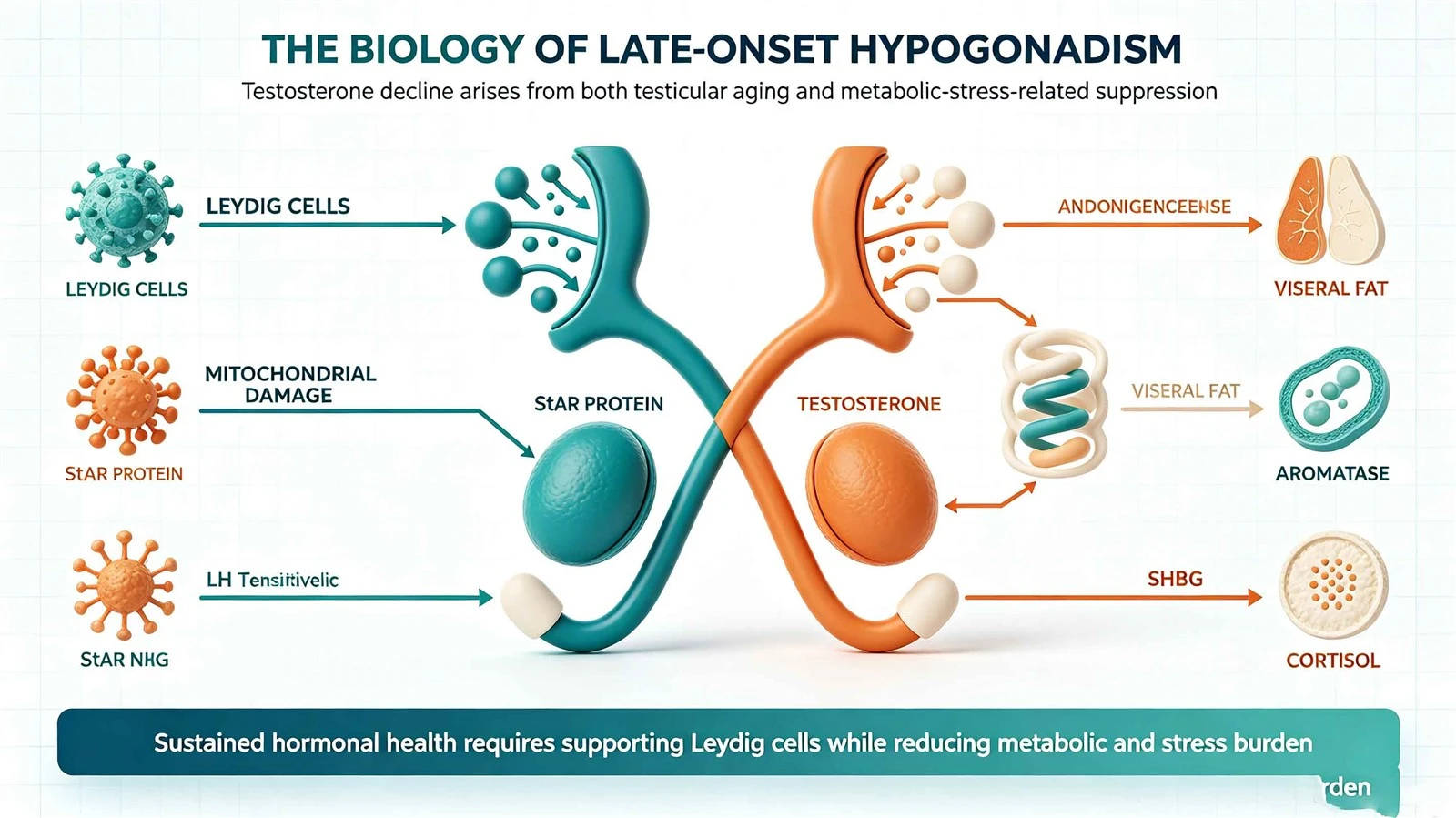
Testosterone decline with age is driven by both testicular and extra-testicular factors. The testicular component involves the Leydig cells-the specialized cells in the testes that produce testosterone. With age, these cells decline in both number and functional capacity. Their mitochondria accumulate oxidative damage, impairing the energy production needed for steroidogenesis. Their responsiveness to luteinizing hormone diminishes, requiring higher LH levels to achieve the same testosterone output. And the StAR protein-the gatekeeper that transports cholesterol into mitochondria for testosterone synthesis-becomes less active.
The extra-testicular component involves the broader metabolic environment. Visceral fat expands with age and expresses increasing amounts of aromatase, the enzyme that converts testosterone to estradiol. More aromatase means more testosterone is diverted into estrogen, creating a double insult: falling testosterone and rising estrogen. Sex hormone-binding globulin rises with age, further reducing the free, biologically active fraction of testosterone. And chronic stress elevates cortisol, which directly suppresses testosterone production at multiple levels of the HPG axis.
The symptoms of late-onset hypogonadism extend far beyond libido. Low testosterone is associated with sarcopenia (muscle loss), osteopenia (bone thinning), abdominal obesity, insulin resistance, depression, cognitive decline, and increased cardiovascular risk. This is why testosterone is considered a marker of overall male health: its decline is both a consequence and a driver of the aging process.
An ideal natural support for this condition would address the testicular component-supporting Leydig cell function and StAR activity-while also addressing the extra-testicular factors: reducing aromatase burden by improving metabolic health, supporting free testosterone by modulating SHBG, and reducing stress-induced suppression through adaptogenic effects. Cistanche tubulosa is demonstrating activity across all these domains.
How Cistanche Tubulosa Supports Testosterone Health
1. Upregulating StAR to Enhance Leydig Cell Testosterone Production
Acteoside has been shown to upregulate the expression of steroidogenic acute regulatory protein in Leydig cells. StAR is the rate-limiting factor in testosterone synthesis: it transports cholesterol from the outer mitochondrial membrane to the inner membrane, where the first steroidogenic enzyme resides. Without adequate StAR, the entire steroidogenic cascade stalls. By increasing StAR expression, acteoside enhances the delivery of substrate for testosterone synthesis, supporting the cell's own capacity to produce the hormone within its physiological range.
In animal models of age-related testosterone decline, Cistanche extract treatment increased serum testosterone levels, preserved Leydig cell morphology, and maintained higher StAR expression compared to untreated controls. The treated Leydig cells appeared healthier-larger, with more abundant mitochondria and lipid droplets-indicating preserved steroidogenic capacity.
2. Protecting Leydig Cells from Oxidative Damage
Leydig cells are vulnerable to oxidative stress. Their high mitochondrial density makes them both major producers and major targets of reactive oxygen species. With age, antioxidant defenses decline, ROS accumulate, and mitochondrial damage impairs ATP production and StAR function. Echinacoside, through Nrf2 activation, upregulates the antioxidant enzymes-superoxide dismutase, glutathione peroxidase, heme oxygenase-1, and catalase-that protect Leydig cells from oxidative damage. This preservation of mitochondrial integrity is essential for maintaining the energy-intensive process of steroidogenesis. By shielding the testosterone-producing cells from the oxidative ravages of aging, echinacoside helps preserve the testicular component of testosterone production.
3. Activating AMPK to Improve Metabolic Health and Reduce Aromatase Burden
Acteoside is a potent AMPK activator, and this activation has profound implications for testosterone health. AMPK activation improves insulin sensitivity, promotes fatty acid oxidation, and reduces visceral adiposity. Less visceral fat means less aromatase expression, which means less testosterone diverted into estrogen. AMPK activation also reduces the chronic low-grade inflammation associated with visceral obesity, which itself suppresses testosterone production. By improving metabolic health, acteoside addresses one of the most important extra-testicular drivers of testosterone decline: the aromatase burden of excess abdominal fat.
4. Modulating SHBG to Increase Free Testosterone
Sex hormone-binding globulin is the protein that binds testosterone in the bloodstream and renders it inactive. SHBG levels rise with age, liver dysfunction, and chronic inflammation. Acteoside's anti-inflammatory effects may help modulate SHBG production in the liver, potentially increasing the free, bioavailable testosterone fraction. This is important because it is free testosterone-not total testosterone-that exerts biological effects on muscle, bone, brain, and libido. A man with normal total testosterone but high SHBG can still experience all the symptoms of hypogonadism. By supporting healthy SHBG levels, Cistanche helps ensure that the testosterone the body does produce is available to tissues.
5. Regulating the HPA Axis to Remove the Stress Brake
Chronic stress is a potent suppressor of testosterone. Cortisol directly inhibits GnRH release from the hypothalamus, LH release from the pituitary, and StAR expression in Leydig cells. Cistanche's adaptogenic properties help regulate the HPA axis, reducing excessive cortisol output. Acteoside's GABA-A receptor modulating activity provides additional anxiolytic support, reducing the psychological stress that drives cortisol secretion. By removing the stress-induced suppression of the HPG axis, Cistanche allows testosterone production to reach its natural potential. This mechanism is often overlooked but is among the most clinically significant-stress is epidemic in modern life, and its anti-androgenic effects are profound.
6. Downstream Benefits: Preserving Muscle, Bone, and Brain
The restoration of healthy testosterone levels has cascading benefits. Testosterone supports muscle protein synthesis, helping to prevent the sarcopenia that robs men of strength and independence. It stimulates osteoblast activity, maintaining bone density and reducing fracture risk. It supports cognitive function through androgen receptors in the hippocampus and prefrontal cortex. And it supports mood stability, reducing the irritability and depression that often accompany the "male menopause." By supporting the hormonal foundation, Cistanche helps men maintain the physical and mental vitality that define quality of life after 40.
A comprehensive 2022 review in Frontiers in Pharmacology catalogs the hormone-supporting, metabolic, antioxidant, and adaptogenic properties of Cistanche tubulosa, confirming the multi-pathway basis for its application in male hormonal health. (Frontiers in Pharmacology review on Cistanche tubulosa)
The Active Ingredients for Hormonal Support
The testosterone-supporting effects are driven by echinacoside and acteoside. Acteoside is the primary StAR upregulator, AMPK activator, and NF-κB inhibitor. Echinacoside is the primary Nrf2 activator and Leydig cell protector. Together, they address both the testicular and extra-testicular components of age-related testosterone decline. A standardized extract containing 20–40% total phenylethanoid glycosides is essential. The evidence-informed dose for hormonal support is 400–600 mg daily, taken with a meal, ideally in the morning when testosterone levels naturally peak.
Integrating Cistanche for Male Hormonal Health
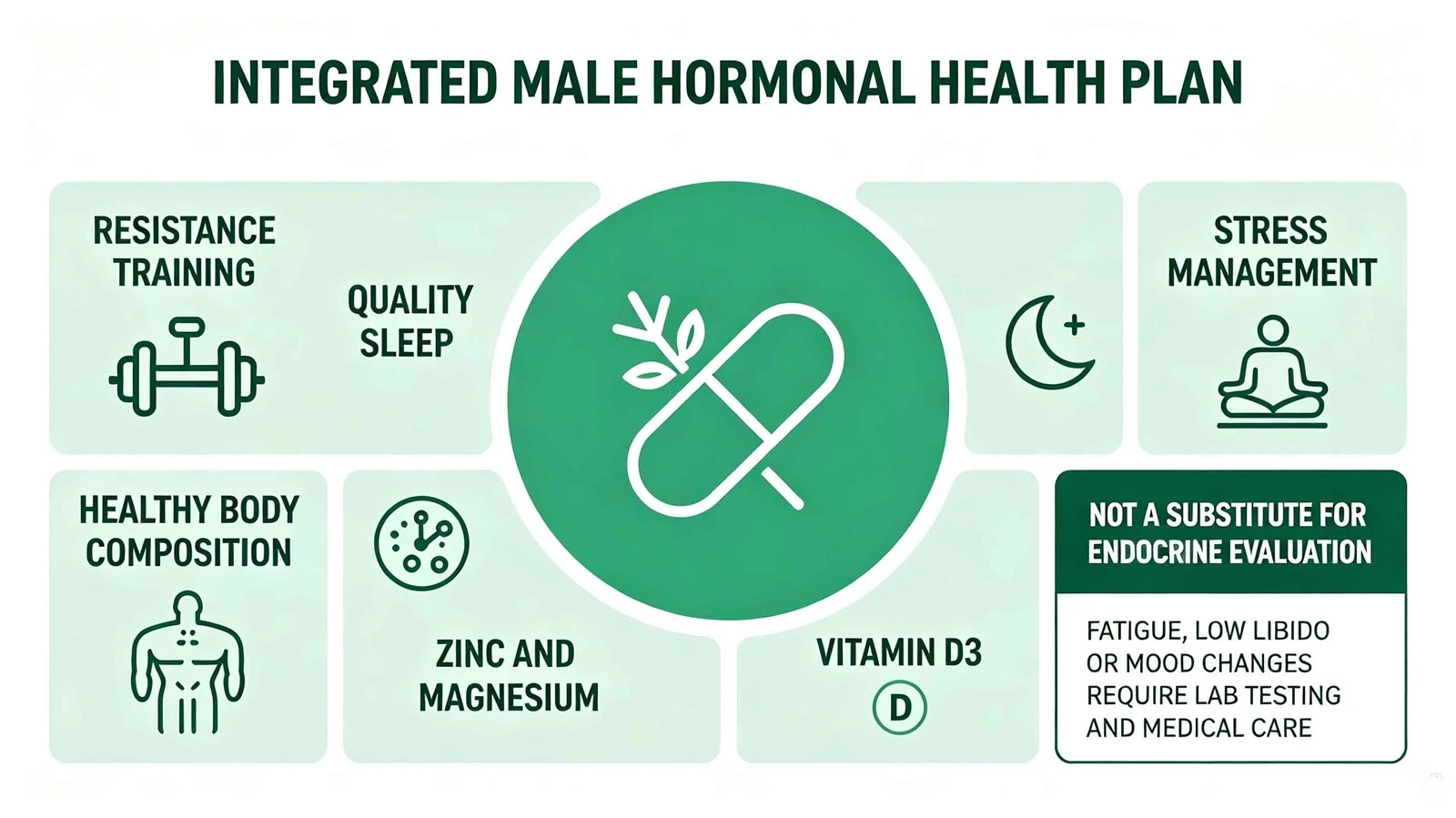
For men over 40 experiencing symptoms of late-onset hypogonadism, Cistanche offers a natural, non-pharmaceutical approach to supporting testosterone health. It should be taken consistently-daily, with a meal-as a long-term support. It pairs well with lifestyle interventions that support the same pathways: resistance training is the most powerful natural stimulator of testosterone production; adequate sleep is essential, as the majority of testosterone is produced during deep sleep; stress management reduces the cortisol that suppresses testosterone; and maintenance of a healthy body weight reduces the aromatase burden. Zinc and magnesium are essential cofactors for testosterone synthesis and should be adequate in the diet or supplemented. Vitamin D3 deficiency is associated with low testosterone and should be corrected.
Unlike testosterone replacement therapy, Cistanche does not suppress the body's own production, does not cause testicular atrophy, and does not require ongoing monitoring for polycythemia or prostate effects. It is a gentler approach that works with the body's own physiology.
For those seeking reliable, research-grade hormonal support, explore our Cistanche tubulosa extract product line - every batch is standardized and third-party tested to ensure consistent potency of echinacoside and acteoside, the active ingredients behind the research.
Safety and Medical Context
Cistanche tubulosa is well tolerated with a centuries-long safety record. However, symptoms of hypogonadism can sometimes indicate serious underlying conditions-pituitary tumors, testicular disorders, or other endocrine disease-that require medical evaluation. Any man with significant fatigue, sexual dysfunction, or mood changes should undergo appropriate lab testing, including total and free testosterone, LH, FSH, prolactin, and thyroid function. This botanical is a supportive, preventive tool for age-related hormonal decline, not a substitute for medical diagnosis or prescribed hormone therapy.