The Modified KDIGO Treatment Process For IgA Nephropathy Is Released! This New Drug Will Yield Early Benefits If Used Early
Jan 11, 2024
Recently, a major review on IgA nephropathy was published in Nature Reviews Disease Primers (impact factor as high as 81.5 in 2022), which comprehensively took stock of the epidemiology and pathogenesis of the disease based on the latest evidence. , diagnosis, treatment, and outlook [1]. Among them, treatment strategies are particularly eye-catching. This introductory review leads the academic field. Based on the 2021 Kidney Disease Improving Global Outcomes Organization (KDIGO) guidelines, it improves the treatment process of IgA nephropathy and incorporates and highly affirms the intestinal mucosa. Therapeutic status of B cell immunomodulator - budesonide enteric-coated capsules (Nefecon®, Nefecon).

Click to Cistanche for kidney disease
Modified KDIGO treatment algorithm: budesonide enteric-coated capsules are suitable for patients with IgA nephropathy at risk of progression, regardless of renal function
Analysis of the new treatment process: Based on optimizing supportive care, budesonide enteric-coated capsules are the preferred combination regimen and have a higher status than systemic hormone therapy
IgA nephropathy is the most common primary glomerular disease and the main cause of renal failure in people under 40 years old, with a heavy disease burden. The pathogenesis of IgA nephropathy is complex, the prognosis is usually poor, and traditional treatments are limited, leaving a huge unmet treatment need. Following the 2021 KDIGO guideline update, breakthroughs have been made in treating IgA nephropathy in the past two years. The emergence of new drugs such as the intestinal mucosal B cell immunomodulator budesonide enteric-coated capsules, SGLT2i, and dual endothelin receptor antagonists have further improved the treatment of IgA nephropathy. The prognosis offers more possibilities, and the treatment landscape will change accordingly. Based on these new treatment advances, this review proposes a modified KDIGO treatment algorithm [1].
Overall, the improved KDIGO treatment process can be divided into two steps: In the first step, it is recommended that all IgA nephropathy patients receive optimized supportive care at baseline, including strict blood pressure control, salt intake, ACEi/ARB, lifestyle changes and other traditional Supportive treatment is provided, and new therapeutic drugs such as SGLT2i and dual endothelin receptor antagonists are included.
In the second step, it is recommended to re-evaluate after about 90 days. For patients with proteinuria <0.75 g/d, it is recommended to continue supportive treatment, while for patients with proteinuria >0.75 g/d (high risk of chronic kidney disease progression), it is recommended to optimize the based on supportive treatment, consider combining other treatment measures. Regardless of the patient's estimated glomerular filtration rate (eGFR), budesonide enteric-coated capsules are the preferred combination therapy.

When eGFR ≥ 30 ml/(min·1.73 m2): Continue to optimize supportive treatment, consider combining budesonide enteric-coated capsules, and carefully evaluate the use of systemic glucocorticoids.
When eGFR <30 ml/(min·1.73 m2): Continue to optimize supportive care and consider combining budesonide enteric-coated capsules. Immunosuppressive therapy is not recommended unless rapidly progressive glomerulonephritis occurs.
From the modified KDIGO treatment process, we can see the important status of budesonide enteric-coated capsules, and its use is recommended over systemic hormone therapy. The new process points out: Considering that the adverse reactions of budesonide enteric-coated capsules are much lower than those of systemic hormone therapy, even though the current clinical benefit evidence comes from the population with eGFR≥30 ml/(min·1.73 m2), for eGFR<30 ml/ (min·1.73 m2) is still recommended for patients with IgA nephropathy [1].
The mechanism behind the recommendation & evidence-based support: Budesonide enteric-coated capsules can treat the cause and effectively delay adverse renal outcomes.
The reason why the improved KDIGO treatment process includes and highly recognizes the therapeutic status of budesonide enteric-coated capsules is based on its unique mechanism of action and sufficient evidence-based medical evidence. This important review analyzes the pathogenesis of IgA nephropathy, emphasizes the "multiple hits" theory, and proposes corresponding intervention strategies (Figure 2) [1]. In short, mucosal B cells located in the ileum, including Peyer's patches, are responsible for inducing the production of galactose-deficient IgA1 molecules (Gd-IgA1); the body produces lgG or lgA autoimmune antibodies that recognize Gd-lgA1, and interact with Gd-lgA1 Circulating immune complexes are formed, and the immune complexes are eventually deposited in the kidneys, inducing immune responses and causing glomerular damage. It can be seen that intestinal mucosal immune abnormalities are one of the main pathogenesis mechanisms of IgA nephropathy, which also explains why the early treatment of IgA nephropathy is mainly to suppress immune abnormalities, and drugs targeting intestinal mucosal B cells can be regarded as IgA nephropathy. Upstream therapeutic drugs.
Budesonide enteric-coated capsules act on the upstream stage of the onset of IgA nephropathy. Through the dual innovative formulation process of delayed-release and sustained release, it is precisely released in the Peyer's patch lymph nodes in the terminal ileum, regulating the activity of B cells in the intestinal mucosa, thereby achieving treatment of the cause. The effect of the drug has been confirmed by clinical studies. The complete 2-year results of the Phase III trial (NeflgArd study) published in The Lancet in September 2023 showed that budesonide enteric-coated capsules significantly improved the renal function of patients with IgA nephropathy. Delays the decline of eGFR, reduces proteinuria, reduces hematuria, and has good safety [2]. The latest data from the 2023 American Society of Nephrology (ASN) Annual Meeting shows that based on the 2-year eGFR total slope of the NefIgArd study, modeling analysis predicts that in the real world, budesonide enteric-coated capsule treatment significantly delays the progression to renal failure in patients with IgA nephropathy. The time is 12.8 years[3].

Early use and early benefit: IgA nephropathy progresses faster in Asian populations, and Macau charity aid is just in time for budesonide enteric-coated capsules
1 People with IgA nephropathy in China should use budesonide enteric-coated capsules as soon as possible
The prognosis of IgA nephropathy is poor, and patients are at risk of progressing to end-stage renal disease (ESRD) during their life expectancy. Early treatment is required to control the risk of disease progression and avoid dialysis or kidney transplantation. Compared with Caucasians, the Asian population has a higher prevalence of IgA nephropathy, more severe clinical pathological manifestations, and faster progression [4,5], suggesting that more active therapeutic intervention should be carried out.
Budesonide enteric-coated capsules can target the source of IgA nephropathy and effectively control Gd-IgA1. A decrease in Gd-IgA1 can be seen within 3 months of use, delaying disease progression. Early use is better for disease control. Analysis of the Chinese subgroup of the NefIgArd study showed that Chinese patients with IgA nephropathy benefited more from treatment with budesonide enteric-coated capsules, which significantly delayed the deterioration of renal function by 66% during the entire 2-year study period, permanently reduced proteinuria, and improved microscopically The proportion of patients with hematuria [6]. This evidence supports that Chinese people with IgA nephropathy should use budesonide enteric-coated capsules as early as possible to benefit as soon as possible. Recently, the top international journal "Nature" sub-journal "Nature Reviews - Introduction to Disease" (IF=81.5) released the optimized treatment strategy of the KDIGO guideline, recommending "Budesonide Enteric-coated Capsules (Nefukang®)" as a priority over hormonal drugs to treat IgA nephropathy, further providing significant support for the benefits of early use of this drug [1].
How Does Cistanche Treat Kidney Disease?
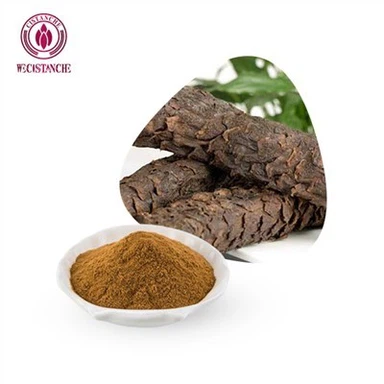
Cistanche is a traditional Chinese herbal medicine used for centuries to treat various health conditions, including kidney disease. It is derived from the dried stems of Cistanche deserticola, a plant native to the deserts of China and Mongolia. The main active components of cistanche are phenylethanoid glycosides, echinacoside, and acteoside, which have been found to have beneficial effects on kidney health.
Kidney disease, also known as renal disease, refers to a condition in which the kidneys are not functioning properly. This can result in a buildup of waste products and toxins in the body, leading to various symptoms and complications. Cistanche may help treat kidney disease ase through several mechanisms.
Firstly, cistanche has been found to have diuretic properties, meaning it can increase urine production and help eliminate waste products from the body. This can help relieve the burden on the kidneys and prevent the buildup of toxins. By promoting diuresis, cistanche may also help Reduce high blood pressure, a common complication of kidney disease.
Moreover, cistanche has been shown to have antioxidant effects. Oxidative stress, caused by an imbalance between the production of free radicals and the body's antioxidant defenses, plays a key role in the progression of kidney disease. ies help neutralize free radicals and reduce Oxidative stress, thereby protecting the kidneys from damage. The phenylethanoid glycosides found in cistanche have been particularly effective in scavenging free radicals and inhibiting lipid peroxidation.
Additionally, cistanche has been found to have anti-inflammatory effects. Inflammation is another key factor in the development and progression of kidney disease. Cistanche's anti-inflammatory properties help reduce the production of pro-inflammatory cytokines and inhibit the activation of inflammation mandatory pathways, thus alleviating inflammation in the kidneys.

Furthermore, cistanche has been shown to have immunomodulatory effects. In kidney disease, the immune system can be dysregulated, leading to excessive inflammation and tissue damage. Cistanche helps regulate the immune response by modulating the production and activity of immune cells, such as T cells and macrophages. This immune regulation helps reduce inflammation and prevent further damage to the kidneys.
Moreover, cistanche has been found to improve renal function by promoting the regeneration of renal tubes with cells. Renal tubular epithelial cells play a crucial role in the filtration and reabsorption of waste products and electrolytes. In kidney disease, these cells can be damaged, leading to damaged renal function. Cistanche's ability to promote the regeneration of these cells helps restore proper renal function and improve overall kidney health.
In addition to these direct effects on the kidneys, cistanche has been found to have beneficial effects on other organs and systems in the body. This holistic approach to health is critical in kidney disease, as the condition often affects multiple organs and systems. che has been shown to have protective effects on the liver, heart, and blood vessels, which are commonly affected by kidney disease. By promoting the health of these organs, cistanche helps improve overall kidney function and prevent further complications.
In conclusion, cistanche is a traditional Chinese herbal medicine used for centuries to treat kidney disease. Its active components have diuretic, antioxidant, anti-inflammatory, immunomodulatory, and regenerative effects, which help improve renal function and protect the kidneys from further damage. , cistanche has beneficial effects on other organs and systems, making it a holistic approach to treating kidney disease.