The Neuroprotective Effect Of Cistanche Tubulosa
Nov 11, 2026
Abstract
Cistanche tubulosa (Schrenk) Wight is an important botanical source of the traditional tonic medicine Cistanches Herba. Its major constituents, particularly the phenylpropanoid glycosides echinacoside and acteoside, have attracted increasing attention for their multi-target neuroprotective properties. Preclinical studies suggest that these compounds can attenuate oxidative stress, mitochondrial dysfunction, neuroinflammation, apoptosis, abnormal protein aggregation, and synaptic impairment. Recent work has extended beyond isolated cell-based observations to animal models of Alzheimer's disease, Parkinson's disease, cerebral ischemia, chronic hypobaric hypoxia, depressive-like behavior, and peripheral neuropathy. Notably, 2025–2026 studies indicate that the total glycosides of C. tubulosa may improve cognition in APP/PS1 mice through a gut microbiota–fatty acid metabolism–neuroinflammation axis, while acteoside may protect against Parkinson-related peripheral nerve injury through an m6A methylation–AKT/CASP3 mechanism. Human evidence mainly consists of small randomized controlled trials of C. tubulosa combined with Ginkgo biloba, which report improvements in memory-related outcomes and biochemical markers. However, robust monotherapy trials, standardized extracts, long-term safety data, and disease-modifying clinical endpoints remain lacking. Therefore, C. tubulosa should be regarded as a promising neuroprotective candidate rather than an established treatment for neurodegenerative disease.

cistanche-prevent Alzheimers disease
1. Taxonomy, Traditional Use, and Scope of Evidence
Cistanche tubulosa (Schrenk) Wight belongs to the family Orobanchaceae and is one of the accepted botanical origins of Cistanches Herba, the dried succulent stem commonly known in Chinese as Rou Cong Rong. It is distributed in arid and desert regions of Asia, with cultivation concentrated in parts of northwestern China. Cistanches Herba has traditionally been used to tonify the kidney, replenish essence and blood, and moisten the intestine. Although this traditional framework differs from modern disease classification, it overlaps conceptually with contemporary research on aging, fatigue, reproductive function, and cognitive health.
A rigorous review must distinguish C. tubulosa from Cistanche deserticola (desert cistanche) and other related species. The two taxa share broad chemical classes and pharmacological activities, which is why C. tubulosa has been used as a resource supplement. Nevertheless, differences in species, host plants, growth environment, harvesting season, processing, and extraction may alter the chemical profile. This review prioritizes studies performed directly on C. tubulosa and uses evidence from related Cistanche species only to illustrate shared mechanisms or to bridge gaps in the evidence chain.

Dragon Herbs Cistanche
2. Phytochemistry and Standardization Challenges
The neuropharmacological potential of Cistanche is attributed to a complex mixture of phenylpropanoid glycosides, iridoid glycosides, lignans, oligosaccharides, polysaccharides, alditol, and other constituents. Among these, phenylpropanoid glycosides are the most extensively studied. Echinacoside and acteoside are not only abundant marker compounds but are also frequently used as indicators of extract standardization. Their chemical structures provide multiple hydroxyl groups capable of scavenging free radicals, although direct radical-scavenging capacity alone cannot explain their effects on synaptic plasticity, glial regulation, or gut microbiota.
The multi-component nature of C. tubulosa creates both opportunity and translational difficulty. On the one hand, several constituents may act on different nodes of a neurodegenerative cascade, offering potential additive or synergistic effects. On the other hand, batch-to-batch variation in glycoside content, incomplete absorption, extensive gut microbial metabolism, and poorly characterized tissue distribution make it difficult to assign a clinical effect to a single molecule. Future studies should therefore report complete phytochemical characterization rather than only the content of one or two marker glycosides.

Phenylethanol glycoside is the main active component of Cistanche tubulosa
3. Core Neuroprotective Mechanisms
3.1 Antioxidant Defense and Mitochondrial Integrity
Oxidative stress and mitochondrial impairment represent converging upstream mechanisms in cerebral aging and neurodegenerative disease. Echinacoside and acteoside have been reported to reduce reactive oxygen species, inhibit lipid peroxidation, restore antioxidant enzyme activity, stabilize mitochondrial membrane potential, and limit the release of pro-apoptotic factors. In a chronic hypobaric hypoxia rat model, C. tubulosa extract increased SOD and glutathione-related activity while reducing MDA levels in brain tissue. These biochemical changes coincided with improved spatial memory and were associated with modulation of the PI3K/Akt/mTOR-HIF-1α pathway and gut microbiota composition.
Cistanche prevents Alzheimer's disease
3.2 Neuroinflammation and Glial Regulation
Microglia maintain cerebral immune surveillance under physiological conditions, but chronic or excessive activation can amplify neuronal injury. Studies on Cistanche preparations and individual glycosides suggest suppression of NLRP3 inflammasome activation, NF-κB signaling, and the release of TNF-α, IL-1β, and IL-6. Some ischemic-stroke models further suggest that phenylpropanoid glycosides may promote a shift from a pro-inflammatory M1-like phenotype toward a relatively protective M2-like phenotype. This anti-neuroinflammatory action may be especially relevant in diseases where soluble inflammatory mediators accelerate synaptic and vascular injury.
3.3 Anti-Apoptosis, Synaptic Plasticity, and Trophic Signaling
Neuroprotection is not limited to preventing cell death. In neuronal cell lines and animal models, echinacoside and acteoside modulate Bcl-2/Bax balance, cytochrome c release, and caspase activation. They have also been linked to BDNF/TrkB signaling, NGF expression, Wnt/β-catenin activation, and axonal or synaptic preservation. These findings support the hypothesis that Cistanche extracts may enhance neural resilience and plasticity. However, most synaptic and neurotrophic outcomes have been observed in preclinical systems; their relevance to long-term human memory or daily function must be tested in adequately powered clinical trials.
Cistanche prevents Alzheimer's disease
4. Evidence in Major Neurological Models
4.1 Alzheimer's Disease and Cognitive Aging
The most mechanistically advanced recent evidence comes from a 2025 study of APP/PS1 mice treated with the total glycosides of C. tubulosa for 60 days. The treatment improved spatial memory in the Morris water maze and reduced Aβ and pro-inflammatory mediators. Multi-omics analyses indicated that the gut microbiota changed from the seventh day of intervention, with enrichment of Akkermansia and alterations in serum and brain fatty acid profiles. In vitro experiments further showed direct promotion of Akkermansia muciniphila growth. The authors proposed a gut microbiota–fatty acid metabolism–neuroinflammation axis as a central mechanism.
This work is scientifically important because it offers a plausible explanation for how orally administered plant glycosides with limited systemic bioavailability may nevertheless affect brain function. It also aligns with the broader concept that microbiome-derived metabolites can influence systemic inflammation and host metabolism. Nevertheless, correlation between taxonomic shifts and cognition does not prove causality. Definitive tests will require fecal microbiota transplantation, defined-strain colonization, metabolite rescue experiments, and validation in additional Alzheimer models.
Desert-living cistanche- anti-Alzheimer's disease
4.2 Parkinson's Disease and Dopaminergic Protection
Earlier studies using MPTP, 6-OHDA, and rotenone models established that total glycosides, echinacoside, and acteoside can protect dopaminergic neurons, preserve tyrosine hydroxylase expression, reduce behavioral deficits, and regulate α-synuclein and oxidative stress. A 2025 study expanded this focus by investigating Parkinson-related peripheral neuropathy in MPTP mice. Acteoside treatment for 21 days improved behavioral and histopathological indicators of dorsal root ganglion injury, with evidence that the effect involved m6A methylation and regulation of the AKT/CASP3 pathway. The study therefore supports the broader concept that C. tubulosa components may protect both central dopaminergic pathways and peripheral nerves.
Chinese herb cistanche-Anti Parkinsons disease
4.3 Cerebral Ischemia, Vascular Cognitive Impairment, and Hypoxia
Vascular contributions to cognitive impairment involve excitotoxicity, oxidative stress, blood–brain barrier disruption, glial activation, and white-matter or synaptic injury. Phenylpropanoid glycosides from Cistanche species have shown protective effects in middle cerebral artery occlusion and vascular-dementia models, partly through modulation of microglial polarization, BDNF/TrkB expression, and inflammatory cascades. The chronic hypobaric hypoxia study of C. tubulosa extract adds a distinct environmental and metabolic context. Although it does not replicate human stroke, it suggests possible relevance to cognitive difficulties associated with high altitude, sleep-disordered breathing, or chronic tissue hypoxia.
4.4 Mood Disturbance, Gut–Brain Interactions, and Peripheral Nerves
Neuroprotective research is increasingly broadening from classical neurodegeneration to mood, fatigue, stress responsiveness, and peripheral nerve integrity. C. tubulosa-related extracts have demonstrated antidepressant-like activity in animal models and may influence hippocampal signaling and hypothalamic–pituitary–adrenal axis regulation. At the same time, acteoside's modulation of m6A methylation and peripheral nerve injury in a Parkinson model points toward possible applications beyond the central nervous system. These findings should be interpreted cautiously because behavioral outcomes can be influenced by activity, sleep, stress, and gastrointestinal function, not solely by neuronal repair.

Benefits of Cistanche tubulosa: Anti-Alzheimer's disease
Click here to view Cistanche Improving Memory and Preventing Alzheimer's Disease products
【Ask for more】 Email:cindy.xue@wecistanche.com / WhatsApp: 0086 18599088692 / WeChat: 18599088692
5. Human Studies and Safety
5.1 Cognitive and Memory Outcomes
Human studies are the principal translational bottleneck for C. tubulosa. A randomized, double-blind, placebo-controlled trial involving 117 healthy adults aged 30–65 years evaluated a botanical tablet containing C. tubulosa and Ginkgo biloba for 30 days. The active group improved in directional memory, associative learning, graphic free recall, portrait memory, total memory, and memory quotient. MRI findings included altered activity in the cerebellar culmen associated with memory improvement. A separate randomized controlled study in middle-aged and older adults used a Cistanche–Ginkgo combination for 90 days and reported improvements in MMSE, MoCA, quality of life, and several memory measures, alongside reductions in total tau and several phosphorylated tau biomarkers.
Together, these trials provide preliminary support for a cognitive-enhancing signal. Their principal limitation is the use of combination products: the observed effect cannot be attributed exclusively to C. tubulosa. Additional limitations include short intervention periods, selected relatively healthy or early-stage participants, reliance on surrogate biomarkers, and the absence of long-term follow-up. Larger monotherapy trials with appropriate comparators are therefore needed.
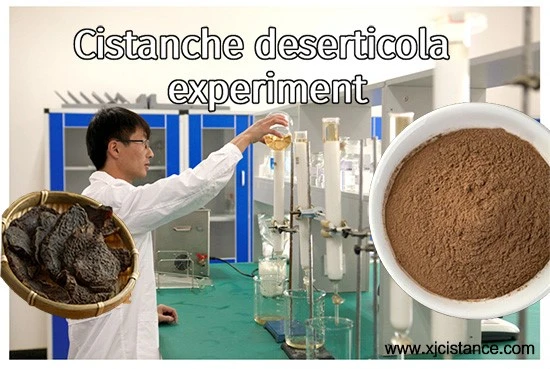
Cistanche tubulosa experiment
5.2 Safety and Tolerability
Available preclinical toxicology and short-term human studies suggest an acceptable safety margin for standardized Cistanche preparations within studied dose ranges. Reviews cite an acute LD50 exceeding 26400 mg/kg in mice and no observed chronic toxicity or genotoxicity in rats given repeated intragastric administration for 180 days. In a 24-week clinical study, patients receiving 2400 mg/day of Cistanche extract mostly tolerated the intervention, with only mild adverse events reported. However, these data do not establish universal safety. Long-term effects, interactions with anticoagulants or antiplatelet agents, effects in pregnancy and lactation, pediatric use, and risks in patients with severe hepatic or renal impairment remain inadequately characterized.
6. Evidence Gaps and Critical Appraisal

cistanche-prevent Alzheimers disease
The current evidence base can be divided into three levels. The first is strong preclinical plausibility: cell and animal studies repeatedly support antioxidant, anti-inflammatory, anti-apoptotic, mitochondrial, and synaptic mechanisms. The second is emerging systems-level evidence, including microbiome–metabolite–brain interactions in Alzheimer models and epitranscriptomic regulation in Parkinson models. The third is preliminary human evidence, consisting mainly of small, short-duration, and combination-product trials. The gap between the first two levels and the third is substantial.
Extraction methods, species authentication, growing conditions, and glycoside content are not standardized across studies.
Oral bioavailability and microbial biotransformation of echinacoside and acteoside remain incompletely characterized.
Network pharmacology and molecular docking generate hypotheses rather than direct proof of target engagement in vivo.
Animal models reproduce only portions of chronic human neurodegenerative disease.
Human trials rarely distinguish the independent contribution of C. tubulosa from that of Ginkgo biloba or other formulation components.
7. Priorities for Translational Research
Future research should progress from descriptive pharmacology to causal and clinically meaningful validation. Standardized C. tubulosa extracts should be fully characterized using quantitative fingerprints, and stability, dose, and exposure should be reported transparently. Microbiome-targeted experiments should test whether cognitive effects are dependent on microbial modification. Pharmacokinetic studies should determine whether active glycosides or their microbial metabolites cross the blood–brain barrier and reach concentrations consistent with observed mechanisms.
Clinical development should prioritize multicenter, randomized, double-blind, placebo-controlled monotherapy trials with prespecified primary cognitive endpoints. Secondary measures may include validated biomarkers, MRI, functional connectivity, quality of life, and non-motor symptoms in Parkinson's disease. Safety monitoring should be systematic and long enough to detect delayed adverse effects. Ultimately, the most credible path is to test whether C. tubulosa can preserve function or delay decline in well-defined at-risk populations rather than claiming reversal of established neurodegeneration.

Cistanche tubulosa extract
8. Conclusion
C. tubulosa exhibits a coherent multitarget neuroprotective profile supported by traditional use, phytochemistry, cellular experiments, animal models, and preliminary human research. Its most credible mechanisms include mitigation of oxidative stress and mitochondrial impairment, suppression of neuroinflammation, preservation of dopaminergic and cholinergic systems, support of synaptic plasticity, and modulation of host metabolism through the gut–brain axis. Recent studies of APP/PS1 mice and MPTP mice extend this profile to microbiome–fatty acid–inflammation interactions and m6A methylation–dependent peripheral nerve protection.
The translational conclusion should remain proportionate to the evidence. C. tubulosa is a promising neuroprotective botanical candidate and a plausible source of functional food ingredients or drug leads, but it is not yet an approved disease-modifying therapy. Progress will depend on standardized preparations, rigorous causal experiments, long-term human safety data, and well-designed clinical endpoints. Until those requirements are met, C. tubulosa should complement, not replace, evidence-based care for neurological and neurodegenerative disorders.
References
[1] Li Z, Lin H, Gu L, et al. Herba Cistanche (Rou Cong-Rong): One of the Best Pharmaceutical Gifts of Traditional Chinese Medicine. Front Pharmacol. 2016;7:41.
[2] Gu C, Yang X, Huang L. Cistanches Herba: A Neuropharmacology Review. Front Pharmacol. 2016;7:289.
[3] Gu C, Yang X, Huang L. Cistanches Herba: A Neuropharmacology Review. PubMed Central; PMCID: PMC5028387.
[4] Li Z, et al. Herba Cistanche (Rou Cong-Rong): One of the Best Pharmaceutical Gifts of Traditional Chinese Medicine. Front Pharmacol. 2016;7:41.
[5] Advances in Omics Studies, Biological and Clinical Potentialities of Cistanches Herba (Rou Cong Rong). Austin Publishing Group.
[6] Hou R, Song W, Nan Y, et al. Cistanche tubulosa glycosides ameliorate cognitive decline in APP/PS1 mice via modulation of gut microbiota and fatty acid metabolism: insights from multi-omics and experimental validation. Front Pharmacol. 2025;16:1662336.
[7] Cistanche tubulosa (Schrenk) Wight Extract Ameliorates Learning and Spatial Memory Abilities in High-Altitude Hypobaric Hypoxia Rats. PubMed Central; 2025.
[8] Zhang X, et al. Advances in Neuroprotective Ingredients of Medicinal Herbs by Using Cellular and Animal Models of Parkinson's Disease. Parkinsons Dis. 2013;2013:957875.
[9] Li Y, Jia W, Hu J, et al. Cistanche tubulosa improves peripheral neuropathy in MPTP-induced PD mice based on regulation of m6A methylation. Animal Model Exp Med. 2025;8(8):1441-1455.
[10] Review evidence on Cistanche extracts, depressive-like behavior, and the gut–brain axis; public Chinese-language summary, 2026.
[11] Cistanche tubulosa-Ginkgo biloba combination enhances memory via cortico-cerebellar reorganization: a randomized controlled trial. PubMed Central; 2026.
[12] Kan J et al. A randomized, double-blind, placebo-controlled study of Cistanche tubulosa and Ginkgo biloba extracts for the improvement of cognitive function in middle-aged and elderly people. Phytother Res.
[13] Phenylethanoid Glycosides from Cistanche deserticola Y. C. Ma: Synergistic Effects, Multi-target Mechanisms and Translational Applications. PubMed Central; 2025.
[14] Public abstract on Cistanche tubulosa and Ginkgo biloba in an LPS-induced neuroinflammation and memory-impairment mouse model; 2026.
[15] Public summary on Cistanche tubulosa, chronic hypobaric hypoxia, gut microbiota, and gut–brain axis; 2026.