Traditional Chinese Medical Therapy For Erectile Dysfunction
Mar 04, 2022
Contact: Audrey Hu audrey.hu@wecistanche.com
Hao Li, Hongyang Jiang, Jihong Liu
Department of Urology, Tongji Hospital, Tongji Medical College, Huazhong University of Science and Technology, Wuhan 430030, China Contributions: (I) Conception and design: J Liu; (II) Administrative support: J Liu; (III) Provision of study materials or patients: All authors; (IV) Collection and assembly of data: H Li, H Jiang; (V) Data analysis and interpretation: H Li; (VI) Manuscript writing: All authors; (VII) Final approval of manuscript: All authors.
Correspondence to: Jihong Liu, MD, PhD. Department of Urology, Tongji Hospital, Tongji Medical College, Huazhong University of Science and
Technology, No. 1095 Jiefang Avenue, Wuhan 430030, China. Email: jhliu@tjh.tjmu.edu.cn.
Abstract: Traditional Chinese medicine (TCM), including acupuncture and Chinese herbs, is used as an alternative therapy to increase the curative effect for erectile dysfunction (ED). A large number of studies have been conducted to investigate the effect and mechanism of TCM for treating ED. The therapeutic effect of acupuncture on ED is still controversial at present. However, some Chinese herbs exhibited satisfying outcomes and they might improve erectile function by activating nitric oxide synthase (NOS)-cyclic guanosine monophosphate (cGMP) pathway, increasing cyclic adenosine monophosphate (cAMP) expression, elevating testosterone level, reducing intracellular Ca2+ concentration, down-regulating transforming growth factor β1 (TGFβ1)/Smad2 signaling pathway, or ameliorating the oxidative stress.
Keywords: Acupuncture; Chinese herbs; erectile dysfunction (ED); traditional Chinese medicine (TCM)

traditional Chinese medicine (TCM) herb
Introduction
Erectile dysfunction (ED) is a common disease that affects about half of men aging from 40 to 70 years in America (1), and the prevalence is almost the same in China (2). Oral phosphodiesterase type 5 inhibitor (PDE5-Is) is the first-line therapy for ED. However, its effective rate is only 60–70% (3). In this condition, various alternative or complementary therapies are being investigated to increase the curative effect for ED, with traditional Chinese medicine (TCM) at the forefront of this trend.
TCM is a holistic modality deriving from ancient oriental philosophy, whose concept believes that the human body has a set of inner homeostatic systems maintained by the Yin-Yang balance. Yin and Yang are two opposite yet complementary forces, which could be understood as anabolic and catabolic processes from a western perspective (4). According to TCM philosophical theories, disease results from the imbalance between the two forces over a period of time. Thereby, the goal of treatment is to restore the balance between Yin and Yang. In TCM, the fluids and blood in human bodies are produced and distributed by Qi, vital energy permeating the whole universe. Qi is generated from the interaction between Yin and Yang. It flows through meridians in human bodies and nourishes the organs. Besides, Qi is responsible for enhancing the immune system and protecting the body from external pathogens. Each organ has its own Qi that maintains its normal function. From the perspective of TCM, an organ is not an existing entity but a theoretical construct with certain functions. Even though the organs in TCM have the same name with the organs in Western medicine, they refer to different things with different functions.
The kidney and liver are the two primary organs related to ED in the TCM understanding. The kidney stores the essence, while liver stores blood. Essence can be recognized as a power that is responsible for growth, development and reproduction. Besides, it participates in the generation of blood and can enhance immunity. In addition to storing blood, the liver can modulate blood volume and maintain the flow of blood. Sexual and reproductive functions are also under the control of the liver. Thereby, the kidney and liver are two important organs with a wide range of functions in TCM. Both the essence and blood belong to Yin in nature, hence the kidney and liver are thought to be of the same source. The weakness of one organ usually leads to the imbalance of the other one. The diagnosis of disease in TCM lies in identifying patterns of disharmony, which is also called syndrome differentiation (5). ED commonly involves the kidney or liver patterns of disharmony, such as kidney yin vacuity, kidney yang vacuity and binding depression of liver Qi. Recognizing the relationship among the organs involved in ED is critical for making an effective therapy plan.
Various techniques are employed in TCM, including acupuncture, moxibustion, cupping, massage and herbal medicine. Over thousands of years of development, practitioners of TCM have established a comprehensive framework for treating ED. Acupuncture and herbal medicine are both thought to have benefits to erectile function.
Acupuncture treatment for ED Acupuncture, identified as the insertion of needles into acupoints at the skin and underlying tissues, is an important therapeutic method of TCM to treat various diseases. These acupoints are recognized as the control points of Qi, which regulate the flow of Qi. They can bring more Qi to the vacuous areas or organs and release the excess part when there is too much Qi accumulating in some areas, thereby maintaining the homeostasis of our bodies. There is sufficient evidence to support that acupuncture can regulate the function of the endocrine, circulatory, and nervous systems. Acupuncture was confirmed as a promising therapy for a wide range of diseases by the National Institutes of Health (NIH).
It is now believed that the neurophysiological effects of acupuncture result from the central nervous system activation as well as neurotransmitters modulation (6). Acupuncture might modulate the release of nitric oxide (NO) and some neuropeptides involved in the process of erection (7). Some studies were conducted to investigate the effect of acupuncture on erectile function in patients. In 1997, Aydin et al. carried on a randomized controlled
study with 60 patients suffering from non-organic ED, in which the patients were treated with acupuncture on the legs and abdomen for 6 weeks. The result showed that 60% of patients of in the treatment group were satisfied with sexual activity after acupuncture therapy compared with 43% in the placebo group, but the difference between the two groups was not statistically significant (8). However, the results of another study indicated that acupuncture is an effective treatment for psychogenic ED. A total of 68.4% of patients in the treatment group showed a satisfactory response, which was significantly higher than the placebo group (6).
The results from other studies were also inconsistent. Thereby, the available evidence at present is insufficient to prove acupuncture to be an effective intervention for ED treatment (9,10). Further investigation needs to be performed to clarify the therapeutic effect of acupuncture for ED.

cistanche
Chinese herbal treatment for ED
A great number of traditional Chinese herbs have been used to treat ED, applied singly or in the form of compound formulas. Most of the herbal remedies are used empirically and thereby are not convincing. In this condition, many studies are being conducted to investigate the underlying mechanism of those Chinese herbs using modern biotechnology.
Single Chinese herb or herbal extracts
It was revealed that the mechanisms of Chinese herbs for treating ED might involve changes in nitric oxide synthase (NOS)-NO-cyclic guanosine monophosphate (cGMP) pathway, cyclic adenosine monophosphate (cAMP), testosterone level, transforming growth factor β1 (TGFβ1)/ Smad2 pathway, oxidative stress as well as intracellular Ca2+ concentration. Some Chinese herbs ameliorate ED through one pathway, others involve several pathways (Table 1).
Angelica sinensis
Angelica sinensis is the dried root of angelica, whose main function is to increase the blood volume and relieve pain in TCM. Intrapelvic injection of Angelica Sinensis solution could avoid the decrease of NOS activity caused by cavernous nerve injury in rats (11).
Ligusticum chuanxiong Hort
Ligusticum chuanxiong Hort is planted primarily in southwestern China, which is usually used to promote blood flow and alleviate pain. Ligustrazine is a vasoactive component isolated from Ligusticum chuanxiong Hort and was shown to be effective in relaxing rabbit cavernosal smooth muscle. The effect was partly mediated by increasing the content of cAMP and cGMP (12).

Folium Ginkgo Bilobae
Folium Ginkgo Bilobae is the leaf of the Ginkgoaceae plant, which grows throughout China. Ginkgo Bilobae extract was shown to have vasoprotective and neuroprotective effects. EGb761 is an effective extract from Folium Ginkgo Bilobae. It was reported that EGb761 preserved the neural nitric oxide synthase (nNOS)-positive nerve fibers after cavernous nerve injury in rats (13). Moreover, the administration of EGb761 was able to enhance the noncontact erection, a penile erection initiated by brain centers, in male rats by increasing the dopamine contents in some parts of the brain (14,15).
Common Cnidium Fruit
Common Cnidium Fruit is the fruit of Cnidium monnieri. It has been used basically for treating ringworm, swelling of women’s genitals and male impotence. Osthole is one major component of Common Cnidium Fruit, which has been shown to have a vasodilating effect. It was reported that ostiole had a relaxant effect on strips of rabbit corpus
cavernosum, which might involve the release of NO from endothelium and inhibition of phosphodiesterase (16). Some other extracts of Common Cnidium Fruit such as imperatorin and xanthotoxin also exhibited a relaxing effect on rabbit corpus cavernosum with intact endothelium (17).
Tribulus Terrestris
Tribulus Terrestris is the fruit of the Zygophyllaceae plant, which grows primarily in North China. It has been recognized as an aphrodisiac since ancient times. Many animal experiments have verified that Tribulus Terrestris could improve erectile function. It was widely believed in the past that the aphrodisiac property of Tribulus Terrestris was due to its androgen-enhancing ability (18). However, more and more studies nowadays show that Tribulus Terrestris supplementation could not increase the testosterone levels in serum significantly (19,20). Hence the precise mechanism underlying its pro-erectile property needs to be investigated further.
Morinda offtcinalis How
Morinda officinalis How is the dried root of morinda officinalis and is widely used in China. In TCM, it is usually used for treating rheumatoid arthritis and impotence. It was shown that pretreatment with aqueous extract from Morinda officinalis How could improve the sexual performance and increase the serum testosterone level of male rats suffering from reproductive impairment (21). This was consistent with the results of another study, which exhibited that administration of oral bajijiasu, an extract from Morinda officinalis How, enhanced the sexual behavior and increased the testosterone concentration of both normal and kidney-yang-deficient mice (22). However, the underlying mechanism needs further investigation.
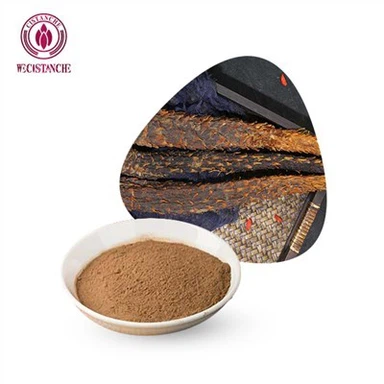
Herba Cistanche
Herba Cistanche is the dried stem of the cistanche species, which grows in extremely arid areas with intensive sunshine. It is applied as a tonic for chronic renal disease, impotence, and some gynecological diseases. Various chemical constituents of Herba Cistanche have been studied and were indicated to have some bio-activities such as antioxidation, neuroprotection, and antiaging (23). It was shown that Cistanche extract shortened the erectile latency and prolonged the erectile duration in castrated rats. An extract from Herba Cistanche was reported to increase the sex hormone levels in rats (24). Another extract of Herba Cistanche, echinacoside, could elicit endothelium-dependent relaxation of aortic rings through the NO-cGMP pathway in rats (25). However, whether Herba Cistanche improves erectile function via this pathway needs further research.
Semen cuscutae
Semen cuscutae is the dried ripe seeds of Cuscuta Chinensis Lam. It has been used to treat impotence and seminal emission for thousands of years in China. The flavones from Semen cuscutae could reverse kidney-yang deficiency symptoms by restoring the testosterone level and androgen receptor expression in the kidney and testicle (26).
Ginseng
Ginseng is the root of some Araliaceae plants, which grow mainly in the northeast of China. Ginseng is an expensive and famous Chinese herb that is widely used in many Asian countries. It has been used to maintain homeostasis and enhance vital energy in human bodies for thousands of years. It was confirmed by a multicenter, placebo-controlled, and double-blinded clinical study that the long-term administration of Korean red ginseng extracts could enhance erectile function in patients (27). Ginsenosides are the main active components in ginseng and have effects of anti-inflammation, anti-tumor, antioxidant, as well as apoptosis inhibition. Among various kinds of ginsenosides, ginsenoside Rg3 has received the most attention. Oral gavage with Rg3 could protect the erectile capacity in diabetic rats by preventing the degeneration of neurons in dorsal penile nerves and reducing the oxidative stress in the corpus cavernosum (28).
Lycium barbarum L
Lycium barbarum L is the fruit of Lycium barbarum and has a large variety of biological activities. It plays an important role in treating some chronic diseases, such as hyperlipidemia, hepatitis, diabetes, and male infertility. Polysaccharides extracted from Lycium barbarum exhibit antioxidant properties, which could shorten the penis erection latency and mount latency of hemicastrated rats (29). Moreover, the administration of Lycium barbarum polysaccharides could promote nerve regeneration and erectile function recovery in rats suffering from cavernous nerve injury (30).
Tetrandrine
Tetrandrine is isolated from the root of Stephania tetrandra S Moore, a traditional Chinese herb with anti-inflammatory, antipyretic, and analgesic effects. It was reported that tetrandrine could inhibit the Ca2+ influx from the extracellular matrix and Ca2+ release from intracellular calcium pool in corpus cavernous smooth muscle cells (31).
Neferine
Neferine is an extract from the embryo of lotus seeds, which is used as a sedative, antipyretic, and hemostat agent in TCM. Neferine can inhibit platelet aggregation, protect vascular endothelium and reduce the very low-density lipoprotein oxidation. Similar to tetrandrine, neferine also had a relaxant effect on rabbit corpus cavernosum by inhibiting the extracellular Ca2+ influx and intracellular stored Ca2+ release (32). Moreover, it could enhance the cAMP concentration in the rabbit corpus cavernosum (33).
Kaempferia parviflora
Kaempferia parviflora grows mainly in the southwest of China. It was shown that some Kaempferia parviflora rhizome extracts, especially the 5,7-methoxy flavone, had inhibitory activity against PDE5 (34). In addition, 3,5,7,30,40-pentamethoxyflavone (PMF) isolated from Kaempferia parviflora was reported to cause relaxation of human cavernosum in vitro by voltage-dependent Ca2+ channel (35).
Panax notoginseng
Panax notoginseng is planted mainly in Guangxi province and Yunnan province of China. Panax notoginseng saponins are the effective ingredients of Panax Notoginseng and are often used to treat cardiovascular or cerebrovascular diseases. It was reported that intraperitoneal Panax notoginseng saponins injection for 4 weeks improved erectile function in rats with diabetic ED by increasing Akt expression and suppressing oxidative stress in the penis (36). In addition, Panax notoginseng saponins could restore the endothelial function in the corpus cavernosum through the endothelial nitric oxide synthase (eNOS)/cGMP pathway (37).
Berberin
Berberine is a benzodiozoloquinolizine alkaloid first extracted from the rootstalk of rhizoma copies and now is found also in other Chinese herbs such as Phellodendron and radix berberis. It was shown that berberine could induce relaxation of the corpus cavernosum by enhancing eNOS mRNA expression (38). Moreover, berberine might also improve erectile function through its antioxidant effect (39).
Icariin
Icariin is one of the major active components in epimedium, which is a traditional Chinese herb used to treat impotence. Icariin is able to improve erectile function through various mechanisms. Icariin could inhibit PDE5 activity and preserve the expression of NOS, thereby increasing the cGMP levels in spontaneously hypertensive rats (40). Oral treatment with icariin improved the erectile function in streptozotocin-induced diabetic rats by down-regulating the TGFβ1/Smad2 signaling pathway (41). In addition, icariin was reported to increase the circulating testosterone level in rats with damaged reproductive systems (42).

the benefit of cistanche: treating ED & improving sexual function
Chinese herbal compound formula
In fact, most Chinese herbs are now used in the form of compound formulas according to some strict rules. A typical Chinese herbal formula consists of four basic elements playing different roles: “Monarch”, “Minister”, “Assistant” and “Servant”, each of which may include one or several drugs. This kind of combination can enhance the therapeutic effect and reduce the toxicity of a single herb (43). A variety of compound formulas have been created to treat ED, such as Shuganyiyang capsule and Yidiyin.
Shuganyiyang capsule
Shuganyiyang capsule is a formula composed of 15 Chinese herbs, which could increase blood circulation, activate Yang and replenish the vital essence of the human body. It was reported that the Shuganyiyang capsule improved the intracavernous pressure in arteriogenic ED in rats by activating the NOS- cGMP pathway and reducing the expression of PDE5 (44).
Yidiyin
Yidiyin, a Chinese herbal decoction used to treat diabetic ED, was shown to improve erectile function in diabetic patients and rats. Combined use of Yidiyin and hypoglycemic drugs could increase patients’ scores on the international index of erectile function-5 (IIEF-5) more than the hypoglycemic drug alone. Animal experiments indicated that the administration of Yidiyin increased rats’ erectile function through activating the NOS-cGMP pathway (45).
In addition to these two formulas, some other formulas are also used to treat ED in clinical practice, including the Yougui pill, Xiaoyao pill, Fufangxuanju capsule, and so on. However, few basic studies have been performed to investigate their mechanisms up to now. We expect that more related research will be conducted in the future.
Conclusions
TCM is an effective alternative therapeutic method for ED. Nowadays various Chinese herbs are used for patients with ED in clinical practice and show satisfying outcomes. The result of some basic studies showed that Chinese herbs could improve erectile function by activating the NOS-NO-cGMP pathway, increasing cAMP expression, elevating testosterone level, reducing intracellular Ca2+ concentration, or relieving oxidative stress. This facilitates our understanding of the mechanism and effect of Chinese herbs. However, most of these studies were performed on animals. To further clarify the effects and clinical application of Chinese herbs and herbal formulas, well-designed RCTs need to be conducted. In addition, the therapeutic effect of acupuncture on ED is still controversial at present. Thereby, it is necessary to find a more effective acupuncture scheme. All in all, TCM is a promising therapy for ED and needs further research. Acknowledgments
Funding: This work was supported by grants from the National Natural Science Foundation of China (No. 81471451).
References
1. Heruti RJ, Sharabi Y, Arbel Y, et al. The prevalence of erectile dysfunction among hypertensive and prehypertensive men aged 25-40 years. J Sex Med 2007;4:596-601.
2. Huang YP, Chen B, Ping P, et al. Asexuality development among middle-aged and older men. PLoS One 2014;9:e92794.
3. Bechara A, Casabé A, De Bonis W, et al. Twelve-Month Efficacy and Safety of Low-Intensity Shockwave Therapy for Erectile Dysfunction in Patients Who Do Not Respond to Phosphodiesterase Type 5 Inhibitors. Sex Med 2016;4:e225-32.
4. Leong PK, Wong HS, Chen J, et al. Yang/Qi invigoration: an herbal therapy for chronic fatigue syndrome with yang deficiency? Evid Based Complement Alternat Med 2015;2015:945901.
5. Pang B, Zhou Q, Zhao TY, et al. Innovative Thoughts on Treating Diabetes from the Perspective of Traditional Chinese Medicine. Evid Based Complement Alternat Med 2015;2015:905432.
6. Cui X, Zhou J, Qin Z, et al. Acupuncture for erectile dysfunction: a systematic review. BioMed research international 2016;2016:2171923.
7.Cui X, Li X, Peng W, et al. Acupuncture for erectile dysfunction: a systematic review protocol. BMJ open 2015;5:e007040.
8. Aydin S, Ercan M, Çaşkurlu T, et al. Acupuncture and hypnotic suggestions in the treatment of non-organic male sexual dysfunction. Scand J Urol Nephrol 1997;31:271-4.
9. Lee MS, Shin BC, Ernst E. Acupuncture for treating erectile dysfunction: a systematic review. BJU Int 2009;104:366-70.
10. Tsai MY, Liu CT, Chang CC, et al. Overview of the relevant literature on the possible role of acupuncture in treating male sexual dysfunction. Acupunct Med 2014;32:406-10.
11. Hu WL, Hu LQ, Cheng B, et al. Effect of Angelica Sinensis on NOS activity in penile tissues of rats after crushing injury to cavernous nerves. Zhonghua Nan Ke Xue 2001;7:29-31.
12. Xiao HJ, Wang T, Chen J, et al. Chuanxiongzine relaxes isolated corpus cavernosum strips and raises intracavernous pressure in rabbits. Int J Impot Res 2010;22:120-6.
13. Wu YN, Liao CH, Chen KC, et al. Effect of ginkgo Biloba extract (EGb-761) on recovery of erectile dysfunction in bilateral cavernous nerve injury rat model. Urology 2015;85:1214.e7-15.
14. Yeh KY, Wu CH, Tai MY, et al. Ginkgo biloba extract enhances noncontact erection in rats: the role of dopamine in the paraventricular nucleus and the mesolimbic system. Neuroscience 2011;189:199-206.
15. Yeh KY, Liu YZ, Tai MY, et al. Ginkgo biloba extract treatment increases noncontact erections and central dopamine levels in rats: role of the bed nucleus of the stria terminalis and the medial preoptic area. Psychopharmacology 2010;210:585-90.