Traditional Chinese Medicine (TCM) Perspectives On Chronic Prostatitis: Theoretical Foundations And Formula Development Opportunities
Jul 17, 2025
🔍 I. Overview: How TCM Understands Chronic Prostatitis
"Chronic prostatitis" is a modern biomedical diagnosis not explicitly named in classical Chinese medical texts. However, based on its clinical symptoms, it is widely interpreted in TCM as falling under various traditional syndromes, such as:
"Bai Yin" (白淫) – pathological genital fluid discharge
"Lin Zheng" (淋证) – painful or dribbling urination (e.g., damp-heat lin, fatigue lin, turbid lin)
"Zhuo Zheng" (浊证) – cloudy or turbid urine
"Jing Zheng" (精证) – dysfunctions involving semen (e.g., spermatorrhea, hematospermia)
Others include "Yao Tong" (腰痛, low back pain), "Yang Wei" (阳痿, erectile dysfunction), and "Zao Xie" (早泄, premature ejaculation)
In modern TCM standards (e.g., China's national TCM disease classification), chronic prostatitis is often categorized under "Jing Zhuo" (精浊) – a condition of turbid seminal discharge.
📖 Ancient texts, such as Su Wen, Zhubing Yuanhou Lun, and Danxi Xinfa, describe syndromes related to this condition and attribute their origins to emotional strain, overindulgence in sex, damp-heat, kidney deficiency, and qi/blood stagnation.

🧠 II. Pathogenesis in TCM: Chronic, Complex, and Multifactorial
From the TCM perspective, CP is characterized by a slow onset, easy recurrence, and root-deficiency with branch-excess. In other words:
The root (ben, 本) is often deficiency of kidney, spleen, or heart
The manifestation (biao, 标) is excess of damp-heat, blood stasis, or qi stagnation
Common Etiological Factors Include:
Overeating greasy/spicy foods and alcohol
Prolonged emotional stress, depression
Excessive or irregular sexual activity
Poor hygiene or exposure to damp environments
Long-standing illness weakening the kidneys

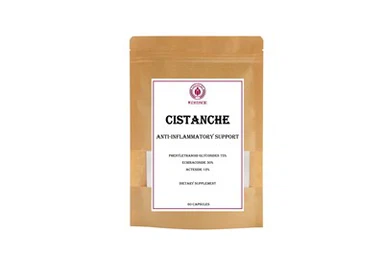
cistanche Extract pills
🔍 III. Key TCM Syndromes and Mechanisms
| Syndrome | Description & Clinical Correlates |
|---|---|
| 🔹 Kidney Essence Deficiency (肾精亏虚) | Core root cause; leads to lumbar weakness, premature ejaculation, fatigue |
| 🔹 Spleen Deficiency with Dampness (脾虚湿阻) | Poor digestion leads to internal dampness descending into the lower burner |
| 🔹 Yin Deficiency with Internal Heat (阴虚火旺) | Restless mind, night sweats, and sexual hyperexcitability |
| 🔹 Damp-Heat Pouring Downward (湿热下注) | Burning urination, scrotal dampness, turbid urine |
| 🔹 Qi Stagnation and Blood Stasis (气滞血瘀) | Localized pelvic pain, emotional suppression, dark tongue with petechiae |
| 🔹 Liver Qi Depression (肝郁气滞) | Emotional tension, mood swings, and sexual dysfunction |
| 🔹 Kidney Yang Deficiency (肾阳虚损) | Cold limbs, low libido, weak urination, fatigue |
📌 These mechanisms often coexist. For example, a patient may present with damp-heat + blood stasis, or kidney yang deficiency + liver qi stagnation.

🌿 IV. Cistanche in TCM Theory and Practice
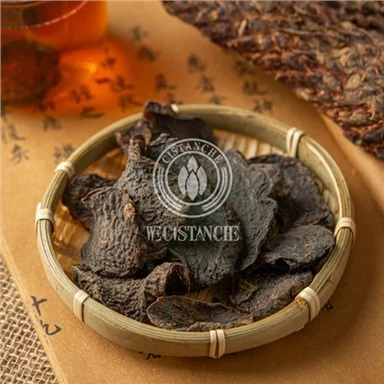
In classical TCM, Cistanche (Rou Cong Rong, 肉苁蓉) is categorized as:
Tonifying the Kidney Yang (补肾阳)
Supporting Jing-Essence (益精血)
Moistening the intestines (润肠通便)
It is most relevant to syndromes such as:
Kidney essence deficiency
Kidney yang deficiency
Yin-yang dual deficiency
Blood stasis from deficiency and cold
📚 Modern Pharmacological Actions:
| Mechanism | TCM Syndrome Correlate | CP Symptom Relief |
|---|---|---|
| 🧬 5α-reductase inhibition | Kidney deficiency + damp-heat | Reduces DHT, prostate swelling |
| 🔥 Anti-inflammatory (↓IL-6, IL-8, TNF-α) | Damp-heat + blood stasis | Relieves pelvic pain, burning urination |
| 💉 Microcirculation improvement | Blood stasis | Alleviates testicular/inguinal discomfort |
| 🧠 Neuroendocrine regulation | Heart-kidney disharmony | Reduces stress-induced symptoms |
| ⚖️ Immunomodulation | Qi/blood imbalance | Prevents chronic relapse |
🔬 V. Syndrome Differentiation in Modern TCM Research
Various institutions and experts propose distinct classification systems. Though names and criteria differ, most recognize the following core syndromes:
| TCM Syndrome | Key Symptoms |
|---|---|
| Damp-Heat in Lower Jiao | Urgency, burning urination, scrotal dampness, yellow tongue coating |
| Qi Stagnation with Blood Stasis | Fixed pelvic pain, dark tongue, wiry pulse |
| Kidney Yin Deficiency | Night sweats, dry mouth, insomnia, red tongue |
| Kidney Yang Deficiency | Cold limbs, fatigue, low libido, pale swollen tongue |
| Liver Qi Stagnation | Emotional depression, testicular pain, wiry pulse |
| Spleen Deficiency with Dampness | Poor digestion, turbid urine, loose stools |
| Mixed Patterns (e.g., Damp-Heat + Kidney Deficiency) | Most common in chronic or relapsing cases |
🧪 These differentiation systems provide a foundation for personalized herbal formulations, functional food design, and integrative therapy development.
📦 VI. Application in Product Development: Cistanche as a Core Botanical
Given its broad therapeutic role in both TCM theory and modern pharmacology, Cistanche is an ideal core ingredient for:
🔹 Herbal prostate health supplements
🔹 Men's reproductive function enhancers
🔹 Adjuncts to CP/CPPS treatment protocols
🔹 TCM-based functional food and beverage products
It can be combined with other syndrome-specific herbs:
🍃 For damp-heat: Phellodendron, Plantago seed
🌰 For yang deficiency: Epimedium, Morinda root
🌿 For blood stasis: Safflower, Red peony
💧 For yin deficiency: Rehmannia, Ophiopogon

Supportive Service Of Wecistanche-The largest cistanche exporter in the China:
Email:wallence.suen@wecistanche.com
Whatsapp/Tel:+86 15292862950

✅ Conclusion: Bridging Classical Wisdom with Modern Innovation
TCM provides a rich, nuanced framework for understanding and treating chronic prostatitis - one that moves beyond symptomatic relief to root cause regulation.
Cistanche, as a kidney-tonifying, inflammation-modulating, and hormone-balancing herb, sits at the intersection of:
⚖️ Traditional theory
🧬 Molecular science
🧑🔬 Clinical potential
Whether you're:
A manufacturer seeking a botanical edge
A practitioner designing syndrome-specific protocols
A patient exploring natural strategies for relief
…it's time to rediscover Cistanche as a functional cornerstone in managing chronic prostatitis.