Common Traditional Chinese Medicines For Treating Erectile Dysfunction (ED) And Their Mechanisms Of Action
Mar 07, 2025
2. Common Traditional Chinese Medicines for Treating Erectile Dysfunction (ED) and Their Mechanisms of Action
Traditional Chinese medicine (TCM) has a long history of understanding and treating ED, forming a comprehensive system of syndrome differentiation, treatment principles, and herbal prescriptions. Proper use of TCM can address both the symptoms and root causes of ED.

Tcm Herbal Cistanche Supplements For Treating ED
2.1 Classic Single TCM Herbs
2.1.1 Epimedium (Yinyanghuo)
Active compounds isolated from Epimedium, such as prenylated flavonol glycosides, icariin (ICA), and icariside II (ICA II), are potent PDE5 inhibitors [27]. Both ICA and ICA II inhibit all three PDE5 subtypes, thereby activating PKG and increasing cGMP levels in corpus cavernosum smooth muscle cells, improving penile erection [28-29].
ICA enhances corpus cavernosum pressure and smooth muscle content, increases the mRNA and protein expression of neuronal NOS (nNOS) and inducible NOS (iNOS), and regulates the interaction between eNOS, caveolin-1, and HSP90 to produce more NO [30-31]. Additionally, it:
Inhibits the expression of key mitochondrial membrane proteins (IP3R1, PACS2, and FACL4) to enhance eNOS production [32].
Promotes neural stem cell proliferation and differentiation, aiding in the repair of damaged cavernous nerves [33].
Modulates the ERK1/2 signaling pathway, reducing endothelial oxidative stress and promoting the proliferation of endothelial progenitor cells, improving vascular endothelial function [34].
Activates estrogen receptor 1/Src tyrosine kinase/PKB/CREB/steroidogenic factor 1 signaling pathways and upregulates key protein expressions (3β-HSD and Cyp17A1), promoting testosterone synthesis [35-37].
ICA II further improves ED by reducing miR-155 expression, thereby weakening its negative feedback regulation on eNOS, increasing NO production, and restoring vascular endothelial function in diabetic patients [38]. It also enhances the PI3K/Akt/mTOR pathway, preventing excessive autophagy in smooth muscle cells, inhibiting AGE receptor activation, and reducing oxidative stress, thereby alleviating ED [39]. Additionally, it regulates the Wnt/β-catenin/cyclin D1 pathway and promotes Schwann cell differentiation from adipose-derived stem cells, helping nerve injury-related ED [40-41].
Epimedium and its derivatives hold great potential for ED treatment, warranting further research [42].

2.1.2 Ginseng (Ren Shen)
Ginseng contains various active compounds that alleviate inflammation, oxidative stress, atherosclerosis, and hyperglycemia, improving ED through multiple targets and pathways [43-44].
The most potent compounds, ginsenosides, have neuroprotective and antioxidative effects, improving vascular endothelial function and increasing eNOS activity, thereby enhancing NO/cGMP signaling to relieve ED [45-47]. Other components, such as kaempferol and stigmasterol, regulate PDE5 levels and reduce vascular inflammation, further benefiting ED patients [48].
2.1.3 Panax Notoginseng (Sanqi)
Active saponins in Panax Notoginseng function similarly to ginsenosides, promoting penile erection by:
Activating NOS
Increasing PKB expression
Inhibiting oxidative stress
Restoring endothelial and smooth muscle cell function in the corpus cavernosum [49-50].

2.1.4 Cnidium Monnieri (Shechuangzi)
Cnidium Monnieri is known for its kidney-tonifying and yang-strengthening properties. Studies show that osthole, its main active ingredient, significantly increases serum testosterone, follicle-stimulating hormone (FSH), and luteinizing hormone (LH), exerting gonadotropin-like and androgen-like effects to enhance libido and maintain reproductive organ function [51].
Additionally, osthole and other active compounds act as PDE5 inhibitors, with osthole being the most potent. It blocks cGMP hydrolysis, leading to cGMP accumulation in corpus cavernosum tissue, thereby relaxing smooth muscle and promoting penile erection [52].
2.1.5 Cistanche (Rou Cong Rong)
Cistanche (Cistanche tubulosa) is a well-known tonic herb that nourishes and protects the kidneys. In traditional Chinese medicine (TCM), Cistanche is regarded as the best kidney tonic.
According to WeCistanche, Cistanche tubulosa contains echinacoside, acteoside, and flavonoids, which:
Reduce kidney cell apoptosis
Promote kidney cell proliferation
Repair damaged kidney cells
Dilate kidney blood vessels
Improve liver function and relieve kidney stress
Cistanche's Mechanism in Treating ED
Cistanche mimics androgenic effects, improving ED by:
Increasing testosterone levels
Providing antioxidant and anti-hypoxic benefits [53-54]
Enhancing cytochrome P450/3β-HSD signaling in Leydig cells, promoting testosterone production [55]
Boosting NO/cGMP activity, thereby increasing cGMP and cAMP levels to improve ED [56]
Cistanche Products for Kidney and ED Support
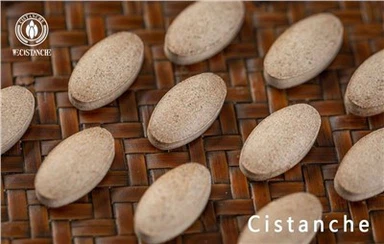
Cistanche kidney supplement tablets
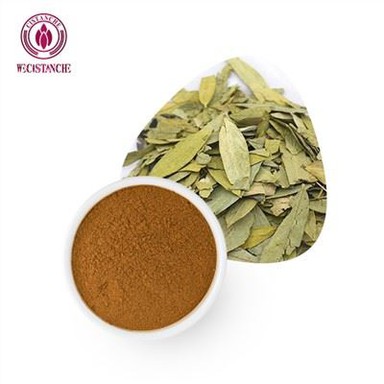
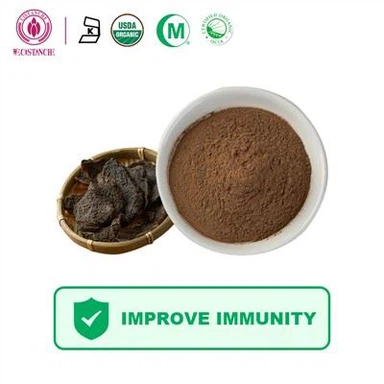
Cistanche extract kidney support powder
Cistanche raw material

2.1.6 Ligusticum Chuanxiong (Chuanxiong)
Ligustrazine, a key active ingredient in Ligusticum Chuanxiong, improves erection duration and hardness, while also reducing fibrotic nodules in the corpus cavernosum [57].
Although ligustrazine does not directly regulate NOS activity, its vasodilatory effects are dose-dependent, primarily through increasing cAMP and cGMP levels [58]. It blocks voltage-dependent calcium channels, reducing intracellular Ca²⁺, thereby relaxing corpus cavernosum smooth muscle [59].
2.1.7 Eucommia Ulmoides (Duzhong)
Eucommia is a classic yang-tonifying herb that improves ED by:
Enhancing PKB and eNOS activation to stimulate NO synthesis
Increasing gonadotropin-releasing hormone (GnRH) and testosterone levels
Reducing estradiol, FSH, and LH levels, thereby balancing the hypothalamic-pituitary-gonadal (HPG) axis [60-61]
Additionally, Eucommia increases superoxide dismutase (SOD) activity, reducing oxidative damage in penile tissue [62]. Its bark extract has hormone-like effects, enhancing testosterone receptor activity [63].
2.1.8 Cuscuta Chinensis (Tusizi)
Similar to Eucommia (Duzhong), Cuscuta Chinensis (Tusizi) enters the Liver and Kidney meridians, has a sweet taste, and is known for its kidney-tonifying and essence-replenishing effects. It enhances cGMP and cAMP levels in the corpus cavernosum, thereby improving ED [64]. Additionally, it regulates sex hormone levels, improving reproductive capacity [65].

2.1.9 Coptis Chinensis (Huanglian)
The main active compound in Coptis Chinensis, berberine, improves ED through multiple mechanisms:
Upregulates eNOS mRNA expression, increasing cGMP concentration [66].
Boosts testosterone levels [67].
Inhibits JAK2-mediated oxidative stress in smooth muscle cells [68].
Reduces apoptosis and improves endothelial function by suppressing the sphingosine kinase 1/sphingosine-1-phosphate/S1P2 receptor pathway and MAPK pathway [69].
Berberine does not affect baseline cAMP levels, but in the presence of a cAMP stimulator (prostaglandins), berberine dose-dependently increases cAMP levels in corpus cavernosum tissue, improving ED [70].
2.2 Compound TCM Formulations and Combination Therapies
Compound herbal formulas are also effective for treating ED, offering advantages such as:
Broader indications
Enhanced therapeutic effects
Reduced toxicity and side effects of individual herbs
Multi-system, multi-layered, and multi-targeted approaches to improving male ED
2.2.1 Shugan Yiyang Capsules
Shugan Yiyang Capsules is a compound herbal preparation containing:
Tribulus Terrestris, Bupleurum, Hornet's Nest, Earthworm, Leech, Aspongopus, Zishao Flower, Cnidium Monnieri, Polygala, Cistanche, Cuscuta, Schisandra, Morinda Officinalis, Centipede, and Acorus Calamus.
This formula invigorates blood, nourishes the kidneys, and soothes the liver [71].
Studies have shown that Shugan Yiyang Capsules:
Increase gene and protein expression of all three NOS isoforms
Boost cGMP protein expression
Reduce PDE5 expression in arterial ED rat models
Enhance cavernous pressure and improve ED [72]
Additionally, this formula increases VEGF (vascular endothelial growth factor), IGF (insulin-like growth factor), and PKB (protein kinase B) expression in penile tissue, improving endothelial function and ED [73].
It also reduces ET-1 (endothelin-1) levels, thereby lowering penile ET levels and increasing connexin expression, inhibiting the RhoA/Rho kinase pathway, and alleviating corpus cavernosum contraction [74].
2.2.2 Yidi Yin
Yidi Yin consists of:
Rehmannia, Cornus, Dioscorea, Alisma, Poria, Gizzard Lining, Cynomorium, Epimedium, Peony, Salvia, Achyranthes, Cuscuta, Pseudostellaria, Turmeric, and Citron.
Studies have found that Yidi Yin:
Increases erection frequency in diabetic ED rat models
Enhances NOS activity
Boosts NO and cGMP levels in corpus cavernosum
Promotes NO/cGMP-mediated smooth muscle relaxation
Improves ED [75]
2.2.3 Huoxue Tongluo Qiwei Decoction
This formula includes:
Leech, Centipede, Red Peony, Achyranthes, Angelica, Burdock, Curcuma, Citrus Peel, Bupleurum, Tribulus Terrestris, Epimedium, and Morinda Officinalis.
Studies show that Huoxue Tongluo Qiwei Decoction:
Downregulates PKC (protein kinase C) signaling molecules in diabetic ED rats
Improves vascular endothelial function
Enhances antioxidant capacity
Prevents platelet activation, thereby improving ED [76]
2.2.4 Leech-Centipede Granules
Centipede has blood-activating, wind-expelling, and detoxifying properties [77]. The combination of Leech and Centipede has been used to treat diabetic vascular diseases with good efficacy.
Research suggests that Leech-Centipede Granules improve diabetic ED by:
Increasing testosterone levels
Enhancing NOS protein expression in the NO/cGMP pathway
Inhibiting PDE5 protein expression [78]
2.2.5 Achyranthes-Botrychium Granules
Achyranthes nourishes the liver and kidneys, while Botrychium promotes blood circulation.
Studies indicate that Achyranthes-Botrychium Granules:
Downregulate caspase-3, VEGF-A, and ACE (angiotensin-converting enzyme) protein expression in corpus cavernosum
Improve vascular endothelial function
Increase eNOS expression, alleviating ED [79]
2.2.6 Hongjing No.1 Granules
Hongjing No.1 Granules contain:
Rhodiola, Codonopsis, Angelica, Salvia, White Peony, Goji Berry, Epimedium, and Achyranthes.
Some ingredients in this formula promote peripheral nerve regeneration.
At specific concentrations, Hongjing No.1 Granules:
Enhance Schwann cell proliferation
Promote pelvic nerve ganglion growth in rats, improving neurogenic ED [80]
Additionally, this formula inhibits the RhoA/Rho kinase pathway and reduces corpus cavernosum fibrosis, contributing to ED improvement [81].
2.2.7 Buyang Huanwu Decoction
Originally recorded in the Qing Dynasty medical classic "Yilin Gaicuo", Buyang Huanwu Decoction consists of:
Astragalus, Angelica, Red Peony, Earthworm, Ligusticum Chuanxiong, Safflower, and Peach Kernel.
This formula replenishes qi, invigorates blood, and unblocks meridians.
Studies indicate that Buyang Huanwu Decoction:
Suppresses reactive oxygen species (ROS)/JNK/proto-oncogene signaling
Restores smooth muscle content in corpus cavernosum
Reduces apoptosis
Improves erectile function in rat models of bilateral cavernous nerve injury, making it effective for nerve injury-related ED [82].
3. Summary and Outlook
Currently, no specific cure exists for erectile dysfunction (ED). Available treatments mainly include oral medications, physical therapies, and surgical interventions. The first-line pharmacological treatment is PDE5 inhibitors, which have an efficacy rate of 60%–70%. However, these drugs are expensive and often come with common side effects [1,83-84].
PDE5 inhibitors primarily target mid-to-late-stage ED, but they do not address the underlying causes of the disease. As a result, their ability to improve sexual function and enhance overall sexual satisfaction is limited.
Advantages of Traditional Chinese Medicine (TCM) for ED Treatment
TCM emphasizes a holistic approach and aims to treat both the symptoms and root causes of ED. It advocates early-stage intervention to maximize the chances of a complete cure. Additionally, TCM integrates systemic and localized treatments, such as the "brain-heart-kidney-reproductive axis" approach in andrology, which focuses on balancing physical and psychological aspects for comprehensive ED management [85].
Many researchers have conducted in-depth studies on the pathogenesis and molecular mechanisms of ED in relation to TCM therapies. The primary therapeutic targets of TCM include:
Regulating androgen levels
Improving vascular endothelial function
Modulating the NO/cGMP pathway
Furthermore, the Notch signaling pathway, recently identified as a key factor in erectile function, may serve as a potential therapeutic target for ED treatment in the future.
Future Directions
We anticipate further advancements in TCM-based ED treatments, particularly in the discovery of new therapeutic targets. By exploring novel molecular pathways involved in ED, researchers can develop more effective and targeted treatment strategies, offering new insights and approaches for ED management.
References
[1] Salonia A, Bettocchi C, Boeri L, et al. European Association of Urology guidelines on sexual and reproductive health-2021 update: Male sexual dysfunction [J]. Eur Urol, 2021, 80(3): 333–357.
[2] Chinese Association of Traditional Chinese Medicine Andrology Branch. Guidelines for the integrated traditional Chinese and Western medicine multidisciplinary diagnosis and treatment of erectile dysfunction (2022 Edition) [J]. Chinese Journal of Andrology, 2022, 36(4): 3–9.
[3] Mitidieri E, Cirino G, d'Emmanuele di Villa Bianca R, et al. Pharmacology and perspectives in erectile dysfunction in men [J]. Pharmacol Ther, 2020, 208: 107493.
[4] Chen L, Shi GR, Huang DD, et al. Male sexual dysfunction: A review of literature on its pathological mechanisms, potential risk factors, and herbal drug intervention [J]. Biomed Pharmacother, 2019, 112: 108585.
[5] Li L, Lin W, Wang Z, et al. Hormone regulation in testicular development and function [J]. Int J Mol Sci, 2024, 25(11): 5805.
[6] Rastrelli G, Corona G, Maggi M. Testosterone and sexual function in men [J]. Maturitas, 2018, 112: 46–52.
[7] Corona G, Rastrelli G, Vignozzi L, et al. Androgens and male sexual function [J]. Best Pract Res Clin Endocrinol Metab, 2022, 36(4): 101615.
[8] Hashimoto D, Fujimoto K, Nakata M, et al. Developmental and functional roles of androgens and interactive signals for external genitalia and erectile tissues [J]. Reprod Med Biol, 2024, 23(1): e12611.