Transcranial Direct Current Stimulation (tDCS) Over The Intraparietal Sulcus Does Not Influence Working Memory Performance Part 2
May 06, 2024
METHODS
PARTICIPANTS
Using G*Power 3.1 (Faul, Erdfelder, Buchner, & Lang, 2009) we determined that to achieve a power of 0.8, an α-error of 0.05, and an estimated effect size of 0.4, we would require at least 42 participants.
There is a close relationship between error and memory. We are all going to make mistakes and mistakes at all times, but that doesn't mean we should bow to those mistakes or accept them as inevitable consequences. On the contrary, in some cases, errors and inaccuracies can help us improve our memory and learning abilities, leading to better results.
First of all, mistakes can stimulate us to think deeper and make us more curious and courageous to explore problems. When we learn new things, we may have some wrong understandings and perceptions, which make us aware of our shortcomings, thus motivating us to study and think more deeply.
Secondly, mistakes can also strengthen our memory ability. By making mistakes and discovering corrections in time, we can remember correct knowledge more deeply. This is because we continue to adjust and improve based on our mistakes, forming deeper impressions and memories.
Finally, handling mistakes correctly builds our patience and perseverance. Making mistakes requires courage to face and accept them, and it also requires us to constantly challenge ourselves and try to continuously improve. It is this persistence and effort that make us more and more tenacious and confident in our studies and lives.
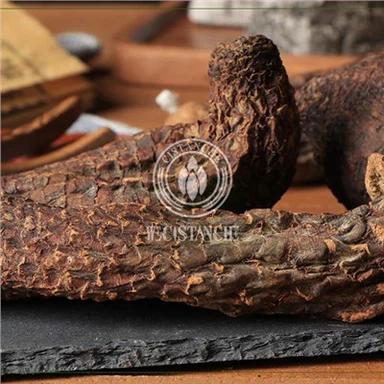
In summary, there is a close relationship between error and memory. Only when we actively face and deal with errors can we truly improve our memory and learning abilities, leading to better outcomes? It can be seen that we need to improve memory, and Cistanche deserticola can significantly improve memory, because Cistanche deserticola has antioxidant, anti-inflammatory, and anti-aging effects, which can help reduce oxidation and inflammatory reactions in the brain, thereby protecting the health of the nervous system. In addition, Cistanche deserticola can also promote the growth and repair of nerve cells, thus enhancing the connectivity and function of neural networks. These effects can help improve memory, learning ability, and thinking speed, and may also prevent the development of cognitive dysfunction and neurodegenerative diseases.

Click know ways to improve brain function
Fifty righthanded participants were recruited from the university community to take part in the experiment. Forty-seven participants (twenty-three male; mean age = 24.15, SD = 2.05) were retained for the final analysis; three participants had to be excluded due to problems in data collection.
More precisely, two participants had no recorded data in one of their sessions and the third had a very low response rate across all sessions (more than 80% abstention rate). Participants were free of any history of psychiatric or neurological diseases and from any form of colorblindness.
They gave their written informed consent to take part in the study, which was approved by the Ethics Committee of the Psychology Faculty of the Liège University, Belgium. The participants did not receive any compensation for their participation.
GENERAL PROCEDURE
All participants took part in three separate tDCS sessions in a pseudo-randomized order approximately one week (±2 days) apart. In each session, one of the three conditions, anodal stimulation, cathodal stimulation, or sham stimulation, was administered.
The participants completed two WM tasks (adapted from Majerus et al., 2016) during each of the three sessions, a visual array probe recognition task and a letter probe recognition task.
These tasks were chosen because they have been shown to recruit the dorsal attention network and more specifically the bilateral IPS, particularly for higher WM load (Majerus et al., 2016): both tasks lead to increased neural activity and differential multivariate voxel patterns in the IPS for 6-load versus 2-load conditions.
The tasks were explained verbally to the participants and they had the opportunity to ask further questions about the task. They also conducted a short practice session for each task (5 trials).
WM TASKS
In the visuospatial WM task (visual array probe recognition; Luck & Vogel, 1997), the participants had to memorize the position of multiple colored squares (see Figure 1). They were comfortably seated at a distance of 90 centimeters from a 22-inch screen.

Each trial started with the presentation of an exclamation mark during 1000 ms. Next, an array containing 2 or 6 colored squares appeared on a grey background. The squares disappeared after 350 ms, but the grey background stayed for another 800 ms.
After that, the array reappeared on the screen with one of the squares circled and the participants had to decide in less than 2000 ms whether the circled square was of the same color as in the memory array or not.
If the color was different, it was also different from the color of the other squares for this trial. For a given trial, no two squares were ever of the same color. Thus, if the square being probed was of a different color than the target square, the new color was also different from the color of any other square, thereby discarding the possibility that negative probes could be rejected merely by detecting color similarity between squares of the probe array.
The participants answered by pressing one of two response keys on the computer keyboard ('d' with their left index for 'same color' and 'k' with their right index for 'different color').
Once an answer had been recorded or the time limit of 2000 ms had been reached there was an inter-trial interval of variable duration (random Gaussian distribution centered on a mean duration of 4000 ± 1000 ms) before the next trial was initiated. This task was constructed to capture non-strategic, attention-based maintenance mechanisms via brief presentations and maintenance durations.
There was a total of 60 trials with half of them featuring a color change. Half of the trials comprised 2 squares (low load condition) and half comprised 6 squares (high load condition). Final scores were standardized to obtain a percentage of correct, incorrect, and missing responses and their corresponding average reaction times. In the verbal WM task (letter probe recognition task, Sternberg, 1966), the participants were presented with horizontal sequences of 2 or 6 letters, the letters being sampled without repetition from a pool of 16 different consonants (see Figure 1).
The presentation apparatus was the same as for the visual WM task. Each trial started with the presentation of an exclamation mark for 1000 ms. The memory sequence then appeared for 2500 ms followed by a fixation cross for 4000 ms during which the participants had to maintain the sequence in memory.
A probe letter then appeared in one of the 2 or 6 possible serial positions, the serial positions being indicated by a sequence of horizontal bars. The participants had 2000 ms to decide if the probe letter had been in the memory list and if it had appeared in the same position as in the probe array.
The participants answered by pressing one of two response keys on the computer keyboard ('d' with their left index for 'correct' and 'k' with their right index for 'incorrect'). Once an answer had been recorded or the time limit of 2000 ms had been reached there was an inter-trial interval of variable duration (random Gaussian distribution centered on a mean duration of 4000 ± 1000 ms) before the next trial was initiated.

It should be noted that there were trials where the letter was present but in another position, but there were no trials where the probe letter was part of the previous list. There was a total of 84 trials, with the same number of trials for each load condition; half of the probes were matching probes. Final scores were standardized to obtain a percentage of correct, incorrect, and missing responses and their corresponding average reaction times.
tDCS
The stimulation was delivered by The Brain Stimulator 1 system (The Brain Stimulator Inc., San Jose, California, USA) through a pair of saline-soaked surface sponge electrodes (target electrode = 3 × 3 cm, return electrode = 5 × 5 cm) connected to a battery-driven constant current stimulator.
For the anodal condition, the anode electrode was placed over the left IPS (P3 localization according to the 10/20 EEG international system), and the cathode was placed on the right cheek, and for the cathodal condition, the cathode was placed over the left IPS and the anode on the right cheek.
Active stimulation consisted of a constant current of 2 mA applied for 20 min (with 30 seconds of fade-in and fade-out), corresponding to the duration of the task. The sham condition consisted of stimulation for 30, and then the stimulator was turned off.
After the stimulation participants were asked if they felt strong discomfort regarding the stimulation and if they felt any side effects of the stimulation. Two participants complained about slight dizziness following anodal stimulation and another one following cathodal stimulation. Note however that there was no more formal assessment of side effects.

STATISTICAL ANALYSES
A 3 (anodal, cathodal vs sham condition) × 2 (low vs high load) repeated-measures analysis of variance (ANOVA) was conducted on both response accuracy and reaction times for each task (visuospatial and verbal) with JASP (JASP Team, 2019, version 0.9.2).
The Shapiro-Wilk test was applied to assess the normality of the data and Mauchly's test was used to assess the sphericity assumption. Greenhouse-Geisser-corrected significance values were used when the sphericity assumption was not met. Furthermore, we conducted Bayesian analyses to assess evidence for the null hypothesis. Bayesian analyses were conducted with JASP (version 0.9.2) with default prior settings (all models have equal prior probabilities).
Since there was a total of five models all prior probabilities were set to 0.2. The null model includes no predictor variable. Contrary to frequentist statistics, the obtained Bayes factors estimate evidence in favor of either the null hypothesis (BF01) or the effect of interest (BF10).
We used Jeffreys' indicative benchmarks (1998) to describe the strength of evidence as anecdotal (0–3), substantial (3–10), strong (10–30), very strong (30–100), or decisive (>100).
A first repeated-measures analysis of variance (ANOVA) was conducted on response accuracy for both tasks (see Figure 2). The percentages of accuracy for the visuospatial task were 97.8% (load 2) and 81.5% (load 6) in the anodal stimulation condition, 98,3% (load 2) and 81.5% (load 6) in the cathodal stimulation condition, and 98,3% (load 2) and 80.7% (load 6) in the sham condition, respectively.
For the verbal task, the percentages of accuracy were 98.3% (load 2) and 90.4% (load 6) in the anodal stimulation condition, 98.6% (load 2) and 91.6% (load 6)) in the cathodal stimulation condition, and 98.4% (load 2) and 90.3% (load 6) in the sham condition, respectively.
The ANOVAs showed a significant main effect of load on performance (visuospatial: F(1,46) = 277.42, p < 0.001, ηp 2 = 0.86; verbal: F(1,46) = 63.40, p < 0.001, ηp 2 = 0.58), but no main effect of condition (visuospatial: F(2,92) = 0.29, p = 0.75; verbal: F(2,92) = 1.27, p = 0.29) nor a significant condition × load interaction (visuospatial: F(2,92) = 1.02, p = 0.37; verbal: F(2,92) = 0.76, p = 0.47).

These results were confirmed by Bayesian analysis, the model associated with the strongest evidence including only the effect of load (visuospatial: BF10 = 4.91e+62; verbal: BF10 = 1.90e+20); strong evidence against a conditioning effect was observed (visuospatial: BF01 = 24.33; verbal: BF01 = 24.92).

For more information:1950477648nn@gmail.com