Treat Chronic Constipation
Jan 09, 2024
Mysteria is a common clinical disease. From a pathological point of view, this disease can be caused by the following factors: autonomic nerve disorder caused by emotional stress, sadness, and anxiety; slow intestinal motility, endocrine disorders; hyper intestinal motility, abnormal parasympathetic nerve excitement, intestinal spasmodic contraction; intestinal injury Insufficient stimulation, such as eating too little or insufficient fiber and water in food; lack of defecation motivation, such as old age, frailty, long-term illness, or postpartum, resulting in weakened contraction of the diaphragm, abdominal muscles, and levator ani muscles; weakened intestinal wall irritability, Such as diarrhea or long-term use of laxatives; lead, arsenic, mercury, and phosphorus poisoning, such as long-term use of calcium carbonate, aluminum hydroxide, atropine, prudence, etc.; water and electrolyte imbalance, such as blood loss, fever, vomiting, diarrhea, etc. Morphologically, this disease is mostly caused by rectocele, intrarectal intussusception, perineal descent, pelvic floor muscle spasm, puborectal muscle spasm and hypertrophy, and solitary rectal ulcer. In terms of treatment, neither drug treatment nor surgery is effective, and many patients even suffer from more severe constipation due to surgery.

Traditional Chinese medicine divides the disease into 5 types according to its different etiology and pathogenesis: gastrointestinal dryness and heat type, qi blockage type, yin deficiency and qi deficiency type, yang deficiency and cold coagulation type, and phlegm-dampness blockage type, with wind secretion. , heat secretion, qi secretion, yin knot, spleen knot, and other disease names. But as the analysis in "The Complete Book of Jingyue·Secret Notes" states: "It is too troublesome to establish a name, and there is no solid evidence, and it does not make sense. It only creates doubts and is not without the harm of clinical evidence."
treatment prescriptions
Tian Zhenguo used the TCM syndrome differentiation theory of viscera, meridians, and qi and blood to reveal that disharmony of viscera, astringent triple burner Qi, lack of motivation, and poor Qi movement are the basic causes of constipation. According to "Urine is a clear channel and belongs to Qi, and stool is a turbid channel and belongs to blood" ("Blood Syndrome Theory"); the liver stores blood and governs dispersion; the spleen governs transportation and transformation, regulates the spleen to achieve healthy transportation, and fills the water and grain essence; the kidney governs the opening of the two vaginas Combined, it strengthens the kidneys to support vitality and increase the driving force of excretion; the lungs and large intestine are related to the exterior and interior, nourishing the lungs to assist the various meridians, strengthening the function of the large intestine, regulating excretion to facilitate smoothness, etc., establishing the concept of "regulating the liver and spleen, nourishing the lungs and strengthening the kidneys, The treatment principle of "unblocking the fu organs and guiding stagnation", the ideological line of "secret but not unblocked, unblocking but not secret, supporting the root to reach the target", put forward the new theory of "using tonic to unblock, using tonic to cure the secret". Based on this academic thought, a Yangrong Runchangshu mixture was created to tonify congestion and treat constipation; a self-made Fuben Runchangshu mixture was prepared. Medicinal uses: 30 grams of cassia seeds, 20 grams of Chinese angelica, 20 grams of Bupleurum, and 15 grams of peach kernels. 30 grams of Magnolia officinalis, 20 grams of Citrus aurantium, 20 grams of betel nut, 30 grams of radish seeds, 30 grams of Cistanche deserticola, 20 grams of Achyranthes bidentata, 15 grams of almonds, 30 grams of melon and 30 grams of Polygonatum. Add 15 to 30 grams of rhubarb or 20 to 30 grams of wine rhubarb.

In the Fuben Runchangshu prescription, Cassia Semen enters the liver meridian and is the main medicine of Zujueyin Ganjia. It clears the liver, promotes diuresis and laxatives, and is mainly used to treat habitual constipation; diet accumulation, cold and heat evil, "removing the old and promoting the new", has the effect of soothing the liver, reconciling the exterior and interior, can cure chest fullness and rib pain, and relieve anal prolapse; Angelica sinensis enters the heart, liver, and spleen meridians, nourishes the blood, moistens the intestines and smoothes the intestines. , to treat dryness of the intestines, difficulty in defecation, severe dysentery, and mass accumulation; peach kernels enter the liver and large intestine meridian, break up blood and promote blood stasis, moisturize and smooth the intestines, and treat dryness of blood and constipation. "Medicine Origin" states that "the temperature is high, and the taste is sweet and bitter.", cures bloody stool, blood constipation, blood dryness, and moisturizes the stool." The above four medicines are combined to strengthen liver qi, regulate liver and blood, and nourish yin.
Magnolia officinalis enters the spleen, stomach, and large intestine meridians, warms the middle and lowers qi, removes dampness, and eliminates phlegm. It can treat chest and abdominal distension and pain, indigestion, cold-dampness, and diarrhea; It can treat bloating and food accumulation in the hypochondriac; betel nut enters the spleen, stomach, and large intestine meridians, can break up the accumulated qi, and cure food accumulation, epigastric distension and pain, and severe diarrhea; radish seed enters the spleen and stomach meridian, has the effect of lowering qi and eliminating food, and can treat It can relieve qi stagnation, chest tightness, abdominal distension, and severe diarrhea due to food accumulation. It can facilitate defecation, help the lungs, and treat asthma. The above four medicines are used together to regulate the spleen and promote qi, help yang and dissipate stagnation, strengthen the dispersion of essence and qi, and help the spleen's function of transporting water and grains.

Cistanche deserticola enters the kidney and large intestine meridians, nourishes the kidneys, replenishes essence, moisturizes dryness, smooths the intestines, and treats dry blood and constipation. "Shen Nong's Materia Medica" states that "only a few Liang can be used to soak away the salty taste, and remove the scales and pericardium. Boil it with light white wine and take it with a meal, it can cure dryness and constipation in the elderly and make them feel energetic. Achyranthes root enters the kidney meridian, dissipates blood stasis, eliminates the syndrome, helps the twelve meridians, treats pain in the heart and abdomen, and treats hard knots under the navel. "Shen Nong's Materia Medica" states that it has "thick flavor and thin gas, can be tonic when traveling, and has a good nature and descends, so it enters the liver and kidneys." The above two medicines are combined to strengthen the kidneys and replenish qi, help the yang benefit the yin, and relieve constipation.
Polygonatum enters the lung meridian, moistens the heart and lungs, and tonifies Zong Qi. "Ben Jing Feng Yuan" calls it "a great product for tonifying the Zhong Palace, widening the middle and replenishing Qi, harmonizing the five internal organs, replenishing muscles, and strengthening bone marrow, all of which are tonifying Yin." "Almonds enter the lungs and large intestine meridian, help the lungs and moisturize the intestines, and reduce the temperature and stool; Trichosanthes melon seeds enter the lungs and large intestine meridian, have the functions of moistening the lungs, dispersing knots, and smoothing the intestines, and can cure chest knots, constipation, and lung dryness." Thirst, constipation. The above three medicines are combined to moisten the lungs and promote qi, harmonize the pulses, and benefit the large intestine.
Rhubarb enters the stomach and large intestine meridian, purges heat and toxins, breaks accumulation, removes blood stasis, and cures constipation due to heat, delirium, and food accumulation. It can cleanse the intestines and stomach, promote metabolism, promote water and grain, harmonize food, and calm the five internal organs. All medicines are used together to regulate the liver and spleen, nourish the lungs and strengthen the kidneys, clear the bowels and moisturize the intestines, to achieve the purpose of supporting the roots and moistening the intestines, and tonifying and treating constipation.
Natural Herbal Medicine For Relieving Constipation-Cistanche
Cistanche is a genus of parasitic plants that belongs to the family Orobanchaceae. These plants are known for their medicinal properties and have been used in Traditional Chinese Medicine (TCM) for centuries. Cistanche species are predominantly found in arid and desert regions of China, Mongolia, and other parts of Central Asia. Cistanche plants are characterized by their fleshy, yellowish stems and are highly valued for their potential health benefits. In TCM, Cistanche is believed to have tonic properties and is commonly used to nourish the kidney, enhance vitality, and support sexual function. It is also used to address issues related to aging, fatigue, and overall well-being. While Cistanche has a long history of use in traditional medicine, scientific research on its efficacy and safety is ongoing and limited. However, it is known to contain various bioactive compounds such as phenylethanoid glycosides, iridoids, lignans, and polysaccharides, which may contribute to its medicinal effects.

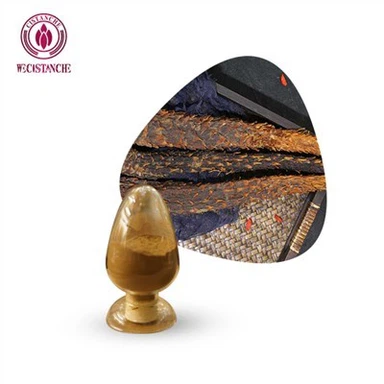
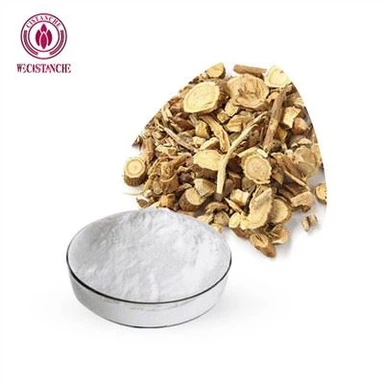
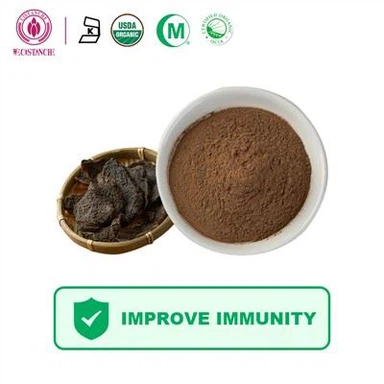
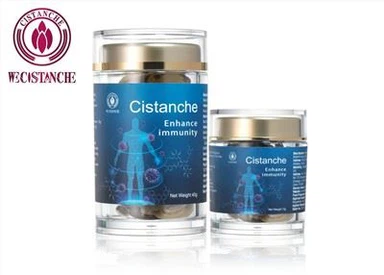
Wecistanche's cistanche powder, cistanche tablets, cistanche capsules, and other products are developed using desert cistanche as raw materials, all of which have a good effect on relieving constipation. The specific mechanism is as follows: Cistanche is believed to have potential benefits for relieving constipation based on its traditional use and certain compounds it contains. While scientific research specifically on Cistanche's effect on constipation is limited, it is thought to have multiple mechanisms that may contribute to its potential to relieve constipation. Laxative Effect: Cistanche has long been used in Traditional Chinese Medicine as a remedy for constipation. It is believed to have a mild laxative effect, which can help promote bowel movements and induce constipation. This effect may be attributed to various compounds found in Cistanche, such as phenylethanoid glycosides and polysaccharides. Moistening the Intestines: Based on traditional use, Cistanche is considered to have moisturizing properties, specifically targeting the Intestines. Promoting hydration and lubrication of the Intestines may help soften tools and facilitate easier passage, thereby relieving constipation. Anti-inflammatory Effect: Constipation can sometimes be associated with inflammation in the digestive tract. Cistanche contains certain compounds, including phenylethanoid glycosides and lignans, that are believed to have anti-inflammatory properties. By reducing inflammation in the intestines, it may help improve bowel movement regularity and relieve constipation.