Unveiling The Extraction Process Of Effective Ingredients From Cistanche Deserticola
Dec 05, 2024
As a precious traditional Chinese medicine in China, the extraction process of active ingredients from Cistanche deserticola has attracted much attention. In the introduction, let's first understand the important position of Cistanche deserticola. Cistanche deserticola was first recorded in the "Shennong Bencao Jing" and is classified as a top-grade herb. It has the effects of tonifying the kidneys and yang, replenishing essence and marrow, nourishing blood and moistening dryness, and prolonging life. It is mainly used to treat male impotence, female infertility, vaginal discharge, blood collapse, cold pain in the waist and knees, and constipation caused by blood deficiency. It mainly grows in desert areas such as western Inner Mongolia, Gansu, and Xinjiang in China, and is a precious traditional Chinese medicine included in the Chinese Pharmacopoeia.
The medicinal herb Cistanche deserticola contains bioactive components such as phenylethanolic glycosides, D-mannitol, polysaccharides, betaine, etc. However, traditional extraction methods are mostly limited to the extraction of one bioactive component, ignoring other components, resulting in significant waste of resources. In order to solve this problem, numerous researchers are committed to studying the extraction process of effective ingredients from Cistanche deserticola, in order to achieve efficient utilization of Cistanche deserticola resources.

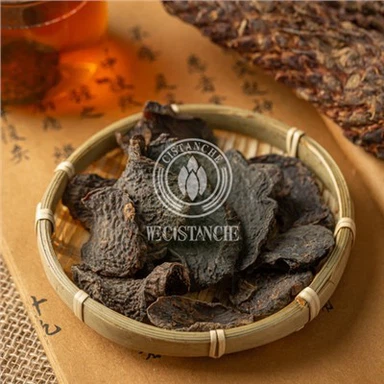
desert living cistanche
The active ingredients of Cistanche deserticola
As a precious traditional Chinese medicine, Cistanche deserticola contains various bioactive components. Among them, phenylethanoid glycosides are one of the important active ingredients in Cistanche deserticola, with various pharmacological effects. D-mannitol is also widely present in Cistanche deserticola and has the chemical properties of a polyol. It is widely used in fields such as medicine, food, and textiles. In addition, polysaccharides are also one of the important components of Cistanche deserticola, with functions such as regulating immune activity. And betaine has a high content in Cistanche deserticola, with various pharmacological activities.
At present, there are many methods for extracting effective ingredients from Cistanche deserticola. For example, enzymatic hydrolysis combined with ultrasound extraction can be used to extract polysaccharides from Cistanche deserticola. The specific steps are as follows: extract the crude powder of Cistanche deserticola with ethyl acetate and ethanol in sequence, collect the residue to obtain defatted Cistanche deserticola powder; Add papain, cellulase, and pectinase to defatted Cistanche deserticola powder, add water to make the ratio of material to liquid 1:20-1:25, perform enzymatic hydrolysis, and then extract with ultrasound for 0.5-0.75 hours, 1-3 times. Combine the filtrate, centrifuge the supernatant and concentrate it. Then add ethanol to the concentrate until the total ethanol concentration is 80%, let it stand, centrifuge to obtain a precipitate, and freeze dry the precipitate.

Cistanche deserticola experiment
There is also a method of extracting polysaccharides from Cistanche deserticola through a combination of enzyme complex and ultrasonic extraction technology. The optimal process parameters for extracting polysaccharides from Cistanche deserticola were determined to be a compound enzyme dosage of 4%, a compound enzyme ratio (cellulase: pectinase) of 1:3, ultrasound power of 350W (40kHz), ultrasound time of 20 minutes, enzymatic hydrolysis temperature of 50 ℃, and pH value of 6. Under this extraction process, the average yield was 5.14% after three repeated extractions, with a mass fraction of 90.78% and a comprehensive index of 47.96%. The RSD was 1.51%, indicating good reproducibility.
In addition, orthogonal experimental design can also be used to study the extraction process of Cistanche deserticola. Study the factors affecting the extraction process of betaine using betaine in the extraction solution as the evaluation index. Among the four factors in the experimental design, ethanol concentration has a significant impact. The optimal extraction process for Neicong is: reflux extraction with 75% ethanol at 8 times the amount for 2 times, each time for 1 hour.
Ultrasonic extraction technology is also widely used in the extraction of active ingredients from Cistanche deserticola. When extracting polysaccharides from Cistanche deserticola using water, ultrasonic extraction for 20 minutes resulted in higher polysaccharide extraction rates than conventional extraction for 24 hours and 100 ℃ reflux for 6 hours. When extracting betaine from Cistanche deserticola using water, ultrasound extraction for 20 minutes resulted in a similar extraction rate as conventional extraction for 24 hours and 100 ℃ reflux for 6 hours. When extracting glycosides from Cistanche deserticola using methanol, ultrasonic extraction for 30 minutes yields the same extraction rate as conventional extraction for 24 hours and reflux at 80 ℃ for 5 hours.
A method for salt induced extraction of phenylethanoid glycosides from Cistanche deserticola using a low melting point solvent aqueous solution. The powder of Cistanche deserticola was extracted using a low melting point solvent solution, and a two-phase system was prepared by adding phosphate to the extraction solution to extract phenylethanoid glycosides from Cistanche deserticola. The extraction and extraction environment conditions were mild, the phase separation time was short, and the yield of phenylethanoid glycosides in Cistanche deserticola could reach up to 20%.

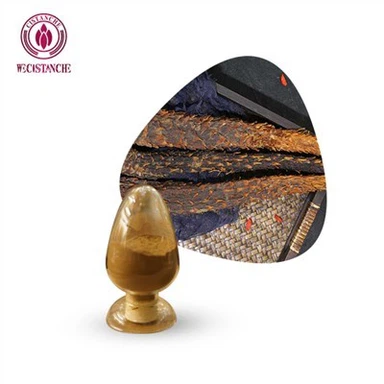
cistanche powder
The extraction of mannitol from Cistanche deserticola can be qualitatively and quantitatively studied using infrared spectroscopy and spectrophotometry. The extraction process of D-mannitol from Cistanche deserticola was proposed, and white powdery mannitol crystals were obtained by crystallization method. The yield of mannitol obtained by Cistanche deserticola mannitol extraction process was 2.9%.
The extraction process of effective ingredients in Cistanche deserticola can be achieved by drying and crushing Cistanche deserticola, extracting it with 90-95% ethanol, and concentrating, crystallizing, and drying the extract to obtain Cistanche deserticola D-mannitol; Extract the residue with an ethanol solution with a concentration of 60-80%. The extract is passed through a macroporous resin, and the eluent is concentrated and dried to obtain phenylethanolic glycosides of Cistanche deserticola; The extracted residue is further heated and extracted with distilled water. The supernatant is concentrated under reduced pressure and then precipitated with 3 times the volume of 95% ethanol. The precipitate is dried to obtain polysaccharides from Cistanche deserticola.
Common extraction processes
The extraction process of active ingredients in Cistanche deserticola is rich and diverse, and the following are several common extraction methods.
Traditional ethanol extraction combined with macroporous resin separation method
Firstly, the medicinal herb Cistanche deserticola is dried at 60 ℃ and crushed into 40 mesh.
Then, 90-95% ethanol solution was used to extract Cistanche deserticola powder, and the extract was concentrated, crystallized, and dried to obtain Cistanche deserticola D-mannitol.
Then, the extraction residue was extracted using an ethanol solution with a volume ratio concentration of 60-80%. The extraction solution was passed through a macroporous resin, and the eluent was collected. After concentration and drying, the phenylethanolic glycosides of Cistanche deserticola were obtained.
Finally, the residue after re extraction was added to distilled water and heated for extraction. The supernatant was concentrated under reduced pressure and precipitated with 3 times the volume of 95% ethanol. After drying, the polysaccharides from Cistanche deserticola were obtained.

cistanche extract powder
Macroporous resin separation and purification method
Grind the Cistanche deserticola and mix it with an ethanol solution with a volume percentage of 50-70%. Heat and reflux to extract 1-3 times, each time for 1-3 hours. Filter and concentrate the filtrate.
The concentrated alcohol extract of Cistanche deserticola is passed through a macroporous resin and eluted with water and ethanol solution in sequence. The ethanol elution solution is collected to obtain the extract of Cistanche deserticola, which contains total glycosides of Cistanche deserticola.
Integrated ultrasonic cycle extraction and separation process
Extraction of total phenylethanolic glycosides from Cistanche deserticola: Take dried fleshy stems of Cistanche deserticola, crush them, add 10-30 times the amount of 30-70% ethanol solution, below 70 ℃, extract by ultrasonic circulation for 20-60 minutes, with 1-2 extractions. Combine the filtrate and concentrate under reduced pressure to obtain concentrated solution I.
Separation of total phenylethanol glycosides in Cistanche deserticola: Add concentrated solution I to a macroporous adsorption resin column, wash with deionized water, collect the washed solution for retention, and then wash with methanol or ethanol solution. Collect the fraction containing total phenylethanol glycosides, concentrate and dry to obtain total phenylethanol glycosides in Cistanche deserticola.
Extraction of total oligosaccharides and crude polysaccharides from Cistanche deserticola: Take the filter residue, add 10-40 times the amount of water, stir and circulate in an ultrasonic reactor at 50-70 ℃ for 20-60 minutes, extract 1-2 times, and combine the filtrate with water washing and dehydration. Concentrate under reduced pressure to obtain concentrated solution II; Place concentrated solution II at room temperature, add 80-100% ethanol to achieve an alcohol content of 50-90%, let it sit overnight at low temperature, filter, concentrate the supernatant under reduced pressure, and dry to obtain total oligosaccharides of Cistanche deserticola; After the precipitation is partially dried, crude polysaccharides of Cistanche deserticola are obtained.
Other extraction methods
Optimization of extraction using response surface methodology combined with different drying methods
Using single factor screening combined with Box Behnken response surface methodology to optimize the extraction process, the factors affecting the extraction of effective components from Cistanche deserticola were first determined, such as ethanol volume fraction, extraction temperature, extraction time, solid-liquid ratio, and extraction times. Then, through experimental design, find the optimal extraction conditions. After optimal extraction conditions, HPLC was used to detect the content of components such as echinacroside in Cistanche deserticola dried under different methods. Through methods such as cluster analysis, principal component analysis, and close value analysis, a comprehensive evaluation of the components of Cistanche deserticola under different drying methods was conducted to select the optimal drying method. Reference materials such as "Optimization of the Reflux Extraction Process of Phenylethanolic Glycosides from Cistanche deserticola by Response Surface Methodology", "Optimization of Ultrasonic Assisted Extraction Process of Cistanche deserticola Polysaccharides by Response Surface Methodology", "Optimization of the Preparation Process and Activity Study of Cistanche deserticola Water Extract by Response Surface Methodology", etc. provide a detailed introduction to the application of Response Surface Methodology in the extraction of active ingredients from Cistanche deserticola, providing theoretical basis and practical experience for the implementation of this method.

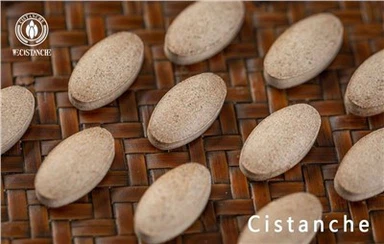
cistanche 200mg
Preparation of Cistanche deserticola pulp by ancient extraction and enzymatic hydrolysis technology
Extracting the effective ingredients of traditional Chinese medicine from Cistanche deserticola through modern methods to produce Cistanche deserticola puree, such as Joyful Miracle&Calm Natural Cistanche deserticola puree. With the help of modern biological enzymes, this raw material can stimulate the active ingredients of Cistanche deserticola, with an absorption rate of up to 99.9%. The preparation process includes cleaning fresh Cistanche deserticola, removing surface impurities, and removing moisture to obtain the pre-treatment product; Slice and crush the preprocessed product to obtain the material; Pump the material to the pulping machine and separate the slag skin with a sieve to obtain the slurry; Perform antioxidant treatment on the slurry, add citric acid dry powder and vitamin C dry powder, and adjust the pH value; Pump the antioxidant treated slurry into a colloid mill for grinding treatment; Homogenize the ground slurry under high pressure to break the cell wall; Finally, perform pasteurization and filling. Reference materials such as "Preparation Method of Cistanche deserticola puree. pdf", "Joyful Miracle&Calm Natural Cistanche deserticola puree: Using modern biological enzymes to make fresh puree!", and "A Preparation Method and Process-2 for Cistanche deserticola puree" provide detailed introductions to the preparation method of Cistanche deserticola puree, providing technical support for this extraction method.
Combining multiple modern extraction techniques
Modern extraction techniques such as supercritical fluid extraction, microwave-assisted extraction, ultrasound assisted extraction, column chromatography separation, and high-performance liquid chromatography are widely used in the extraction and separation of active ingredients in Cistanche deserticola. Supercritical fluid extraction method uses supercritical fluids such as carbon dioxide as extractants to extract effective components from Cistanche deserticola in a supercritical state. It has the advantages of high extraction efficiency, strong selectivity, and minimal damage to thermosensitive components. The microwave-assisted extraction method utilizes the thermal and non thermal effects generated by microwave radiation to promote the rupture of the cell wall of Cistanche deserticola, accelerate the release of effective ingredients, and achieve fast and efficient extraction speed. The ultrasound assisted extraction method utilizes the cavitation and mechanical effects of ultrasound to destroy the cell wall of Cistanche deserticola and promote the release of active ingredients. It also has the characteristics of fast extraction speed and high efficiency. Column chromatography and high-performance liquid chromatography utilize the different adsorption capacities and distribution coefficients of different substances on adsorbents or stationary phases for separation, and have the advantages of good separation efficiency, high sensitivity, and strong selectivity. The reference materials such as "Extraction and Separation of Effective Components in Cistanche - Doudingwang" provide a detailed introduction to the application principles and processes of these modern extraction techniques in the extraction and separation of effective components in Cistanche, providing a reference for the combination of multiple technologies.
conclusion
There are various extraction processes for the active ingredients of Cistanche deserticola, and different extraction methods have their own advantages and disadvantages. In practical applications, suitable extraction processes can be selected according to the needs to fully utilize the medicinal value of Cistanche deserticola.
Traditional ethanol extraction combined with macroporous resin separation method, macroporous resin separation and purification method, integrated ultrasonic circulation extraction and separation process and other common extraction methods, as well as response surface methodology optimized extraction combined with different drying methods, ancient extraction+biological enzymatic hydrolysis technology to produce Cistanche deserticola pulp, and the combination of various modern extraction technologies, provide multiple options for the extraction of effective ingredients from Cistanche deserticola.
For example, the traditional ethanol extraction combined with macroporous resin separation method can sequentially extract D-mannitol, phenylethanolic glycosides, and polysaccharides from Cistanche deserticola, but the steps of this method are relatively cumbersome. The macroporous resin separation and purification method is relatively simple to operate, but there may be slight differences in extraction efficiency. The integrated ultrasonic cycle extraction and separation process utilizes ultrasonic technology to improve extraction efficiency, but requires high equipment requirements.

Main Chemical Constituents of Cistanche deserticola
Click here to view Cistanche Enhance Immunity products
【Ask for more】 Email:cindy.xue@wecistanche.com / Whats App: 0086 18599088692 / Wechat: 18599088692
Response surface methodology optimization extraction combined with different drying methods can find the optimal extraction conditions through experimental design, and comprehensively evaluate different drying methods to select the best drying method and improve the content and quality of active ingredients. The traditional extraction method combined with biological enzymatic hydrolysis technology is used to produce the original slurry of Cistanche deserticola. With the help of modern biological enzymes, the effective components of Cistanche deserticola can be stimulated, resulting in high absorption rate, but the cost may be relatively high. The combination of various modern extraction techniques, such as supercritical fluid extraction, microwave-assisted extraction, ultrasonic assisted extraction, etc., has the advantages of high extraction efficiency and strong selectivity, but the technical difficulty and cost may also be high.
In summary, when selecting the extraction process for the active ingredients of Cistanche deserticola, it is necessary to comprehensively consider factors such as extraction efficiency, cost, and product quality to achieve efficient utilization of Cistanche deserticola resources and fully realize their medicinal value.