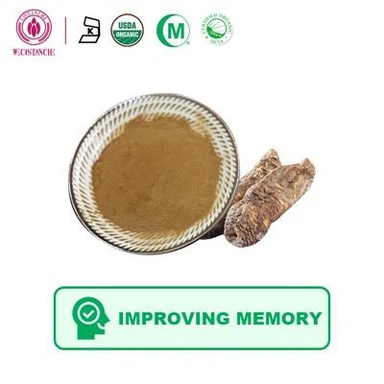
What Is The Magic Of Calmly And Leisurely Cistanche Deserticola?
Nov 15, 2024
The ancient saying goes A fairy grass that lasts for a thousand years, the Cistanche has miraculous effects. The name Cistanche deserticola comes from its characteristics of "calmness" and "gentleness". Li Shizhen's "Compendium of Materia Medica" records: "This substance (Cistanche deserticola) is nourishing but not steep, so it is called calm." "The Road to Health" also made a special report on Cistanche deserticola, stating that it has a "mild yang tonifying effect and is suitable for long-term consumption", which shows its preciousness.
Get to know Cistanche deserticola

dragon herbs cistanche
Cistanche deserticola is a dry fleshy stem with scaly leaves of the Cistanche deserticola or Cistanche tubulosa plants in the family Rhamnaceae. Excavate the seedlings in spring or before the frozen soil in autumn, and remove the stem tips. Cut into sections and dry in the sun. Sweet, salty, and warm in taste. Returning to the kidney and colon meridian. Tonifying kidney yang, nourishing essence and blood, moistening intestines, and promoting bowel movements. They are used for kidney yang deficiency, essence and blood deficiency, impotence, infertility, soreness and weakness of the waist and knees, muscle and bone weakness, intestinal dryness, and constipation.
The use of Cistanche deserticola as medicine has a long history. During the Kaiyuan period of the Tang Dynasty, "Daozang" listed Cistanche deserticola as one of the nine immortal herbs in China, along with Tian Shan snow lotus, San Liang Chong ginseng, Hundred and Twenty Year Old Shouwu, and Cordyceps Sinensis. It is a very precious nourishing medicine. Famous doctors such as Hua Tuo, Zhang Zhongjing, Sun Simiao, Zhu Danxi, and Wang Haogu used Cistanche deserticola to treat patients. It is sweet and warm, salty and moist in quality, nourishing yang without dryness, nourishing yin without greasiness, and has miraculous therapeutic effects.
superman herbs cistanche
After harvesting or purchasing, Cistanche deserticola cannot be directly used as medicine or consumed. Like most traditional Chinese medicinal materials, it needs to undergo relevant processing to exert its effects better. In the "Lei Gong's Treatise on Processing", it is mentioned that "any envoy (Cistanche deserticola) must first soak it in clear wine overnight, then use a brown brush to remove the sand, floating armor, split the center, and remove a heavy layer of white films, like bamboo, silk, and grass. With this, it can block the qi in front of the heart and prevent it from dissipating, making people's qi rise. Steam it in a steamer, take it out from noon to noon, and then use crispy roasting to obtain it.
Efficacy and Classic Formula Testing
Cistanche deserticola was first recorded in the "Shennong Bencao Jing" and is classified as a top-grade herb: "It has a sweet and slightly warm taste and grows in valleys. It can treat five kinds of fatigue and seven injuries, nourish the middle, remove cold and hot pain in the stem, nourish the five organs, strengthen yin, nourish essence and qi, have more children, and relieve women's fatigue. Long-term consumption can lighten the body.

effects of cistanche-improve kidney function
Modern scientific research has shown that the main components of Cistanche deserticola include phenylethanoid glycosides, iridoids, and their glycosides, sugars, volatile components, as well as amino acids and trace elements. The development prospects of the medicinal value of Cistanche deserticola are promising, with effects such as anti-aging, anti-dementia, anti-fatigue, moisturizing the intestines and promoting bowel movements, immune regulation, liver protection, improving sexual function, regulating the central nervous system, regulating the endocrine system, enhancing memory ability, preventing senile dementia, anti-osteoporosis, and promoting bone formation.
The core pharmacological mechanisms of Cistanche deserticola are antioxidant and anti-inflammatory mechanisms. The antioxidant effect of sugars is particularly prominent, and the anti-aging effect of glycosides is more clear. The ischemic protection, liver protection, and reproductive improvement effects of phenylethanoid glycosides are particularly significant.
Ancient medical practitioners often used Cistanche deserticola in combination with different traditional Chinese medicines to treat diseases such as constipation, impotence, and nocturnal emissions. Combination of Angelica sinensis and Achyranthes bidentata (Ji Chuan decoction in the Ming Dynasty's "Jing Yue Quan Shu": water for one and a half minutes, boil for seven or eight minutes, take before eating), used to treat elderly kidney deficiency, constipation, and soreness in the waist and feet. Combined with yam (as stated in the Tang Dynasty's "Essential Prescriptions for Preparing Urgent Qianjin"), yam pills are used to treat symptoms such as kidney qi deficiency, fatigue, lower back pain, tinnitus, nocturnal emissions, night sweats, or coldness in the lower body. It is compatible with Cuscuta chinensis (Cistanche Pill in the Song Dynasty's Taiping Shenghui Prescription: the top is the end, and the honey refining is the pill, as big as the plane tree seed. Every 30 pills taken, the hollow warm wine is sent, and it is taken before dinner), mainly for impotence and fatigue.

effects of cistanche-anti fatigue
Click here to view Relieve Physical Fatigue Cistanche products
【Ask for more】 Email:cindy.xue@wecistanche.com / Whats App: 0086 18599088692 / Wechat: 18599088692
Renowned traditional Chinese medicine practitioner Li Furen believes that the fundamental cause of senile constipation is the gradual decline of vital energy and the low function of the five organs. Therefore, the treatment should be based on the principle of strengthening the body and consolidating the foundation. The "moistening and promoting" method is proposed, which commonly uses Cistanche deserticola to nourish the liver and kidneys, strengthen and protect vital energy, and is combined with goji berries, hemp seeds, and licorice to enhance vital energy and preserve the original vital energy, achieving the goal of eliminating evil without harming the vital energy.
Hu Jianhua's treatment for chronic nephritis proteinuria is mainly focused on strengthening the spleen and kidneys. He commonly uses Cistanche deserticola to warm and nourish kidney yang and combines it with Euryale and Golden Cherry to strengthen the spleen, tonify the kidneys, and fix astringency. The combination of various medicines is essential for regulating and supplementing the essence of the kidney. The dosage of Cistanche deserticola is 12g; For the treatment of menstrual headaches that repeatedly do not heal, Cistanche deserticola is used to regulate the Chong Ren function. It is combined with Tianma and Gauteng to calm the liver and dispel wind, while Paeonia lactiflora and Curcuma zedoaria can promote blood circulation and remove blood stasis. The dosage of Cistanche deserticola is 12g.
Tang Qisheng believes that schizophrenia belongs to the category of "madness" in traditional Chinese medicine, with phlegm confusing the heart and mind, and kidney qi deficiency as the foundation. To treat schizophrenia with negative symptoms, Cistanche deserticola is commonly used to nourish kidney qi, nourish essence and blood, and is combined with Morinda officinalis to tonify the kidneys, benefit essence, and increase yang and qi. The combination of the two drugs can tonify the kidneys and yang, and treat the decline of fire in the gate of life. The dosage of Cistanche deserticola is 15g.
It is worth noting that although Cistanche deserticola belongs to the category of medicinal and edible substances, it is widely used in clinical practice and has not shown significant toxic side effects at commonly used doses (6-10g). However, during use, attention should still be paid to unsuitable populations (such as those with excessive internal heat, constipation, and gastrointestinal weakness), and appropriate dosages and drug combinations should be selected to better exert its efficacy.
Identification of Cistanche deserticola
At present, the legal source plants of the traditional Chinese medicine Cistanche deserticola are divided into two types. One is the Haloxylon ammodendron, also known as the Soft Big Cloud, with the scientific name "(Desert) Cistanche deserticola", mainly distributed in Alxa and other areas in western Inner Mongolia; One type is Red Willow Big Yun, also known as Hard Big Yun, scientific name "Guanhua Cistanche", mainly produced in Hotan area of Xinjiang. Thanks to its unique geographical environment and climate conditions, the Cistanche deserticola produced in the Alxa region is large, thick in flesh, rich in gelatinous substances, and of high quality. It is renowned both domestically and internationally as the "Desert Ginseng", and Alxa is also known as the "hometown of Cistanche deserticola in the world". So, how to distinguish between the two?
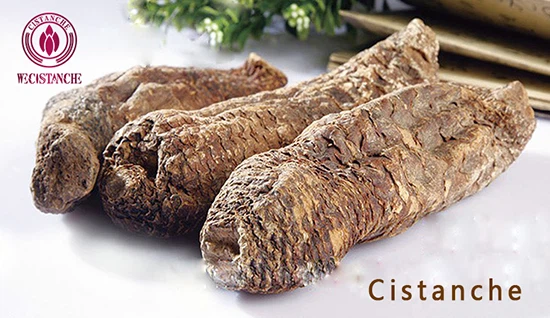
Cistanche deserticola is a flattened cylindrical shape, slightly curved, measuring 3-15cm in length and 2-8cm in diameter. The surface is brown or gray-brown, densely covered with fleshy scales arranged in a tile-like pattern, and the tips of the scales are usually broken. Weight, hard texture, slightly flexible, not easy to break, brown cross-section, with light brown dotted vascular bundles arranged in wavy rings. Qi is subtle, with a sweet and slightly bitter taste.
Cistanche tubulosa is spindle-shaped, flattened spindle-shaped, or flattened cylindrical, slightly curved, 5-25cm long, and 2.5-9cm in diameter. Surface brown to dark brown. The cross-section is granular, gray-brown to gray-brown, with scattered punctate vascular bundles.
In addition, due to the large-scale harvesting of Cistanche deserticola in recent years, as well as the difficulty in reproducing parasitic plants and the shortage of medicinal sources, there are often confused products appearing in the market, such as Cistanche deserticola, Salted Meat Congrong, Lanzhou Cistanche deserticola, Grass Cistanche deserticola, as well as counterfeit multi stamen snakehead, with vastly different effects, which must be carefully identified.
Cistanche deserticola dietary therapy formula
Braised lamb with Cistanche deserticola

Cistanche deserticola slice
Prepare 10g of Cistanche deserticola, 100g of lamb, 2g of cinnamon, 10 Sichuan peppercorns, 2g of ginger, 2g of star anise, and 5g of scallions. Put the washed spices together into a cloth bag, cut the lamb into pieces, and chop the scallions. Put the cloth bag, Cistanche deserticola, and lamb into a clay pot. After boiling on high heat, turn to low heat and remove the foam promptly. When the lamb is half cooked, add scallions and stew until the lamb is cooked. Season with salt.
Effect: Eating Cistanche deserticola together with lamb can nourish the kidneys and essence, warm the middle and lower parts, moisten dryness, and smooth the intestines. It is used for five types of injuries, including soreness and weakness of the waist and knees, nausea and vomiting due to middle deficiency, infertility, and kidney yang deficiency. Symptoms include cold limbs, tinnitus, dizziness, frequent urination, and constipation.
Stewed Chicken Soup with Goji Berry, Cistanche deserticola
Prepare 500g of chicken, 15g of goji berries, 15g of Cistanche deserticola, and 20g of ginger. Blanch the chicken chunks in water and remove them. Take a clean pot and heat it up. Add water, ginger slices, Cistanche deserticola, and chicken chunks. Bring to a boil over high heat and simmer over low heat for 30 minutes. Add goji berries and simmer for 10 minutes to complete the dish.
Effect: Cistanche deserticola supplements kidney yang and benefits essence and blood. Goji berries can treat blood deficiency, fatigue, dizziness, blurred vision, and blurred vision.