Why Getting Back To Nature Is Good For You
Nov 16, 2022
Support: wallence.suen@wecistanche.com 0015292862950
In China, the incidence of chronic diseases is increasing year by year, and various diseases are showing a younger trend. There are 160 million people with dyslipidemia (including hyperlipidemia), 270 million people with high blood pressure, 92.4 million people with diabetes, and 200 million people who are overweight or obese. On average, one person suffers from cancer every 30 seconds, one suffers from diabetes every 30 seconds, and at least one person dies of cardiovascular and cerebrovascular diseases every 30 seconds. In the past ten years, the average number of new chronic cases per year has nearly doubled, and chronic diseases have become a fatal factor that threatens the health of Chinese people. How does Chinese medicine treat chronic diseases? In this issue, "Life Times" specially invited Professor Xu Fengqin, a famous Chinese medicine doctor in the capital and vice president of Xiyuan Hospital of China Academy of Chinese Medical Sciences, to explain in detail and give the conditioning prescription.

Good doctor, benevolence, and skill are indispensable
Xu Fengqin is a native of Weifang, Shandong, and was admitted to Beijing College of Traditional Chinese Medicine (now Beijing University of Traditional Chinese Medicine) in 1979. On the day she left home to report for duty, the old branch secretary said to her, "Study hard, and I will treat our people well in the future!" Xu Fengqin said that from this moment on, she made up her mind to learn the skills well and become a good doctor who can save lives and heal the wounded.
Medicine is benevolence, "benevolence" and "skill" are indispensable, a good doctor must have noble medical ethics and superb medical skills. "I remember that when I was working in the CCU (Coronary Care Unit), a patient with a large area of myocardial infarction suffered a sudden cardiac arrest. During my internship at the university, a young doctor and I were on night shift, and repeated cardiac compressions, electrical defibrillation, and drugs for the patient. First aid... The young doctor asked me: "Teacher, can such a life-saving rescue really save life?" I told him that unless he was declared clinically dead, he must do his best! After one night of treatment, the patient finally turned from danger to safety and lived for another 20 years. Became my 'fan'."

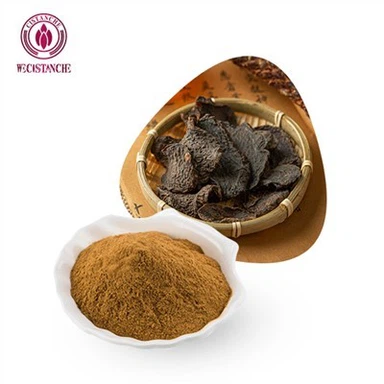
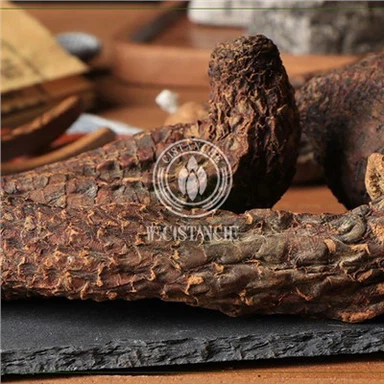
Cistanche tubulosa Capsule Supplement Extra Strength for
Energy, Muscle Growth, Heart Health, Vascularity & Stamina
Xu Fengqin's specialty is the combination of traditional Chinese and Western medicine. Whenever she faces a critically ill patient, her principle is to use whichever treatment plan has the best curative effect and less pain, and adheres to the combination of traditional Chinese and Western medicine. "I remember a patient who was hospitalized for cirrhosis and ascites. He had been hospitalized for many times in the local area. This time he came to Xiyuan Hospital to seek Chinese medicine treatment, but after examination, it was found that the real cause of the patient was not cirrhosis, but Buga Syndrome is caused by ascites caused by stenosis of the inferior vena cava and poor blood return. For him, the most effective treatment is to implant a stent in the stenosis of the inferior vena cava. Drug treatment is difficult to be effective. But the patient is unwilling, said To see Chinese medicine is to take medicine.” Xu Fengqin said that for such a patient, it is necessary to patiently enlighten and help him make the right choice.
In 1997, Xu Fengqin became the first surgical heirs of Academician Chen Keji, a famous doctor of integrated traditional Chinese and Western medicine. In 2000, he became a doctoral student of Academician Chen Keji. The six years under the tutelage of Academician Chen Keji was an important period for her to grow rapidly and become a talent. For traditional Chinese medicine, "classics are the foundation, and teaching from teachers is the key." With her own efforts and the hands-on teaching of her mentor, Xu Fengqin's theory and clinical level of traditional Chinese medicine and integrated Chinese and Western medicine have been significantly improved, and she has become a member of the Chinese Academy of Chinese Medical Sciences Department of Cardiovascular Medicine. Leader, part-time professor and doctoral supervisor of Beijing University of Traditional Chinese Medicine. The 59-year-old Xu Fengqin has accumulated a large number of "fan patients" in the clinic. Many patients with coronary heart disease and hypertension have recognized her since she was the attending physician. In addition to doing her job well, Xu Fengqin is also particularly willing to do medical poverty alleviation work. "Many people wonder why such a great expert like you always likes to go to small places?" Xu Fengqin said, "I grew up in the countryside, and I feel the same for the backward medical conditions in remote areas. As long as I have the opportunity, I am willing to go. .”
How Chinese Medicine Treats Chronic Diseases
The so-called chronic diseases are chronic non-communicable diseases, characterized by long course of the disease, high complications, and high disability rate, which seriously endanger people's health and increase the social burden, and generally require long-term treatment or life-long medication. In Xu Fengqin's view, there is only one triggering factor for all diseases, which is the imbalance of yin and yang in the body. There are two major reasons for the imbalance of yin and yang, namely, internal factors (including joy, anger, worry, thought, sadness, fear, and shock—the seven emotions) and external factors (wind, cold, heat, dampness, dryness, and fire—the six evils). According to the logic of Chinese medicine, nature is a big universe, and the human body is a small universe. Most people get sick because they violate the laws of nature and their own laws. Therefore, the focus of solving human diseases is to mediate the harmony of the body and mind, and guide people into the right path that follows the laws of nature, so that the body can restore health.
In the prevention and treatment of chronic diseases, traditional Chinese medicine plays an important role, which is mainly reflected in two aspects of "prevention" and "treatment". The so-called "prevention", Chinese medicine can regulate the viscera function and immune status of the human body in a sub-healthy state, and has fewer adverse reactions. The so-called "cure", Chinese medicine can directly treat many diseases, such as Shexiang Baoxin Pills, Cistanche Ginseng Tonifying Kidney Tablets, Naoxintong Capsules, etc., all have very good therapeutic effects on coronary heart disease. Xu Fengqin said that to restore the balance of yin and yang in the human body, the methods commonly used in traditional Chinese medicine include cognition, emotion, medicinal diet, meridians, guidance, and exercises, etc., through adjusting internal and external factors, the human body can be restored to a peaceful physique.

"The organic combination of syndrome differentiation theory of traditional Chinese medicine and modern medicine is the management and treatment of chronic diseases through the combination of traditional Chinese and Western medicine." Xu Fengqin said that many chronic diseases require long-term treatment and control of western medicine. Reduce the side effects of long-term use of western medicine. Taking diabetes as an example, western medicine uses drugs to control blood sugar as the main treatment method, while traditional Chinese medicine eliminates the cause from the aspects of correcting bad living habits and adjusting thoughts and emotions; Condition the body with ointment in winter.
"Preventive cure" is good medicine
Traditional Chinese medicine has always attached importance to the prevention of diseases. As early as in the "Huangdi Neijing", the preventive thought of "preventing diseases" was put forward, emphasizing prevention before they happen. Xu Fengqin said that patients with chronic diseases should follow this concept and treat diseases through disease prevention.
Tune up the spirit. Mental and emotional activities are closely related to the physiological and pathological changes of the human body. Sudden strong mental stimulation, or repeated and continuous mental stimulation, can cause the body's Qi mechanism to be reversed, and Qi, blood, yin and yang are imbalanced, resulting in disease. So keep your mind at ease, don't be overjoyed, angry or sad. The seven emotions in traditional Chinese medicine are originally a normal emotional response, but if you react too hastily, it will damage the human body. Now the prevalence of anxiety and depression is very high, combined with chronic diseases such as coronary heart disease and hypertension. Long-term mental stress can cause decreased resistance, insomnia, headache, memory loss, etc., and can also increase blood pressure and angina pectoris. For example, during World War II, the German army surrounded Leningrad, the former Soviet Union, and the siege lasted for three years. The besieged people in these three years have been in anxiety and depression for a long time, and the prevalence of high blood pressure has risen from 4% before the war to 64%, which is called "siege hypertension" by the medical profession.
take more exercise. The "Wu Qin Xi" created by Hua Tuo, a physician in the Han Dynasty, can make blood flow, joints smooth, and Qi movement smooth. Taijiquan, Taijijian and other fitness methods that have evolved in later generations can not only strengthen the body and reduce weight, but also have a certain preventive effect on chronic diseases. In 2016, the American Academy of Sports Medicine published a review study on Tai Chi, and found that practicing Tai Chi for an average of 20 weeks, 2 to 3 times a week, can reduce systolic blood pressure and diastolic blood pressure by 6 mmHg and 3 mm respectively. Mercury. The more times you practice Tai Chi each week, the better your blood pressure drops. For patients with prehypertension, Tai Chi can bring blood pressure up to standard.
Daily life is regular. To maintain good health, energy, and prolong life, one should understand the laws of natural changes. Pay attention to heatstroke prevention and cooling in hot summer, and keep warm in cold winter. The living environment is quiet and elegant, and try to avoid noisy and air-polluted environments. .
Diet in moderation. Disease occurrence is closely related to dietary structure and habits. Eat a reasonable diet, eat more grains, meat, fruits, and vegetables, do not overeat, and properly limit salt intake. You also need to avoid alcohol and smoking. For example, smoking can cause coronary artery spasm, slow and reduce blood flow in the coronary artery, increase blood viscosity, myocardial hypoxia, increase the concentration of cholesterol and low-density lipoprotein, and make these substances deposit on the coronary artery wall, accelerating the development of coronary artery disease. Coronary heart disease occurs.
In addition, Chinese medicine believes that health preservation in the four seasons has its own emphasis, that is, "spring birth, summer growth, autumn harvest, and winter storage". Now that it is winter, traditional medicine emphasizes "winter storage", and proposes to keep the spirit inside, to hide the will and not let it out, so as to balance yin and yang, qi and blood.
Antihypertensive "porridge therapy"
Winter melon, yam and red bean porridge. Take 100 grams of Chixiaodou, 50 grams of Huaishan medicine, 50 grams of wax gourd, 100 grams of japonica rice, a small amount of refined salt, wash and cut the wax gourd; cut the Huaishan medicine into pieces, put them in warm water for 3 to 5 minutes; wash the japonica rice and Chixiaodou and put them in a casserole. Add appropriate amount of water, put the Chinese yam medicine into the pot together, boil over high heat until the japonica rice and red bean are mature, add a little salt, and cook until soft, glutinous and fragrant. This prescription is suitable for all types of hypertension, and can relieve symptoms such as fatigue, laziness, dizziness, and sticky stools caused by spleen deficiency and dampness.
Chicken porridge with fungus and barley. Take 20 grams of fungus, 100 grams of coix seed, 100 grams of japonica rice, 80 grams of chicken, appropriate amount of ginger, onion and salt, wash the fungus with clean water, soak in hair, and shred; wash coix seed and japonica rice (preferably soak in warm water for 2 hours) , put them together in a pot, put appropriate amount of water, add fungus and a small amount of salt when it is half-cooked with high heat, simmer slowly until overcooked, add green onion and ginger and cook evenly. This prescription is suitable for hypertensive patients with deficiency of kidney qi, symptoms such as dizziness, tinnitus, fatigue, soreness of waist and knees, etc.

Four Seasons Healthy Tea Replacement
Chrysanthemum Mingmu tea in spring: 3 grams each of chrysanthemum, Ophiopogon japonicus, and wolfberry.
Summer nourishing and calming tea: 3 grams each of rose, Radix Ophiopogon japonicus, and lotus seed heart.
Autumn invigorating spleen and replenishing qi tea: 3 grams of tangerine peel, 3 grams of Cistanche, 6 grams each of coix seed and lily.
Winter longan mulberry tea: 3 grams of longan, 6 grams each of jujube and mulberry.
How to take: The above tea is brewed with boiling water and served warmly.