Wild Plant Protection Part 2 | No Digging Of Wild Cistanche
Mar 12, 2024
In March 2022, the defendant Mr. Yin, knowing that the wild Cistanche deserticola is a national key protected plant, illegally collected 250 wild Cistanche deserticola in Karamay City without the permission of the competent Department of Wild Plants, dried the collected wild Cistanche deserticola deserticola deserticola and hid it in the dormitory. In July 2022, the court found that the defendant Yin had committed the crime of endangering national key-protected wild plants, and punished him accordingly. At the same time, 250 wild Cistanche deserticola plants involved in the case were confiscated and fined in accordance with the law.

cistanche herb
Legal Reasoning
Cistanche deserticola, commonly known as "Dayun", is a parasitic plant that parasitizes the roots of desert trees such as Haloxylon ammodendron and red willow. It mainly grows in deserts with strong sunlight, extreme drought, and poor soil such as Xinjiang and Qinghai. It is known as "desert ginseng" and is a national second-level key-protected plant. Wild plants, as an important component of natural ecosystems, are an important material foundation for human survival and development. They play an irreplaceable role in maintaining ecosystem balance and promoting sustainable economic and social development. The illegal logging, acquisition, transportation, processing, and sale of precious trees or nationally protected plants and products constitute illegal crimes.

Cistanche deserticola
Common sense
Ecological habits: National second-level key protected wild plants. Growing in the desert at an altitude of 225-1150 meters, it parasitizes the roots of plants such as Haloxylon ammodendron and Haloxylon ammodendron in the family Chenopodiaceae and absorbs nutrients and water from its host. Distributed in Alxa Right Banner, Inner Mongolia, Gaolan, Gansu, Ningxia, Urumqi, Toutunhe, Urhe, Changji, Qitai, Jinghe, Wuqia, Shawan, Tori and other places in Xinjiang.

Cistanche deserticola slices
Click here to view Cistanche deserticola tea products
【Ask for more】 Email:cindy.xue@wecistanche.com / Whats App: 0086 18599088692 / Wechat: 18599088692
General knowledge of relevant laws and regulations "Regulations of the People's Republic of China on the Protection of Wild Plants"
How are wild plants classified?
Article 10 Wild plants are divided into national key protected wild plants and local key protected wild plants. National key protected wild plants are divided into national first-level protected wild plants and national second-level protected wild plants. The list of nationally protected wild plants shall be formulated by the forestry administrative department and the agricultural administrative department of the State Council (hereinafter referred to as the State Council's wild plant administrative department) in consultation with relevant departments of environmental protection, construction, etc. of the State Council, and submitted to the State Council for approval and publication. Local key protected wild plants refer to wild plants protected by provinces, autonomous regions, and municipalities directly under the central government, in addition to national key protected wild plants. The list of locally protected wild plants shall be formulated and published by the people's governments of provinces, autonomous regions, and municipalities directly under the Central Government, and submitted to the State Council for record.
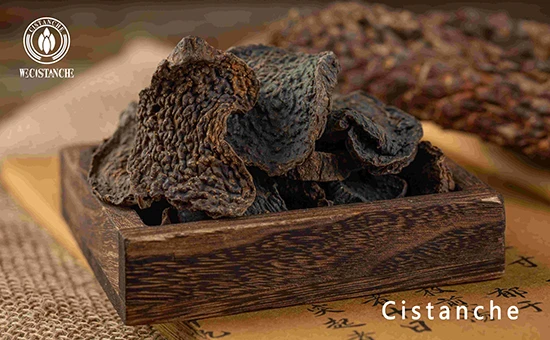
Cistanche deserticola slices
How to collect wild plants?
Article 16: It is prohibited to collect wild plants under national first-class protection. For special needs such as scientific research, artificial cultivation, and cultural exchange, those who collect national first-class protected wild plants shall apply for a collection certificate from the forestry administrative department of the State Council or its authorized institution in accordance with their management authority; Or apply for a collection certificate from the agricultural administrative department of the people's government of the province, autonomous region, or municipality directly under the central government or its authorized institution in the collection area. For the collection of national second-level protected wild plants, it is necessary to obtain opinions from the wild plant administrative department of the county-level people's government at the collection site, and then apply for a collection certificate from the wild plant administrative department of the provincial, autonomous region, or municipality directly under the central government or its authorized institution. If collecting national first or second-level protected wild plants from urban gardens or scenic spots, the consent of the urban garden or scenic spot management agency must be obtained first, and the collection certificate must be applied for in accordance with the provisions of the first two paragraphs. Collecting precious wild trees or wild plants in forest areas or grasslands shall be handled in accordance with the provisions of the Forest Law and the Grassland Law. After the administrative department in charge of wild plants issues the collection certificate, it shall copy the environmental protection department for filing. The format of the collection certificate shall be formulated by the competent department of Wildlife Administration under the State Council.
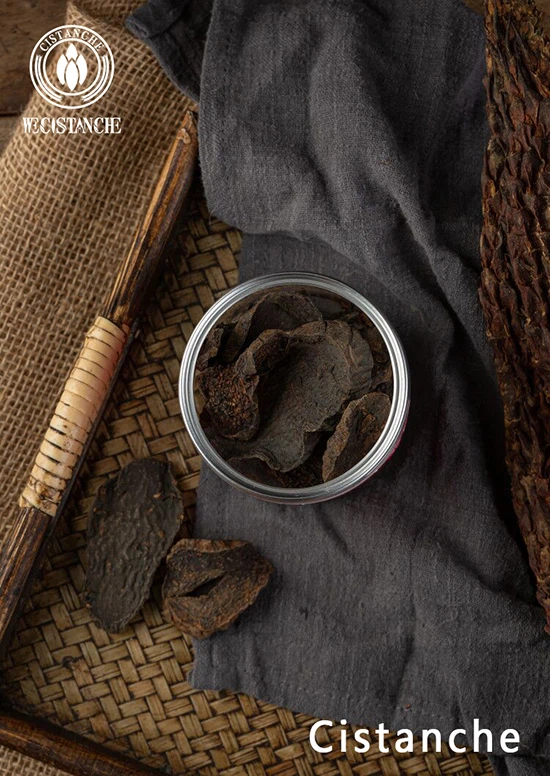
Cistanche deserticola slices
Article 17: Units and individuals collecting nationally protected wild plants must collect them in accordance with the types, quantities, locations, deadlines, and methods specified in the collection certificate. The wild plant administrative department of the county-level people's government shall supervise and inspect the collection of nationally protected wild plants within its administrative region, and promptly report to the approved wild plant administrative department or its authorized institution for collection.