Xinjiang Hetian Cistanche Deserticola, Ecological Value Creates Desert Oasis
Nov 05, 2024
1, Overview of Hetian Cistanche
Hetian Cistanche, mainly produced in the Hetian area of Xinjiang Uygur Autonomous Region, especially on the southern edge of the Taklamakan Desert, is an important production area of Cistanche tubulosa. It is known as the "desert ginseng" and has a long history of consumption and medicinal use. According to records, Cistanche deserticola has been used as a food and medicine in China for over two thousand years, with written records in many traditional Chinese medical texts such as the "Shennong Bencao Jing", "Mingyi Bielu", and "Zhenquan Medicinal Materia Medica".
As a rare medicinal herb, Cistanche deserticola has various miraculous effects. It is widely used in folk medicine, nourishment, health care and other fields in China. It has the effects of tonifying the kidney and yang, promoting color and longevity, moistening the intestines and promoting bowel movements, nourishing yin and yang, and prolonging life. In history, among the exotic treasures presented to the imperial court by various countries in the Western Regions, Cistanche deserticola was one of the most beloved tribute items by the emperors. There has always been a folk saying that goes, 'I would rather have a basket of Cistanche than a bed full of gold and jade.' This shows the rare value of Cistanche.

Cistanche deserticola
The unique geographical environment and climate conditions in Hotan region give Hetian Cistanche a unique quality. The climate here is arid, with low rainfall, high evaporation, long sunshine hours, and large temperature differences between day and night, providing a suitable environment for the growth of Cistanche deserticola. At the same time, the soil in Hotan area is mainly composed of gray brown desert soil and brown desert soil. The host plant, Haloxylon ammodendron, is a strong drought tolerant plant, and Cistanche deserticola often parasitizes on its lateral roots 30-100 centimeters deep. These conditions have collectively created the reputation of Hetian Cistanche as the "Desert Ginseng".
2, Ecological value of windbreak and sand fixation
(1) Improving the Desert Environment
Hetian Cistanche parasitizes on the roots of red willows, which play an important role in desert management as an excellent plant for windbreak and sand fixation. Red willows have well-developed root systems that can penetrate deep into the ground, firmly grasp sandy soil, and effectively prevent the flow of the desert. Planting Cistanche and Salix not only provides a host for the growth of Cistanche, but also greatly improves the soil environment.
The large-scale planting of red willows has gradually stabilized the soil in the desert and reduced the erosion caused by sandstorms. Over time, the organic matter content in the soil gradually increases, creating conditions for the growth of other plants. Meanwhile, red willows can also absorb dust from the air, purify the air, and improve the ecological environment in desert areas.
(2) Promote ecological balance
The growth of Cistanche deserticola has strict requirements for climate and environment, which makes its host plants play a more important role in sand control and prevention. The climate in Hotan region is hot and arid, with rampant sandstorms. The average annual precipitation is only 35 millimeters, and the annual evaporation is 2480 millimeters. There are over 220 days of sandstorms per year, with about 60 days of sandstorms. In such harsh environments, the host plants of Cistanche deserticola, such as red willows and other shrubs, grow tenaciously, providing the foundation for its survival.
Red willows and other host plants form a natural barrier in the desert, blocking the invasion of sandstorms and protecting the surrounding ecological environment. Their existence not only provides growth conditions for Cistanche deserticola, but also provides a habitat for other organisms, promoting the development of ecological balance. For example, some birds and small mammals build nests and inhabit red willow groves, adding vitality and vigor to desert ecosystems.

cistanche body building
At the same time, the cultivation of Cistanche deserticola and Red Willow has also brought economic benefits to local farmers, achieving a win-win situation of ecological and economic benefits. By planting red willows and Cistanche deserticola, farmers can not only improve the desert environment, but also increase income, improve living standards, and further promote the sustainable development of the local ecological environment.
3, Economic Development of Ecological Value
(1) Driven by characteristic industries
Planting Cistanche deserticola has become one of the characteristic agriculture in Hotan area, injecting strong impetus into the local economic development. In recent years, Hotan Prefecture has taken strong measures to increase support for the Cistanche deserticola industry, turning it into a pillar industry and a project that benefits the people and drives economic development.
The development of the Cistanche deserticola industry has effectively promoted the income increase and wealth creation of farmers and herdsmen. For example, under the guidance of Professor Shi Weiming of the Chinese Academy of Sciences Nanjing Institute of Soil Research and Dong Gangqiang, a senior plant research scientist of Amway Plant Research and Development Center, local growers in the experimental base for artificial planting of Cistanche tubulosa in Yutian County, Xinjiang, have grown well and brought considerable income to growers.
Hetian Dichen Pharmaceutical Biotechnology Co., Ltd. is committed to the industrialization and commercialization of Cistanche deserticola. Through years of technological accumulation, it has not only improved product quality, but also accumulated a large amount of experience in artificial cultivation of Cistanche deserticola. With the cooperation of the local government in Hotan, the company has promoted organic agriculture planting, further enhancing the economic benefits of the Cistanche deserticola industry.
The abundant resources of Cistanche deserticola in Hotan region have attracted many enterprises to settle down. Currently, Hotan region has formed an industrial chain for Cistanche deserticola cultivation, slicing processing, and health food. Health products made from Cistanche deserticola extract have been sold to countries such as Japan and South Korea. The industrial chain of Cistanche deserticola has driven stable income growth for more than 30000 farmers in Hotan area. In 2018, farmers and herdsmen engaged in characteristic forest and fruit industries in Hotan area earned more than 35% of their average annual income.

Old Man and Cistanche deserticola
(2) Sustainable development of industries
Promoting organic agriculture cultivation is the key to achieving sustainable development of the Cistanche deserticola industry. The organic planting technology of soil fertilization can significantly increase the yield of Cistanche deserticola, especially in new forests, achieving a dual effect of increasing yield and preserving value. If local farmers master this technology, they can further mobilize them to cultivate new forests and plant Cistanche deserticola, which can promote early growth, increase yield, and increase income.
The host plant, Tamarix chinensis (Red Willow), plays an important role in sand control and prevention, and has significant ecological and environmental significance. By promoting organic agriculture cultivation, the economic benefits of the Cistanche deserticola industry can be further enhanced, while also preventing soil desertification through the planting of tamarisk trees, achieving a win-win goal of poverty alleviation and environmental protection for local farmers in the western region.
For example, Dr. Dong Gangqiang from the Amway Plant Research and Development Center introduced that in 2009, Amway went to Yutian County to conduct certification inspections on the Kazinak base. The Kazinak base obtained the Nutrilite certification qualification and purchased local Cistanche deserticola. The related products developed were sold in multiple international markets and received high praise from consumers. Actively promote the organic planting technology of Cistanche deserticola, expand the supporting industry of Cistanche deserticola, and contribute to poverty alleviation in Hotan.
4, Future prospects of ecological value

Cistanche deserticola efficacy-tonifying kidney
The Hetian Cistanche industry has achieved significant results in ecological improvement and economic development, but it also faces some challenges. However, its potential for future development is enormous and worth looking forward to.
From the perspective of ecological improvement, the role of Cistanche deserticola and its host plants in windbreak, sand fixation, and improving desert environment cannot be ignored. With the continuous development of the Cistanche deserticola industry, the expansion of planting areas will further enhance the ecological stability of desert areas. In the future, we can expect more desert areas to be covered with green, air quality to improve, and ecological balance to be better maintained. Meanwhile, with the continuous advancement of technology, research on the ecological value of Cistanche deserticola will become more in-depth, providing a more scientific basis for ecological protection.
In terms of economic development, the Cistanche deserticola industry has become one of the characteristic industries in Hotan region, bringing considerable income to local farmers. With the inclusion of Cistanche deserticola in the "Catalogue of Substances that are Both Food and Traditional Chinese Medicine", its development prospects in the food industry are broad. It is expected that more companies will invest in the deep processing of Cistanche deserticola in the future, develop more types of products, and further expand the market. For example, Xinjiang Life Nuclear Power High tech Co., Ltd. has developed solid beverages, compressed candies, raw materials, formulated liquor and other food and cosmetic products, and there will be more innovative products launched in the future. At the same time, the development of the Cistanche deserticola industry will also drive the development of related industries such as packaging, logistics, and deep processing of products, injecting new vitality into the local economy.
However, the Cistanche deserticola industry also faces some challenges. On the one hand, the quality of products varies greatly, and there is a phenomenon of counterfeiting and shoddy products, which affects consumers' trust. It is necessary to strengthen market supervision, establish a sound product quality testing mechanism, and severely crack down on counterfeit and shoddy products. On the other hand, the industrial chain still needs to be improved and the added value is relatively low. We need to increase investment in technology, promote technological innovation, expand the industrial chain, and enhance the added value of products. In addition, the instability of market demand is also a problem, which requires strengthening market research, developing more sales channels, and improving market competitiveness.
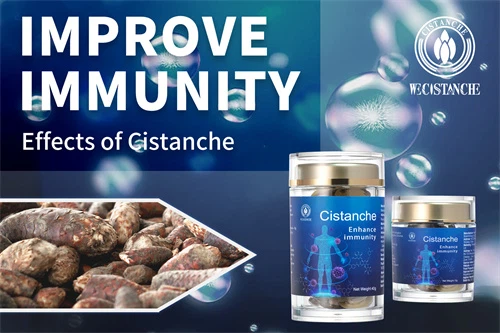
cistanche plant-increasing immune system
Click here to view Cistanche Enhance Immunity products
【Ask for more】 Email:cindy.xue@wecistanche.com / Whats App: 0086 18599088692 / Wechat: 18599088692
Despite facing challenges, the future development potential of the Hetian Cistanche industry is enormous. The government should increase its support for the Cistanche deserticola industry, guide financial support for enterprise development, and create favorable conditions for industrial development. At the same time, we will strengthen the integration of industry, academia, and research, promote technological innovation, and improve product quality and added value. I believe that with the joint efforts of the government, enterprises, and all sectors of society, the Hetian Cistanche industry will play a greater role in ecological improvement and economic development, and make greater contributions to achieving sustainable development.