A Traditional Chinese Herbal Formula For Neurodegenerative Disorders (Alzheimer’s Focus): Composition, Preparation Process, And What It Means For Herbal Support
Oct 22, 2026
Quick Takeaways
Neurodegenerative disorders (including Alzheimer's disease) involve progressive loss of neurons and cognitive function.
Traditional Chinese Medicine (TCM) often approaches these conditions through multi-herb, multi-pathway strategies rather than a single target.
This article presents an English translation + reader-friendly interpretation of a TCM herbal composition and preparation method described in a patent-style technical text.
The formula features Cistanche (Rou Cong Rong) as a key "tonifying" herb, combined with aromatics, qi-regulating herbs, blood-activating herbs, and calming agents-organized under the classic TCM framework of Jun–Chen–Zuo–Shi (Monarch–Minister–Assistant–Envoy).
Disclaimer: This blog post is for educational purposes only. It is not medical advice and is not intended to diagnose, treat, cure, or prevent any disease. If you have Alzheimer's disease or any serious condition, consult a qualified healthcare professional.
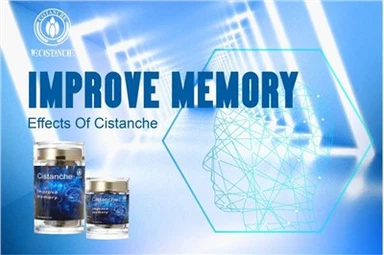
Cistanche Extract Supplements For Treating Alzheimer's Disease
1) Why Neurodegenerative Diseases Are So Hard to Address
Neurodegenerative diseases are a group of disorders caused by the progressive, largely irreversible loss of neurons in the brain and spinal cord. Common examples include:
Alzheimer's disease (AD)
Parkinson's disease (PD)
Amyotrophic lateral sclerosis (ALS)
Huntington's disease (HD)
Alzheimer's disease typically has a slow onset and gradually worsens over time. Clinical features include memory decline as well as broader cognitive impairment and behavioral changes. Conventional treatments often focus on symptom relief and may help some individuals, but they usually act on single targets and can have limitations.
Why many people look to natural herbal approaches
Traditional herbal systems-especially TCM-are often explored because they emphasize:
multiple botanical constituents
multiple potential biological pathways
personalized pattern-based strategies (TCM "syndromes")
This is one reason multi-herb formulas remain a key research and application area in natural product development.
2) How TCM Traditionally Understands Alzheimer's-Like Conditions
In classical Chinese medical literature, Alzheimer's-like cognitive decline is often discussed under categories such as "dai bing" (dullness) and "shan wang" (forgetfulness). Modern TCM interpretation frequently links cognitive decline to imbalances involving the brain and organ systems such as the kidney, liver, heart, spleen, with "kidney deficiency" commonly emphasized in aging-related decline.
Many TCM clinicians and researchers describe patterns involving combinations of:
deficiency of qi and blood (vital energy and nourishment)
phlegm/turbidity
blood stasis (poor circulation/obstruction)
"toxin" damaging the brain networks (a modern interpretive framework)
As a result, formulas may be designed around principles such as:
tonifying kidney essence
resolving phlegm and stasis
regulating liver qi
opening sensory orifices and calming the spirit
3) The Herbal Composition: Ingredients and Ratio (Patent-Style Formula)
3.1 Claimed composition (weight parts)
A TCM composition for treating neurodegenerative diseases, characterized by the following raw materials in weight parts:
Acorus tatarinowii / Shi Chang Pu: 20–25 parts
Heng Jing Xi: 18–23 parts
Cistanche deserticola / Rou Cong Rong: 15–20 parts
Jie Shi Cao: 9–13 parts
Buddha's hand citrus / Fo Shou (Citrus medica var. sarcodactylis): 10–14 parts
Dodder seed / Tu Si Zi (Cuscuta chinensis): 7–12 parts
Dragon's blood resin / Xue Jie: 5–10 parts
Poria with hostwood / Fu Shen: 7–13 parts
Safflower / Hong Hua (Carthamus tinctorius): 8–12 parts
Cinnamon twig / Gui Zhi (Cinnamomum cassia twig): 6–10 parts
Licorice / Gan Cao (Glycyrrhiza): 3–8 parts
3.2 A specific example formulation (one preferred ratio)
Shi Chang Pu 23
Heng Jing Xi 20
Rou Cong Rong 17
Jie Shi Cao 11
Fo Shou 13
Tu Si Zi 10
Xue Jie 7
Fu Shen 9
Hong Hua 10
Gui Zhi 8
Gan Cao 5
Note: Several herb names (e.g., Heng Jing Xi and Jie Shi Cao) may have regional naming ambiguity in English/Latin identification. For a factory blog and procurement clarity, it's best to confirm the standard pharmacopoeia identity, Latin name, and accepted raw material specs before commercial production.
Table 1. Total Movement Distance and Average Speed
| Group | Total Movement Distance (cm) | Average Speed (mm/s) |
|---|---|---|
| Normal control group | 1762.85 | 43.41 |
| Model group | 1718.39 | 43.18 |
| Positive drug group | 1883.44 | 47.77 |
| Experimental case 1 (low dose) | 1851.56 | 47.69 |
| Experimental case 1 (medium dose) | 1877.40 | 47.85 |
| Experimental case 1 (high dose) | 1889.73 | 48.24 |
| Comparative case 1 (low dose) | 1770.34 | 44.33 |
| Comparative case 2 (low dose) | 1775.68 | 45.52 |
| Comparative case 3 (low dose) | 1788.35 | 46.67 |
Table 2. Behavioral Metrics
| Group | Time to First Platform Reach (s) | Number of Platform Crossings (times) | Target Quadrant Swimming Distance (cm) | Time Spent in Target Quadrant (s) |
|---|---|---|---|---|
| Normal control group | 19.41 | 3.79 | 682.35 | 27.28 |
| Model group | 65.82 | 1.25 | 2759.44 | 14.01 |
| Positive drug group | 22.06 | 3.70 | 690.81 | 21.60 |
| Experimental case 1 (low dose) | 21.93 | 3.74 | 688.27 | 21.85 |
| Experimental case 1 (medium dose) | 21.17 | 3.81 | 687.19 | 22.43 |
| Experimental case 1 (high dose) | 20.54 | 3.85 | 684.52 | 23.04 |
| Comparative case 1 (low dose) | 29.26 | 2.39 | 801.94 | 17.12 |
| Comparative case 2 (low dose) | 26.70 | 2.87 | 738.36 | 19.65 |
| Comparative case 3 (low dose) | 23.19 | 3.38 | 695.77 | 20.49 |
Table 3. Inflammatory Cytokines
| Group | TNF-α (ng/L) | IL-1β (ng/L) |
|---|---|---|
| Normal control group | 374.71 | 40.26 |
| Model group | 466.59 | 52.83 |
| Positive drug group | 380.38 | 44.17 |
| Experimental case 1 (low dose) | 379.42 | 43.85 |
| Experimental case 1 (medium dose) | 378.16 | 42.36 |
| Experimental case 1 (high dose) | 375.64 | 40.91 |
| Comparative case 1 (low dose) | 417.52 | 49.49 |
| Comparative case 2 (low dose) | 394.80 | 47.73 |
| Comparative case 3 (low dose) | 385.27 | 45.02 |
Table 4. Oxidative Stress Indicators
| Group | SOD (U/g) | MDA (nmol/L) | GSH-Px (nmol/L/min/g) |
|---|---|---|---|
| Normal control group | 865.51 | 10.81 | 6963.48 |
| Model group | 207.68 | 13.42 | 3459.17 |
| Positive drug group | 594.26 | 11.33 | 6088.94 |
| Experimental case 1 (low dose) | 596.09 | 10.91 | 6107.62 |
| Experimental case 1 (medium dose) | 605.38 | 10.89 | 6214.53 |
| Experimental case 1 (high dose) | 617.44 | 10.82 | 6356.34 |
| Comparative case 1 (low dose) | 569.56 | 12.38 | 5085.89 |
| Comparative case 2 (low dose) | 580.83 | 11.67 | 5759.16 |
| Comparative case 3 (low dose) | 591.72 | 11.14 | 5994.90 |
4) Formula Logic: Jun–Chen–Zuo–Shi (Monarch–Minister–Assistant–Envoy)
This composition is described using the classic TCM formulation architecture:
Monarch (Jun) herbs
Shi Chang Pu (Acorus)
Heng Jing Xi
Rou Cong Rong (Cistanche)
Purpose (TCM language): "benefit intelligence and awaken the mind," "tonify kidney and replenish essence."
Why Rou Cong Rong matters here:
Cistanche is traditionally used to nourish kidney yang and essence and is widely used in formulas addressing aging-related decline and vitality. In modern natural products, it is often positioned for energy, endurance, healthy aging, and cognitive support (depending on regulatory framework).
Minister (Chen) herbs
Jie Shi Cao
Tu Si Zi (Dodder seed)
Fo Shou (Buddha's hand citrus)
Purpose: regulate liver qi, move qi and blood, support digestion and absorption-often seen as "making the formula work smoothly."
Assistant (Zuo) herbs
Xue Jie (Dragon's blood resin)
Fu Shen (Poria with hostwood)
Gui Zhi (Cinnamon twig)
Hong Hua (Safflower)
Purpose: promote circulation, "open the network vessels," calm the spirit, warm and unblock channels.
Envoy (Shi) herb
Gan Cao (Licorice)
Purpose: harmonize the formula and improve palatability; also commonly used to moderate harsh properties of other herbs.
5) Preparation Method (Manufacturing Process Overview)
The described method is a classic two-decoction extraction followed by concentration into an extract and then dosage-form manufacturing.
Step (a): First extraction
Weigh each raw herb according to the specified parts.
Add herbs to water and soak.
Decoct/boil after soaking.
Filter to obtain Extract Liquor 1 and Residue 1.
Parameters:
Water amount: 4–10× total raw herb mass
Soaking time: 1–3 hours
Decoction time: 1–2 hours
Step (b): Second extraction
Add water to Residue 1.
Decoct/boil again.
Filter to obtain Extract Liquor 2 and Residue 2.
Parameters:
Water amount: 3–6× mass of Residue 1
Decoction time: 1–1.5 hours
Step (c): Combine, concentrate, and formulate
Combine Extract Liquor 1 + Extract Liquor 2.
Concentrate into a thick extract ("extractum").
Parameters:
Concentration temperature: 60–65 °C
Relative density of thick extract: 1.2–1.4
Add pharmaceutically acceptable excipients.
Produce an oral dosage form, such as:
granules
tablets
capsules
pills
6) Experimental Model Mentioned in the Text (Plain-English Explanation)
The text describes an animal study design using male SD rats and a scopolamine (SCOP)-induced memory impairment model-commonly used to evaluate learning and memory function.
Grouping (as described)
Normal control group
Model group
Positive drug group (donepezil at 0.52 mg/kg/day)
Example formula groups (low/medium/high doses)
Several "comparison" formula groups (low dose)
Dosing timeline (high-level)
Oral administration daily for 30 days
From day 18, scopolamine injection for 12 days to induce memory impairment
Behavioral testing conducted after modeling
Behavioral tests mentioned
Open field test (general activity/exploration)
Morris water maze (learning and spatial memory):
acquisition/escape latency
probe trial (platform crossings, time in target quadrant)
Biomarkers mentioned
The text reports measurement of:
inflammatory markers: TNF-α, IL-1β
oxidative stress markers: SOD, MDA, GSH-Px
The stated conclusion is that the formula improved behavioral outcomes in the SCOP model and was associated with changes in these markers.
Important context: Animal models and biomarkers are research tools; they do not guarantee human clinical outcomes. Use them as "signals" that guide further research.
7) What This Means for a Cistanche (Rou Cong Rong) Factory Blog
If you operate a Cistanche-focused factory or supply chain business, content like this can educate buyers and consumers on:
how Rou Cong Rong is used in multi-herb classical logic (not isolated hype)
why extraction parameters matter (water ratio, decoction time, concentration temperature)
what "oral dosage forms" in a manufacturing context can look like (granules/tablets/capsules)
how to talk about "brain and cognitive support" responsibly
Suggested SEO keyword clusters (naturally reflected in content)
cistanche extract manufacturing
Rou Cong Rong benefits (traditional use)
traditional Chinese herbal formula for cognitive support
TCM Jun Chen Zuo Shi formulation
herbal decoction extraction process
botanical formula development for healthy aging
neuroinflammation TNF-alpha IL-1beta (research context)
oxidative stress SOD MDA GSH-Px (research context)
If you want, I can tailor the keyword density and headings to your exact target markets (US / EU / SEA) and your product line (raw slices, powder, water extract, ethanol extract, granules, OEM capsules).
8) Safety Notes and Compliance (Read Before You Publish)
Because this topic touches Alzheimer's disease:
Avoid direct consumer-facing claims like "treats Alzheimer's" unless you are an approved drug manufacturer and have appropriate regulatory authorization.
For supplements/herbal products, safer language often includes:
"supports cognitive function"
"supports brain health"
"supports healthy aging"
"helps maintain memory and focus" (be cautious and evidence-aligned)
Also note possible interactions and contraindications (general examples):
blood-activating herbs (e.g., safflower, dragon's blood resin) may not be appropriate for people on anticoagulants
cinnamon twig and other warming herbs may not suit certain constitutions
licorice may affect blood pressure/electrolytes in sensitive individuals
Encourage readers to consult professionals-especially for diagnosed conditions.
9) FAQ (SEO-Friendly)
Q1: Is Cistanche (Rou Cong Rong) used alone or in formulas?
Traditionally, Rou Cong Rong is frequently used within formulas to balance tonification with digestion support, circulation support, and calming herbs-especially in complex, chronic patterns.
Q2: Why does the formula include aromatic herbs like Acorus (Shi Chang Pu)?
Acorus is classically used to "open the orifices" and "transform phlegm," and it is commonly included in TCM approaches to brain fog, forgetfulness, and cognitive dullness patterns.
Q3: What dosage form is best-granules, tablets, or capsules?
It depends on your manufacturing capability and market preference. The described method supports multiple oral dosage forms after preparing a thick extract. Granules are often closer to decoction logic; tablets/capsules offer convenience.
Q4: Does this mean the formula cures Alzheimer's?
No. The provided text describes an invention and an animal-model experiment. Human outcomes require clinical evidence and medical oversight.
10) Conclusion
This patent-style TCM composition organizes multiple herbs under the Jun–Chen–Zuo–Shi framework, with Rou Cong Rong (Cistanche) playing a central "tonifying" role. The preparation method is a practical, scalable two-stage water extraction followed by controlled-temperature concentration and standard oral dosage formulation.
For readers exploring natural approaches, the biggest value is understanding how TCM formulas combine tonification, qi regulation, circulation, and calming strategies-rather than relying on a single ingredient. For manufacturers and brands, the method provides a clear process blueprint and a strong educational foundation for compliant "cognitive support / healthy aging" content.