A Novel Model For The Digestion Of Single-stranded DNA By The Dna2-RPA Complex
Mar 28, 2022
Contact: Audrey Hu Whatsapp/hp: 0086 13880143964 Email: audrey.hu@wecistanche.com
Single-stranded DNA (ssDNA) often occurs as an intermediate in DNA metabolic pathways. The single-stranded DNA-binding protein RPA not only protects the integrity of single-stranded DNA but also directs downstream factor signaling or repair of single-stranded DNA intermediates. However, it is unclear how these enzymes/factors compete with RPA for ssDNA.
On January 18, 2022, Qi Zhi from Peking University and Hengyao Niu from Indiana University jointly published a research paper entitled "Deciphering the mechanism of processive ssDNA digestion by the Dna2-RPA ensemble" in Nature Communications. The research is based on the yeast Saccharomyces cerevisiae. In a model system, the study found that the key nuclease for DNA replication and repair, Dna2, interacts with RPA in both cis and trans.
The cis-activity makes RPA the process unit of Dna2-catalyzed ssDNA cleavage, and RPA delivers its bound ssDNA to Dna2. On the other hand, trans-acting activity is mediated by acidic plaques on Dna2, which allows it to act with suboptimal RPA, or to overcome DNA secondary structure. The transactivation mode is not required for cell survival but is required for efficient double-strand break (DSB) repair. In conclusion, this study proposes a new model for the digestion of single-stranded DNA by the Dna2-RPA complex, which further refines the biological function of RPA.

The benefit of cistanche: improves immunity
Single-stranded DNA (ssDNA) is a common intermediate in DNA replication and repair. During DNA replication, ssDNA is briefly exposed as a template for lagging strand synthesis and contains 5'-flap DNA that must be removed during lagging strand maturation. Lesion removal in mismatch repair, nucleotide excision repair, and long-range base excision repair also produces single-stranded DNA intermediates that require gap-filling repair. During homologous recombination (HR), nuclear cleavage of double-strand breaks (DSBs) generates 3'-ssDNA, enabling RAD51-catalyzed homology search and strand exchange.
In eukaryotes, replication protein A (RPA) readily occupies ssDNA, protects it from nucleolytic attack, and directs enzymes involved in damage repair. RPA-coated ssDNA also marks DNA damage sites and triggers ATR/Mec1-dependent DNA replication and DNA damage checkpoints. Therefore, failure to remove RPA-coated single-stranded DNA, such as the 5'-flap DNA formed during subsequent strand maturation, may result in cell cycle prolongation and cell death. Removal of RPA-coated ssDNA intermediates can be accomplished by DNA polymerase-catalyzed duplex generation, or by replacement with downstream repair factors such as RAD51 recombinase. Furthermore, the evolutionarily conserved DNA2 endonuclease provides a unique method for removing RPA-coated ssDNA from the open 5' end.
During subsequent strand synthesis, Dna2 removes the RPA-coated long 5'-flap DNA and allows the Fen1 nuclease to further complete subsequent strand maturation. This function of Dna2 is critical for yeast survival. However, the lethality of Dna2 mutants can be rescued by inactivation of the DNA replication checkpoint or Pif1, a 5' to 3' DNA helicase responsible for the formation of long 5'-flaps during subsequent strand synthesis DNA. In addition to DNA replication, Dna2 also plays a key role in DSB repair by digesting RPA-coated 5'-flap DNA unwound by the SGS1 helicase to help end DSB processing. The SGS1-Dna2 pair catalyzes the long-distance excision of DSBs as an alternative to the Exo1 nuclease under the action of Mre11-Rad50-Xrs2 (MRX) and Sae29.

Cistanche tubulosa for DNA repairing
This study,combines biochemical, single-molecule and genetic approaches to provide evidence that RPA does not act passively, but instead functions as an active unit of the Dna2 nuclease using a gating mechanism. Within this framework, RPA allows the release of its bound ssDNA to Dna2 in a ternary complex formed by Dna2, RPA and 5'-ssDNA.
The study also revealed a trans-acting element supported by a bimodal interface between Dna2 and RPA, which allows Dna2 in the Dna2-RPA-ssDNA ensemble to interact with other RPA molecules, and when RPA becomes limited or encountered It retains its full activity up to the DNA secondary structure. In addition, the study reports a functional dissociation mutant of DNA2-dna2-AC, which inactivates the trans-acting element and fully supports cellular activity, but results in a major defect in DSB repair, possibly due to failure to disassemble critical recombination mid product.
In conclusion, this study proposes a new model for the digestion of single-stranded DNA by the Dna2-RPA complex, which further refines the biological function of RPA.
Reference information: https://www.nature.com/articles/s41467-021-27940-y

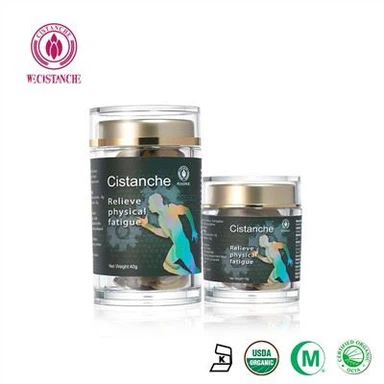
Cistanche supplements: improve immunity
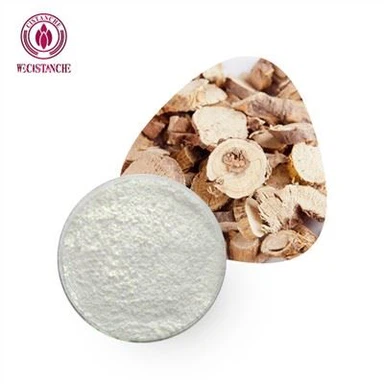
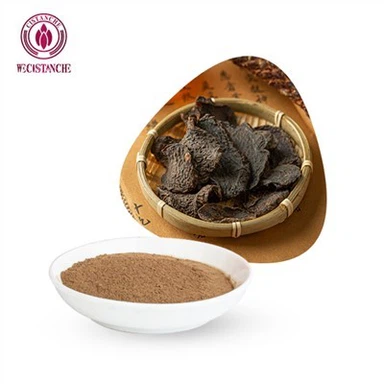
Note: The traditional Chinese medicinal herb cistanche (also known as the "dragon herb" and "desert ginseng"), grows only in the arid and warm deserts. As one of the nine immortal herbs, Cistanche (cistanche tubulosa/cistanche deserticola/desertliving cistanche/cistanche salsa)contents with rich effective ingredients such as echinacoside, acteoside, total phenylethanoid glycosides, flavonoids, polysaccharides, etc. these effective ingredients made cistanche a precious nourishing herb and food material for people's immunity, internal organs, and brain cells and neurons, etc. The modern pharmacological studies have confirmed the following effects of cistanche(benefits of cistanche): improve immunity; improve sexual function and kidney function; anti-fatigue; anti-aging; improve memory; anti-Parkinson's disease; anti-Alzheimer's disease; antioxidation; ease-constipation; anti-inflammatory; promote bone growth, whitening skin; protect liver; etc.

cistanche extract benefit: improve immunity