A Pharmaceutical Composition For Preventing Senile Dementia And Improving Memory
Oct 10, 2026
Abstract
This product relates to the field of health care and medical wellness, and specifically to a pharmaceutical composition for preventing senile dementia and improving memory. The composition comprises the following ingredients and ratios: Cistanche extract (1–3 parts), Astragalus extract (1–3 parts), and Kudzu root powder (Pueraria lobata powder) (1–3 parts).
The invention provides a pharmaceutical composition for preventing senile dementia and improving memory. Its manufacturing process is simple and low-cost. It is made entirely from natural plants, contains no hormones, and does not add colorants or other chemically synthesized substances. After continuous use, it is claimed to have no toxic or side effects on the human body.
Herb Cistanche

1. Claims
Claim 1
A pharmaceutical composition for preventing senile dementia and improving memory, characterized by the following ingredients and ratios: Cistanche extract (1–3 parts), Astragalus extract (1–3 parts), and Kudzu root powder (1–3 parts).
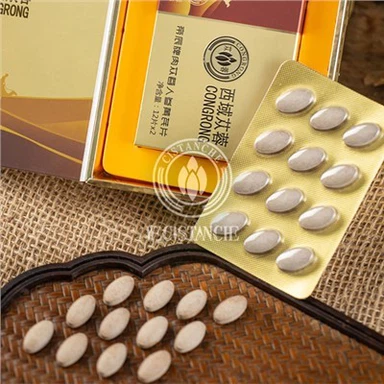
It may be prepared into granules, capsules, soft capsules, instant drink granules, dripping pills, and herbal paste (decoction concentrate). The manufacturing process is simple and low in cost, and it is made entirely from natural plants, without hormones, and without added colorants or other chemically synthesized substances. After continuous use, it is claimed to have no toxic or side effects on the human body.
This herbal medicine contains multiple active constituents that are readily absorbed by the human body, including flavonoids, saponins, phenolic acids, alkaloids, and polysaccharides. It can be effectively used for kidney-tonifying and brain-strengthening, reinforcing qi and transforming turbidity, and promoting blood circulation and detoxification. It is suitable for prevention in cases described as mild cognitive impairment and Alzheimer's disease (AD) of the pattern type characterized as "deficiency of essence and qi with stasis-toxin obstructing the orifices."
The effective components extracted from Chinese herbal medicine have multiple effects and may inhibit brain iron overload in AD, thereby alleviating central nervous system functional decline caused by brain iron overload.
Cistanche Benefits

Claim 2
A preparation method for a Cistanche health product for preventing senile dementia and improving memory according to Claim 1, characterized by the following steps:
S1: First prepare the herbal materials to obtain Astragalus extract (thick extract), Cistanche extract (thick extract), and Kudzu extract, and store them separately in different containers for later use.
S2: Mix starch, powdered sugar, microcrystalline cellulose, and sodium carboxymethyl starch uniformly, pass through an 80-mesh sieve, and set aside as excipients.
S3: Add the excipients prepared in S2 to the Astragalus thick extract, Cistanche thick extract, and Kudzu powder prepared in S1, then perform granulation, drying, and tableting to obtain the finished tablets.
S4: Perform polysaccharide extraction on the finished tablets obtained in S3.
Claim 3
The preparation method according to Claim 2, characterized in that the preparation of the Astragalus thick extract in S1 is as follows:
Place 5–7 parts of Astragalus into a container, add 10× water, and perform ultrasonic extraction at 70°C for 30 minutes, then filter under suction. Add 8× water to the residue, perform ultrasonic extraction for 30 minutes, and filter again. Combine the two filtrates and concentrate to obtain a thick extract with a concentration of 1 g/mL.
Claim 4
The preparation method according to Claim 1, characterized in that the preparation of Kudzu powder in S1 is as follows:
Take 3–6 parts of Kudzu root, pulverize, pass through an 80-mesh sieve, and reserve for use.
Claim 5
The preparation method according to Claim 1, characterized in that the detailed implementation of S3 is as follows:
S301: Add the prepared excipients to the Astragalus thick extract, Cistanche thick extract, and Kudzu powder, mix uniformly to form a wet mass; granulate through an 18-mesh sieve to form wet granules.
S302: Dry the wet granules at 80°C for 2 hours, and size through an 18-mesh sieve.
S303: Add sodium carboxymethyl starch and 0.2% magnesium stearate to the sized granules, mix uniformly, and compress into tablets.
Claim 6
The preparation method according to Claim 1, characterized in that the implementation steps of polysaccharide extraction in S4 are as follows:
S401: Soak the tablets in hot ethanol for 3 hours, filter with gauze, discard the filtrate, and keep the residue.
S402: Add water to the residue and decoct three times, each time for 1–2 hours; filter and combine the filtrates.
S403: Evaporate and concentrate the combined filtrate, centrifuge to remove precipitate, then add 2–3 volumes of 95% ethanol to the supernatant to precipitate; stand at 4°C for 24 hours. The next day, centrifuge at 4°C for 20 minutes at 5500–6000 r/min and collect the precipitate.
S404: Dissolve the precipitate in water, remove protein by deproteinization and dialysis, then freeze-dry to obtain polysaccharides.
A Pharmaceutical Composition for Preventing Senile Dementia and Improving Memory
[0001] Technical Field and Background
In the past three decades, the incidence and mortality of Alzheimer's disease (AD) have risen rapidly, and it has become the fifth leading cause of death among urban and rural residents in China. China is facing major challenges brought by Alzheimer's disease.
According to the China Alzheimer's Disease Report 2024, in 2021 the number of existing cases of AD and other dementias in China reached 16,990,827. Relevant data such as prevalence and mortality of senile dementia increase continuously with age, and the corresponding figures for women are higher than those for men.
At present, drugs approved by the Food and Drug Administration authorities for the treatment of AD mainly include cholinesterase inhibitors and NMDA receptor antagonists. Such drugs primarily regulate neurotransmitter levels in the brain and may improve early AD symptoms. Promising directions for drugs that may protect neurons and slow AD progression include neurotrophic factors, medications that improve neuronal metabolism, and traditional Chinese medicine (TCM).
According to Yi Lin Gai Cuo (Corrections on Errors in Medical Works): "When one is old and has no memory, the brain marrow gradually becomes empty. As people age, the functions of the organs decline; the sea of marrow becomes insufficient; the brain loses nourishment, and then the mind fails to function." This suggests that insufficiency of the sea of marrow is a fundamental cause triggering senile dementia.
Cistanche Benefits In Modern Medicine Terms

Invention Content
[0002] Purpose of the Invention
The purpose of this invention is to provide a health product that is low-cost, purely herbal, and "green," with effective results for the prevention and treatment of senile dementia.
The composition includes Cistanche extract (1–3 parts), Astragalus extract (1–3 parts), and Kudzu root powder (1–3 parts). It can be made into granules, capsules, soft capsules, instant drink granules, dripping pills, and herbal paste. The manufacturing process is simple and low-cost, made entirely from natural plants, without hormones, and without added colorants or other chemically synthesized substances. After continuous use, it is claimed to have no toxic or side effects on the human body.
The process includes the following steps:
S1: prepare Astragalus thick extract, Cistanche thick extract, and Kudzu extract and store separately;
S2: mix starch, powdered sugar, microcrystalline cellulose, and sodium carboxymethyl starch, pass through an 80-mesh sieve as excipients;
S3: add excipients to Astragalus thick extract, Cistanche thick extract, and Kudzu powder for granulation, drying, and tableting;
S4: perform polysaccharide extraction on the finished tablets.
The Astragalus thick extract preparation: ultrasonic extraction at 70°C with 10× water for 30 min, filter; extract residue again with 8× water for 30 min, filter; combine filtrates and concentrate to 1 g/mL.
Kudzu powder preparation: pulverize Kudzu root and pass through an 80-mesh sieve.
Tableting: mix, granulate through 18-mesh, dry at 80°C for 2 h, size, then add sodium carboxymethyl starch and 0.2% magnesium stearate and compress into tablets.
Polysaccharide extraction: hot ethanol soak, water decoction extraction, concentration and centrifugation, ethanol precipitation at 4°C, centrifugation, then redissolution, deproteinization, dialysis, and freeze-drying.
[0003] TCM Etiology and Pathogenesis Perspective
When blood stasis blocks the brain collaterals, Lei Zheng Zhi Cai states: "If there is blood stasis inside, one will be forgetful as if mad." When blood stasis is internal, the brain collaterals are obstructed; the clear orifices lose their responsiveness, leading to dementia.

Background Technology
[0004] Epidemiological Context
According to statistics, the prevalence of dementia (Alzheimer's disease, vascular dementia, and other dementias) and mild cognitive impairment is very high in China.
[0005] Prevalence, Regional Differences, and Risk Factors
Among Chinese adults aged 60 years and above, the age- and sex-adjusted prevalence of dementia is approximately 6.0%; the prevalence of Alzheimer's disease is 3.9%; vascular dementia is 1.6%; and other dementias are 0.5%.
This corresponds to approximately 15.07 million Chinese older adults (≥60 years) with dementia, 9.83 million with Alzheimer's disease, 3.92 million with vascular dementia, and 1.32 million with other dementias. Prevalence varies by region: 6.3% in northern China, 4.7% in southern China, and 7.5% in western China.
Aging is accompanied by brain changes, including atrophy (especially of the hippocampus), imbalance between production and degradation of β-amyloid, activation of inflammation, and decline of neurons in memory-related regions. Across all ages, prevalence is higher in women, which may relate to decreased estrogen and related hormones after menopause as well as differences in benign brain structure. A family history of dementia increases genetic susceptibility. In addition, there are as many as nine modifiable risk factors: rural residence, fewer years of education, widowhood/divorce/living alone, smoking, hypertension, hyperlipidemia, diabetes, heart disease, and cerebrovascular disease.
[0006] Cistanche (Rou Cong Rong) in Traditional Use and Modern Research Context
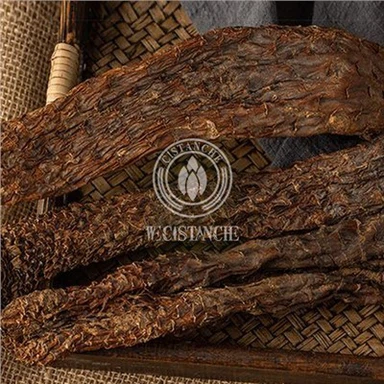
Cistanche tonifies kidney yang and benefits essence and blood, and is commonly used in TCM for treating brain and neurological conditions. Modern research has found that Cistanche has neuroprotective effects; in addition to Alzheimer's disease, it is also often used for Parkinson's disease, vascular dementia, and other disorders. Relevant research progress has been summarized to provide scientific basis and reference for the prevention and treatment of Alzheimer's disease.
Cistanche Extract Capsule for preventing AD
Click to get more details

The Shennong Bencao Jing (Divine Farmer's Materia Medica Classic) earliest recorded the functions of Cistanche: "It mainly treats five consumptions and seven injuries, supplements the center, relieves cold and heat pain in the stem, nourishes the five zang organs, regulates yin and benefits essence qi."