

A Traditional Chinese Herbal Formula For OSAHS-Related Erectile Dysfunction (ED): Ingredients, Rationale, Preparation Method, And Practical Takeaways
Oct 23, 2026
Who this article is for
If you are exploring herbal support for erectile function, especially when the problem is associated with poor sleep, loud snoring, or sleep-disordered breathing, this article explains a Traditional Chinese Medicine (TCM) multi-herb formula described in a patent-style technical text.
You will learn:
Why obstructive sleep apnea–hypopnea syndrome (OSAHS) is strongly associated with ED
The complete ingredient list and ratios used in the formula
The classic TCM structure (Monarch–Minister–Assistant–Envoy) behind the formulation
A manufacturing-style preparation process (two decoctions + concentration; and a granule process option)
What clinical outcomes were reported in the provided text (presented as a research summary, not medical advice)
1) Why sleep apnea can be linked to erectile dysfunction
Erectile dysfunction (ED) is common and can significantly affect quality of life. A growing body of research and clinical observations indicate that hypoxia-related conditions, especially obstructive sleep apnea–hypopnea syndrome (OSAHS), may contribute to or worsen ED.
What is OSAHS?
OSAHS is often recognized as chronic loud snoring with episodes of nighttime breathing pauses (apnea) or shallow breathing (hypopnea). These repeated events can lead to intermittent hypoxia (repeated drops in oxygen levels).
Why low oxygen may affect erections (mechanistic overview)
The technical text you provided summarizes key mechanisms that may connect OSAHS and ED, including:
Hormonal disruption (e.g., reduced testosterone)
Endothelial dysfunction (impaired nitric oxide pathways, affecting blood flow)
Autonomic nervous system imbalance (e.g., increased sympathetic activity)
Inflammation and oxidative stress (elevated inflammatory factors; oxidative damage)
From a practical perspective: if someone has ED plus signs of sleep apnea (snoring, daytime sleepiness, witnessed apneas), addressing sleep and oxygenation is often foundational.
Table 1. Clinical efficacy evaluation [n (%)]
| Time point | Cases (Dropouts) | Markedly effective, n (%) | Effective, n (%) | Ineffective, n (%) | Total effective rate (%) |
|---|---|---|---|---|---|
| After treatment | 47 (-3) | 5 (10.64) | 17 (36.17) | 25 (53.19) | 46.81 |
2) Limitations of conventional approaches (as described in the text)
The text notes that standard approaches may include:
Ventilation-support methods such as CPAP (continuous positive airway pressure) or oral appliances
ED medications such as PDE5 inhibitors (e.g., sildenafil, tadalafil)
However, it also highlights real-world problems:
Low adherence to CPAP due to comfort and long-term usability
Side effects from PDE5 inhibitors (headache, flushing, dizziness, indigestion, nasal congestion; sometimes visual disturbance or muscle aches)
PDE5 inhibitors may not work for every patient, and efficacy may be lower when ED is strongly linked to hypoxia-related factors
This is one reason multi-target strategies-including lifestyle, sleep interventions, and (where appropriate) integrative herbal approaches-remain of interest.
Table 2. Comparison of IIEF-15 total score before and after treatment in OSAHS-ED (H-ED) patients (Mean ± SD)
| Outcome | Before treatment | After treatment |
|---|---|---|
| IIEF-15 total score | 35.09 ± 2.51 | 46.15 ± 4.62* |
| Erectile function | 14.09 ± 1.35 | 15.64 ± 2.07* |
| Intercourse satisfaction | 6.94 ± 1.09 | 8.02 ± 2.07* |
| Orgasmic function | 4.26 ± 0.77 | 4.60 ± 1.12* |
| Sexual desire | 4.36 ± 0.76 | 4.57 ± 0.93 |
| Overall satisfaction | 5.47 ± 0.75 | 5.66 ± 0.96* |
Note: Compared with before treatment, P<0.05P<0.05P<0.05.
3) TCM perspective: "multi-organ regulation" and "treating both root and branch"
The source text frames the condition as a combined pattern where:
The "root" involves deficiency (often described as lung/spleen/heart/kidney qi deficiency over time)
The "branch" involves obstructive factors such as phlegm/turbidity and blood stasis
The functional outcome is inadequate nourishment of tissues involved in erectile function
Accordingly, the core TCM treatment principles stated are:
Tonify qi (support lung/heart/spleen/kidney function)
Invigorate blood and transform stasis (support circulation)
Transform phlegm and open the channels (remove obstructive factors)
Unblock vessels and support erectile function (in TCM terms)
Table 3. Comparison of sex hormones before and after treatment in OSAHS-ED (H-ED) patients (Mean ± SD)
| Time point | TE (nmol/L) | E2 (pmol/L) | FSH (IU/L) | LH (IU/L) | PRL (mIU/L) |
|---|---|---|---|---|---|
| Before treatment | 16.29 ± 2.34 | 110.96 ± 12.16 | 7.07 ± 0.83 | 5.34 ± 0.64 | 209.96 ± 15.91 |
| After treatment | 17.44 ± 3.10* | 103.97 ± 14.70* | 6.82 ± 0.93* | 5.12 ± 0.76* | 196.85 ± 22.25* |
Note: Compared with before treatment, P<0.05P<0.05P<0.05.
4) The herbal composition (complete ingredient list + ratios)
4.1 Claimed formula (by "parts by weight")
The TCM composition is described as containing the following ingredients:
Huang Jing (Polygonatum rhizome): 20–30 parts
American ginseng (Panax quinquefolius): 3–6 parts
Rhodiola (Rhodiola spp.): 6–12 parts
Dan Shen (Salvia miltiorrhiza): 30 parts
Bai Zhu (Atractylodes macrocephala): 12–30 parts
Rou Cong Rong (Cistanche) (Cistanche spp.): 9–15 parts
Dang Gui (Angelica sinensis): 9–12 parts
Gou Qi Zi (Goji berry) (Lycium barbarum): 12–15 parts
Ba Ji Tian (Morinda officinalis): 9–12 parts
Mao Dong Qing (Ilex root, commonly Ilex pubescens in TCM contexts): 30 parts
Ginkgo leaf (Ginkgo biloba leaf): 12–15 parts
Hong Hua (Safflower) (Carthamus tinctorius): 3–6 parts
Fu Ling (Poria) (Poria cocos): 12–15 parts
Ju Hong (tangerine/red citrus peel processed form): 6–9 parts
Bai Jie Zi (White mustard seed) (Sinapis alba / Brassica alba): 9–15 parts
Shi Chang Pu (Acorus) (Acorus tatarinowii rhizome): 6–12 parts
Gan Cao (Licorice) (Glycyrrhiza spp.): 6 parts
Gui Zhi (Cinnamon twig) (Cinnamomum cassia twig): 6–9 parts
Di Long (Earthworm) (Pheretima): 6–9 parts
San Qi powder (Panax notoginseng powder): 2–3 parts
Factory note: For global trade and label accuracy, each herb should be locked to a pharmacopeia identity (Latin binomial + plant part + standard). Some Chinese materia medica names can map to multiple species depending on region and standard.
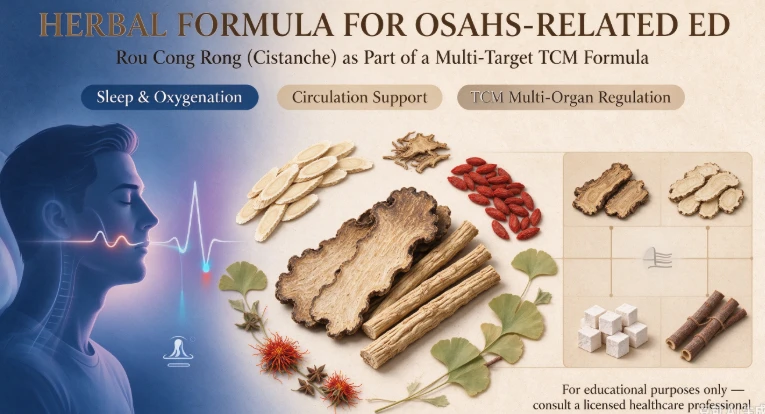
5) Why Rou Cong Rong (Cistanche) is important in this formula
From the TCM logic in the text, Rou Cong Rong is positioned within the "kidney support / yang support / essence support" category, paired with:
Goji (Gou Qi Zi)
Morinda (Ba Ji Tian)
In traditional use, Cistanche is often associated with:
supporting vitality in deficiency patterns
supporting reproductive function in TCM theory
supporting healthy aging
For a Rou Cong Rong factory blog, this is relevant because it shows how Cistanche is often combined (rather than used alone) to align tonification with circulation support and "phlegm/stasis" management.
6) Formula architecture (Monarch–Minister–Assistant–Envoy)
The text explicitly describes the formula structure:
Monarch herbs (core focus)
Huang Jing
American ginseng
Rhodiola
Stated purpose: support qi and yin across heart/lung/spleen/kidney, addressing the "root" deficiency.
Minister herbs (major supporting actions)
Kidney/yang support: Rou Cong Rong + Goji + Ba Ji Tian
Qi/spleen support: Bai Zhu + Fu Ling + Licorice
Blood activation: Dan Shen + Dang Gui + Hong Hua + San Qi
Vessel/network support: Ginkgo leaf + Mao Dong Qing root
Assistant herbs (phlegm, dampness, qi movement)
Ju Hong
Bai Jie Zi
Shi Chang Pu
Envoy herbs (guide and harmonize)
Di Long + Gui Zhi are described as guiding the actions toward the "target area" and supporting channel opening; licorice also harmonizes
Cistanche Supplements For Sexual Function
7) Preparation method (decoction + San Qi added later)
7.1 Decoction (tang) method (as described)
Weigh 19 herbs excluding San Qi powder; wash/clean.
Place herbs into a decoction pot and add water to soak.
Bring to a boil (high heat), then simmer (low heat); filter to collect the first decoction.
Add water to the residue; boil then simmer; filter to collect the second decoction.
Combine the two decoctions; concentrate and cool; add San Qi powder; mix evenly.
Water ratio:
Step (2): water at 8–10× the total weight of the 19 herbs
Step (4): water at 6–8× the weight of the residue
Simmer time:
The text states the low-heat simmer time is 20–30 minutes (one section), while specific examples show 30–40 minutes for the first decoction and 20–30 minutes for the second.
Why add San Qi powder after cooling?
The formula specifies adding San Qi powder after concentration and cooling to around 40–50°C in example procedures. This is often done in herbal practice to better preserve certain characteristics and ensure uniform mixing rather than prolonged boiling.
Table 4. Total effective rate of IIEF-15 (two-group comparison)
| Group | n | Clinical cure | Markedly effective | Effective | Ineffective | Total effective rate (%) |
|---|---|---|---|---|---|---|
| Control group | 39 | 0 | 1 | 11 | 27 | 30.77 |
| Treatment group | 39 | 0 | 6 | 24 | 9 | 76.92# |
Note: Compared with the control group, # P<0.05P<0.05P<0.05.
8) Granules manufacturing process (extract + spray-drying + granulation)
The document also provides a granules process example:
Clean all 20 materials; dry until moisture is below 8%.
Mix and grind into coarse powder; pass a 40-mesh sieve.
Add water (8–10×), decoct twice (first 2 hours, second 1.5 hours), combine and filter.
Vacuum concentrate to a thick extract with relative density 1.10–1.15 at 60°C.
Spray-dry (inlet 180–200°C, outlet 80–90°C) to get extract powder.
Add excipients (e.g., dextrin or lactose), mix with extract powder + San Qi powder; use 85% ethanol to make a wet mass; granulate through 14-mesh.
Dry at 60–70°C to moisture below 5%; size the granules.
B2B tip: For export-ready products, you'd typically also define in-process controls (solids content, microbial limits, heavy metals, pesticide residues, marker compounds) and stability specs.
Table 5. IIEF-15 total score and domain scores (two-group comparison, Mean ± SD)
| Outcome | Control (n=39) Before | Control (n=39) After | Treatment (n=39) Before | Treatment (n=39) After |
|---|---|---|---|---|
| IIEF-15 total score | 35.05 ± 2.43 | 40.18 ± 4.14* | 35.31 ± 2.54 | 52.38 ± 3.42*# |
| Erectile function | 14.13 ± 1.36 | 14.64 ± 1.11* | 13.62 ± 1.65 | 20.03 ± 1.91*# |
| Intercourse satisfaction | 6.72 ± 1.10 | 9.49 ± 1.99* | 7.05 ± 1.19 | 11.18 ± 1.55*# |
| Orgasmic function | 4.31 ± 0.77 | 4.44 ± 0.72 | 4.26 ± 0.82 | 6.77 ± 1.31*# |
| Sexual desire | 4.46 ± 0.68 | 4.54 ± 0.68 | 4.36 ± 0.93 | 6.41 ± 0.99*# |
| Overall satisfaction | 5.46 ± 0.72 | 7.08 ± 1.11* | 6.03 ± 1.04 | 8.00 ± 0.86*# |
Notes:
Within-group comparison (before vs after), P<0.05P<0.05P<0.05.
Table 6. TCM syndrome score, AHI, and LSpO2 (two-group comparison, Mean ± SD)
| Outcome | Control (n=39) Before | Control (n=39) After | Treatment (n=39) Before | Treatment (n=39) After |
|---|---|---|---|---|
| TCM syndrome score | 19.31 ± 3.20 | 14.26 ± 3.21* | 20.77 ± 3.06 | 11.33 ± 4.04*# |
| AHI | 22.67 ± 11.31 | 14.75 ± 7.41* | 22.82 ± 9.89 | 14.01 ± 9.08* |
| LSpO2 | 66.03 ± 13.74 | 67.74 ± 10.33 | 63.38 ± 10.68 | 71.23 ± 9.05*# |
Notes:
Within-group comparison (before vs after), P<0.05P<0.05P<0.05.
9) Clinical and research summary (as presented in your text)
Your material includes multiple study descriptions. Below is a reader-friendly summary without turning it into a consumer "guarantee."
Study set 1 (Qinghai Provincial Hospital of TCM; 2024.07–2025.07)
50 patients enrolled; 47 completed follow-up
Treatment duration: 12 weeks
Reported outcomes:
Improved IIEF-15 total score and several subdomains (except "sexual desire" in one description)
Increased testosterone (TE), decreased E2/FSH/LH/PRL
Reported total effective rate: 46.81% among 47 evaluated patients
Mild adverse events: nausea/vomiting (1 case), loose stool/diarrhea (2 cases), resolved with adjustments
Study set 2 (Longhua Hospital, Shanghai University of TCM; 2023.09–2026.02)
90 patients randomized; 78 completed (39 per group)
Both groups received baseline care; control used auricular acupressure; treatment group added the herbal decoction
Reported outcomes after intervention:
Treatment group total effective rate reported as 76.92% vs 30.77% in control
Improved IIEF-15 (all dimensions)
Improved OSAHS-related measures such as AHI and lowest oxygen saturation (LSpO2)
Mild GI reactions, no significant liver/kidney function impact reported
Study set 3 (retrospective comparison; 2023.05–2026.05)
141 cases: "improved formula" vs a prior "Jun-Chen formula" variant
Reported that the improved version showed better outcomes on IIEF-15 total effective rate and certain hormone markers, with mild side effects in both groups
Again: these are summaries of the provided text. For international marketing, it's best to treat these as "research observations" rather than product claims, unless you have regulatory clearance and standardized clinical documentation suited to your market.
Table 7. Total effective rate of IIEF-15 (Juncheng formula group vs Jinghong formula group)
| Group | n | Clinical cure | Markedly effective | Effective | Ineffective | Total effective rate (%) |
|---|---|---|---|---|---|---|
| Juncheng formula group | 71 | 0 | 8 | 26 | 37 | 47.89 |
| Jinghong formula group | 70 | 1 | 6 | 39 | 24 | 65.71* |
Note: Compared between groups, P=0.033<0.05P=0.033<0.05P=0.033<0.05.
10) Practical takeaways for people looking for herbal support for ED
10.1 If snoring and daytime fatigue are present, don't ignore sleep apnea
If you have ED plus loud snoring, choking/gasping at night, or excessive daytime sleepiness, consider discussing sleep apnea screening with a clinician. Improving oxygenation and sleep quality can be foundational.
10.2 Multi-herb strategies often aim at multiple pathways
This formula is designed to target a pattern that includes:
low energy / deficiency pattern support
circulation/endothelial support
oxidative stress/inflammation balance
phlegm/dampness transformation (TCM framework)
10.3 Not everyone should use strong "blood-activating" herbs
Herbs such as Dan Shen, Hong Hua, San Qi, and even ginkgo may be inappropriate for some people-especially those on anticoagulants/antiplatelet drugs, preparing for surgery, or with bleeding disorders.
10.4 Quality and extraction matter
For factory-grade materials, consider:
correct botanical identity and plant part
raw material cleaning and moisture control
validated extraction parameters (water ratio, time, temperature)
consistent extract density / solids
contaminant testing and batch-to-batch consistency
Table 8. IIEF-15 total score and domain scores (Juncheng vs Jinghong; Mean ± SD)
| Outcome | Juncheng (n=71) Before | Juncheng (n=71) After | Jinghong (n=70) Before | Jinghong (n=70) After |
|---|---|---|---|---|
| IIEF-15 total score | 38.76 ± 2.81 | 48.97 ± 6.66* | 35.09 ± 2.48 | 49.39 ± 7.40*# |
| Erectile function | 14.61 ± 1.13 | 17.87 ± 2.08* | 13.76 ± 1.60 | 19.51 ± 3.98*# |
| Intercourse satisfaction | 6.34 ± 0.83 | 8.58 ± 2.01* | 6.93 ± 1.15 | 10.71 ± 1.83*# |
| Orgasmic function | 6.03 ± 0.74 | 7.39 ± 1.29* | 4.26 ± 0.79 | 5.79 ± 1.61* |
| Sexual desire | 5.70 ± 0.80 | 7.38 ± 1.33* | 4.40 ± 0.82 | 5.63 ± 1.24* |
| Overall satisfaction | 6.17 ± 0.88 | 7.90 ± 1.08* | 5.74 ± 0.93 | 7.74 ± 1.00*# |
Notes:
Within-group comparison (before vs after), P<0.05P<0.05P<0.05.
Table 9. Sex hormones before and after treatment (Juncheng vs Jinghong; Mean ± SD)
| Group | Time point | TT (nmol/L) | E2 (pmol/L) | FSH (IU/L) | LH (IU/L) | PRL (mIU/L) |
|---|---|---|---|---|---|---|
| Juncheng formula group (n=71) | Before treatment | 16.19 ± 6.42 | 106.99 ± 34.22 | 7.03 ± 3.03 | 5.11 ± 2.05 | 209.70 ± 83.53 |
| Juncheng formula group (n=71) | After treatment | 17.90 ± 5.71 | 98.17 ± 34.85 | 6.59 ± 3.19 | 5.44 ± 1.87 | 198.82 ± 68.85 |
| Jinghong formula group (n=70) | Before treatment | 14.58 ± 2.85 | 106.62 ± 13.75 | 7.70 ± 1.90 | 4.87 ± 0.95 | 194.31 ± 45.98 |
| Jinghong formula group (n=70) | After treatment | 17.67 ± 3.66* | 97.06 ± 14.52* | 6.62 ± 1.92* | 4.03 ± 1.02*# | 142.19 ± 61.84*# |
Notes:
Within-group comparison (before vs after), P<0.05P<0.05P<0.05.
11) FAQ (for SEO and customer education)
Q1: Can Cistanche (Rou Cong Rong) be used alone for ED?
In traditional practice, Rou Cong Rong is often used as part of a formula, especially where circulation, phlegm, and stress/sleep factors are also involved. The formula shown here illustrates that "tonifying" is combined with circulation and phlegm-transforming components.
Q2: Does this formula replace CPAP or doctor-prescribed ED medication?
No. If you have diagnosed OSAHS or ED, do not stop or replace prescribed therapy without medical supervision. Herbal approaches may be considered as complementary support under professional guidance.
Q3: Why include ginkgo leaf and Dan Shen?
In TCM and modern research contexts, these ingredients are often discussed in relation to circulation and endothelial pathways. However, they can interact with medications-especially blood thinners-so caution is required.
Q4: What dosage form is best-decoction, granules, capsules?
The document lists decoction and granule processes. Decoctions are closer to traditional use; granules are more convenient and standardized for modern distribution. The best choice depends on manufacturing capability, compliance needs, and user preference.
About us
12) Closing: how this fits a Rou Cong Rong factory's blog strategy
For a Cistanche-focused factory, this article can support:
ingredient education (what Rou Cong Rong is paired with in complex formulas)
manufacturing competence (decoction/extraction and granule SOP-style clarity)
compliant communication ("support" language, safety notes, and disclaimers)
You Might Also Like
-
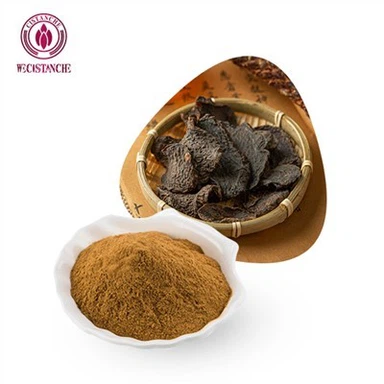
Herbal Cistanches Extract Powder
-
Cisntanche Supplement Immunity Booster
-
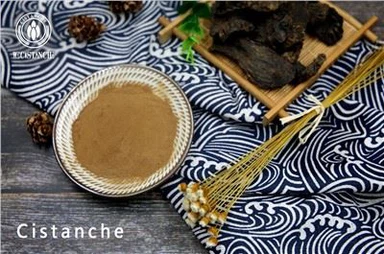
Cistanche Tubulosa Extract Food Grade Supplement
-

Cistanche Dietary Supplement Testosterone Supplement Phen...
-
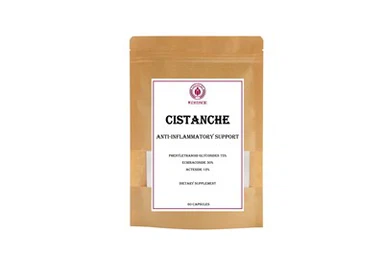
Cistanche Dietary Supplement Anti-Inflammatory support Ph...
-

Cistanche Extract Supplier Cistanche Tubulosa Cistanche D...