Advances in Diagnosis And Treatment Of Amyloid Nephropathy
Oct 11, 2024
Amyloidosis is a group of protein conformational diseases caused by different etiologies, which result in abnormal β-sheet-like folding of precursor proteins, forming insoluble substructures that are deposited in tissues and organs, leading to tissue structural destruction and organ dysfunction. The kidney is one of the most commonly affected organs in amyloidosis, and related renal structural and functional disorders are important causes of the disease. Amyloidosis nephropathy has become the second leading cause of secondary nephrotic syndrome in the elderly.

Click to Cistanche for kidney disease
Currently, there are 42 precursor proteins for amyloidosis, of which AL amyloidosis accounts for 80%, followed by SAA type, and there is also some amyloidosis caused by genetics and metabolism. The precursor proteins of amyloid substances have multiple sources: (1) high concentrations of proteins in normal protein blood for a long time. (2) the structure of normal proteins is unstable, and hydrolysis fragments produce β-folded structures, leading to excessive aggregation. (3) with the increase of age, its protein folding characteristics are enhanced. (4) Gene mutations lead to changes in protein amino acid sequences. Protein misfolding is not only a feature of amyloidosis but also involved in aging, neurodegenerative diseases, etc. The clinical features of renal amyloidosis depend on the type of amyloid protein, the location and number of renal deposition, and the degree of involvement of extrarenal organs.

Congo red staining is still the key method for pathological histological diagnosis of amyloidosis. Since Bennhold introduced the use of Congo red staining to observe the microscopic structure of amyloid in 1922, it has been a milestone. Subsequently, Divey et al. described the characteristics of apple green birefringence under polarized light of Congo red staining of amyloid. Positive Congo red staining and apple green birefringence under polarized light are still the gold standard for pathological diagnosis of amyloid protein. The red light mode of fluorescence microscopy can improve the sensitivity and specificity of Congo red staining, and become an auxiliary means of diagnosis when the content of amyloid protein in biopsy is low. Recent studies have found that positive Congo red staining is not completely equivalent to amyloidosis. In 2018, the Mayo Clinic reported a series of 18 cases of Congo red-positive fibrillary glomerulonephritis. At the same time, negative Congo red results cannot exclude amyloidosis. According to a retrospective Congo red staining study of elderly patients with minimal change nephropathy published in 2014, amyloid was detected in 17 cases (65%) by Congo red staining. Therefore, for people at high risk of renal damage, renal pathology Congo red staining and electron microscopy are very necessary. Liquid chromatography-tandem mass spectrometry is even more important for the differential diagnosis of renal amyloidosis. Protein spectrum analysis has become an indispensable and important means for the classification and differential diagnosis of renal amyloidosis.
The classification diagnosis of amyloidosis nephropathy is of great significance for the selection of clinical treatment plans and prognosis. At present, 13 of the 42 precursor proteins are known to involve the kidneys, and 50% to 80% are AL-type. About 12.3% of amyloidosis nephropathy cannot be accurately classified by immunofluorescence. Due to the easy adhesion of amyloid, false positive results of immunofluorescence may occur. In some cases, the conformation of the precursor protein changes and loses its original antigenic determining region, which may result in false negative results of immunological detection. High-performance liquid chromatography-tandem mass spectrometry is currently the "gold standard" for the diagnosis of amyloidosis nephropathy.

Amyloidosis nephropathy classification is closely related to treatment. At present, the treatment strategy for AL amyloidosis is relatively mature. The D-CyBorD regimen is the first choice. Autologous stem cell transplantation and CAR-T therapy are both used in AL amyloidosis. Drugs targeting starch substances such as CAEL-101, Birtamimab monoclonal antibody, and AT-03 Attralus autoantibody have been gradually put into clinical use. The treatment of amyloidosis nephropathy is progressing rapidly. Early diagnosis and standardized treatment can greatly improve the prognosis of patients with amyloidosis nephropathy.
How Does Cistanche Treat Kidney Disease?
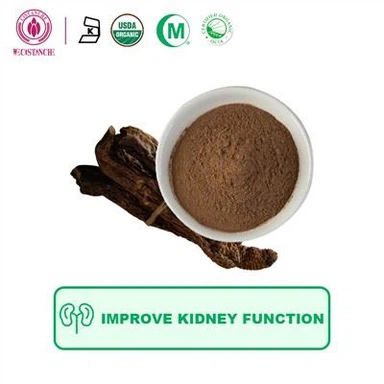
Cistanche is a traditional Chinese herbal medicine used for centuries to treat various health conditions, including kidney disease. It is derived from the dried stems of Cistanche deserticola, a plant native to the deserts of China and Mongolia. The main active components of cistanche are phenylethanoid glycosides, echinacoside, and acteoside, which have been found to have beneficial effects on kidney health.
Kidney disease, also known as renal disease, refers to a condition in which the kidneys are not functioning properly. This can result in a buildup of waste products and toxins in the body, leading to various symptoms and complications. Cistanche may help treat kidney disease ase through several mechanisms.
Firstly, cistanche has been found to have diuretic properties, meaning it can increase urine production and help eliminate waste products from the body. This can help relieve the burden on the kidneys and prevent the buildup of toxins. By promoting diuresis, cistanche may also help Reduce high blood pressure, a common complication of kidney disease.
Moreover, cistanche has been shown to have antioxidant effects. Oxidative stress, caused by an imbalance between the production of free radicals and the body's antioxidant defenses, plays a key role in the progression of kidney disease. ies help neutralize free radicals and reduce Oxidative stress, thereby protecting the kidneys from damage. The phenylethanoid glycosides found in cistanche have been particularly effective in scavenging free radicals and inhibiting lipid peroxidation.
Additionally, cistanche has been found to have anti-inflammatory effects. Inflammation is another key factor in the development and progression of kidney disease. Cistanche's anti-inflammatory properties help reduce the production of pro-inflammatory cytokines and inhibit the activation of inflammation mandatory pathways, thus alleviating inflammation in the kidneys.
Furthermore, cistanche has been shown to have immunomodulatory effects. In kidney disease, the immune system can be dysregulated, leading to excessive inflammation and tissue damage. Cistanche helps regulate the immune response by modulating the production and activity of immune cells, such as T cells and macrophages. This immune regulation helps reduce inflammation and prevent further damage to the kidneys.

Moreover, cistanche has been found to improve renal function by promoting the regeneration of renal tubes with cells. Renal tubular epithelial cells play a crucial role in the filtration and reabsorption of waste products and electrolytes. In kidney disease, these cells can be damaged, leading to damaged renal function. Cistanche's ability to promote the regeneration of these cells helps restore proper renal function and improve overall kidney health.
In addition to these direct effects on the kidneys, cistanche has been found to have beneficial effects on other organs and systems in the body. This holistic approach to health is particularly important in kidney disease, as the condition often affects multiple organs and systems. che has been shown to have protective effects on the liver, heart, and blood vessels, which are commonly affected by kidney disease. By promoting the health of these organs, cistanche helps improve overall kidney function and prevent further complications.
In conclusion, cistanche is a traditional Chinese herbal medicine used for centuries to treat kidney disease. Its active components have diuretic, antioxidant, anti-inflammatory, immunomodulatory, and regenerative effects, which help improve renal function and protect the kidneys from further damage. , cistanche has beneficial effects on other organs and systems, making it a holistic approach to treating kidney disease.