After The Virus: How Cistanche Tubulosa Supports Recovery From Post-Viral Fatigue And Immune Dysregulation
Sep 22, 2026
For most people, a viral infection is a temporary inconvenience-a few days of fever, cough, and fatigue, followed by a gradual return to normal. But for a significant minority, the virus leaves behind a lingering legacy: persistent fatigue that does not resolve with rest, cognitive fog that makes work and conversation difficult, muscle aches that come and go, and a feeling of being chronically unwell. This constellation of symptoms, often called post-viral fatigue syndrome, has gained unprecedented attention in the wake of the COVID-19 pandemic, but it is not new. It has been described after influenza, Epstein-Barr virus, and other infections for decades. The biology is complex, involving persistent immune activation, mitochondrial dysfunction, neuroinflammation, and autonomic nervous system dysregulation. Cistanche tubulosa, through its active ingredients echinacoside and acteoside, is being studied for its ability to address these interconnected mechanisms-not by targeting the virus itself, but by supporting the body's return to a balanced, resilient state.
What Happens After the Virus Is Gone
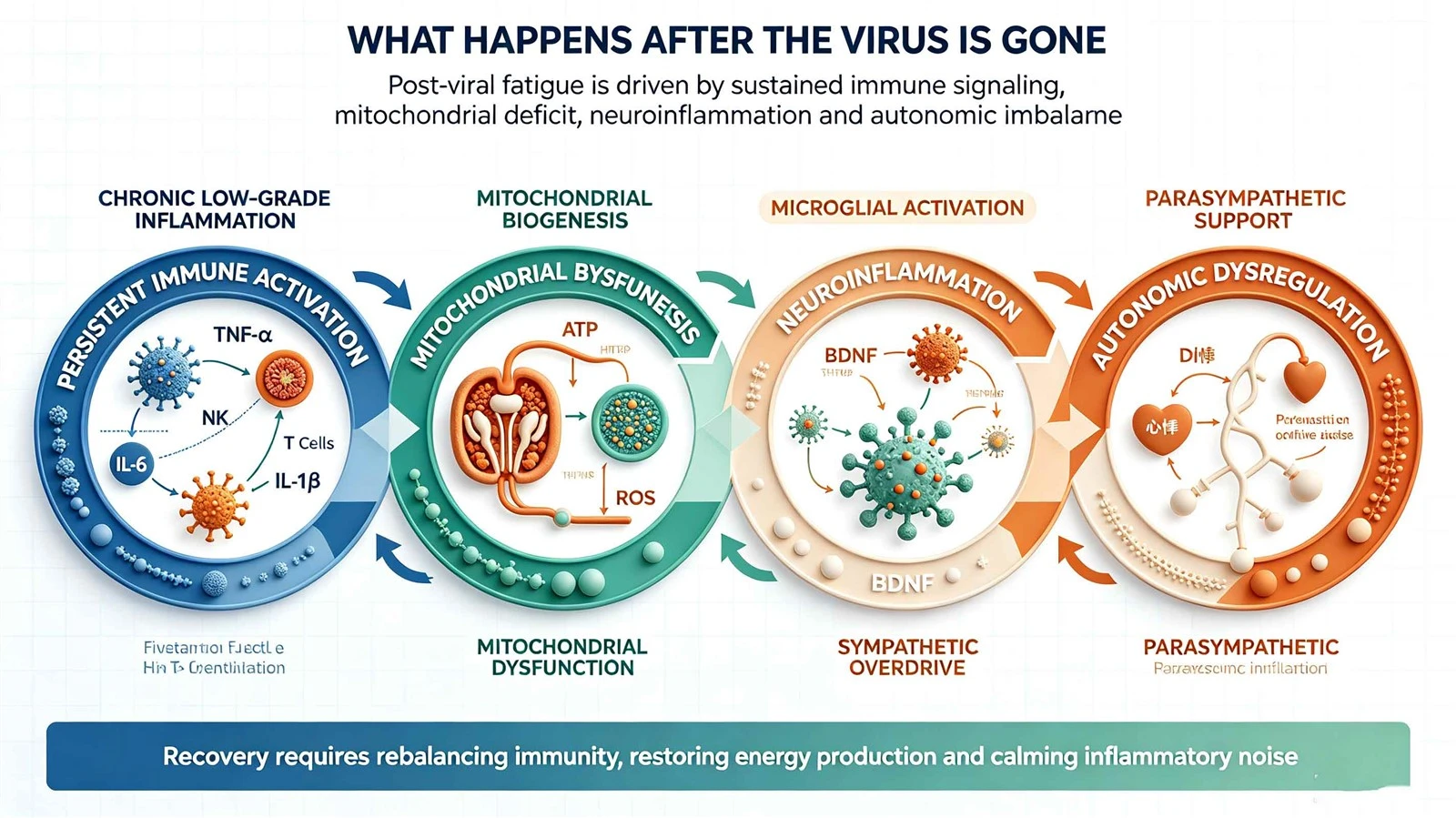
Post-viral fatigue is not simply the lingering of the acute infection. It is a distinct syndrome driven by maladaptive responses that persist after the pathogen has been cleared. Several interconnected mechanisms are involved.
Persistent immune activation is a central feature. The immune system, having been mobilized to fight the virus, fails to fully stand down. Elevated levels of pro-inflammatory cytokines-TNF-α, IL-6, IL-1β-continue to circulate, driving a state of chronic, low-grade inflammation that damages tissues and impairs energy metabolism. Natural killer cells and T cells may remain activated, or conversely, become exhausted and dysfunctional. This immune dysregulation is one of the most consistent findings in post-viral fatigue syndromes.
Mitochondrial dysfunction is the cellular basis of the fatigue. Viral infections-and the inflammatory response to them-damage mitochondria, impairing ATP production and increasing oxidative stress. Studies of patients with post-viral fatigue have found reduced mitochondrial function in muscle and immune cells, correlating with the severity of fatigue. The brain, with its enormous energy demands, is particularly vulnerable to mitochondrial deficits.
Neuroinflammation is a third driver. Viruses can cross the blood-brain barrier, and the systemic inflammatory response can activate microglia-the brain's immune cells. Activated microglia release cytokines that interfere with synaptic function, impair neurotransmitter balance, and contribute to the cognitive symptoms of post-viral syndrome: brain fog, difficulty concentrating, memory lapses, and mood disturbances.
Autonomic dysfunction is often overlooked but highly prevalent. The autonomic nervous system, which regulates heart rate, blood pressure, digestion, and body temperature, becomes dysregulated. This manifests as orthostatic intolerance (dizziness upon standing), palpitations, exercise intolerance, and abnormal sweating. The dysregulation appears to involve both the sympathetic and parasympathetic branches.
An ideal intervention for post-viral recovery would need to address all these mechanisms: calming the persistent inflammatory response, restoring mitochondrial function, protecting the brain from neuroinflammation, and supporting the autonomic nervous system. Cistanche tubulosa's phenylethanoid glycosides demonstrate activity across all these domains.

How Cistanche Tubulosa Supports Post-Viral Recovery
1. Modulating the Immune Response to Restore Balance
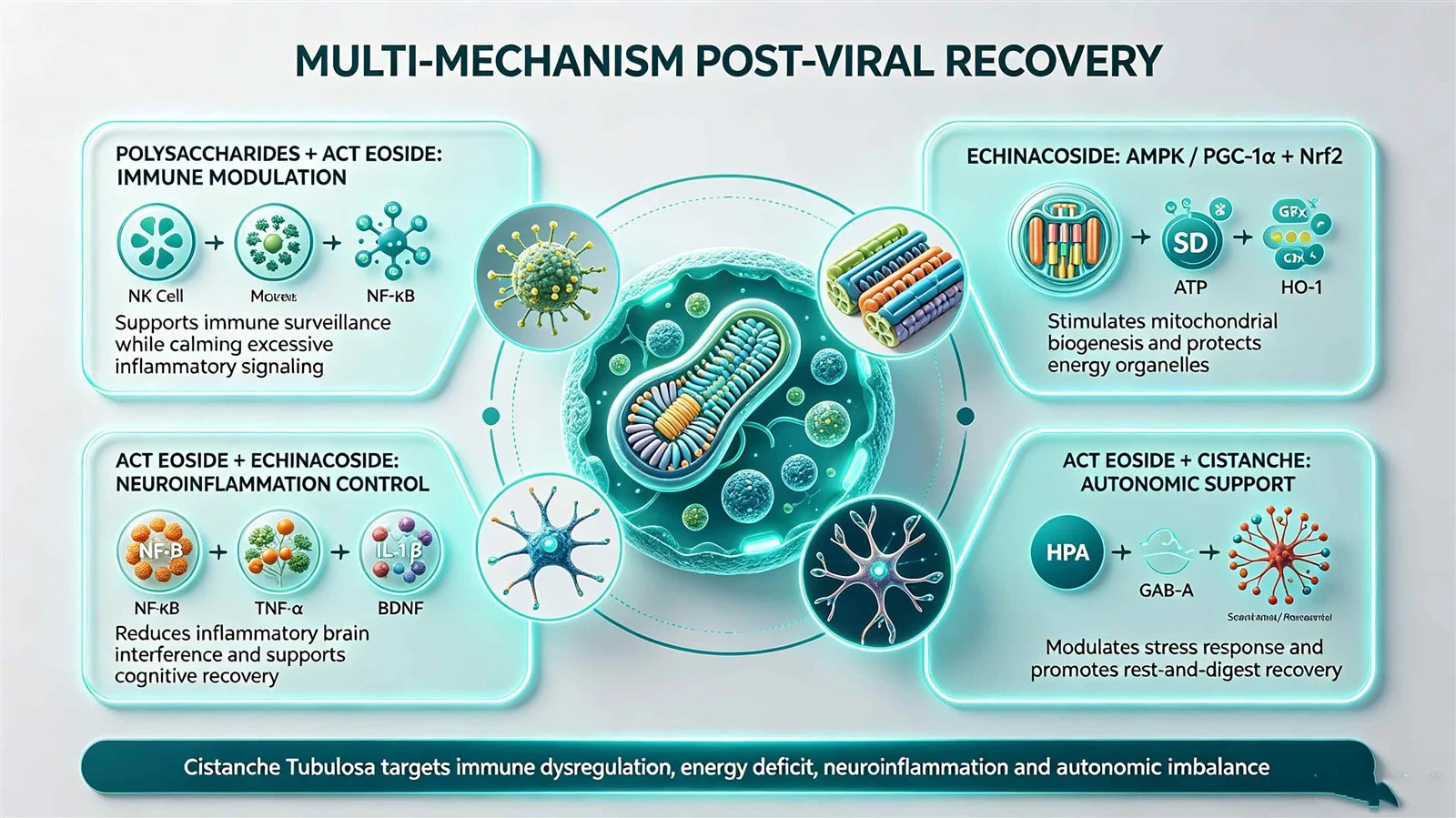
The immune system after a viral infection is not simply "suppressed" or "overactive"-it is dysregulated. The goal is not to boost or suppress but to restore balance. Cistanche's polysaccharides activate natural killer cells and macrophages, enhancing the immune surveillance that eliminates lingering infected cells and abnormal cells. Simultaneously, acteoside suppresses the excessive NF-κB-driven inflammatory response that perpetuates tissue damage. This bidirectional modulation is the hallmark of an immunomodulator, and it is precisely what a dysregulated post-viral immune system needs. By calming the inflammatory background, acteoside removes the brakes on proper immune function, allowing effector cells to do their job without the collateral damage of chronic inflammation.
2. Restoring Mitochondrial Energy Production
Echinacoside activates AMPK and PGC-1α, the master regulators of mitochondrial biogenesis. By stimulating the creation of new mitochondria and enhancing the efficiency of existing ones, it addresses the energy deficit at the heart of post-viral fatigue. It also activates Nrf2, upregulating the antioxidant enzymes-superoxide dismutase, glutathione peroxidase, heme oxygenase-1-that protect mitochondria from the oxidative damage that viral infections and inflammation inflict. This dual action-building more mitochondria while protecting them from damage-is the most fundamental way to restore cellular energy.
3. Reducing Neuroinflammation and Brain Fog
Acteoside's potent NF-κB inhibition directly addresses the microglial activation that drives neuroinflammation and cognitive symptoms. By reducing the production of TNF-α, IL-1β, and IL-6 in the brain, it helps restore the quiescent neurochemical environment that clear thinking requires. Echinacoside's Nrf2 activation protects neurons from oxidative damage, while its BDNF upregulation supports synaptic plasticity and cognitive recovery. For the brain fog that plagues so many post-viral patients, this combined anti-inflammatory and neurotrophic support offers a rational approach to recovery.
4. Supporting the Autonomic Nervous System
The autonomic dysfunction of post-viral syndrome involves both overactive sympathetic tone and insufficient parasympathetic tone. Cistanche's adaptogenic properties help modulate the HPA axis and the broader stress response, reducing sympathetic overdrive. Acteoside's GABA-A receptor modulating activity provides gentle parasympathetic support, helping restore the "rest and digest" branch that promotes recovery. This autonomic support may translate into improved exercise tolerance, better sleep quality, and reduced orthostatic symptoms.
5. Protecting Against Viral-Induced Organ Damage
Viral infections can leave lasting damage in organs throughout the body-the lungs, heart, kidneys, and liver. Echinacoside's Nrf2 activation protects these organs from oxidative stress, while acteoside's anti-inflammatory effects reduce fibrotic remodeling. For patients recovering from severe viral illness, this organ-protective support is particularly valuable. The same mechanisms that protect the liver, kidneys, and cardiovascular system in other contexts apply to post-viral recovery.
A comprehensive 2022 review in Frontiers in Pharmacology catalogs the immunomodulatory, anti-inflammatory, antioxidant, mitochondrial-protective, and neuroprotective properties of Cistanche tubulosa, confirming its multi-mechanism relevance to conditions of persistent fatigue and immune dysregulation. (Frontiers in Pharmacology review)
The Active Ingredients for Post-Viral Recovery
The recovery-supporting effects are driven by the polysaccharides, echinacoside, and acteoside. The polysaccharides modulate immune function and support the gut-immune axis. Echinacoside is the primary Nrf2 activator, mitochondrial protector, and AMPK stimulator. Acteoside is the primary NF-κB inhibitor and neuroinflammation suppressor. A high-quality extract must retain both the polysaccharide and phenylethanoid glycoside fractions. The evidence-informed dose is 400–600 mg daily.
Integrating Cistanche for Post-Viral Recovery
For post-viral fatigue, Cistanche should be taken consistently-daily, with a meal-as a long-term restorative. Recovery is gradual, and the effects accumulate over weeks to months. It pairs well with pacing strategies, which are essential for managing post-viral fatigue: alternating activity with rest, avoiding the push-crash cycle, and gradually increasing activity as energy allows. Nutritional support for mitochondrial recovery-Coenzyme Q10, magnesium, B vitamins, and omega-3 fatty acids-complements Cistanche's effects. Stress management and adequate sleep are critical, as the autonomic nervous system requires a calm environment to re-regulate. For patients with severe post-viral symptoms, a gradual, medically supervised approach is essential.
For those seeking reliable, research-grade recovery support, we offer Cistanche tubulosa extract products with verified active ingredient content.

Safety and Medical Context
Cistanche tubulosa is well tolerated with a centuries-long safety record. It does not suppress the immune system or interfere with the body's ability to fight infection. However, post-viral fatigue can overlap with serious conditions-cardiac complications, pulmonary fibrosis, or autoimmune disease-that require medical evaluation. Anyone experiencing persistent symptoms after a viral infection should consult a healthcare provider. This botanical is a supportive, restorative tool for post-viral recovery, not a substitute for medical diagnosis or treatment.