Application Of Cistanche in Health Food
Dec 05, 2021
Contact: emily.li@wecistanche.com
ZHOU Gang1, GAO Jia-Min2*, CAO Jin2
(1. Inner Mongolia Institutes for Drug Control, Hohhot 010020, China; 2. National Institutes for Food and Drug Control, Beijing 100050, China)
ABSTRACT Cistanche has a variety of health functions. There are 47 kinds of approved health food with Cistanche as raw material, and its health function is mainly to relieve physical fatigue, delay senility, enhance immunity and defecate. The development of health food with Cistanche as ingredient has broad prospect. This paper summarized the use of Cistanche as raw material in health food, introduced the chemical composition, pharmacological action and safety evaluation of Cistanche, summarized the approved health food with Cistanche as raw material, and analyzedthe application of Cistanche in health food, in order to provide reference for the development and utilization of Cistanche as health food raw materials
KEY WORDS: Cistanche; Cistanche deserticola Y.C. Ma; Cistanche tubulosa (Schenk) Wight; health food
0 Introduction
Cistanche was first published in the "Shen Nong's Materia Medica" and was listed as the top grade, with records such as "replenishing five labors and seven injuries, long service and light body". "Compendium of Materia Medica" records: "This thing is supplement but not stern, so it has the title of calmness, clam gentle appearance". Cistanche is a perennial parasitic herb of the Cistanche Hoffing.et Link of the Orobanchaceae family. It often parasitizes on the roots of sand-fixing plants such as Haloxylon ammodendron, weird willow, salt claw claw, pearl wood, etc. There are about 22 species in the world. The key to the family and genus of higher plants in China records that there are 6 species of this genus in my country, and according to further investigation by domestic scholars, it is determined to be 4 species and 1 variety.
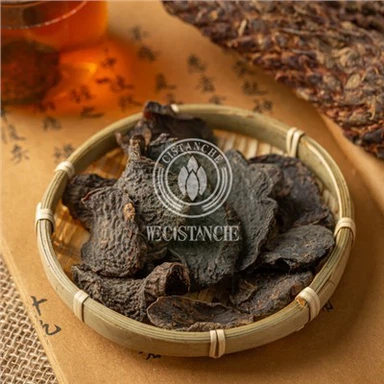
They are Cistanche deserticola YCMa, C. salsa (CAMey.) G. Beck, C. salsavar.albiflora PFTu et ZCLou, C. sinensis G. Beck and Csitanche tubulosa. Cistanche in China is mainly distributed in the arid areas of Northwest China, including Inner Mongolia, Xinjiang, Gansu, Qinghai, etc. Desert Cistanche has been included in the calendar editions of the Chinese Pharmacopoeia since 1977. In recent years, due to scarcity of resources and long-term unreasonable mining, wild Cistanche is on the verge of exhaustion and has been listed as a national second-level protected plant. In the 2005 edition of the Chinese Pharmacopoeia, Cistanche tubulosa, which is rich in resources, was used as the base plant for the first time. The Cistanche included in the 2015 edition of the Chinese Pharmacopoeia is a plant of the Dang family. Desert Cistanche deserticola YCMa or Cistanche tubulosa (Schenk) Wight has dry fleshy stems with scaly leaves, sweet, salty, and warm in nature. It returns to the kidney and the large intestine meridian, with nourishing kidney yang, nourishing essence and blood, moisturizing and laxative effect. They are Mainly used for symptoms such as deficiency of kidney yang, deficiency of essence and blood, impotence and infertility, weakness of waist and knees, weakness of muscles and bones, dry bowel, constipation, etc. Modern pharmacological research shows that in addition to being a traditional Chinese medicine for invigorating the kidney and strengthening yang, Cistanche has many functions such as anti-oxidation, anti-aging, and immune regulation. Health foods with Cistanche as the main raw material have gradually developed. 47 kinds of health foods containing Cistanche as raw materials have been approved, and their health functions are mainly to relieve physical fatigue, delay aging, enhance immunity, laxative, etc. This article introduces the main chemical components, pharmacological effects and safety evaluation of Cistanche, and summarizes and analyzes the use of Cistanche as a raw material in health food, and provides a reference for the development and utilization of Cistanche as a health food raw material.
1 Chemical composition and pharmacological effects
Because Cistanche has exact clinical curative effects and health care functions, the study of its active ingredients and pharmacological effects has always been a hot spot. Cistanche has rich active ingredients, the main active ingredients are phenethyl alcohol glycosides, iridoids, lignans, polysaccharides, galactitol, oligosaccharides, etc. Echinacoside and Acteoside belong to the phenethyl alcohol glycosides, which are the index components specified in the 2015 edition of the Chinese Pharmacopoeia. The pharmacological effects of Cistanche are improving sexual function, enhancing memory, immune regulation, anti-aging, anti-oxidation, moisturizing bowel and laxative, protecting liver, etc. With the deepening of research on Cistanche, the medicinal effect and mechanism of the effective ingredients of Cistanche have also been elucidated. In-depth research on the effective material components, pharmacological effects and mechanism of Cistanche is the prerequisite for the development of the Cistanche industry.

At present, there are many studies on the pharmacological effects of the chemical components of Cistanche mainly on phenylethanol glycosides, polysaccharides, galactitol and oligosaccharides. Phenylethanol glycosides have broad pharmacological effects such as tonifying kidney yang, regulating immune function, enhancing memory, anti-oxidation, anti-aging, etc. Zhao Wei et al. discussed in detail the pharmacological effects of phenylethanol glycosides in 13 aspects, such as invigorating the kidney and strengthening yang, protecting the liver, anti-aging, and improving memory. Wu Haihong et al. evaluated the antioxidant activity of phenylethanol glycosides from three aspects: reduction ability, 1-diphenylpicryl phenylhydrazine radical scavenging ability and linoleic acid system anti-lipid peroxidation ability, and found that phenylethanol glycosides have Strong antioxidant capacity. Wu Yu and other studies have found that echinacoside has a protective effect on acute liver injury in rats. Zhang Tao and other studies found that the total glycosides of Cistanche can significantly enhance the immune function of D-galactose-induced aging mice, restore or approach the state of young mice, and have the effect of delaying aging. Liu Meihong and others found that Cistanche phenethanol glycosides can improve learning and memory abilities.
The main function of polysaccharides is to enhance immune function. Zeng Qunli et al. studied the immune activity and mechanism of Cistanche deserticola polysaccharides and found that polysaccharides can promote cells to enter the division phase, and concluded that its promotion of mouse thymic lymphocyte proliferation is related to its promotion of calcium release in mouse thymic lymphocytes. Gao Xiaoxia et al. elaborated on the pharmacological effects of Cistanche deserticola polysaccharide in enhancing immune function.
The main role of lactitol and oligosaccharides is to moisturize the intestines and relax the bowels. Research by Tu Pengfei and others found that the desert cistanche, cistanche salina and cistanche tubulosa can significantly promote the peristalsis of the large intestine in mice, inhibit the absorption of large intestine water, and shorten the defecation time, and the three have similar intensities. Chemical composition studies have shown that Cistanche contains a large amount of galactitol, which can increase intestinal osmotic pressure. The highest content of galactitol of the three is Cistanche salina, Cistanche deserticola is the second place, and Cistanche tubulosa is the lowest. In addition, pharmacological studies have shown that the order of intensities of inhibiting water absorption in the large intestine is also the same: Cistanche salina> Cistanche deserticola> Cistanche tubulosa. Zhang Baishun et al.'s research on the dose-effect relationship of galactitol moisturizing bowel and laxative found that the Cistanche deserticola extract galactitol has a moisturizing and laxative effect on normal animals at a concentration of 1.1%. The effect gradually increases as the dose increases, but the dose-effect curve becomes flat when the concentration is about 10%, and the laxative effect is no longer strengthened with the increase in dose. Gao Yunjia et al. did a laxative study on the total polysaccharides, total glycosides, total oligosaccharides (including galactitol), galactitol, and total oligosaccharides in Cistanche, and found that total oligosaccharides, half Lactitol and total oligosaccharides without galactitol have a very significant effect on the intestinal propulsion rate of constipated mice. It also shows that the effective substances of Cistanche for laxative and laxative are total oligosaccharides and galactitol.
2 Safety evaluation
"Shen Nong's Materia Medica" lists Cistanche as a top-grade medicine, sweet in taste and slightly warm. "Compendium of Materia Medica" and other ancient herbal medicines have clearly pointed out that Cistanche is "non-toxic". Cistanche has been a medicinal and edible species since ancient times. Years of edible and medicinal history have shown that the safety of Cistanche is reliable. There are many ways to eat Cistanche in the folks, including stew, soup, porridge, wine, tea, etc. Various cooking methods make full use of its health benefits of nourishing the kidneys and strengthening the body, nourishing the five internal organs, improving immunity, and delaying aging. Nutrition High value and no toxic side effects.
On November 25, 2019, the National Health Commission and the State Administration for Market Supervision issued the ``Notice on the Pilot Work on the Management of 9 Substances including Codonopsis and Ginseng that are Traditionally Food and Chinese Medicinal Materials''(Guowei Food Letter (2019) No.311), Took Cistanche (desert) as a pilot is traditionally a substance that is both a food and a Chinese medicinal material, indicating that the National Health Commission has conducted a large number of experimental data studies to prove that Cistanche (desert) can be used as a food directly eaten by the human body and has reliable safety.
Modern safety scientific experiments show that Cistanche has no toxic side effects. Huang Zongluo et al.'s edible safety toxicology study on Cistanche, among which the results of acute toxicity experiments showed that the maximum oral tolerance of cistanche to female and male mice was greater than 20 g/kg body weight, and its dose was greater than the recommended amount for humans 600 times, It shows that Cistanche is a non-toxic substance. The acute toxicity of Bai Guohui and others on Cistanche and the 90-day feeding experimental toxicity study did not find that Cistanche has obvious toxic effect. Lin Jian et al.'s research on the reproductive toxicity and teratogenicity of Cistanche in rats found that Cistanche had no toxicity to pregnant and fetal rats; Hu Yuming et al. studied the acute, subacute and genotoxicity of Cistanche total glycosides and found that the acute toxicity test was non-toxic, and the genotoxicity test was negative. There were no significant differences in weight, food utilization, blood routine, blood biochemistry, organ coefficient, and histopathological examination compared with the control group. The conclusion shows that there are no obvious toxic and side effects in the total glycosides of cistanche. Peng Liang et al.'s experimental study on the toxicology and safety of Cistanche tea found that Cistanche tea was non-toxic under the experimental conditions, and did not show acute, sub-chronic toxicity and genetic toxicity. As well as the results of Zhang Juan and others on the safety evaluation of Cistanche extracts, they all show that Cistanche is non-toxic and harmless, and will not cause any acute, subacute, chronic or other potential hazards to human health.
The results of clinical experiments by Ren Kegong and others showed that after 40 consecutive doses of Cistanche, no damage to the heart, liver, and kidney functions was found. The safety evaluation results of Cistanche provide a scientific basis for its application as a health food raw material.
3 Applications of Cistanche as raw material in health food
Cistanche is widely used as a raw material in health foods approved on the market. By consulting the health food information approved by the State Food and Drug Administration, there are 45 and 2 domestic and imported health foods containing Cistanche as a raw material, respectively. Summarize the health food information that has been approved to contain Cistanche as a raw material. The approval number includes the national food health character (21 entries), the health food health character (24 entries) and the imported health food (2 entries). The functions of the approved health food containing Cistanche are claiming to relieve physical fatigue, delay aging, enhance immunity, and laxative, as shown in Table 1. The types of health food products using Cistanche as the main raw material include wine, tea, tablets, granules, capsules, oral liquids, etc., as shown in Figure 1.


There are 39 health food products that contain cistanche as raw materials in health foods that have been approved. And 5 health food products with raw materials containing Cistanche extract, and 3 health food products with raw materials containing Cistanche extract. Cistanche is often used in combination with other raw materials. There is only one single health food product of Cistanche raw material, and the raw material used is Cistanche(desert). The main functional ingredients of approved health foods containing Cistanche are echinacoside, Acteoside and crude polysaccharides, etc. The content of the main functional components of different health foods is quite different, and the content range is per 100 g or 100 mL. The health food contains 1.3~7.55 g echinacoside, 0.8~1.8 g Acteoside, and 0.0736~3.5 g crude polysaccharide. Unsuitable people are mostly children, pregnant women, nursing mothers, etc. The Chinese Pharmacopoeia and the Japanese Pharmacopoeia include Cistanche as a Chinese medicinal material. The index items for the determination of the content of Cistanche in the Chinese Pharmacopoeia are echinacoside and Acteoside. The functional or iconic components of health foods containing Cistanche raw materials are also echinacoside and Acteoside, which are consistent with the index components of the pharmacopoeia. Cistanche has been used as a health food raw material in health foods, but there is a lack of unified health food cistanche raw material quality standards and related testing methods for cistanche in health foods. It is necessary to establish related quality evaluation methods to improve the testing methods of Chinese medicine health foods and promote Standardized development of Chinese medicine health food.

4 Conclusion
At present, the success of the artificial cultivation of Cistanche and the large-scale promotion not only protect the wild resources of Cistanche, but also can effectively prevent wind and sand, promote the restoration of desert ecology, and help protect and improve the ecological environment. Artificial cultivation of Cistanche can provide a stable source of raw materials for Cistanche, which provides a good material foundation for the development of related health food products. Cistanche has a wide range of medicinal and health care values, is safe and non-toxic. The health food with Cistanche as the main raw material has a variety of health functions, relieves physical fatigue, delays aging, strengthens immunity, laxative, etc. With the continuous deepening of research on Cistanche and the continuous discovery of new pharmacological effects, the application of Cistanche has been increasing. The health benefits of Cistanche have been fully exploited, and more health foods have been developed to provide health services to more people. While developing Cistanche health food, it is necessary to establish relevant health food raw material quality standards and testing methods to ensure the quality of health food. With the continuous enhancement of people's health awareness, the Cistanche deserticola industry will develop rapidly, and the development of health foods using Cistanche deserticola as a raw material has broad prospects.

From: Journal of Food Safety and Quality Vol. 12 No. 3 Feb. 2021
----By ZHOU Gang1, GAO Jia-Min2*, CAO Jin2