Application Of Chaihu (Bupleurum) And Banxia (Pinellia) Formulas in Male Reproductive Disorders: A Modern Medical Perspective
Feb 20, 2025
1.2 Dried Ginger-Based Formulas
Dried ginger (Ganjiang) is a key component in various classical formulas, recognized for its potent warming properties. According to Yixue Rumen (Introduction to Medicine), dried ginger "warms the spleen and stomach, treats internal cold, and alleviates abdominal pain and distension." Yixue Qiyuan (Origins of Medicine) further emphasizes its ability to "dispel deep-seated cold in the organs and expel cold from the meridians."
Dried ginger is pungent and hot, entering the lung, stomach, liver, and kidney meridians. It warms the middle burner, dispels cold, revives yang, and enhances circulation. Compared to cinnamon twig (Guizhi) and fresh ginger (Shengjiang), dried ginger has a stronger yang-warming effect. In Dajianzhong Tang (Major Construct the Middle Decoction), dried ginger is combined with Sichuan pepper (Chuanjiao), ginseng (Renshen), and maltose (Yitang) to strongly warm the middle burner and alleviate severe abdominal pain, vomiting, and signs of profound deficiency.
In male reproductive health, dried ginger-based formulas like Lizhong Tang (Regulate the Middle Decoction) are commonly used. In this formula:

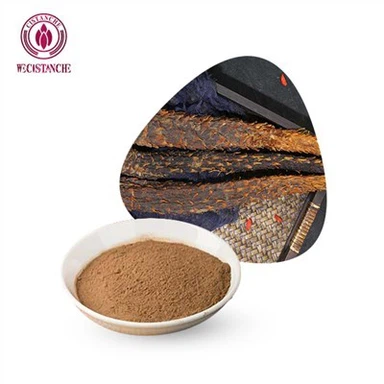
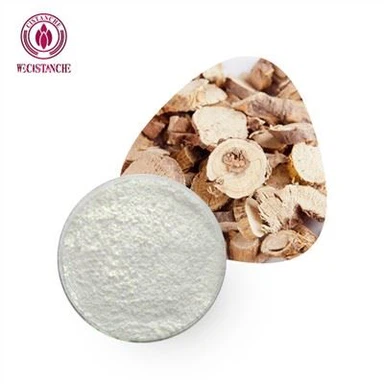
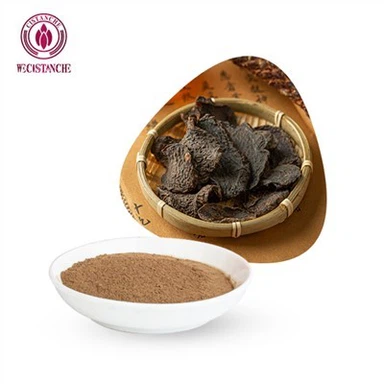
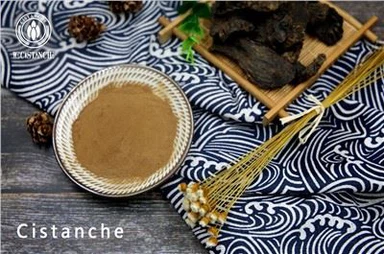
New herb cistanche and ginger extract for tonify kidney qi and support digestion
click the photo to get more details
Dried Ginger warms and strengthens the middle burner.
Ginseng, Atractylodes (Baizhu), and Licorice (Gancao) tonify spleen qi and support digestion.
By harmonizing the middle burner, this formula ensures the proper nourishment of the entire body, particularly the reproductive organs. When the spleen yang is restored, the testes function normally to produce and store sperm. Conditions such as oligospermia, asthenospermia, premature ejaculation, and nocturnal emissions can be effectively managed with Lizhong Tang. Clinical studies have shown its efficacy in treating disorders related to depletion of qi and fluids, including seminal leakage, fatigue, and spontaneous sweating.
1.3 Aconite-Based Formulas
Aconite (Fuzi) is another powerful warming herb, known for its ability to "expel deep cold from the organs, supplement yang, and warm the spleen and stomach," as described in Zhuzhi Yaolue (Key Points in Treatment). It is pungent, sweet, and extremely hot, entering the heart, spleen, and kidney meridians. Aconite is particularly effective in reviving yang, dispelling cold, and promoting the production of vital essence (jing).
Core Mechanism:
Aconite warms the kidney fire (Mingmen) and supports all three burners. This makes it invaluable for treating cold-induced dysfunctions in the reproductive system, where it revitalizes yang energy and promotes sperm production.
Four-Reversal Decoction (Sini Tang):
This formula combines aconite, dried ginger, and licorice, making it highly effective for conditions involving profound cold in the organs. While Danggui Sini Tang targets cold stagnation in the meridians, Sini Tang focuses on internal cold in the spleen and kidneys, which manifests as extreme fatigue, cold limbs, abdominal pain, and reproductive dysfunction. Conditions such as male infertility, benign prostatic hyperplasia (BPH), and orchitis linked to spleen and kidney yang deficiency respond well to this formula.
True Warrior Decoction (Zhenwu Tang):
When spleen and kidney yang deficiency impairs water metabolism, resulting in fluid retention, Zhenwu Tang is prescribed.
Aconite serves as the primary herb, warming kidney yang.
Poria (Fuling) and Atractylodes (Baizhu) strengthen the spleen and promote diuresis.
Dried Ginger warms the spleen, while White Peony Root (Baishao) soothes the liver, alleviates cramps, and supports fluid regulation.
This formula is particularly effective for conditions like BPH, where urinary retention, frequency, and urgency stem from kidney yang deficiency.
Jinkui Shenqi Wan:
This formula addresses combined kidney yin and yang deficiencies. Its base-Liuwei Dihuang Wan-tonifies the kidney and liver, while aconite and cinnamon twig mildly warm kidney yang. Symptoms such as lower back pain, fatigue, cold intolerance, erectile dysfunction, premature ejaculation, and nocturia can be effectively treated with this formula.
Tianxiong Powder (Tianxiong San):
Although Zhang Zhongjing did not specify its clinical indications, its composition suggests it targets cold-induced reproductive dysfunction.
Aconite (or its related herb Tianxiong) warms kidney yang.
Cinnamon Twig, Atractylodes, and Dragon Bone (Longgu) harmonize the middle burner and consolidate essence.
This formula is particularly useful for early-stage seminal leakage, sperm production disorders, and reduced sexual function.

Additional Aconite Applications
Ephedra-Aconite-Asarum Decoction (Mahuang Fuzi Xixin Tang):
Primarily used for Shaoyin cold damage, this formula warms the meridians and dispels cold. It is valuable for chronic prostatitis with cold sensitivity and deep-seated pelvic pain.
Coix-Aconite-Patrinia Decoction (Yiyiren Fuzi Baijiang San):
This formula combines the warming properties of aconite with the heat-clearing and pus-draining effects of Patrinia and Coix. It is effective for chronic prostatitis and conditions involving damp-heat and pus accumulation.
2.1 Application of Chaihu-Based Formulas
The liver and gallbladder share a close anatomical and functional relationship with the spleen and stomach in the middle burner. The liver and gallbladder's role in ascending and descending functions relies on the spleen and stomach to regulate qi dynamics. As noted in Sisheng Xinyuan (The Four Saints' Source of the Heart), "Without the upward movement of spleen qi, liver qi cannot ascend; without the downward movement of stomach qi, gallbladder fire cannot descend." Zhang Zhongjing emphasized, "When observing liver disorders, one must understand that the liver transmits its imbalance to the spleen." This reflects the five-element relationship, where wood (liver) overacts on earth (spleen). When spleen and stomach function declines, it creates a combined pattern of liver stagnation and spleen deficiency, leading to a mix of excess and deficiency.
Chaihu-based formulas, derived from Xiaochaihu Tang (Minor Bupleurum Decoction), follow Zhang Zhongjing's principle of balancing the spleen and liver. These formulas are particularly valuable for disorders involving liver-spleen disharmony.
In Shanghan Lun (Treatise on Cold Damage), Clause 97 states, "For cases where the blood is weak, qi is depleted, and the interstices are open, allowing pathogenic qi to enter and lodge in the hypochondria... Xiaochaihu Tang is indicated." The underlying pathology involves spleen and stomach deficiency, which leads to insufficient production of qi and blood, weakening the body's defense against external pathogens. Consequently, the pivot of the Shaoyang channel becomes obstructed, resulting in symptoms such as hypochondriac fullness, bitter taste in the mouth, nausea, and irritability.
Mechanism of Xiaochaihu Tang:
Chaihu (Bupleurum) disperses pathogenic qi from the Shaoyang channel.
Huangqin (Scutellaria) clears heat from the interior.
Banxia (Pinellia) and Shengjiang (Fresh Ginger) harmonize the stomach and relieve nausea.
Renshen (Ginseng), Dazao (Jujube), and Gancao (Licorice) strengthen the spleen and replenish qi.
This formula balances both excess and deficiency, promoting the proper ascending and descending of qi in the liver and spleen. In modern clinical practice, Xiaochaihu Tang is widely used for male reproductive disorders related to emotional stress, such as erectile dysfunction, premature ejaculation, and infertility. Many men with these conditions also experience psychological symptoms such as anxiety, depression, insomnia, and feelings of isolation, all of which reflect liver qi stagnation and spleen deficiency. Studies have demonstrated the effectiveness of Xiaochaihu Tang in improving male reproductive health.

Variations and Derivatives of Chaihu-Based Formulas
Dachaihu Tang (Major Bupleurum Decoction):
This formula is used when Shaoyang pathology progresses to involve the Yangming channel, manifesting as combined Shaoyang-Yangming disorders. Symptoms include severe epigastric pain, constipation, or diarrhea with heat symptoms.
Key Ingredients:
Chaihu and Huangqin harmonize the Shaoyang.
Dahuang (Rhubarb) and Zhishi (Immature Bitter Orange) purge heat and resolve intestinal stagnation.
Baishao (White Peony Root) relaxes smooth muscles and alleviates pain.
Banxia and Shengjiang harmonize the stomach, and Dazao replenishes qi.
Modern studies suggest that Dachaihu Tang improves metabolic syndrome, which is closely linked to erectile dysfunction and male infertility.
Chaihu Jia Longgu Muli Tang (Bupleurum plus Dragon Bone and Oyster Shell Decoction):
This formula is used for liver qi stagnation with phlegm-heat disturbing the heart, resulting in emotional dysregulation and physical symptoms such as a heavy sensation in the body, urinary dysfunction, and sexual weakness.
Key Ingredients:
Dragon Bone (Longgu) and Oyster Shell (Muli) calm the mind and stabilize emotions.
Chaihu, Huangqin, and Dahuang regulate qi and clear heat.
Fuling (Poria) harmonizes the middle burner and resolves dampness.
This formula is particularly beneficial for men with chronic prostatitis accompanied by anxiety, irritability, and insomnia.
Chaihu Guizhi Tang (Bupleurum and Cinnamon Twig Decoction):
A combination of Xiaochaihu Tang and Guizhi Tang, this formula balances liver-spleen disharmony and regulates the Taiyang and Shaoyang channels. It is effective for conditions involving premature ejaculation and spermatorrhea caused by prolonged liver qi stagnation and spleen qi deficiency.
Chaihu Guizhi Ganjiang Tang (Bupleurum, Cinnamon Twig, and Dried Ginger Decoction):
This formula targets Shaoyang disorders with concurrent spleen deficiency and interior cold.
Key Ingredients:
Chaihu and Huangqin harmonize the Shaoyang.
Guizhi (Cinnamon Twig) warms and harmonizes yin and yang.
Ganjiang (Dried Ginger) strengthens the spleen and dispels cold.
Tianhuafen (Trichosanthes Root) nourishes fluids, and Muli stabilizes yin.
Clinically, this formula is effective for erectile dysfunction and diarrhea associated with cold in the spleen and heat in the liver.
Sini San (Frigid Extremities Powder):
This classical formula is used for liver qi stagnation leading to spleen dysfunction and qi stagnation. Symptoms include cold extremities, abdominal pain, diarrhea, and hypochondriac fullness.
Key Ingredients:
Chaihu regulates the liver and disperses stagnation.
Zhishi (Immature Bitter Orange) resolves qi stagnation and dissipates clumps.
Baishao soothes the liver and relieves pain.
Gancao harmonizes and tonifies the middle burner.
Modern research indicates that Sini San relaxes smooth muscle, alleviates psychosomatic symptoms, and improves circulation, making it effective for chronic prostatitis, erectile dysfunction, and premature ejaculation associated with emotional stress and liver-spleen disharmony.

2.2 Application of Banxia-Based Formulas
Banxia-based formulas, derived from Banxia Xiexin Tang (Pinellia Decoction to Drain the Epigastrium) or centered around Banxia as the primary herb, have significant clinical applications. These formulas address complex patterns of cold and heat, deficiency and excess, particularly in the middle burner.
In Shanghan Lun (Treatise on Cold Damage), Clause 149 states:
"On the fifth or sixth day of cold damage, when vomiting and fever are present, but the patient is treated with purgatives... fullness without pain in the epigastrium occurs. This is called Pi (epigastric distension). Chaihu Tang is ineffective, and Banxia Xiexin Tang should be used."
This pathology involves the misuse of purgatives, which damages the middle burner yang qi. As a result, unresolved Shaoyang heat penetrates internally, creating a cold-heat complex and causing epigastric fullness and distension. According to Suwen (Basic Questions), "When clear qi descends abnormally, diarrhea occurs; when turbid qi ascends, abdominal distension occurs." This reflects a disruption in the spleen's ascending and stomach's descending functions, leading to symptoms such as borborygmus, diarrhea, nausea, vomiting, and abdominal distension.
Mechanism of Banxia Xiexin Tang
Banxia Xiexin Tang modifies the structure of Xiaochaihu Tang by removing the exterior-releasing herbs (Chaihu and Shengjiang), as the exterior pathogen has already moved internally. Instead, it incorporates:
Huanglian (Coptis) and Ganjiang (Dried Ginger): These form a fundamental pairing that harmonizes cold and heat by combining acrid opening and bitter descending properties.
Banxia (Pinellia): Resolves dampness and eliminates phlegm.
Huangqin (Scutellaria): Clears heat and dries dampness.
Renshen (Ginseng): Tonifies qi to support the middle burner.
Dazao (Jujube) and Gancao (Licorice): Strengthen the spleen and harmonize the formula.
This formula primarily treats spleen-stomach deficiency with internal damp-heat. By restoring the spleen and stomach's physiological functions, it promotes proper qi and blood circulation, which nourishes the reproductive organs. This makes it effective for conditions such as erectile dysfunction. Chen Yanli highlights its effectiveness in treating spleen-stomach weakness with damp-heat, which impairs blood and qi flow to the genital region, resulting in poor erectile function.
Clinical applications have also demonstrated its efficacy in male infertility conditions such as oligospermia and late-onset hypogonadism. Research by Chang Degui has shown significant improvements in sperm quality and hormonal balance with the use of this formula.
Variations and Derivatives of Banxia Xiexin Tang
Gancao Xiexin Tang (Licorice Decoction to Drain the Epigastrium):
This is a modification of Banxia Xiexin Tang with an increased dose of licorice, emphasizing qi replenishment and middle burner tonification.
Classical Indication: Described in Shanghan Lun as treating epigastric distension due to stomach qi deficiency with cold-heat intermingling.
Broader Applications: In Jingui Yaolue (Essential Prescriptions from the Golden Cabinet), it addresses mucosal ulcerations such as "throat erosion (Huo) and genital erosion (Hu)."
Modern Use: This formula is applied for inflammatory mucosal conditions like oral ulcers, Behçet's disease, Sjögren's syndrome, and ulcerative colitis. In urology and andrology, it has shown efficacy in treating chronic prostatitis and urethritis due to its anti-inflammatory and mucosal-protective properties.
Banxia Houpo Tang (Pinellia and Magnolia Bark Decoction):
This is the primary formula for treating Meihe Qi (Plum-Pit Qi), a condition characterized by a sensation of a lump in the throat due to phlegm and qi stagnation.
Key Ingredients:
Banxia and Shengjiang: Resolve dampness and transform phlegm.
Houpo (Magnolia Bark): Regulates qi and disperses stagnation.
Fuling (Poria): Strengthens the spleen and resolves dampness.
Zisuye (Perilla Leaf): Relieves qi stagnation and enhances qi movement.
In male reproductive health, emotional stress often contributes to conditions such as chronic prostatitis, erectile dysfunction, and premature ejaculation. These disorders frequently co-occur with Meihe Qi. Combining Banxia Houpo Tang with Chaihu-based formulas has been shown to effectively regulate qi dynamics, alleviate emotional disturbances, and promote recovery. Research by Cui Yun demonstrated significant improvements in chronic prostatitis and psychogenic erectile dysfunction when combining Xiaochaihu Tang and Banxia Houpo Tang.
Other Banxia-Based Formulas:
Shengjiang Xiexin Tang (Fresh Ginger Decoction to Drain the Epigastrium): Used for more pronounced cold signs in the middle burner.
Dahuang Huanglian Xiexin Tang (Rhubarb and Coptis Decoction to Drain the Epigastrium): Applied for heat excess in the middle burner.
Fuzi Xiexin Tang (Aconite Decoction to Drain the Epigastrium): Addresses severe cold in the middle burner.
Xuanfu Daizhe Tang (Inula and Haematite Decoction): Targets nausea and vomiting with qi rebellion.
Bentun Tang (Running Piglet Decoction): Treats liver qi counterflow with panic attacks.
While these formulas lack extensive clinical reports in andrology, their mechanisms suggest potential applications in male reproductive disorders, warranting further exploration.