Bioactive Metabolites And Pharmacology Of Cistanche Tubulosa
Apr 21, 2022
Plant herbs usually produce many secondary metabolites, these metabolites are the main metabolites synthesized by the organism itself and constitute an important source of chemicals, which can be used as medicines, pesticides, spices, fragrances, pigments, biological pesticides, and food additives.
Studies in recent years have shown that Cistanche has a wide range of biological effects, including the prevention and treatment of central nervous system diseases, cardiovascular disease treatment, antioxidant, endocrine and reproductive, gastrointestinal, respiratory, antidiabetic, antibacterial, antiparasitic, it contains Many biologically active compounds, including phenylethanoid glycosides (cyclic glycoside A, cyclic glycoside B, echinacoside, cyclic glycoside A, cyclic glycoside, 2-acetyl glycoside, cyclic glycoside C and cyclic glycoside), syringin A3-O-α-L-rhamnoside, hi-side I, iridoid, iridium Glycosides (Glycanose, Glycal, A, B, C, D, Glycan A, F, F, H1, H2 and I), Phenyloligosaccharides, Terpenes, and Lignans. The plant produces a variety of pharmacological effects, including memory enhancement, hypolipidemic, hair-stimulating antibacterial, anti-diabetic, anti-osteoporotic, anti-hepatoprotective, anti-inflammatory, neuroprotective, anti-Parkinson's disease, anti-fatigue, vasodilation, and reproductive effect. This article reviews the chemical constituents and pharmacological effects of Cistanche.
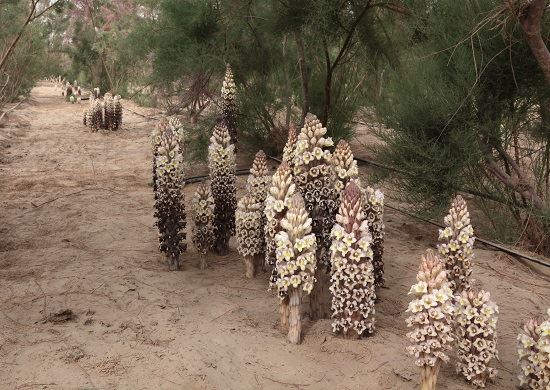
Description: Perennial parasitic, yellowish to yellow-brown, fleshy herb, herb, 15-40 cm tall, with a purplish tinge, simple, erect, glabrous to puberulous, often broader at the base. Densely covered with triangular or lanceolate, 1-4 cm long scales. Spikes dense, showy, cylindrical 10-20 cm long. Flowers yellow, 3- 4.5 cm long. Calyx lobes 5, 1- 1.5 cm long, oblong-ovate. Corolla, funnel-shaped, 4-5 cm long, bright yellow to pinkish-yellow or violet. Staminal filaments, anthers densely hairy, woolly at the base, rounded or blunt at the ends. Capsules ovoidoblong, laterally compressed, 20-25 mm long, beaked, many-seeded, seeds pitted, dark-coloured, 1 mm long.
Traditional uses:Cistanche tubulosa is commonly used in the treatment of amnesia, impotence and senile constipation by traditional Chinese physicians . It is also used as a tonic, for the treatment of blood circulation-related disorders, body weakness, impotence, sterility, and lumbago(38-40,43) . Chemical constituents: Many bioactive compounds were isolated from Cistanche tubulosa, included phenylethanoid glycosides (cistantubuloside A, cistantubuloside B, echinacoside, cistanoside A, acteoside, isoacteoside, 2- acetylacteoside, cistanoside C and tubuloside), syringalide A 3-O-α-L-rhamnopyranoside, campneoside I, iridoids, iridoid glycosides (kankanose, kankanol, kankanoside A, B, C, D, F, H1, H2 and I), phenylethyl oligosaccharides, terpenes and lignans (43-48) . Four new acylated phenylethanoid oligoglycosides, kankanosides J1, J2, K, and K2, were isolated from stems of Cistanche tubulosa (Orobanchaceae) together with isocampneoside I(49) . Kankanosides L, M, N, O and P were also isolated from fresh stems of Cistanche tubulosa together with eight iridoid glycosides, five acyclic monoterpene glycosides, three phenylpropanoid glycosides, and four lignan glycosides(11) . Cistanche tubulosa contents of echinacoside and acteoside were (31.8-119.9) and ( 7.3- 25.4) mg/g respectively(50) . However, Xie et al., isolated 16.9 mg of echinacoside and 5.1 mg of acteoside from 220 mg of Cistanche tubulosa extract(51). The plant contained many heavy metals, the concentration of heavy metals (Fe, Zn, Ni, Co, Cu, Mn, Cd and Cr) were 63.45±0.85, 52.07±1.23, 3.04±0. 32, 2.19±0.19, 32.43±1.23, 28.97±1.23, 0.83±0.09, 0.31±0.09 and 11.72±0.88 mg/kg, respectively. However, the concentration of iron, manganese, copper, zinc and magnesium in the stem of Cistanche tubulosa were 242.18, 17.85, 7.96, 6.64 and 1357.50 microg/g(51-53) . Pharmacological effects: Effect on memory: The improvement of learning ability and consolidation of Cistanche tubulosa extract was carried out with a step down test in mice. In this method, a platform (safe area) is located on an electric wire with 36 V current and mice’s learning ability and consolidation were evaluated by the time they spend on the platform and the number of electronic shocks they received. Scopolamine (which may retard learning ability) was administered before the training started, and sodium nitrite (a drug to inhibit the synthesis of protein involved in the formation of memory by inducing oxygen deficit in the brain) was administered after the training to induce learning/memory disorder. As a result, the safe area time (latency) and the number of errors (frequency that mice hit by electronic shocks) were significantly better in the Cistanche tubulosa extract administration group as compared to the memory consolidation dysfunction model group. Cistanche tubulosa extract exerted stronger activity than piracetam, a pharmaceutical agent to activate energy metabolism of brain cells. According to these results, Cistanche tubulosa extract significantly helped the brain to recover from scopolamine-induced learning disorder and sodium nitrite-induced memory consolidation dysfunction and it improved the learning ability and formation of memory of brain(54) . On the other hand, water maze test was carried out to evaluate the memory recall ability of mice. Training was conducted to create memory in mice on the routes of water maze. Cistanche tubulosa extract (50- 400 mg/kg) were orally administered to mice every day throughout the training period, four weeks. On the last day of the training, 30% ethanol was given to mice to induce memory loss (failing to recall memorized information). The mice in the group consumed Cistanche tubulosa extract required shorter time to arrive destination compared to control. The rate of error was significantly lower in the group consumed Cistanche tubulosa extract. Cistanche tubulosa demonstrated stronger activity than piraceetam. Accordingly, Cistanche tubulosa extract improved the ability to elicit or recall memorized information(55) . The ameliorating effects of Cistanche tubulosa extract which was quantified with three phenylpropanoid glycosides was studied in Alzheimer’s disease (AD)-like rat model. Amyloid β peptide 1-42 (Aβ 1-42) intracisternally infused rats by osmotic pump was used as an AD-like rat model. The major pathological makers were measured including Aβ 1-42 immunohistochemical stain, behavioral tests (inhibitory avoidance task and Morris water maze) and central neurotransmitter functions. Aβ 1-42 caused cognitive deficits, increased amyloid deposition and acetylcholine esterase activities, and decreased the levels of brain’s acetylcholine and dopamine. Daily administration of Cistanche tubulosa extract throughout Aβ 1-42 infusion periods ameliorated the cognitive deficits, decreased amyloid deposition and reversed cholinergic and hippocampal dopaminergic dysfunction caused by Aβ 1-42 (56) . The efficacy and safety of Cistanche tubulosa glycoside capsules (CTG capsule, Memoregain® ) for treating Alzheimer’s disease (AD) were studied clinically. A total of 18 patients with AD administered with Memoregain® for 48 weeks were assessed for drug efficacy by Alzheimer’s disease assessment scale–cognitive
behavioral scale, and clinical global impression (CGI) scales. The MMSE score was 14.78 ± 2.51 at baseline and 14.06 ± 4.26 at study completion. While changes in ADAS-cog score before and after 48 weeks of treatment were statistically insignificant, the score improved, deteriorated, and remained unchanged in 10, 7,and 1 patient, respectively. The ADL and CGI scores showed no significant difference from baseline. All adverse reactions were mild. After Memoregain®treatment, patients with AD showed no obvious aggravation of cognitive function, independent living ability, and overall conditions but were stable throughout the study. In comparison with other long-term medications, acetylcholinesterase inhibitors suggests that Memoregain®has the potential to be a possible treatment option for mild to moderate AD(57-58).The body of Cistanche tubulosa (Schenk.) Wight, was used to make a medicinal preparation containing phenylethanoid glycosides and comprising 10-70% of echinacoside and 1-40% of acetonide by weight of the preparation. The medicinal preparation was used effectively in the prevention of senile dementia,and inhibition of aggregation of blood platelets(59).
Effect on immunity and aging of Cistanche Tubulosa:

Click here to know the anti-aging function of cistanche
Hypolipidemic effects of Cistanche Tubulosa:
cytochrome P450 SCC were significantly enhanced. In addition, acetonide, a major constituent of CTE, was found to enhance the mRNA expressions of apolipoprotein B, VLDL receptor, and cytochrome P450 SCC in HepG2 hepatocytes. According to these results, the authors concluded that CTE affected the mRNA expressions of molecules related to cholesterol transport and metabolism and exhibited hypercholesterolemia activity in diet-induced hypercholesterolemia mice. Acteoside was involved in the hypocholesterolemic activity of CTE(61).
Effects on hair health of Cistanche Tubulosa:
Cistanche tubulosa extract was studied in a double-blinded, placebo-controlled clinical trial, to investigate its efficacy in promoting hair health in patients with mild to moderate patterned hair loss. The density and diameter of hairs were compared with that in patients receiving placebo at baseline, 8 and 16 weeks of the study. In order to determine the efficacy of treatment on dandruff and scalp inflammation, the investigator's visual assessment score and patient's subjective score were also performed. A statistically significant increase in the hair density and hair diameter of the test group was recorded after 16 weeks. There were also significant outcomes regarding the investigator's visual assessment and patient's subjective score of dandruff and scalp inflammation in the test group compared to those in the control group. Based on the results of this clinical study, the authors conclude that Cistanche tubulosa extract is a promising substance for promoting the health of the scalp and hair(62).
Antimicrobial effect of Cistanche Tubulosa:
typhi, Escherichia coli, methicillin resistant Staphylococcus aureus, Fusarium axyosporum, Aspergilus niger and Aspergilus fumigatus. Phenylethanoid glycosides, Campneosid I and Campneosid II, isolated from Cistanche tubulosa, have high antibacterial and antifungal activity. Campneosid I showed significant antibacterial activity against several pathogenic strains of Streptococcus and Staphylococcus.
Cytotoxic effects of Cistanche Tubulosa:
The extract of the aerial parts of the plant was evaluated for cytoxicity using the larvae (nauplii) of Artemia salina (brine shrimp) model. LD50 of the plant extract against Artemia salina was 62.95 (49.26-79.05) ppm.
Cistanche tubulosa extract possessed the highest toxicity among eight tested plants.
Antidiabetic effect of Cistanche Tubulosa:
Antiosteoporotic effect of Cistanche Tubulosa:
The antiosteoporotic effect of echinacoside (ECH) on bone metabolism was studied in the ovariectomized (OVX) rat model of osteoporosis in vivo. In OVX rats, the increases of body weight, serum hydroxyproline (HOP) levels, and the decreases of uterus wet weight and BMD were significantly reversed by ECH treatment. Moreover, three dosages of ECH completely corrected the increased urine concentration of calcium (Ca), inorganic phosphorus (P), and HOP observed in OVX rats. Furthermore, Micro-CT analysis results of distal femur showed that all ECH-treated groups notably enhanced bone quality compared to OVX group (p<0.05). The total femur BMD and biomechanical strength of tibia were significantly improved (p<0.05) after 12 weeks ECH administration. Histological results also showed the protective activity of ECH through promotion of bone formation and suppression of bone resorption. In addition, the ECH administration also significantly enhanced the expression of ER in the uteri according to immunohistochemical evaluation (p<0.05).
According to these findings, the authors concluded that ECH is a new class of phytoestrogen, with remarkable antiosteoporotic activity, similar to estrogen, and especially effective for prevention osteoporosis induced by estrogen deficiency(67).
Echinacoside (ECH), isolated from Cistanche tubulosa (Schrenk) R. Wight stems, was subjected to in vitro experiments to investigate its bioactivities on proliferation, differentiation and mineralization of the osteoblastic cell line MC3T3-E1. ECH caused a significant increase in cell proliferation, ALP activity, COL I contents,OCN levels and an enhancement of mineralization in osteoblasts at the concentration range from 0.01 to 10nmol/l (p<0.05). In addition, the ratio of OPG/RANKL was also enhanced by ECH. Accordingly, ECH can promote bone regeneration in cultured osteoblastic MC3T3-E1 cells, which might be done by elevating the OPG/RANKL ratio(68).
Hepatoprotective effect of Cistanche Tubulosa:
against D-galactosamine (D-GalN)/lipopolysaccharide (LPS)-induced liver injury in mice. Among the isolated compounds, echinacoside, acteoside, isoacteoside, acetylacteoside, and tubuloside A, inhibited D-GalN induced death of hepatocytes. These five compounds, and cistantubuloside B also reduced TNF-alpha-induced cytotoxicity in L929 cells.
cytochrome P450 SCC were significantly enhanced. In addition, acteoside, a major constituent of CTE, was found to enhance the mRNA expressions of apolipoprotein B, VLDL receptor, and cytochrome P450 SCC in HepG2 hepatocytes.

Three among acylated phenylethanoid oligoglycosides isolated from stems of Cistanche tubulosa were found to inhibit D-galactosamine-induced cytotoxicity in primary cultured mouse hepatocytes.
Effect on inflammatory mediators: The anti-inflammatory effects of fuciodan and Cistanche tubulosa extract was investigated in vitro macrophage culture system and in vivo carrageenan-induced air pouch inflammation model. Although, fucoidan was inactive, in vivo air pouch inflammation model, carrageenan-induced vascular exudation, and increased nitric oxide and prostaglandin E2 concentrations in the exudates were synergistically suppressed by co-administration of fucoidan and Cistanche tubulosa extract. Moreover, tissue inflammation was substantially attenuated by combinational therapy. However, there was no synergistic effect against the inflammatory cell
infiltration, although fucoidan and Cistanche tubulosa extract each markedly reduced the cell numbers.
The authors concluded that fucoidan blocked infiltration of inflammatory cells, while Cistanche tubulosa extract inhibited activation of the cells, and that their combinational treatment could be a promising candidate for the relief of various types of inflammation.The efficacy of echinacoside ECH-enriched extract of Cistanche tubulosa was evaluated in the treatment of dextran sulphate sodium (DSS)-induced colitis. Oral administration of ECH extract significantly suppressed the development of acute colitis, indicated by lowering disease activity index (p<0.0001) and preventing colonic damage (p=0.0336). Histological examinations showed that ECH extract treatment protected intestinal epithelium from inflammatory injury (p = 0.0249) but had less effect on inflammatory cellular infiltration (p=0.1753). The beneficial effect of ECH extract treatment was associated with upregulation of transforming growth factor (TGF)-β1, as well as an increase in the number of Ki67(+) proliferating cells in diseased colons (p < 0.0001). In cultured MODE-K cells, the addition of ECH extract enhanced in vitro wound healing that depended on TGF-β1 expression. Cistanche tubulosa dialysate (CTD) prepared using a 3,500-Da molecular weight cut-off dialysis membrane, enhanced IgM production in B-cell line BALL-1 and IgG production in B-cell line HMy-2, induced cell proliferation in BALL-1 and T-cell line Jurkat, and oppositely inhibited cell proliferation in B-cell line Namalwa.
The effect of acteoside extracted from Cistanche tubulosa (Schrenk). Studies show that on the
basophilic cell-mediated allergic reaction. The effect of acteoside on β-hexosaminidase release and intracellular Ca2+/l level from rat basophilic leukemia (RBL-2H3) cells was determined. Histamine, tumor necrosis factor (TNF)- α, and interleukin (IL)-4 on human basophilic (KU812) cells were also determined. The effect of acteoside on basophilic cell viability was studied using the 3-[4,5-dimethylthiazolyl]-2,5-diphenyltetrazolium bromide (MTT) assay. The results indicated that 0.1-10.0 µg/ml acteoside inhibited the release of β-hexosaminidase and Ca2+/l influx from IgE-mediated RBL-2H3 cells. Moreover, acteoside inhibited histamine release, TNF- α, and IL-4 production in a dose-dependent manner from calcium ionophore A23187 plus phorbol 12-myristate 13-acetate (PMA) or compound 48/80-stimulated KU812 cells. The authors concluded that acteoside inhibited basophilic cell-derived immediate-type and delayed-type allergic reactions.
Neuroprotection and antiparkinsonian effects:
Campneosid II, isolated from Cistanche tubulosa has strong protective effect on neurons against
neurotoxin-induced 1-Methyl-4-phenylpyridinum (MPP) apoptosis(64). Total glycosides obtained from
Cistanches herba have been demonstrated to have neuroprotective effects on dopaminergic neurons of substantia nigra in a chronically intoxicated MPTP mice model of Parkinson’s disease. Treatment with 400 mg/kg of total glycosides significantly improved the altered neurobehavioral pattern of MPTP-intoxicated mice and inhibited the reduction of nigral dopaminergic neurons and the expression of TH in the striatum. Acteoside extracted from Cistanches herba has neuroprotective effects against rotenone-induced damage to SH-SY5Y cells. Pretreatment of SH-SY5Y cells with acteoside (10, 20, or 40 mg/l) for 6 h significantly reduces the release of lactate dehydrogenase induced by rotenone (0.5 μM/l). Pretreatment of SH~SY5Y cells with acteoside at the same dose range for 6 h, decreased the cleavage of parkin induced by 0.5 μM/l of rotenone, dose-dependently, decreased α-syn-positive SH-SY5Y cells, and stopped the dimerization of α-syn.

Click here to know anti-parkinson's function in Cistanche
Acteoside was also studied to investigate its neuroprotective effects in MPTP models of PD.
Pretreatment with acteoside at 10 and 30 mg/kg significantly improved MPTP-induced behavioral deficits in C57BL/6 mice. Acteoside also increased the dopaminergic neurons and content of DA(76).
3.5 and 7.0 mg/kg of echinacoside prevented the 6-OHDA-induced extracellular loss of monoamine
echinacoside to MPTP-intoxicated mice increased levels of striatal DA and its metabolite, reduced behavioral deficits, cell death, and caused a significant rise in TH expression as compared to mice treated with MPTP alone. Pretreatment with echinacoside markedly reduced MPP+-induced activations of caspase-3 and caspase-8 in cerebellar granule neurons. Echinacoside increased neurochemical and behavioral outcomes in MPTP mice models of PD and inhibited caspase-3 and caspase-8 activation in cerebellar granule neurons. Oral administration of echinacoside (30 mg/kg/day for 14 days) to MPTP-induced sub-acute mice model of PD, significantly overcame the reduction of striatal fibers, nigral dopaminergic neurons, dopamine transporter, and dopamine in MPTP-lesioned animals. In comparison with vehicle-treated mice, echinacoside treatment increased mRNA and protein expression of glial cell-derived neurotrophic factor (GDNF) and brain-derived neurotrophic factor in MPTP-lesioned mice. echinacoside treatment also decreased the increased apoptotic cells and mRNA/protein ratio of Bax/Bcl-2 in MPTP-lesioned mice. It was also improved motor deficits produced by MPTP.
Anti-fatigue effect:
5 and 10 g/kg of Cistanche tubulosa extract were orally administered to mice for seven days. One
hour after the final administration, mice were placed in a 250 ml bottle containing sodium carbonate and the survival time under oxygen deficient condition was measured. The survival time of oxygen deficient mice receiving Cistanche tubulosa extract was significantly longer. The prolonged survival time was concentration-dependent. On the other hand, Cistanche tubulosa extract was orally given to mice for seven days. One hour after the final administration, a forced swimming test was conducted with 5% increased in weight of total body weight of mice. The total time spent when the mice went under water till their breathing stopped was measured.
Mice receiving Cistanche tubulosa extract demonstrated a prolonged tolerance time in a forced swimming test.The effect was concentration-dependent. Cistanche tubulosa extract exhibited anti-fatigue effect with increased tolerance on ischemic condition.

Click here to know Anti-fatigue Cistanche Extract
Vasorelaxant effect:
The vasorelaxant activity of echinacoside, a phenylethanoid glycoside isolated from Cistanche
tubulosa, and its possible underlying mechanism on isolated rat thoracic aortic rings pre-contracted with phenylephrine (PE, 1 microM) and KCl (60 mM) was investigated. Echinacoside (30-300 microM) exhibited an acute relaxation in endothelium-intact rings in a concentration-dependent manner, while this relaxation was significantly inhibited in endothelium-denuded condition and in the presence of the endothelial nitric oxide synthase (eNOS) inhibitor, N(W)-nitro-L-arginine methyl ester (L-NNA, 100 microM), an unselective soluble guanylate cyclase blocker, methylene blue (10 microM) and the selective sGC inhibitor 1 H-[1, 2, 4] oxadiazolo[4,3- A]quinoxalin-1-one (ODQ, 1 microM); in addition, atropine (1 microM), a selective muscarinic receptor antagonist, partially affected the relaxation. However, the cyclooxygenase inhibitor indomethacin (5microM) had no influence on the relaxant action. Echinacoside enhanced the cyclic guanosine monophosphate(cGMP) production in aortic rings contracted with PE. The authors concluded that echinacoside mediates the endothelium-dependent vasodilator action in rat thoracic aortic rings through nitric oxide (NO)-cGMP pathway(81).
The methanolic extract from the dried stems of Cistanche tubulosa showed inhibitory effect on
contractions induced by noradrenaline in isolated rat aortic strips. From the extract, new phenylethanoid oligoglycoside constituents, kankanosides F and G, and an acylated oligosugar, kankanose, were isolated together with 14 known compounds. Kankanoside F, kankanose, echinacoside, acteoside, and cistanoside F, showed vasorelaxant activity(43).
Effect on reproductive system:
The effect of ethanol extract of Cistanche tubulosa (Schenk) R. Wight stem (CTE) was studied
on hormone levels and testicular steroidogenic enzymes in rats. It appeared that the administration of CTE (0.4 and 0.8 g/kg) increased sperm count (2.3 and 2.7 folds) and sperm motility (1.3 and 1.4 folds) and decreased the abnormal sperm (0.76 and 0.6 folds) respectively. The serum level of progesterone and testosterone in rats was also increased by CTE administration (p<0.05). Results of immunohistochemistry and western blot analysis confirmed that the expression of CYP11A1, CYP17A1, and CYP3A4 was enhanced by CTE (p<0.05).
The weights of seminal vesicle and prostate gland of castrated young rats were significantly increased
by administration of alcohol soluble extract from the decoction of Cistanche tubulosa. The phagocytic function of intra-abdominal macrophage in mice was activated by the decoction of Cistanche tubulosa.
Side effects and toxicity:
LD50 of Cistanche tubulosa extract was deduced to be >26.4 g/kg in both male and female mice.
abnormalities and fatal event and autopsy abnormalities at 26.4 g/kg. Ames test showed no difference of the colony counting in TA97, TA98, TA100 and TA102 strains with Cistanche tubulosa extract (8-5000 μg/plate).
Micronucleus test of polychromatic erythrocyte in mice marrow showed that Cistanche tubulosa extract (2.5-10g/kg) caused no damage to bone marrow cells. The teratogenic test showed that Cistanche tubulosa extract (2.5-10 g/kg) has no teratogenesis to mice spermatozoon. In subacute test, Cistanche tubulosa extract was orally administered to male and female rats. No abnormalities and fatal event and autopsy abnormalities were observed at 0.65-1.30 g/kg for 30 days. In long term toxicity, Cistanche tubulosa extract was orally administered to male and female rats at 1.65 g/kg and kept for 180 days. No abnormalities and fatal event and autopsy abnormalities were recorded.
FIND THE BEST BOTANICAL HOLISTIC CARE FOR Prevent your body health
Our carefully hand-crafted protect liver formula includes the best-researched herbs and cistanche products. Each shows amazing potential for Kidney function enhancement and immunity improvement management, more details click link of cistanche products supports below
Includes:
Cistanche Extract 3 :Cistanche is a well-known tonic herb that can nourish and protect the kidneys. In traditional Chinese medicine theory, Cistanche is the best herb for kidneys.Cistanche is rich in echinacoside, acteoside, and flavonoids.These effective ingredients in Cistanche can reduce kidney systemic inflammation, hypoxemia, endothelial dysfunction, increased sympathetic activation, and increased aortic stiffness.

The key to improving immunity #3:– to improve immunity and prevent Lung Disease, contains Echinacoside>20%, Acteoside>8%, Cistanche Flavonoid>7% shows support of the immunity system in studies