Calm And Unhurried Cistanche: What's So Miraculous About It?
Dec 24, 2024
1. Introduction
As the ancients said, "A celestial herb once in a thousand years, Cistanche has miraculous effects." The name of Cistanche is derived from its "calm" and "gentle" characteristics. Li Shizhen's "Compendium of Materia Medica" records: "This substance (Cistanche) tonifies without being harsh, so it is named 'Congrong'." The "Health Road" also made a special report on Cistanche, stating that its "yang-tonifying effect is mild and suitable for long-term use", which shows its preciousness.
2. Understanding Cistanche
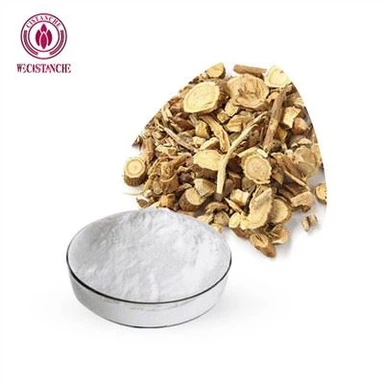
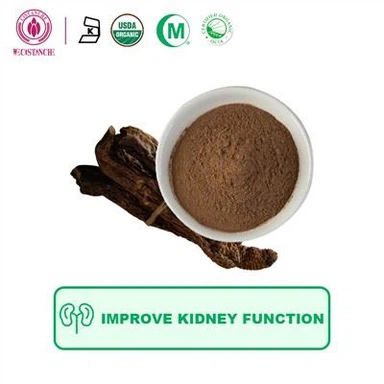
Cistanche is the dried fleshy stem with scale leaves of the Orobanchaceae plant Cistanche deserticola or Cistanche tubulosa. It is dug up when the seedlings just emerge in spring or before the soil freezes in autumn, and the stem tip is removed. Then it is cut into sections and dried. Its nature is sweet, salty, and warm. It enters the kidney and large intestine meridians. It has the functions of tonifying kidney yang, nourishing essence and blood, and moistening the intestines and relieving constipation. It is used for insufficient kidney yang, deficiency of essence and blood, impotence, infertility, weakness and soreness in the waist and knees, lack of strength in the tendons and bones, and dryness and constipation of the intestines.
Cistanche has been used as a medicine for a long time. In the Kaiyuan period of the Tang Dynasty, the "Daozang" listed Cistanche as one of the nine celestial herbs in China, ranking it with Tianshan snow lotus, three-tael heavy ginseng, one-hundred-twenty-year-old fleece-flower root, Cordyceps sinensis, etc. It is a very precious tonic medicine. Famous doctors such as Hua Tuo, Zhang Zhongjing, Sun Simiao, Zhu Danxi, and Wang Haogu all used Cistanche to treat patients. It is sweet and warm in nature, salty and moist in texture, tonifying yang without being dry, and tonifying yin without being greasy, with miraculous curative effects.

After Cistanche is dug or purchased, it cannot be directly used as medicine or for consumption. Like most Chinese herbal medicines, it needs to be processed to better 发挥 its effects. The "Lei Gong's Treatise on Processing of Chinese Materia Medica" mentions: "When using (Cistanche), it must first be soaked in clear wine overnight. The next day, use a palm brush to remove the floating soil and scales, split it open in the center, and remove a layer of white membrane like bamboo grass. If this is not done, it can block the qi in front of the heart and cause shortness of breath. Then steam it in a steamer from noon to evening and then roast it with butter until it is properly processed."
3. Efficacy and Classic Prescriptions
Cistanche was first recorded in the "Shennong's Classic of Materia Medica" and listed as a top-grade herb: "It tastes sweet and slightly warm and grows in valleys. It treats five kinds of overstrain and seven kinds of impairment, tonifies the middle, relieves pain and heat in the penis, nourishes the five internal organs, strengthens yin, enriches essence, promotes fertility, and treats abdominal masses in women. Long-term use makes the body light." The "Essentials of Materia Medica" proposes: "It tonifies the fire of the life-gate, moistens the five internal organs, enriches the marrow and tendons, treats five kinds of overstrain and seven kinds of impairment, impotence, infertility, cold and painful waist and knees, uterine bleeding, and spermatorrhea."

Modern scientific research shows that the main components of Cistanche include phenylethanoid glycosides, iridoids and their glycosides, sugars, volatile components, as well as amino acids and trace elements. The development prospect of the medicinal value of Cistanche is considerable. It has the effects of anti-aging, anti-dementia, anti-fatigue, moistening the intestines and relieving constipation, immunoregulation, liver protection, improving sexual function, regulating the central nervous system, regulating the endocrine system, improving memory ability, preventing senile dementia, anti-osteoporosis, and promoting bone formation.
The more core pharmacological mechanisms of Cistanche are antioxidant and anti-inflammatory mechanisms. The antioxidant effect of sugars is relatively prominent, the anti-aging effect of glycoside components is more definite, and the ischemia protection, liver protection, and reproductive improvement effects of phenylethanoid glycoside components are particularly significant.

Ancient doctors often used Cistanche in combination with different Chinese herbal medicines to treat diseases such as constipation, impotence, and spermatorrhea. Combined with Angelica sinensis and Achyranthes bidentata (Jichuan Decoction in the Ming Dynasty's "Jingyue's Complete Works": boil with one and a half cups of water until seven or eight tenths is left, and take it before meals), it is used to treat senile kidney deficiency, constipation, weakness and soreness in the lower back and legs. Combined with Dioscorea opposita (Incomparable Dioscorea Pill in the Tang Dynasty's "Essential Prescriptions Worth a Thousand Gold for Emergencies": grind the above twelve ingredients into powder, make pills the size of Chinese parasol seeds with honey, take twenty pills with wine before meals, and increase to thirty pills, twice a day), it is mainly used to treat kidney qi deficiency and exhaustion, weakness and soreness in the lower back, tinnitus, spermatorrhea, night sweats, or cold and clear leucorrhea. Combined with Dodder seed (Cistanche Pill in the Song Dynasty's "Taiping Holy Prescriptions for Universal Relief": grind the above ingredients into powder, make pills the size of Chinese parasol seeds with refined honey, take thirty pills each time, take with warm wine on an empty stomach, and take again before dinner), it is mainly used to treat impotence and consumptive diseases.

Famous veteran Chinese doctor Li Furen believes that the fundamental cause of senile constipation lies in the gradual decline of healthy qi and the low function of the five internal organs. Therefore, the treatment is based on the principle of strengthening the healthy qi and consolidating the root. He proposes the "moistening and unblocking" method and often uses Cistanche to tonify the liver and kidney and protect the healthy qi. Combined with Lycium barbarum, Cannabis sativa seed, and Glycyrrhiza uralensis to enhance the healthy qi, so that the original healthy qi can be preserved and the purpose of expelling pathogenic factors without damaging the healthy qi can be achieved.
Hu Jianhua treats chronic nephritis proteinuria with the method of strengthening the spleen and consolidating the kidney. He often uses Cistanche to warm and tonify kidney yang, combined with Euryale ferox and Rosa laevigata to strengthen the spleen, tonify the kidney, and astringe. The combination of various medicines regulates and tonifies the congenital and acquired foundations. The dosage of Cistanche is 12g. When treating menstrual headaches that recur and do not heal, he uses Cistanche to regulate the thoroughfare and conception vessels, combined with Gastrodia elata and Uncaria rhynchophylla to calm the liver and extinguish wind, Paeonia lactiflora and Curcuma phaeocaulis to promote blood circulation and remove blood stasis. The combination of various medicines regulates the thoroughfare and conception vessels and relieves pain by removing blood stasis. The dosage of Cistanche is also 12g.
Tang Qisheng believes that schizophrenia belongs to the category of "mania and insanity" in traditional Chinese medicine. Phlegm confounding the mind is the superficial symptom, and kidney qi deficiency is the root cause. When treating schizophrenia with mainly negative symptoms, he often uses Cistanche to nourish kidney qi and essence and blood, combined with Morinda officinalis to tonify the kidney, benefit essence, and assist yang and enhance willpower. The combination of the two medicines can tonify the kidney and assist yang and treat the decline of the life-gate fire. The dosage of Cistanche is 15g.
It should be noted that although Cistanche belongs to the substances with the same origin of medicine and food and is widely used clinically, and no obvious toxic and side effects have been found under the commonly used dosage (6 - 10g), during the use process, attention should still be paid to the inapplicable population (those with excessive fire in the life-gate, loose stools, and weak gastrointestinal function are prohibited from taking it). Only by selecting the appropriate dosage and compatible medicines can the efficacy be better exerted.
4. Identification of Cistanche
At present, the legal source plants of traditional Chinese medicine Cistanche are divided into two types. One is the Haloxylon ammodendron Cistanche, also known as soft Cistanche, and its scientific name is "(Desert) Cistanche deserticola", mainly distributed in Alxa and other places in western Inner Mongolia. The other is the Tamarix chinensis Cistanche, also known as hard Cistanche, and its scientific name is "Cistanche tubulosa", mainly produced in the Hetian area of Xinjiang. Among them, thanks to the unique geographical environment and climatic conditions, the Cistanche produced in the Alxa region is large, fleshy, rich in gelatin, and of high quality. It ranks first among Cistanche and is famous at home and abroad, known as the "Desert Ginseng", and Alxa is also called the "Hometown of Cistanche in the World". So, how to identify the two?
Cistanche deserticola is flat-cylindrical, slightly curved, 3 - 15 cm long, and 2 - 8 cm in diameter. The surface is brownish or grayish-brown, densely covered with overlapping fleshy scale leaves, and usually the tip of the scale leaf is broken. It is heavy, hard, slightly flexible, and not easy to break. The cross-section is brownish, with light brown dotted vascular bundles arranged in a wavy ring pattern. It has a slight odor, and the taste is sweet and slightly bitter.
Cistanche tubulosa is spindle-shaped, flat-spindle-shaped, or flat-columnar, slightly curved, 5 - 25 cm long, and 2.5 - 9 cm in diameter. The surface is brownish-black to blackish-brown. The cross-section is granular, grayish-brown to grayish-black, with scattered dotted vascular bundles.
In addition, due to the large amount of digging of Cistanche in recent years and the difficulty in the reproduction of parasitic plants, the source of medicine is in short supply, and there are often adulterants in the market, such as Cistanche salsa, Halophytum ammodendron, Cistanche lanzhouensis, Boschniakia rossica, and the counterfeit Balanophora polyandra, whose efficacies are very different, so they must be carefully identified.
5. Cistanche Dietary Therapy Recipes
5.1 Cistanche and Mutton Stew
Prepare Cistanche 10g, mutton 100g, cinnamon 2g, 10 Chinese prickly ash grains, ginger 2g, star anise 2g, scallion 5g. Put the washed spices together in a cloth bag. Cut the mutton into pieces and cut the scallion into sections. Put the cloth bag, Cistanche, and mutton into a casserole. Bring to a boil over high heat and then turn to low heat. Remove the foam in time. When the mutton is half-cooked, put in the scallion sections and stew until the mutton is cooked through. Add salt for seasoning.
Efficacy: Eating Cistanche and mutton together can tonify the kidney and replenish essence, warm the middle and warm the lower body, moisten dryness and smooth the intestines. It is used for five kinds of overstrain and seven kinds of impairment, weakness and soreness in the waist and knees, deficiency-cold in the middle and reversed flow of qi, infertility, and symptoms of kidney yang deficiency such as cold limbs, tinnitus, dizziness, frequent urination, and constipation.
5.2 Chinese Wolfberry and Cistanche Chicken Stew
Prepare 500g of chicken, 15g of Chinese wolfberry, 15g of Cistanche, 20g of ginger. Blanch the chicken pieces and remove them. Take a clean pot, put in water, ginger slices, Cistanche, and chicken pieces. Bring to a boil over high heat and then turn to low heat and stew for 30 minutes. Then put in the Chinese wolfberry and stew for another 10 minutes.
Efficacy: Cistanche tonifies kidney yang and nourishes essence and blood. Chinese wolfberry can treat blood deficiency and overstrain, dizziness, weakness, dizziness, and blurred vision.
6. Cistanche and Constipation: A Natural Solution
One of the common health concerns that many people face is constipation. It can cause a great deal of discomfort, including abdominal pain, bloating, and a general feeling of sluggishness. In modern medicine, constipation can be caused by a variety of factors such as an unbalanced diet, lack of physical activity, and stress.
Cistanche offers a natural and effective way to address constipation. Modern research has shown that Cistanche can significantly increase the 推进速度 of the small intestine in mice, which means it can help move food through the digestive tract more quickly. At the same time, it has a significant inhibitory effect on the water absorption in the large intestine. This combination of effects is crucial for those struggling with constipation. By increasing the movement of the intestines and maintaining an appropriate amount of water in the feces, Cistanche makes the stools softer and easier to pass. This is especially beneficial for people with hard and dry stools, providing a gentle yet effective relief without the harsh side effects that some chemical laxatives may have.
7. Beyond Constipation: Other Potential Benefits and Considerations
In addition to its constipation-relieving properties, Cistanche holds great potential in other aspects of health. Its antioxidant and anti-inflammatory effects can help protect our cells from damage caused by free radicals and reduce inflammation in the body. This could have implications for a wide range of health conditions, from improving skin health to potentially reducing the risk of chronic diseases such as heart disease and diabetes.
Moreover, its potential anti-aging and anti-dementia effects are also areas of great interest. While more research is needed in these areas, the initial findings suggest that Cistanche could play a role in maintaining cognitive function and slowing down the aging process of the brain.
However, it is important to note that like any herbal remedy, Cistanche should be used with caution. While it has many potential benefits, it may interact with certain medications or have different effects on different individuals. For example, those with excessive fire in the life-gate, loose stools, or weak gastrointestinal function should avoid taking it. It is always advisable to consult with a healthcare professional before using Cistanche or any other herbal products, especially if you have underlying health conditions or are taking other medications.
In conclusion, Cistanche is a remarkable herb with a long history of use in traditional medicine and promising potential in modern medical research. Its ability to relieve constipation, along with its other potential health benefits, makes it a subject worthy of further exploration. By understanding its properties and using it appropriately, we can better harness the power of nature to support our health and well-being. But always remember to prioritize your health and make informed decisions when it comes to using herbal remedies.