Characterization Of The CYP3A4 Enzyme Inhibition Potential Of Selected Flavonoids Part 1
Apr 27, 2022
Please contact oscar.xiao@wecistanche.com for more information
Abstract: Acacetin, apigenin, chrysin, and pinocembrin are flavonoid aglycones found in foods such as parsley, honey, celery, and chamomile tea. Flavonoids can act as substrates and inhibitors of the CYP3A4 enzyme, a heme-containing enzyme responsible for the metabolism of one-third of drugs on the market. The aim of this study was to investigate the inhibitory effect of selected flavonoids on the CYP3A4 enzyme, the kinetics of inhibition, the possible covalent binding of the inhibitor to the enzyme, and whether flavonoids can act as pseudo-irreversible inhibitors. For the determination of inhibition kinetics, nifedipine oxidation was used as a marker reaction. A hemochromopyridine test was used to assess the possible covalent binding to the heme, and incubation with dialysis was used in order to assess the reversibility of the inhibition. All the tested flavonoids inhibited the CYP3A4 enzyme activity. Chrysin was the most potent inhibitor∶ IC50 = 2.5± 0.6 μM, K;= 2.4± 1.0 μM,knit =0.07 ±0.01 min-1, kimacl/K;= 0.03 min-1μM-1. Chrysin caused the highest reduction of heme (94.5±0.5% residual concentration). None of the tested flavonoids showed pseudo-irreversible inhibition. Although the inactivation of the CYP3A4 enzyme is caused by interaction with heme, inhibitor-heme adducts could not be trapped. These results indicate that flavonoids have the potential to inhibit the CYP3A4 enzyme and interact with other drugs and medications. However, possible food-drug interactions have to be assessed clinically.
Keywords: acacetin; apigenin;chrysin; pinocembrin; inhibition; CYP3A4; flavonoid-drug interaction
1. Introduction
Food is directly linked to the overall health and well-being of humans. Flavonoids are secondary plant metabolites that are consumed through vegetables, fruits, teas, wines, propolis, medicinal plants, and so on. These compounds aid organoleptic characteristics of foods(e.g., the color and taste of tea and wine) and are of interest due to their biological properties affecting human health [1,2]. As non-essential nutrients, they have received much attention in the last decades. All flavonoids have a similar molecular structure—a phenylbenzo-r-pyrone (rings A, B, and C)—to which hydroxyl groups are bound, and these hydroxyl groups can be methylated and glycosylated [3]. Based on different authors and estimations, there are from 4000 to 8000 currently known flavonoids that can be classified into different subgroups based on the structure of ring C(such as flavans, flavanones, flavones, and flavonols)[4]. The consumption of flavonoids from foods varies between societies and countries, ie., France has a high consumption rate (1193 mg/day)versus the United Kingdom (182 mg/day) [5,6].
Please click here to know more
Acacetin is an O-methylated flavone believed to be connected with the prevention of heart diseases [7], presenting anti-inflammatory [8], anti-plasmodial [9], and anti-proliferative [10,11]effects on tumor cells in vitro. Apigenin has a hydroxy instead of a methoxy group in its molecular structure (Figure 1). Apigenin is most abundant in parsley—up to 45.035 ug/g in dried plants [12]. Other food sources of apigenin are chamomile, celery, vine spinach, artichokes, and oregano [13]. Apigenin shows various biological effects,including anti-oxidative [14],anti-hyperglycemic [14], and anti-inflammatory[15] to anti-apoptotic [16].Chrysin is a 5,7-dihydroxy-flavone (Figure 1), a dietary phytochemical abundantly present in honey and many plant extracts (propolis, blue passion flower)[17]. Chrysin is a potent inhibitor of aromatase(cytochrome P45019A1 enzyme)18], showing anti-inflammatory [19] and anti-oxidant [20] effects, as well as the capability to induce apoptosis of cancer cells in vitro [17]. Pinocembrin is a 5,7-dihydroxy-flavanone (Figure 1), which can be mostly found in fruits, vegetables, nuts, seeds, honey, herbs, spices, flowers, tea, and red wine [18-20].
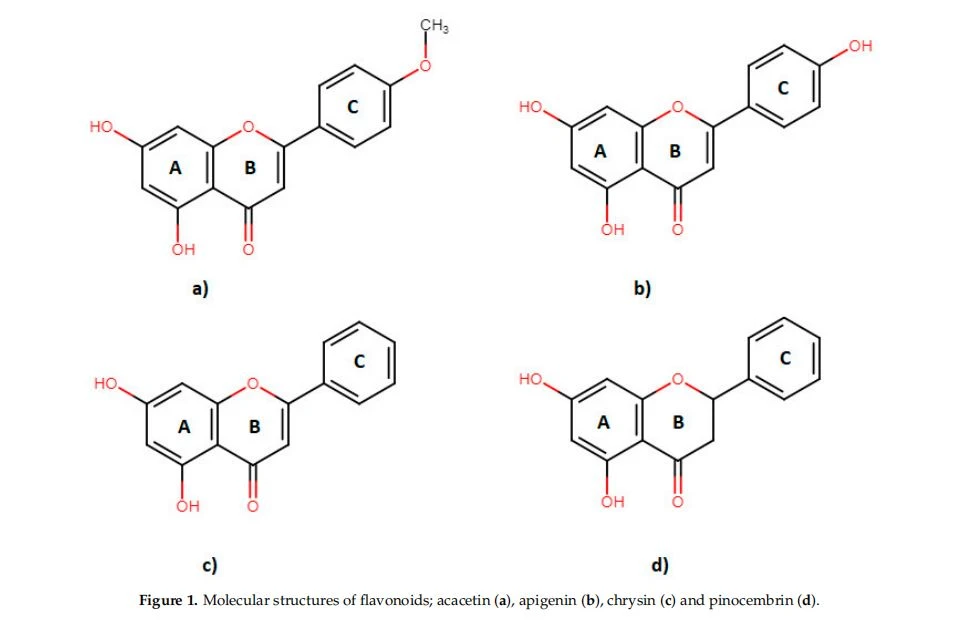
Overall, the consumption of flavonoids and foods rich in flavonoids is linked with beneficial effects on human health [21]. However, there is a potential risk that flavonoids can cause interactions with various drugs. A food-drug interaction is a serious safety issue that happens when the pharmacologic effect of a drug is changed by the action of food and/or dietary supplements causing unexpected clinical effects [22]. Drug interactions are responsible for more than 30% of all adverse drug events [23] and about 0.57% of hospital admissions in the United States of America [24]. Flavonoids can cause interactions with certain medications. One of the ways in which flavonoids cause interactions is by inhibiting the enzymes responsible for drug metabolism such as cytochrome P450 enzymes(CYP enzymes), the most significant of which is the CYP3A4 enzyme.
Cistanche can improve immunity
The CYP3A4 enzyme is responsible for the metabolism of 33%of drugs [25]. Besides this, CYP3A4 is involved in the metabolism of many xenobiotics, several of which can act as inhibitors or inducers of its activity. Interactions with other drugs used in therapy and even clinically significant interactions can occur [26]. For example, one of the significant possible interactions is the use of St.John's wort and oral contraceptives, where the reduced efficacy of oral contraceptives and resulting pregnancies have been noticed [27]. Thus, it is very important to know which compounds can inhibit or induce the activity of the CYP3A4 enzyme. As it has been previously shown, acacetin, apigenin, chrysin, and pinocembrin can cause statistically significant inhibition of CYP3A4 at 1 μM concentration, using testosterone as a marker substrate of residual enzyme activity [28]. These data suggest that flavonoids have the potential of causing food-drug interactions when foods rich in flavonoids (honey, propolis) are used [29]. As CYP3A4 has a large active site, it is suggested that all inhibition assays are conducted using at least two marker substrates [30].

The aim of this study was to investigate the inhibition kinetic of acacetin, apigenin, chrysin, and pinocembrin using nifedipine as a marker substrate of CYP3A4 enzyme activity. Furthermore, the aim of this study was to investigate the possible covalent binding of flavonoids to the heme part of CYP3A4, as well as to test their possible role in pseudo-irreversible inhibition.
2. Results
2.1. Enzyme Kinetics
Of all the tested flavonoids, chrysin was the most potent inhibitor of CYP3A4 with an IC50 value of 2.5±0.6 uM(Figure 2). Pinocembrin, acacetin, and apigenin had IC5 values of 4.3±1.1,7.5±2.7, and 8.4±1.1 μM, respectively (Table 1).
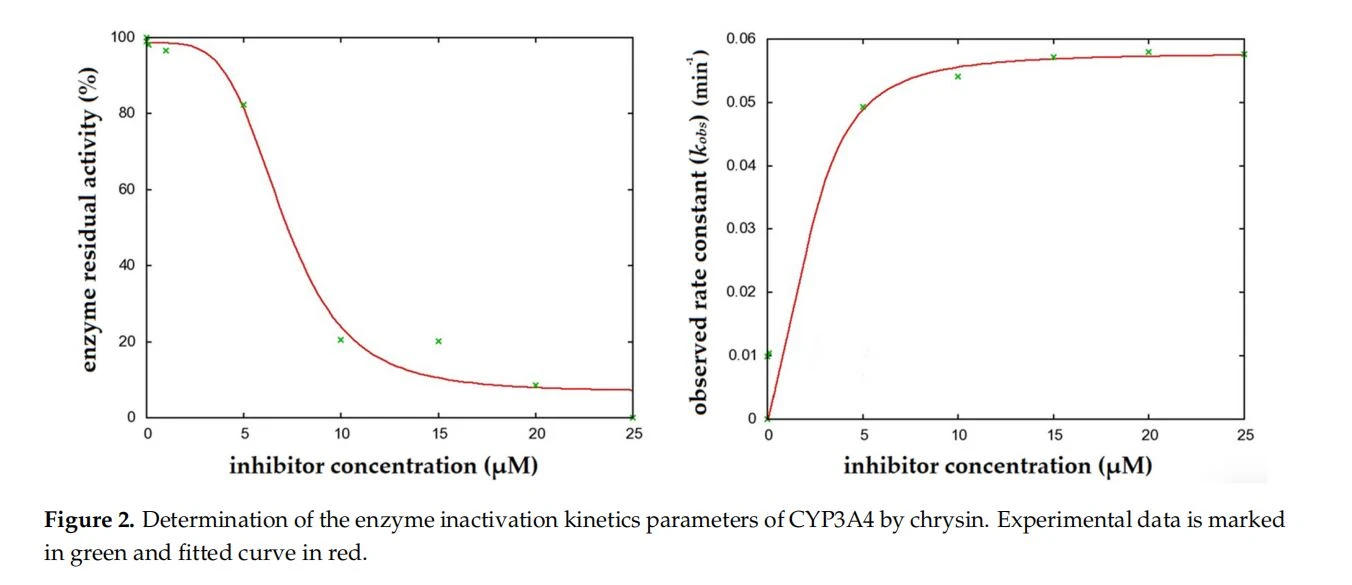
Table 1. Basic kinetic parameters of CYP3A4 inhibition by individual flavonoids (nifedipine(NIF), used as marker substrate, and the results expressed as mean values of triplicates). The results are compared with the assays in which testosterone (TSN) was used as a marker substrate (taken from reference [29]).

ICs values are dependent on the experimental setup; thus, a complete inhibition kinetic was determined for individual flavonoids using different concentrations of flavonoid incubated for different time periods (vide infra). Chrysin also showed the lowest inhibition constant—K; value. The inhibition constants of individual flavonoids were tested using nifedipine as a marker substrate, and for acacetin, apigenin, chrysin, and pinocembrin, the following; values were determined∶12.1±5.6,20.2±12.7,2.4± 1.0, and 5.1±1.6μM, respectively. The corresponding inactivation rate constants were: 0.10 ± 0.02 min-I, 0.11± 0.04 min-1,0.07±0.01 min-1,and 0.04±0.01 min-1,respectively. The inactivation efficiency was determined for each flavonoid as the ratio of the inactivation rate constant and the inhibition constant. Out of all the tested flavonoids, chrysin had the highest inhibition efficiency, which was 0.029 min-1 μM-1(Table 1).

2.2. Hemochrome-Pyridine Assay
The hemochrome pyridine assay is used to determine the covalent binding of reactive intermediates to the protoporphyrin portion of heme. Under reduced, basic conditions, ferrous forms a complex with pyridine. The absorption maxima of the complex were observed at 531 nm and 570 nm. Incubations containing flavonoids as inhibitors(acacetin, apigenin, chrysin, and pinocembrin) showed a decrease in heme concentration (Figure 3). The assays were then confirmed by additional incubation with catalase (CAT) and superoxide dismutase (SOD)to prevent the possible destruction of heme by reactive oxygen species formed in nonproductive cytochrome P450 cycles. A reduction of heme concentration was also confirmed (Figure 3). Incubation with acacetin reduced heme by 51.12%, apigenin by 54.95%, chrysin by 94.5%, and pinocembrin by 74.73%.
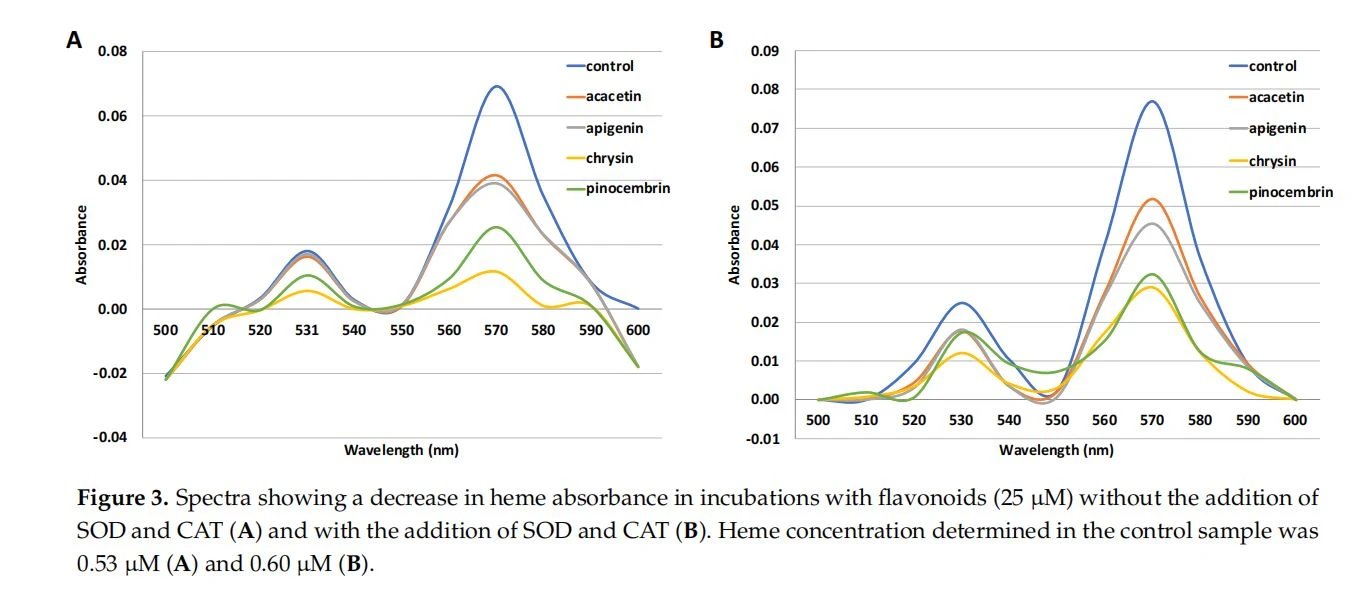
All flavonoids reduced the heme concentration in the assay with and without the addition of SOD and CAT. The residual heme concentration after incubation with acacetin was 48.88%, and, on retesting with the addition of SOD and CAT, was 63.33%. The residual heme concentration after incubation with apigenin was 45.05%, and, on repeated testing with the addition of SOD and CAT, was 55.11%. The residual heme concentration after incubation with chrysin was 2.9%, while after incubation with the addition of SOD and CAT was 5.5%. The second-largest reduction of heme concentration was observed in incubations with pinocembrin, which were at 25.3%and 35.5%, without and with the addition of SOD and CAT, respectively (Table 2).
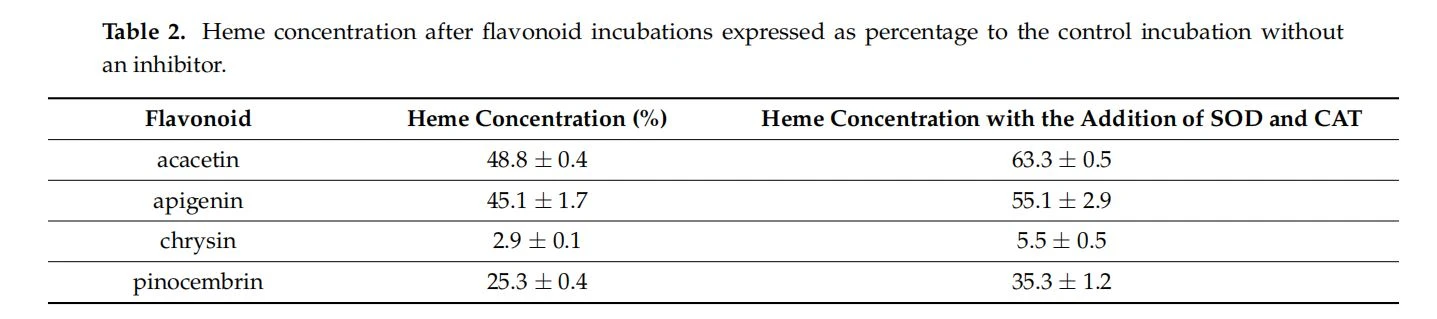
These results indicate that the inactivation of the cytochrome P450 3A4 enzyme is achieved through the adduct formation of reactive flavonoid intermediate with the heme portion of the enzyme. As the results were confirmed with the use of CAT and SOD, it can be concluded that heme destruction was not caused by reactive oxygen species generated in non-productive cycles of cytochrome P450.
This article is extracted from Molecules 2021, 26, 3018