Chinese Expert Consensus On Diagnosis And Treatment Of Outlet Obstruction Constipation Ⅰ
Dec 13, 2023
In recent years, many societies in my country, including the Anorectal Physicians Branch of the Chinese Medical Doctor Association, have successively issued multiple diagnosis and treatment guidelines and expert consensus on constipation, which have played a positive role in standardizing the surgical diagnosis and treatment of chronic constipation in my country. However, as the most common subtype of functional constipation, outlet obstructive constipation (OOC) has diverse clinical symptoms, and complex pelvic floor anatomy, and involves many aspects such as function and psychology. Its diagnosis and treatment are still very controversial. However, there is still a lack of gold standards and high-level clinical research evidence. To standardize the diagnosis and treatment process of OOC in my country, improve clinical efficacy and reduce treatment complications, the Anorectal Physician Branch of the Chinese Medical Doctor Association and its Clinical Guidelines Working Committee are led by the Colorectal and Anal Disease Professional Committee of the Chinese Society of Integrated Traditional Chinese and Western Medicine and the Anorectal Professional Committee of the Chinese Association of Women Physicians. , the Chinese Constipation Medical Association, etc., and the "Chinese Journal of Gastrointestinal Surgery" organized and convened a working team of domestic experts in this research field to focus on the diagnosis, classification, examination, and evaluation of OOC, including cultivating good eating and living habits. , drug treatment, biofeedback treatment, pelvic floor function training, psychological intervention, traditional Chinese medicine treatment, and surgical treatment, etc., based on the search of relevant literature, combined with the latest evidence-based medicine evidence and clinical experience at home and abroad, and after many discussions and revisions, They voted on relevant content. They reached the "Chinese Expert Consensus on the Diagnosis and Treatment of Outlet Obstructive Constipation (2022 Edition)", which aims to help anorectal surgeons make clinical decisions, standardize the diagnosis and treatment process, reduce complications, and improve clinical efficacy.
Click to best laxative for constipation
Outlet obstructive constipation (OOC) is the most common subtype of functional constipation. It is also called obstructive defecation syndrome (ODS) in foreign literature and accounts for about 60% of chronic constipation. Due to the diverse clinical symptoms of OOC, the complex anatomy of the pelvic floor, and the involvement of many factors such as anal function and patient psychology, the diagnosis and treatment of OOC are controversial. To standardize the diagnosis and treatment process of OOC in my country, improve clinical efficacy and reduce treatment complications, the Anorectal Physician Branch of the Chinese Medical Doctor Association and its Clinical Guidelines Working Committee are led by the Colorectal and Anal Disease Professional Committee of the Chinese Society of Integrated Traditional Chinese and Western Medicine and the Anorectal Professional Committee of the Chinese Association of Women Physicians. Jointly initiated by the Chinese Constipation Medical Association and others, the Chinese Journal of Gastrointestinal Surgery organized and convened a working team of domestic experts in this research field. Based on the search for relevant literature, the latest evidence-based medical evidence and clinical experience at home and abroad were used to reach a consensus. After many discussions and revisions, and voting on relevant content, the "Chinese Expert Consensus on the Diagnosis and Treatment of Outlet Obstructive Constipation (2022 Edition)" was reached.
The evaluation grades for the voting results of this consensus are as follows: a. Completely agree (essential); b. Partially agree, but with certain reservations; c. Agree, with major reservations; d. Disagree, but have certain reservations; e. Disagree. The recommendation levels in this consensus opinion are divided according to the voting results: A-level indicators (strongly recommended), that is, the proportion of votes for a ≥ 80%; Level B indicators (recommended), that is, the sum of the proportions of votes for a and b is ≥ 80%; Level C Indicator (suggestion), that is, the sum of the proportion of votes for a, b and c is ≥ 80%; if it does not reach the C-level indicator, it will be deleted. Finally, experts reviewed and finalized the draft to form this consensus opinion. Based on the level of evidence and expert voting results, this consensus divides the recommendation levels into three levels: "strongly recommended", "recommended" and "suggested".
1. Diagnosis of OOC
Recommendation 1: The diagnosis of OOC must meet the Rome IV diagnostic criteria for functional constipation, with a disease duration of at least 6 months, and the following diagnostic criteria for the past 3 months: (1) Must meet functional constipation and/or constipation-predominant irritable bowel syndrome Diagnostic criteria for symptoms. (2) In the process of repeated attempts to defecate, at least one of the following is included: balloon expulsion test or imaging examination confirms that there are anatomical changes related to weakened evacuation function or pelvic floor relaxation; pressure measurement and imaging or electromyography The examination confirms that the pelvic floor muscles contract uncoordinatedly or the sphincter basic resting pressure relaxation rate is <20%; pressure measurement or imaging examination confirms that the rectal propulsion force is insufficient during defecation (recommendation level: strongly recommended; complete approval rate 91%, Partial approval rate 9%).
2. Classification of OOC
Recommendation 2: OOC is classified according to the description of the Rome IV diagnostic criteria for functional constipation into pelvic floor spasm type, pelvic floor relaxation type, rectal propulsion deficiency type, and pelvic floor mixed type that combines two or more of the above types. Among them, the pelvic floor spasm type includes puborectalis syndrome and pelvic floor spasm syndrome; the pelvic floor flaccid type includes rectocele, rectal intramucosal prolapse, rectal intussusception, perineal descent syndrome, and pelvic floor hernia ( Recommendation level: Recommended; 65% fully agree, 28% partially agree, 5% agree, 2% disagree).

3. Inspection and Evaluation
Those who have tumor alarm symptoms such as blood in the stool and changes in defecation habits should undergo routine digital rectal examination and rectal or fiberoptic colonoscopy to rule out tumors and inflammatory diseases and add psychological evaluation if necessary. Specific auxiliary examinations have guiding value in identifying the subtypes, severity, and efficacy evaluation of OOC.
1. Ask about the medical history in detail.
Recommendation 3: Ask about the medical history in detail, including the symptoms and course of OOC, eating habits, gastrointestinal symptoms, accompanying symptoms and diseases, medication use and anorectal surgery history, frequency of defecation, fecal properties, awareness of defecation, and whether it exists Difficulty or smooth defecation, incomplete defecation and sinking feeling after defecation; assessment of mental and psychological status (recommendation level: strongly recommended; full agreement rate 95%, partial agreement rate 5%).
2. Anorectal specialist examination.
Recommendation 4: Carry out a specialized anorectal examination, and use anal digital examination to understand whether there is feces retention and its characteristics in the rectum, whether there is an anal canal or rectal stenosis, or rectal space-occupying conditions, etc., and understand the functions of the anal sphincter and puborectalis muscles. Condition and whether there is rectocele, rectal prolapse, etc. During the examination, attention should be paid to observing whether there is any change in the shape of the perineum and whether there is visible pelvic organ prolapse. Pay attention to the changes in the pelvic floor and perineum during Valsalva and simulated defecation movements. If necessary, perform gynecological and urological examinations. Surgery-related collaborative physical examination. Anoscopy can reveal mucosal lesions such as loose and accumulated rectal mucosa and solitary rectal ulcers (recommendation level: strongly recommended; full approval rate 91%, partial approval rate 9%).
3. Defecography: Defecography usually uses diluted barium. X-ray contrast can capture the patient's resting, levator ani, forceful defecation, and post-defecation mucosal phases. Combined with bony landmark lines, the subtype and severity of OOC can be determined. Analysis, if necessary, can be performed simultaneously with pelvic floor peritonography. Triple and/or quadruple angiography and pelvic dynamic multiple angiography can understand the changes in the morphology of the organs around the rectum and the pelvic floor during defecation. They are simple to operate and low in price. , intuitive images, and reliable evaluation, it is the most commonly used inspection method for OOC. Increasing the amount of dilute barium perfusion can display the left colon and the entire colon, and can detect colon morphological abnormalities such as colon dilation, colon lengthening, hepatic flexure or splenic flexure syndrome, and rule out megacolon or colon lengthening syndrome. Dynamic magnetic resonance defecography can display the movement and empty of pelvic organs, pelvic floor tissues, and the rectum and anus in real time during defecation. It is of equal value to multiple pelvic contrast angiography for the judgment and surgery of pelvic floor dysfunction diseases. The formulation of the plan has important reference value.
Recommendation 5: Defecography can simultaneously observe the morphological structure and abnormal discharge function of the rectum. It can be used to evaluate anorectal function and provide a reliable basis for the selection of surgical methods (recommendation level: strongly recommended; full approval rate 88%, partial approval rate 7%, approval rate 5%).
4. Gastrointestinal transit test (GIT): X-ray opaque markers are commonly used in GIT. It is forbidden to take laxatives and other drugs that affect intestinal function 3 days before the examination. Take 20 radiopaque markers with a standard meal. Take a plain X-ray of the abdomen each 6, 24, 48, and 72 hours after taking the markers. Calculate colon transit time and expulsion rate based on the number of markers in the colon. The normal value is 72 h to eliminate 80% of markers. According to the distribution of colon markers, it is helpful to evaluate whether OOC. The main methods include the X-ray opaque marker method, a small amount of barium meal method, the hydrogen breath test, and the scintillation fluorescence tracer method. The X-ray opaque marker method is the most widely used in the clinical diagnosis of chronic constipation. If necessary, this examination can be completed 2 or more times before surgery to provide more accurate results. The hydrogen breath test method and the scintillation fluorescence tracer method are currently rarely carried out in China.
Recommendation 6: GIT is an important method for evaluating colonic transport function. It is of great significance for evaluating the severity of gastrointestinal motility dysfunction and evaluating the treatment effect of slow-transit constipation. It is also a method for evaluating mixed constipation (recommendation level: strong Recommended; full approval rate 90%, partial approval rate 5%, approval rate 5%).
5. Anorectal manometry: Anorectal manometry examination indicators include anal resting pressure, maximum anal systolic pressure, defecation slowing reflex, recto-anal contractile reflex and recto-anal inhibitory reflex, rectal sensory function, and rectal compliance. etc., there are traditional water perfusion systems, high-resolution anorectal pressure measurement, digestive tract pressure wireless capsule detection technology, etc., which can be used for dynamic assessment of anorectal diseases, guidance of biofeedback, and evaluation of postoperative efficacy of OOC. It is a detection technology that is non-invasive, easy to operate and has a high safety factor.
Recommendation 7: Anorectal manometry can be used to identify abnormalities in anorectal function, identify anorectal sensory and motor dysfunction, and guide the treatment of various subtypes of OOC (recommendation level: recommended; full agreement rate 79%, partial agreement The approval rate is 19%, and the approval rate is 2%).

6. Pelvic floor electromyography: Commonly used are anal sphincter electromyography, pudendal nerve somatosensory evoked potentials, and bulbocavernosus muscle electromyography. Pelvic floor electromyography is the best way to observe the electrical activity of the external anal sphincter and puborectalis at rest or during defecation. It can locate and characterize perianal nerve or muscle injuries and can be used for nerve sources caused by lesions of the central nervous system (such as Parkinson's disease or multiple sclerosis) or the peripheral nervous system (such as the conus conus, cauda equina, sacral plexus and pudendal nerve). Differential diagnosis of sexual constipation and myogenic constipation. Pelvic floor surface electromyographic examination can be used as an auxiliary means to distinguish OOC types and to evaluate the effect of intervention.
Recommendation 8: Pelvic floor electromyography can be used as an auxiliary method to identify neurogenic constipation and myogenic constipation, and can locate and characterize perianal nerve or muscle injuries (recommendation level: recommended; 58% fully agree, partially agree The approval rate is 40%, and the approval rate is 2%).
7. Balloon expulsion test: The balloon expulsion test is usually positive if the expulsion time of the 50 ml balloon is >5 minutes. However, a normal balloon expulsion test does not completely rule out insufficient rectal propulsion or pelvic floor spasms.
Recommendation 9: The balloon expulsion test can reflect the ability of the anorectum to discharge the balloon and can be used for the preliminary classification diagnosis of OOC (recommendation level: recommended; full agreement rate 65%, partial agreement rate 33%, agreement rate 2%).
8. Pelvic floor ultrasound: For OOC with a loose pelvic floor, pelvic floor ultrasound can detect abnormal ultrasound manifestations such as rectocele, perineal descent, rectal intussusception, and intestinal hernia. Its diagnostic effect is similar to X-ray or MRI defecography. It is easy to conduct real-time and repeatable examinations and has high diagnostic value; however, pelvic floor ultrasound may underestimate the severity of the lesion due to reasons such as the position during the examination, the operator's experience level, or the pressure of the probe. For pelvic floor spasm type OOC, pelvic floor ultrasound has its unique advantages in observing the layers of the rectal wall and anal sphincter, the anatomical shape and movement of the puborectalis muscle, and can evaluate resting and Valsalva, anorectal angle during simulated defecation movements, and Changes in the anal sphincter, puborectalis muscle, and levator ani hiatus provide multi-parameter reference for clinical selection of treatment methods and evaluation of efficacy. Transperineal ultrasound shear wave elasticity imaging (SWE) has been used in recent years to quantitatively evaluate the elasticity and contraction function of pelvic floor muscles such as puborectalis and levator ani muscles, which can guide early clinical pelvic floor muscle training. , evaluate the effect of pelvic floor rehabilitation.
Recommendation 10: Pelvic floor ultrasound can observe the morphological structure of the bladder, urethra, cervix, vagina, anus, and rectum and the real-time functional status of Valsalva or simulated defecation movements, providing a reference for the selection of clinical treatment methods (Recommendation level: Recommended; Full approval rate 68%, partial approval rate 21%, approval rate 9%, disapproval rate 2%).
9. Psychological evaluation: If the symptoms of constipation still cannot be relieved after adjusting lifestyle and empirical treatment, special attention should be paid to the evaluation of the patient's mental psychology, sleep status, and social support to determine the cause-and-effect relationship between psychological abnormalities and constipation. Actively carry out psychological intervention to improve the efficacy and quality of life of patients, and also provide a reference for assessing surgical risks and prudent surgical intervention for patients with severe mental and psychological disorders.
Recommendation 11: Understanding the patient's mental state early and conducting necessary psychological evaluation for constipation patients with mental and psychological symptoms (recommendation level: strongly recommended; full agreement rate 91%, partial agreement rate 9%).
10. Efficacy evaluation.
Recommendation 12: The evaluation of the treatment effect of OOC mainly relies on the patient's defecation experience, including the patient's frequency of spontaneous defecation per week, defecation time, fecal emptying satisfaction and related symptom improvement satisfaction before and after treatment (0 to 10 points). Various scoring scales such as the constipation scoring system (CSS), Cleveland clinic score (CCS), and obstructed outlet syndrome score (ODS) have certain reference values (recommendation level: Strongly recommended; full approval rate 84%, partial approval rate 14%, approval rate: 2%).
Natural Herbal Medicine For Relieving Constipation-Cistanche
Cistanche is a genus of parasitic plants that belongs to the family Orobanchaceae. These plants are known for their medicinal properties and have been used in Traditional Chinese Medicine (TCM) for centuries. Cistanche species are predominantly found in arid and desert regions of China, Mongolia, and other parts of Central Asia. Cistanche plants are characterized by their fleshy, yellowish stems and are highly valued for their potential health benefits. In TCM, Cistanche is believed to have tonic properties and is commonly used to nourish the kidney, enhance vitality, and support sexual function. It is also used to address issues related to aging, fatigue, and overall well-being. While Cistanche has a long history of use in traditional medicine, scientific research on its efficacy and safety is ongoing and limited. However, it is known to contain various bioactive compounds such as phenylethanoid glycosides, iridoids, lignans, and polysaccharides, which may contribute to its medicinal effects.

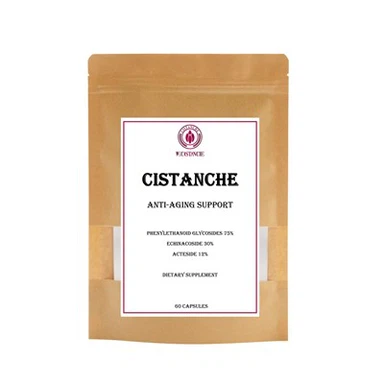
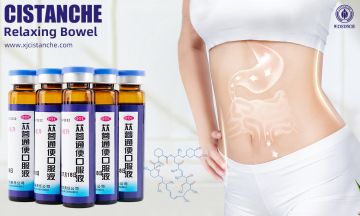
Wecistanche's cistanche powder, cistanche tablets, cistanche capsules, and other products are developed using desert cistanche as raw materials, all of which have a good effect on relieving constipation. The specific mechanism is as follows: Cistanche is believed to have potential benefits for relieving constipation based on its traditional use and certain compounds it contains. While scientific research specifically on Cistanche's effect on constipation is limited, it is thought to have multiple mechanisms that may contribute to its potential to relieve constipation. Laxative Effect: Cistanche has long been used in Traditional Chinese Medicine as a remedy for constipation. It is believed to have a mild laxative effect, which can help promote bowel movements and induce constipation. This effect may be attributed to various compounds found in Cistanche, such as phenylethanoid glycosides and polysaccharides. Moistening the Intestines: Based on traditional use, Cistanche is considered to have moisturizing properties, specifically targeting the Intestines. Promoting hydration and lubrication of the Intestines may help soften tools and facilitate easier passage, thereby relieving constipation. Anti-inflammatory Effect: Constipation can sometimes be associated with inflammation in the digestive tract. Cistanche contains certain compounds, including phenylethanoid glycosides and lignans, that are believed to have anti-inflammatory properties. By reducing inflammation in the intestines, it may help improve bowel movement regularity and relieve constipation.