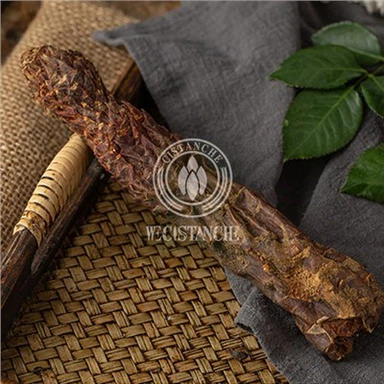
Chronic Cold Extremities And Fluid-Deficient Constipation — Understanding Cistanche Tubulosa Extract
Nov 20, 2026
1. A Different Way to Read "Always Cold" and "Dry Stools"
Many people live with chronically cold hands and feet. Many others struggle with dry, hard stools and weak bowel movements. In traditional practice, these are often not separate problems. Cold extremities usually point to insufficient warming capacity, especially when accompanied by low back soreness, fatigue, chills, frequent nighttime urination, and pale complexion. Dry constipation usually points to inadequate intestinal moisture and weak propulsion, especially with thirst, dry skin, and sluggish digestion.

When both appear together, the pattern is often described as deficiency of warmth, essence, and fluid. The goal is not aggressive heating and not harsh laxation. The goal is gentle restoration: warm the root, nourish essence and blood, and moisten the intestines. Cistanche tubulosa extract fits precisely into this niche.
2. What Is Cistanche Tubulosa
Cistanche tubulosa is a holoparasitic desert plant in the Orobanchaceae family. It grows attached to the roots of Tamarix and related shrubs across arid regions of Xinjiang, Gansu, and Inner Mongolia. Its dried succulent stem with scaly leaves is used in herbal medicine and is commonly called "Desert Ginseng".
In traditional herbal systems, it is classified as sweet, salty, and warm; entering the Kidney and Large Intestine channels; tonifying Kidney Yang; benefiting essence and blood; moistening the intestines; and promoting bowel movement. Classical texts describe it as "warming without heat, tonifying without harshness, moistening without leakage". This makes it different from strongly heating stimulants and from irritant laxatives.
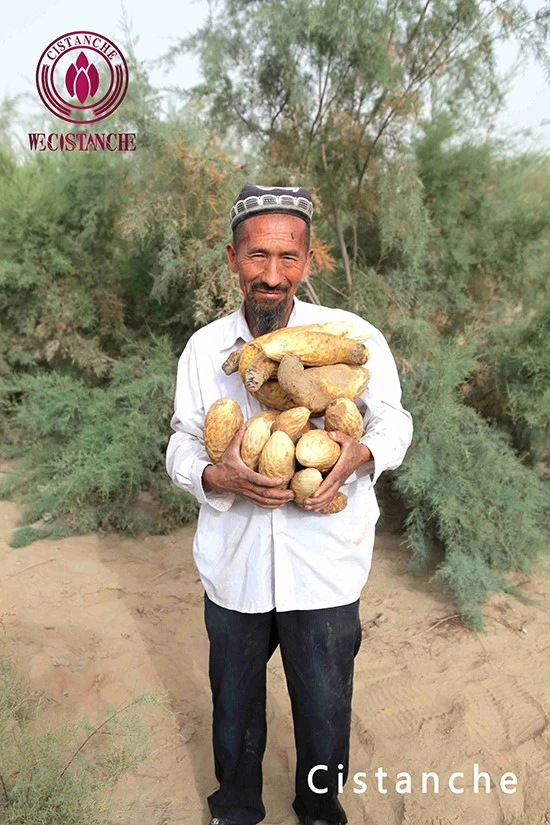
Harvest of Cistanche tubulosa
3. Core Phytochemistry
Modern standardization focuses on a clear active matrix. Phenylethanoid glycosides are the most important group, including echinacoside, acteoside (also called verbascoside), isoacteoside, and tubuloside A. Echinacoside and acteoside are the signature markers, contributing to antioxidant defense, free radical scavenging, neuroprotection, anti-fatigue effects, modulation of the hypothalamic-pituitary-adrenal axis, support of mitochondrial energy metabolism, and regulation of inflammatory pathways such as NF-kB and NLRP3.
Iridoid glycosides such as geniposidic acid and salidroside support metabolic regulation, antioxidant activity, and mild vasoregulation. Polysaccharides and oligosaccharides modulate gut microbiota, support the intestinal barrier, enhance macrophage activity, and improve stool moisture. Galactitol and sugar alcohols increase intraluminal osmotic pressure, reduce excessive water absorption in the colon, and soften stools without strong stimulation.

Main Chemical Constituents of Cistanche tubulosa
Click here to view Cistanche Tubulosa Extract Natural Supplement Powder
【Ask for more】 Email:cindy.xue@wecistanche.com / WhatsApp: 0086 18599088692 / WeChat: 18599088692
4. Why "Warming Yang" Has a Modern Meaning
The traditional concept of Kidney Yang deficiency can be mapped onto several physiological themes. First, peripheral circulation: cold hands and feet often reflect reduced cutaneous perfusion or blunted thermoregulation. Second, energy metabolism: low mitochondrial efficiency can present as constant chilliness, slow recovery, and reduced endurance. Third, neuroendocrine regulation: the HPA, thyroid, and gonadal axes all influence body temperature, mood, libido, stamina, and stress adaptation. Fourth, oxidative stress and low-grade inflammation are frequently linked to chronic fatigue and poor recovery.
Cistanche tubulosa extract does not work like caffeine. It does not force short-term stimulation. Instead, its phenylethanoid glycosides help upregulate neurotrophic factors, reduce oxidative damage, improve glycogen utilization, lower lactate accumulation, and support adrenal and gonadal homeostasis. The result is a slower, more sustainable restoration of warmth, drive, and resilience.

Dragon Herbs cistanche-improve kidney function
5. Fluid-Deficient Constipation: Why Harsh Laxatives Fail
Typical deficiency-type constipation shows hard pellet-like stools, straining without urgency, dry mouth and skin, fatigue after defecation, lumbar weakness, and sensitivity to cold. The underlying issue is usually dual: not enough moisture in the colon, and not enough strength to move it. Stimulant laxatives such as senna or rhubarb work quickly but may cause dependency, cramping, melanosis coli, worsening deficiency, and microbiome disruption.
Cistanche works through a different logic: it moistens rather than attacks; it supports motility gently through involvement of the SCF/c-kit pathway and interstitial cells of Cajal; it regulates the microbiome by shifting short-chain fatty acid profiles and microbial composition; and it protects vital energy because it also tonifies essence and blood. It is therefore suited to elderly users, post-illness recovery, sedentary professionals, and people who cannot tolerate aggressive purgation.

Effects of cistanche-treat constipation
6. The Dual-Axis Profile
|
Traditional Function |
Modern Interpretation |
|
Tonify Kidney Yang |
Support thermogenesis, endocrine balance, circulation |
|
Benefit essence and blood |
Antioxidant, anti-fatigue, tissue recovery |
|
Moisten intestines |
Increase stool moisture, modulate motility |
|
Relieve constipation |
Regulate microbiota and enteric signaling |
|
Anti-aging tonic |
Neural protection, immune balance, metabolic support |
This is why Cistanche tubulosa is not merely a laxative or a libido ingredient. It is a systemic restorative aimed at the root-energy and moisture-regulation network.
7. Raw vs Wine-Processed Extract
Raw Cistanche tubulosa has a stronger moistening and laxative tendency, better for dryness, hard stools, and deficient constipation. Wine-
processed Cistanche has a stronger warming and Yang-tonifying tendency, better for cold intolerance, low back weakness, and low vitality. Standardized extracts should declare their processing route, solvent system, and marker concentrations, because spectrum-effect relationships change with processing.
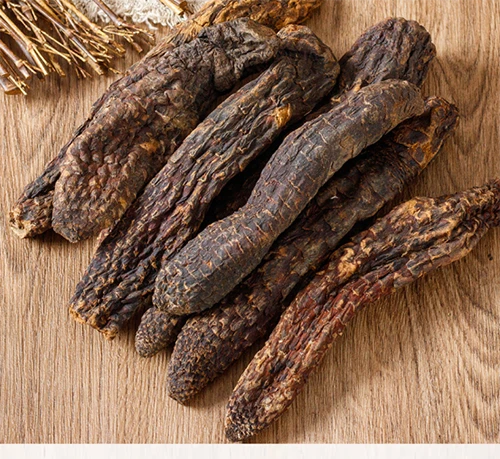
Cistanche tubulosa
8. What a Quality Standard Should Include
For B2B sourcing or finished-product development, the parameters that matter include identity and source (botanical name, plant family, used part, traceable origin), extraction method (water, ethanol, or macroporous resin purification), and standardization. Common specifications include total phenylethanoid glycosides at 10 to 85 percent by HPLC, echinacoside at 10, 30, or 50 percent grades, and acteoside at 2, 5, or 10 percent grades. Safety testing should cover heavy metals, pesticide residues, microbial limits, mycotoxins, solvent residues, and a characteristic HPLC fingerprint. Formulations include capsules, tablets, sachets, functional beverages, herbal coffee alternatives, anti-fatigue stacks, and gut-brain-axis products.

Cistanche tubulosa extract
9. Typical Application Scenarios
Cold sensitivity and low vitality: signs include cold extremities, chilliness in air-conditioned environments, fatigue, low motivation, and frequent nighttime urination; pairing with goji, Huangjing, and mild adaptogens is appropriate. Deficient dry constipation: signs include hard stools, incomplete evacuation, and dry mucosa, especially in elderly or sedentary lifestyles; pairing with hemp seed, prebiotics, soluble fiber, and magnesium is suitable. Burnout and cognitive fatigue: pairing standardized phenylethanoid glycosides with B vitamins, magnesium, and medicinal mushroom polysaccharides helps. Healthy aging: combining the extract with CoQ10, omega-3, and vitamin D supports stamina and resilience.