A Survey Of The Research On The Chemical Constituents Of Cistanche
Mar 08, 2022
Contact: Audrey Hu Whatsapp/hp: 0086 13880143964 Email: audrey.hu@wecistanche.com
(School of Pharmacy, Xinjiang Medical University, Urumqi, Xinjiang 830054)
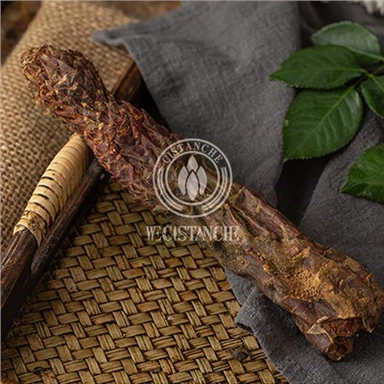
Cistanche is Orobanchaeceae Cistanche plant Cistanche dried fleshy stem with scaly leaves, also known as fine bamboo shoots, vertical squash, fleshy floss, goblin, and big Yun are one of the commonly used traditional Chinese medicines. There are about 18 species of this genus in the world, and about 4 species and 1 variety in my country, namely Cistanche deserticola Y. C. Ma, C. salsa (CA Mey.) G. Beck, C. tubulosa Schenk R. Wight, C. salsa var. albif lora P. F. Tu et Z. C. Lou) and C. sinensis G. Beck). "The Dictionary of Chinese Medicine" contains 3 types: salted Cistanche, Cistanche, C. ambigua (Bge.) B. Beck [1]. "Chinese Pharmacopoeia" only contains Cistanche as medicinal Cistanche [2]. According to the investigation, due to the shortage of genuine resources, the traditional Chinese medicine Cistanche used in many places is a genuine product of the Cistanche genus that is not included in the Pharmacopoeia. A resource survey conducted by Tu Pengfei and others on this genus of plants showed that “In addition to Cistanche, there are Cistanche tuber and a new variety of Cistanche white flower [3]. Few areas also use cistanche. Boschmikia rossica (Cham. Et Schlecht) Fedtsch. et Flerov also has a similar effect of nourishing the kidney and strengthening yang and is often used in folk medicine [4]. Foreign research shows that Cistanche has a significant effect on scavenging free radicals [5]. The main component of Cistanche is phenoxyethanol glycosides, and the number of phenoxyethanol glycosides and the amount of each monomer are obviously related to the variety and place of production. The literature pointed out that [6] Cistanche has a higher amount of total phenethyl alcohol glycosides than Cistanche and Cistanche salt. Therefore, Cistanche tuberosum has broad prospects as an official variety or supplementary variety of Cistanche included in the Pharmacopoeia.

Cistanche is mainly produced in the desert regions of Central Asia, West Asia, Xinjiang, Inner Mongolia, Gansu, Ningxia, and other desert regions of China. It has the effects of nourishing the kidney, nourishing essence, promoting blood circulation, and laxative. It is a traditional Chinese medicine with the conclusive function of nourishing the kidney and strengthening the yang. According to some statistics, the appearance rate of traditional Chinese medicine prescriptions for increasing strength is the first place, and it is second only to ginseng in anti-aging and anti-aging prescriptions [7]. In recent years, extensive research has been conducted at home and abroad on the chemical components, pharmacological effects, and anti-aging active ingredients contained in Cistanche deserticola. The results show that [8], Cistanche has shown certain activities in enhancing immunity, improving endurance, preventing liver damage from carbon tetrachloride, and regulating the nervous system and endocrine system. This article summarizes the main chemical components of Cistanche.

1. Phenylethanol glycosides
Modern studies have shown that Cistanche has aphrodisiac, anti-aging, immune function, memory enhancement, blood lipid-lowering, and laxative effects [9-10] It has the reputation of "desert ginseng", and its main active ingredient is phenethyl alcohol glycosides [9]. According to reports in the literature, phenethyl alcohol glycosides have many functions such as resisting adverse stimuli, enhancing learning and memory, and assisting yang [11] Cistanche deserticola contains more of these components. Hiromi Kobayashi, Japan, etc. to my country's Mongolian products C. Salsa has conducted a systematic study and separated phenoxyethanol glycosides from it [12-15]: (Cis-tanosideA) (1); CistanosideB (2); Echinacoside) (3); CistanosideC (4); CistanosideD (5); Acteoside (6); 2'-Acetyacteoside (7); Cistanoside E (8); Cistanoside F (9); Osmanthusjde B (10). Kobayashi Hiromi and others also produced from Karachi, Pakistan C. New compounds were found in tubulosa [16]: Tubuloside A (11); Tubuloside C (12); Tubuloside B (13); Acteoside isomer (14); Tubuloside D (15). Japan Tang Hu ひろ子 etc. from C. New compounds were obtained from salsa [17]: Cistanoside H (16); Cistanoside I (17); Decaffeoylacteoside (18); Cistanoside G (19); Salidroside (20). Fumio Yoshizawa et al. from C. New compounds obtained from tubulosa [18]: Tubuloside E (21); Syringalide A3′-α-L-rhamnopyranoside (22); and Isosyringalide-3′-α-L-rhamnopyranoside (23). C. Domestic scholars There are many studies on deserticola, and Du Niansheng et al. divided echinacoside, cistanche glycoside A, cohodoside, and 2'-acetyl cohodoside from it [19]. Xu Wenhao et al. can be divided into cohodosides, 2'-acetyl cohodosides, echinacoside, cistanche glycosides A, B, C, H, etc. [20]. Xu Zhaohui obtained salidroside from it [21] etc.
2. Iridoids
Japan's Hiromi Kobayashi, etc. to ou country's Cistanche in Inner Mongolia C. Salsa has conducted a systematic study [22-24]. 8-Epiloganic acid (24); Mussaenoside acid (25); Leonuride (ajugol) (26); 8-Epideoxyloganic acid (27); Gluroside (28); Geniposidic acid (29); Bartsioside (30); 6-Deoxy-catalpol (31); Cistanin (32) (Cistanchlorin) (33) and other compounds. Luo Shangsu waited C. Desterticola is divided into 8-Epiloganic acid [25]. Xu Wenhao et al. C. Desterticola scored 8-Epiloganic acid [20].

Cistanche
3. Lignin
Hiromi Kobayashi from C. Salsa scored [14-17]: (+) -Syringaresinol o- β-D-glucopyranoside (34); Liriodendrin (35); Pinoresinol (36) powder; (+) -Pinoresinol O-β-D-glucopyra- noside (37) and abietic acid. From C. New lignin can be divided into tubulosa [18]: De-hydrodiconiferyl alcohol γ′-O-β-D-glucopyranoside (38) and De-hydrodiconiferyl alcohol 4′-O-β-D-glucopyranoside (39).
4. Volatile components
Produced in Xinjiang in 1988 by Du Niansheng and Qu Shuhui. C. The essential oils were extracted by water vapor distillation in salsa, and then analyzed by GC/MS/DS methods to analyze the components and relative content of the essential oils, and a total of 38 chemical components were identified [26]. Ma Xizhong used supercritical fluid extraction technology to determine C. There are more than thirty compounds in the volatile components of deserticola, and they are divided into three categories: normal alkanes C16-C28, and three main components of ester compounds are dibutyl phthalate and sebacic acid. The oxygen-containing and nitrogen-containing compounds of butyl ester and diisooctyl phthalate are mainly eugenol, followed by vanillin and isoeugenol [27].

5. Others
Hiromi Kobayashi from C. Salsa can be divided into [12] 8-Hydroxygeraniol1-β-D-glucopyranoside, C16 H18O7·1/2H2O (40) colorless crystal mp 58-60℃[α]2D3.5-35.8°; D-mannitol; β-sitosterol; succinic acid; β-sitosterol-β-D-glucopyranoside [17] and syringin (Syringin) [20] (41) C16H24O9 colorless needle crystal mp188-189℃[α]20D -12 .3°. From C. Tubulosa [18] scored 20-Hydroxyecdysone (42) mp 240-241°C [α] 25D + 70.0°; and 6-Deoxycatalpol.
Luo Shangsu waited C. Mannitol was obtained from deserticola and its amino acid content was determined [25]. Chen Miaohua et al. C. Destercola can be divided into β-sitosterol, carotene, succinic acid, coffee sugar ester, triacontanol and betaine [28]. Zhang Shuyun on before and after concocting C. The content of betaine in deserticola was compared and analyzed [29]. Tu Pengfei et al. C. Desterticola flowers are divided into 6-deoxycatalpol and galactitol [30]. From Xu Wenhao C. Desterticola can be divided into glucose, sucrose, betaine, succinic acid, mannitol, β-sitosterol, carotene, etc. [23]. Xue Dejun from C. Tubulosa can be divided into β-sitosterol, D-mannitol, D-glucose, D-fructose, carotene, succinic acid, etc. [31]. Different from the place of origin C. Heteropolysaccharides were separated from deserticola, and qualitative and quantitative analysis was carried out. It was found that the types of monosaccharides contained in Cistanche deserticola from different places of production were different, the content of polysaccharides was different, and the monosaccharide components of heteropolysaccharides were also different [32]. Xu Zhaohui et al. C. There are 10 compounds in deserticola: cistanche, catalpol, syringin, salidroside, 2 5-dioxo-4-imidazolidine-carbamic acid, mannitol, stearic acid, β-sitosterol, Carrot glycosides, betaine [21]. Chen Xiaodong and others also analyzed the Ca, Mg, Zn, Cu, Mo, Po, and P contained in it. The content of iron, copper, zinc, and manganese is higher than that of general Chinese medicine [33]. In the early years, it was also reported that cistanche base and cistanche glycoside were obtained from Cistanche [34].

Cistanche
References
[1] Jiangsu Medical College. Dictionary of Traditional Chinese Medicine [M]. Shanghai: Shanghai People's Publishing House. 1977, 895.
[2] The First Pharmacopoeia of the People's Republic of China [S]. Beijing: Chemical Industry Press, 2000. 103.
[3] Tu Pengfei, He Yanping, Lou Zhicen. Investigation and resource protection of Cistanche-like drugs [J]. Chinese Herbal Medicine, 1994, 25(4):205.
[4] Liu Yongzhen. The effect of Cistanche on learning and memory and scavenging free radicals [J]. Chinese Herbal Medicine 1993, 24 (2): 81.
[5] Tsuda. The free radical scavenging effect of Bossica cistanche [J]. Foreign Medicine and Traditional Chinese Medicine Volume. Chinese Herbal Medicine, 1993, 24(2): 81.
[6] Du Niansheng, Liu Junling. Macroporous adsorption resin-UV spectrophotometric determination of phenylethanoid glycosides in Cistanche desert [J]. Research and development of natural products. 1993, 5(3): 30.
[7] Han Lichun, Hou Jinfeng, Ji Zhihua, et al. Effects of Cistanche on serum urea nitrogen and liver ultrastructure in mice[J]. Chinese Journal of Traditional Chinese Medicine, 1994,19(5):307.
[8] Xue Dejun, Zhan Yongcheng. Research progress of Cistanche [J]. Modern Applied Pharmacy, 1996, 13(5): 12.
[9] Takashi Sato, Satan Koziko, Komiko Kobayashi, et al. Phar- macological studies on Cistanchis HerbaⅠ. Effects of the constituents of Cistanchis Herba on sex and learning behavior in chronically stressed mice[J]. Pharmaceutical Journal [Day]. 1985, 105(12): 1131. [10] Zhang Hongquan, Zhang Aixiang, Du Niansheng, etc. The effect of Cistanche on the immune function of mice [J]. Journal of Integrated Traditional Chinese and Western Medicine, 1998, 8:736.
[11] Sato Sui. he. The pharmacological study of Cistanche-the effect of Cistanche components on the sexual behavior and learning behavior of chronic stress-loaded mice[J]. Foreign Medicine-Chinese Medicine and Chinese Medicine Section. 1987, 9(16): 33.
[12] Hiromi Kobayashi, Hiroko Karasawa, Toshio Miyase, et al. Studies on the Constituents Cistanchis Herba. Ⅲ. Isolation and Structures of new Phenylpropanoid Glycosides, Cistanosides A and B[J]. Chem Pharm Bull, 1984, 32(10): 3009-3014.
[13] Hiromi Kobayashi, Hiroko Karasawa, Toshio Miyase, et al. Studies on the Constituents Cistanchis Herba. Ⅳ. Isolation and Structures of Two New Phenylpropanoid Glycosides, Cistanosides C and D[J]. Chem Pharm Bull, 1984, 32(10): 3880-3885. [14] Hiromi Kobayashi, Hiroko Karasawa, Toshio Miyase, et al. Studies on the Constituents Cistanchis Herba. Ⅴ. Isolation and Structures of Two New Phenylpropanoid Glycosides, Cistanoside E and F [J]. Chem Pharm Bull, 1985, 33(4): 1452-1457.
[15] Hiromi Kobayashi, Hiroko Oguchi, Nonuo Takizawa, et al. New Phenylethanoid Glycosides from Cistanoside tubulosa (SCHRENK) Hook. f [J]. Chem Pharm. Bull, 1987, 35(8): 3309-3314.
[16] Tang Hu Kezi, Kobayashi Hiromi, Yan Hu Xinfu, etc. Studies on the Con- stituents of Cistanchis Herba. Ⅶ. Isolation and structure of Cistanoside H and I [J]. Pharmaceutical Journal (Japanese) 1986, 106 (7): 562-566.
[17] Tang Hu Kezi, Kobayashi Hiromi, Yan Hu Nobuo, etc. Studies on the Con- stituents of Cistanchis Herba. Ⅶ. Isolation and structure of a New Phenylethanoid Glycoside, Cistanoside G [J]. Journal of Pharmacology (Japan) 1986, 106(8): 721-724.
[18] Fumio Yoshizawa, Takeshi Deyama, Nobuo Takizawa, et al. The Constituents of Cistanoside tubulosa (SCHKENK) Hook. f. Ⅱ. Isolation and Structures of a New Phenylpropanoid Glycosides and a new Neolignan Glycoside [J]. Chem Pharm Bull, 1990,38(7):1927-1930.
[19] Du Niansheng, Wang Hong, Yi Yanghua. Separation and identification of phenyl ethanol glycosides in Cistanche. Development and Research of Natural Products, 1993, 5 (4): 5.
[20] Xu Wenhao, Qiu Shengxiang, Zhao Jihong. Study on the chemical constituents of Cistanche [J]. Chinese Herbal Medicine, 1994,25(10):509.
[21] Xu Zhaohui, Yang Junshan, Lu Russian. Study on the chemical constituents of Cistanche [J]. Chinese Herbal Medicine 1999,30(4):244.
[22] Hiromi Kobayashi and Tunko Komatsu. Study on the ingredients of Cistanche [J]. Pharmaceutical Journal [Day] 1983, 103 (5): 508-511.
[23] Hiromi Kobayashi, Hiroko Karasawa, Toshio Miyase et al. Studies on the Constituents of Cistanchis Herba. Ⅳ. Isolation and Structures of a New Iridoid Glycoside, 6-Deoxyeatalpol [J]. Chem Pharm Bull, 1985, 33(9): 3645-3650.
[24] Hiromi Kobayashi, Hiroko Karasawa, Toshio Miyase et al. Studies on the Constituents of Cistanchis Herba. Ⅱ. Isolation and Structures of New Iridoids, Cistanin and Cistachlorin [J]. Chem Pharm Bull, 1984, 32(5): 1729-1734.
[25] Luo Shangsu, Gu Ying, Liu Yonghe. Study on the chemical constituents of Cistanche [J]. Chinese Medicine News, 1986, 11 (11): 4.
[26] Du Niansheng, Qu Shuhui, Mexican, and so on. Study on the chemical constituents of Cistanche essential oil[J]. Journal of Organic Chemistry, 1988,27.
[27] Ma Xizhong, Yu Xiaobing, Zheng Zhenhua. Application of analytical supercritical fluid extraction technology in the determination of chemical components of Cistanche [J]. Chemical Journal of Chinese Universities, 1991, 12(11): 1443.
[28] Chen Miaohua, Liu Fengshan, Xu Jianping. Research on the chemical constituents of Cistanche, traditional Chinese medicine for invigorating kidney and yang [J]. Chinese Journal of Traditional Chinese Medicine, 1993,18(7):424.
[29] Zhang Shuyun, Chao Zhao, Chen Miaohua. Determination of betaine content of Cistanche before and after processing [J]. Chinese Journal of Traditional Chinese Medicine, 1995,20(7):409.
[30] Tu Pengfei, He Yanping, Lou Zhicen. Study on the chemical constituents of the flower sequence of Cistanche deserticola [J]. Chinese Herbal Medicine, 1994,25(9):451.
[31] Xue Dejun. Study on the chemical constituents of Cistanche Guanhua [J]. Chinese Journal of Traditional Chinese Medicine, 1997, 22(3): 170.
[32] Xue Dejun, Zhang Ming. Analysis of three kinds of Cistanche carbohydrate components[J]. Chinese Medicinal Materials, 1994,17 (2): 36.
[33] Chen Xiaodong, Xue Dejun, and others. Analysis of Trace Elements in Cistanche [J]. Journal of Jiangxi University of Traditional Chinese Medicine, 1994, 6(4): 31.
[34] Xiao Chonghou, Yang Songsong, Hong Xiaokun, etc. Chinese Medicine Chemistry [M]. Shanghai: Shanghai Science and Technology Press, 1987:343.