Cistanche And Black Goji: What Happens When These Two Desert Superfoods Meet Your Digestive System?
Oct 28, 2026
In the dry, sun-scorched deserts of northwest China, two remarkable plants grow side by side, each quietly accumulating a treasure chest of biologically active compounds. One is a parasitic herb that has been used in traditional Chinese medicine for over a thousand years. The other is a small, dark purple berry so rich in pigments that it is often called the "king of anthocyanins."
Together, they are turning heads in modern nutrition research - not just for what they contain, but for what happens to those compounds after you actually swallow them.
Recent laboratory research from Gansu, China, took a closer look at this pairing. Using a simulated digestion model, scientists followed black goji berry powder and cistanche powder as they moved through simulated stomach and intestinal fluids, measuring how their key active ingredients changed and how well their antioxidant power survived the journey.
What they found offers a fresh, science-backed way to think about these two desert superfoods - and why the way you consume them may matter just as much as what is in them.
This article walks through the research in plain language: what these plants are, what the study actually measured, why digestion changes everything, and what the findings mean for anyone considering cistanche as a daily supplement.
Part 1: Getting to Know the Two Desert Stars
What Is Cistanche Deserticola?
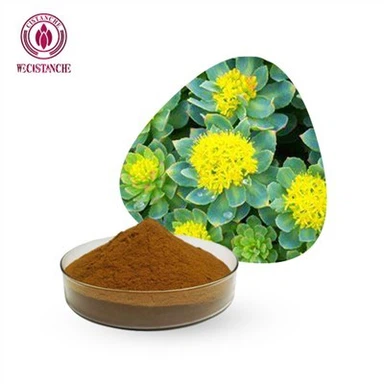
Cistanche deserticola - known in Chinese as rou cong rong (肉苁蓉) and often nicknamed the "desert ginseng" - is a parasitic plant belonging to the Orobanchaceae family. It does not grow on its own; instead, it attaches its roots to other desert plants, most commonly the Haloxylon ammodendron (saxaul) tree, and draws water and nutrients from its host.
For centuries, cistanche has held a prominent place in traditional Chinese herbal medicine, where it is classified as a tonic that supports kidney energy and is often recommended for vitality, joint comfort, and healthy aging. Modern phytochemistry has largely confirmed why the herb earned such a reputation: cistanche is packed with a family of compounds called phenylethanoid glycosides - the best-known of which are echinacoside and verbascoside (sometimes called acteoside) - along with polysaccharides, polyphenols, and a range of other bioactive molecules.
Among these, phenylethanoid glycosides are widely regarded as the signature actives of cistanche, and they have become the focus of a great deal of international research on antioxidant activity, neuroprotection, and immune support.
What Is Black Goji Berry (Lycium ruthenicum)?
While most people around the world know the bright red goji berry (Lycium barbarum), its less famous relative - the black goji berry, or Lycium ruthenicum - deserves equal attention.
Black goji grows as a hardy shrub on saline-alkali soil in the Hexi Corridor of Gansu and other arid regions of northwest China. Its berries are small, dark purple to nearly black, and unusually rich in anthocyanins, the water-soluble pigments responsible for the deep color in blueberries, purple grapes, and black rice. In fact, black goji is sometimes promoted as one of the best natural botanical sources of anthocyanins, which is why it has earned the nickname "king of anthocyanins" among researchers and ingredient suppliers.
Beyond anthocyanins, black goji also delivers polyphenols, flavonoids, phenolic acids, polysaccharides, and multiple trace minerals. Its reputation as a natural antioxidant powerhouse is backed by repeated studies showing that its total phenol and anthocyanin content correlates closely with strong free-radical-scavenging activity.

Why Pair Them Together?
These two plants come from the same ecological zone and share a long history in regional food and medicine. In traditional practice, they are sometimes combined because their actions are considered complementary: black goji is viewed as nourishing and cooling, while cistanche is regarded as warming and reinforcing. Together, they are thought to help balance the body's internal energy, support blood antioxidant defenses, strengthen immunity, and contribute to healthy aging.
But traditional wisdom only takes us so far. The question modern science asks is more precise: if you combine these two powders, do their active compounds survive digestion? And does the combination actually deliver better antioxidant activity than either alone?
That is exactly the question the recent Gansu study set out to answer.
Part 2: How the Researchers Tested It - Digestion in a Test Tube
Studying what happens to food and herbs inside the human body is complicated, invasive, and ethically difficult. So scientists have developed a well-established shortcut: simulated in vitro digestion. This method recreates the conditions of the stomach and small intestine in a laboratory, using the same digestive enzymes and acidity levels the body would produce, and then measures how ingredients change as they pass through each stage.
The Gansu research team followed this approach closely.
The Materials
Two raw materials were used:
Black goji berries, harvested from artificially planted forests in Huahai Town, Yumen City, in 2022. The berries were air-dried, crushed, and sieved.
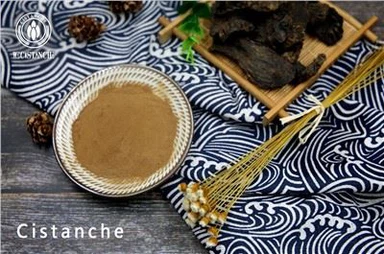
Cistanche (Cistanche deserticola), collected in May 2022 from artificially inoculated saxaul forests growing on sandy dunes in Gaotai County, Gansu. The fresh herb was cleaned, sliced, treated with a color-protection solution, freeze-dried, and ground into powder.
Beyond testing each powder alone, the researchers created three blend ratios of black goji to cistanche - 1:2, 1:1, and 2:1 - to see whether the ratio of the two herbs changed the outcome.
Simulating the Stomach
In the first phase, each sample was mixed with water, adjusted to a strongly acidic pH of about 2.0 (similar to a fasting stomach), and combined with simulated gastric fluid containing pepsin, the enzyme that breaks down proteins. The mixture was then shaken gently at body temperature (37 °C) for two hours, mimicking the churning of the stomach.
At the end of this stage, the enzymes were inactivated by heat, the mixture was centrifuged, and the liquid portion - now carrying whatever had been released from the powders - was collected for analysis.
Simulating the Intestine
The second phase picked up where the stomach left off. The partially digested mixture was neutralized with sodium bicarbonate to a milder, near-neutral pH of about 7.0, then pancreatic enzymes were added to mimic the small intestine. The mixture was shaken at 37 °C for another two hours, then heat-treated and centrifuged again.
By comparing samples taken at regular intervals (0, 0.5, 1, 1.5, and 2 hours), the team could watch how each active ingredient rose and fell over the course of digestion.

What Was Measured
Four families of active compounds were tracked:
Polyphenols - measured with the standard Folin–Ciocalteu method.
Polysaccharides - measured with the phenol–sulfuric acid method.
Anthocyanins - measured using the pH-differential method.
Phenylethanoid glycosides - measured by ultraviolet spectrophotometry.
Antioxidant activity was assessed using two widely recognized laboratory tests that measure a substance's ability to neutralize free radicals: the DPPH assay and the ABTS assay. Each test uses a different type of free radical, so running both gives a more complete picture of antioxidant strength.
Every measurement was performed in triplicate, and the results were analyzed statistically to determine whether differences were significant.
Part 3: What Happens to Black Goji Alone During Digestion
Let's first look at what digestion did to black goji berry powder on its own.
Active Compounds Rose in the Stomach, Then Fell
In the simulated stomach, black goji's polyphenol content climbed significantly within the first 1.5 hours before easing off. Its polysaccharides also rose markedly over two hours of gastric digestion. And its anthocyanins - the prized pigments - increased significantly in the acidic stomach environment within the first 1.5 hours.
The story changed in the simulated intestine. While polyphenols continued to gain, polysaccharides dropped sharply, and anthocyanins declined in the more alkaline intestinal environment. This is an important clue: the researchers noted that alkaline conditions are among the most destructive factors for anthocyanins, which are naturally most stable in acidic surroundings.
In plain terms, the acidic stomach is a friend to these pigments; the neutral-to-alkaline intestine is far harder on them.
Antioxidant Activity Followed a Similar Pattern
Black goji's ability to neutralize DPPH radicals rose overall during gastric digestion, and its ABTS radical scavenging also improved steadily. But in the intestinal phase, both antioxidant measures weakened noticeably.
The statistical analysis added another layer: in the gastric group, polyphenols and polysaccharides correlated strongly with antioxidant activity, while in the intestinal group, polyphenols showed a strong negative correlation - meaning the longer they sat in the intestinal environment, the more of their antioxidant power was lost.
The takeaway: black goji's antioxidant benefits are largely delivered early in the digestive process, primarily in the stomach, and are closely tied to its polyphenols, polysaccharides, and anthocyanins.

Part 4: What Happens to Cistanche Alone During Digestion
Now let's apply the same lens to cistanche.
Polyphenols Rose Early; Polysaccharides Declined
In the stomach, cistanche's polyphenols rose significantly within 1.5 hours before tapering, and its phenylethanoid glycosides climbed steadily over the full two hours. Its polysaccharides, however, showed an overall downward trend during digestion - a common pattern, since polysaccharide structures are easily destabilized by the digestive enzymes and shifting acidity.
Phenylethanoid Glycosides Proved the Star
The most striking finding for cistanche was the behavior of its phenylethanoid glycosides - the compound family containing echinacoside and verbascoside. These rose significantly across both gastric and intestinal digestion, and their content correlated closely with the sample's antioxidant activity in both phases.
This makes sense: cistanche's antioxidant reputation rests primarily on these glycosides, and the study confirmed that they remain active and continue to be released through digestion - a strong vote of confidence for the herb's value as a supplement.
The Acidic Advantage
Interestingly, the study observed that cistanche showed generally stronger antioxidant performance under acidic (gastric) conditions than under the more alkaline intestinal conditions. The researchers linked this partly to verbascoside and related compounds, whose antioxidant activity tends to decline after passing through the stomach phase.
So while cistanche's key actives survive digestion well, the environment they pass through still influences how much antioxidant power they ultimately express.
Part 5: The Blends - Does Ratio Matter?
The heart of the study lay in the three blended formulations: 1:2, 1:1, and 2:1 (black goji to cistanche). Here is where the research gets genuinely practical.
During Gastric Digestion
All three blends showed patterns broadly similar to the individual powders. Over two hours of stomach digestion, the mixes generally saw:
Anthocyanins rise significantly - especially in the 1:2 and 2:1 blends.
Phenylethanoid glycosides increase in the 1:1 and 2:1 blends.
DPPH and ABTS free-radical scavenging improve steadily over time in all three groups.
The acidic stomach proved to be a favorable release zone for the blends' active compounds, just as it was for the single powders.
During Intestinal Digestion
The picture became more nuanced once the blends reached the simulated intestine. Polyphenols rose early then tapered; polysaccharides and anthocyanins fluctuated depending on the ratio; phenylethanoid glycosides continued to climb across all three blends. Meanwhile, DPPH scavenging dipped in the first half-hour before recovering, while ABTS scavenging declined over the two-hour intestinal phase.
The 2:1 Blend Took the Lead
When the results were weighed together, one formulation stood out: the 2:1 blend of black goji to cistanche delivered the most effective improvement in antioxidant activity.
The practical implication is worth pausing on. It suggests that combining the two herbs is not merely a matter of tradition - the proportion genuinely influences how well the combined product performs. A carefully balanced ratio can outperform a haphazard one, which is valuable information for formulators developing new functional foods.

Part 6: Why Digestion Matters More Than You Think
Most people evaluate a supplement by reading its ingredient label: if it contains 30% phenylethanoid glycosides or high anthocyanins, they assume the benefits follow automatically. But the Gansu study is a useful reminder that the story does not end at the label.
Bioaccessibility - how much of a compound is actually released and made available in a usable form during digestion - is a separate, crucial step. A compound can be abundant in the raw powder yet poorly released, or unstable in the environment it encounters, and therefore deliver little benefit once swallowed.
This research shows that:
The stomach releases more actives than the intestine. Gastric digestion consistently produced higher levels of polyphenols, polysaccharides, anthocyanins, and phenylethanoid glycosides - and better antioxidant activity - than intestinal digestion.
Acidity protects certain compounds. Anthocyanins and several polyphenols are most stable and active in acidic conditions, which is why the stomach stage matters so much for black goji.
Some actives are built to survive the whole journey. Cistanche's phenylethanoid glycosides kept rising through both gastric and intestinal phases, suggesting robust bioaccessibility.
Ratio is a real variable. With the right blend (here, 2:1), the two herbs complemented each other and delivered stronger combined antioxidant activity.
For anyone choosing supplements, this reinforces a simple but powerful idea: formulation, sourcing, and even how a product is processed can change whether the good stuff on the label actually reaches your bloodstream.
Part 7: What This Means for You - Practical Takeaways
If you are curious about adding cistanche, black goji, or a combination to your routine, here is how to translate the research into practical guidance.
Look for Standardized Active Content
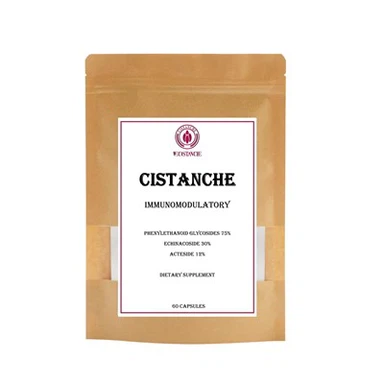
Not all cistanche products are equal. Because phenylethanoid glycosides - echinacoside and verbascoside - are the signature actives, a high-quality extract is often standardized to a guaranteed level of these compounds. Checking the specification sheet for phenylethanoid glycoside content is a reasonable first screen.
Pay Attention to the Delivery Form
Given that these actives are released and perform best in the stomach, forms that survive to the intestine while protecting acidic-sensitive compounds - such as enteric-coated capsules or formulations designed to release gradually - may have advantages worth discussing with a supplier.
Consider the Combination
The study's finding that a 2:1 black-goji-to-cistanche ratio enhanced antioxidant activity hints at genuine synergy between the two botanicals. If you value antioxidant support, a thoughtfully blended product may offer more than either herb alone.
Whole Powder vs. Extract - a Trade-Off
The researchers were candid about a limitation: they tested crude powders, and they noted that extracted and purified active compounds can behave differently from those locked inside raw plant matrix. For supplement users, this is a gentle reminder that "extract" and "whole herb powder" are different products with different characteristics - and that the best choice depends on your goal.

Part 8: Sourcing, Quality, and the Sustainability Angle
Two details from the study's materials section deserve attention, because they speak directly to quality.
Cultivated, Not Wild-Harvested
Both ingredients came from cultivated sources: black goji from planted forest stands, and cistanche from artificially inoculated saxaul forests. This matters. Wild cistanche has historically been over-harvested, and the plant's parasitic nature makes it slow to replenish. Sourcing from cultivated, inoculated plantations supports both consistent quality and environmental responsibility - a point increasingly valued by conscientious buyers.
Regional Identity as a Quality Signal
Both plants originated in the Hexi Corridor of Gansu, a region with a long history of growing these botanicals under harsh, mineral-rich desert conditions. Many growers and suppliers point to this terroir as a reason for the distinctive quality of Gansu black goji and cistanche - similar in spirit to how wine regions confer character on grapes.
For consumers, this translates into a simple checklist: ask about the origin, the cultivation method, the extraction and standardization process, and third-party testing for both active content and contaminants.
Part 9: Common Questions, Straight Answers
Q: Is cistanche safe for everyday use? As a traditional food-and-medicine dual-use botanical with centuries of documented use, cistanche is generally well tolerated when sourced from reputable suppliers and consumed at recommended amounts. As with any supplement, it is wise to start with a lower dose, and anyone with a medical condition, or who is pregnant or nursing, should consult a healthcare professional first.
Q: Will I notice antioxidant effects? Antioxidant support is a long-term, cumulative benefit rather than a sudden sensation. The laboratory evidence for strong free-radical scavenging is solid, but real-world results vary with diet, lifestyle, dose, and individual biology.
Q: Should I choose red goji or black goji? Both are nutritious, but they are not identical. Black goji is distinctly richer in anthocyanins, making it a standout for antioxidant-focused use. Red goji remains excellent for its own mix of carotenoids and polysaccharides. The choice depends on your goals - and some people enjoy both.
Q: Is this study proof that cistanche "works"? This single study is evidence for how these compounds behave during digestion and how the two herbs interact - an important piece of the puzzle, but not the whole picture. Reliable supplement choices rest on a body of evidence: traditional use, this kind of laboratory research, human studies where available, and trustworthy sourcing.

Part 10: The Road Ahead for Cistanche-Based Functional Foods
This line of research opens practical doors for product developers. The findings suggest several promising directions:
Optimized blends. The 2:1 ratio result shows that formulation science can meaningfully improve antioxidant outcomes - a green light for developers to design more effective combination products.
Digestion-aware delivery. Because acidic environments favor the release of these actives, packaging and delivery systems that respect the stomach phase could boost bioaccessibility.
Gansu's botanical identity. The Hexi Corridor's established cultivation of both black goji and cistanche positions the region as a credible, sustainable source for premium functional-food ingredients - a story worth telling to international buyers.
At the same time, the researchers noted that future work should move beyond crude powders to extracted and purified compounds, and ideally into human studies, to confirm how these ingredients behave in real bodies rather than test tubes.
Final Thoughts: Two Desert Plants, One Shared Message
The pairing of black goji and cistanche is more than a tradition - it is a scientifically interesting combination with demonstrated antioxidant potential. This study's most useful message is elegantly simple: what a plant contains matters, but what happens to those compounds inside your body matters just as much.
Digestion is the great gatekeeper. It decides which compounds are released, which survive, and which actually get a chance to do their work. Understanding that process - and using it to design better blends and better products - is exactly how ancient botanical wisdom and modern food science can meet.
Whether you are a formulator exploring new functional foods, a supplier building a transparent sourcing story, or a consumer simply looking for a thoughtful addition to your daily routine, the desert has two gifts worth knowing well: a dark berry full of pigment, and a parasitic herb full of promise - and, as this research suggests, they may be at their best together.
This article is for informational and educational purposes only and is based on published laboratory research on the in vitro digestion and antioxidant activity of black goji berry and cistanche powders. It is not medical advice and does not diagnose, treat, or prevent any disease. Consult a qualified healthcare professional before using any supplement, especially if you are pregnant, nursing, taking medication, or managing a health condition.