Cistanche And Bone Health: What Phenylethanoid Glycosides Like Echinacoside And Acteoside Actually Do Inside Your Skeleton
Nov 13, 2026
Why Bone Loss Is a Bigger Problem Than Most People Realize
Bone feels permanent. It is not.
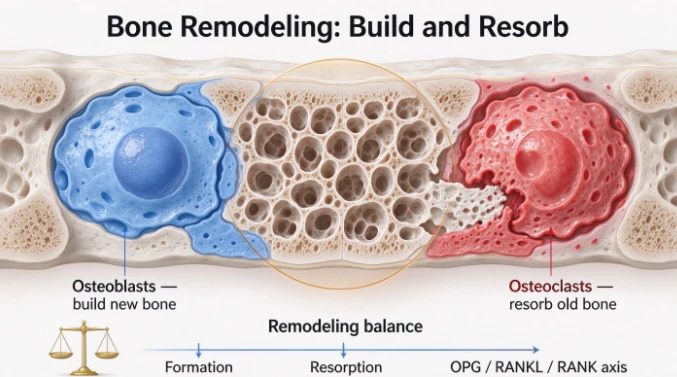
Your skeleton is living tissue that gets torn down and rebuilt continuously, roughly like a city that is being renovated every day of your life. Specialized cells called osteoclasts demolish old bone, and other cells called osteoblasts lay down fresh bone. When the two crews work at the same pace, your bone mass stays stable. When demolition outruns construction, bone density falls, the internal architecture of the bone gets thinner and more porous, and the whole structure becomes fragile.
This is the process behind osteoporosis - a systemic skeletal condition marked by lower bone mineral density, deteriorating bone microarchitecture, and a sharp rise in fracture risk. It is sometimes called a "silent" disease because there are no symptoms until something breaks. A wrist, a hip, a vertebra. For many people, the first sign of bone loss is the fracture itself.
Age is one driver. So is the drop in estrogen that follows menopause, which is why postmenopausal women are hit hardest. But bone loss is not only a female issue, and it is not only an elderly issue. Low physical activity, low protein intake, poor vitamin D status, chronic inflammation, long-term steroid use, and years of yo-yo dieting all leave marks on bone.
Conventional medicine has effective tools: bisphosphonates, calcitonin, estrogen replacement, selective estrogen receptor modulators, denosumab, strontium ranelate, and anabolic agents. They work, but they also come with real baggage. Long-term use of some of these drugs has been linked to cardiovascular events, venous thromboembolism, and other adverse outcomes, which is exactly why so many people - and so many researchers - are looking for gentler, food-derived options that can support bone remodeling earlier in the game.
That search has led to an unusual plant from the deserts of northwest China: Cistanche, known colloquially as "desert ginseng." And within Cistanche, one family of molecules has drawn most of the attention from bone researchers - the phenylethanoid glycosides (PhGs), with echinacoside and acteoside (also called verbascoside) as the headline act.
This article walks through what these compounds are, how your body actually processes them, and the seven biological pathways that laboratory research has connected to bone formation and bone breakdown. It is written for readers who want more than marketing language but who are not pharmacologists. Where the evidence is from cells or animals rather than humans, we say so plainly.

What Is Cistanche, Exactly?
Cistanche is a genus of perennial parasitic herbs in the family Orobanchaceae. It has no chlorophyll worth speaking of and does not photosynthesize. Instead, it attaches to the roots of desert shrubs - mainly Haloxylon (saxaul) and Tamarix - and draws water and nutrients from its host. That is why it grows where almost nothing else will: the arid, sandy, sun-blasted stretches of northwest China and the warmer dry regions of Eurasia.
Worldwide there are roughly 22 species. China is home to five of them, distributed across Inner Mongolia, Xinjiang, Qinghai, and Ningxia. Two are commercially and pharmacologically important:
Cistanche deserticola Y.C. Ma - the classic species, historically the "official" one.
Cistanche tubulosa (Schenk) Wight - widely cultivated in Xinjiang, and the main source for most modern extracts.
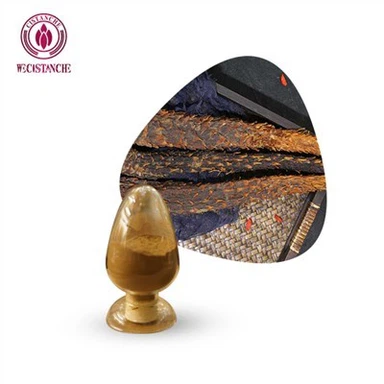
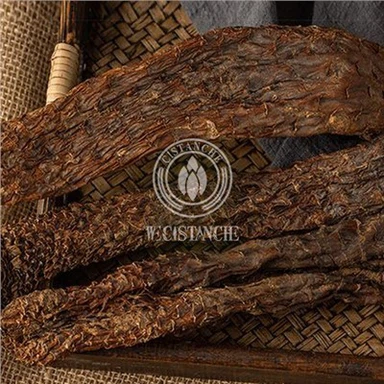
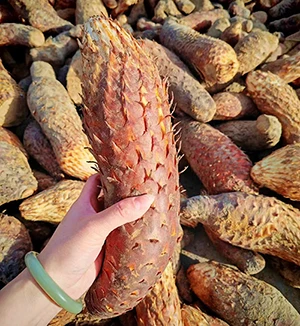
The medicinal material is the dried fleshy stem with its scaly leaves, which looks a bit like a thick, dried pine cone crossed with a root. In Chinese pharmacy it has been used for centuries under names like roucongrong, dayun, and congrong. It first appears in the Shennong Bencao Jing, the oldest surviving Chinese materia medica, where it is classified in the top tier of herbs - a category reserved for substances considered safe for long-term use.
Traditional descriptions classify it as sweet and salty in taste, warm in nature, and acting on the kidney and large intestine channels. Its classical indications cluster around what Chinese medicine calls "kidney yang" and "essential blood" deficiency: fatigue, weakness, cold limbs, poor memory, constipation in the elderly, and - relevant to our topic - weakened bones.
That framing is not as far from modern biology as it sounds. Traditional Chinese medicine has long held that "the kidney governs bone," and contemporary research has repeatedly found that Cistanche and its extracts exert measurable effects on bone metabolism. The vocabulary is different; the target tissue is the same.
Beyond bone, a large body of literature describes Cistanche as anti-aging, anti-inflammatory, antioxidant, anti-fatigue, immunomodulatory, hepatoprotective, antidepressant, and mildly laxative. It is also an established food ingredient in China, which is why it sits in the "medicine and food are one" category rather than the prescription-only one.
What makes Cistanche interesting commercially is that these effects are not attributed to a vague "herbal energy." They trace back to specific, measurable, standardized molecules.
The Molecules That Matter: Phenylethanoid Glycosides
If you hydrolyze Cistanche stems and look at what comes out, the dominant bioactive family is the phenylethanoid glycosides - sometimes abbreviated PhGs, sometimes called phenylethanol glycosides in older literature.
Structurally, these are small polyphenols built from a phenethyl or phenylpropenyl core, decorated with sugar chains. That structure matters enormously, for two reasons we will return to: the sugar chains control how well the molecule survives your digestive tract, and the phenolic hydroxyl groups control how well it neutralizes reactive oxygen species.
The main members found in Cistanche:
Echinacoside - the most abundant and most studied. Also found in Echinacea, which is where the name comes from.
Acteoside / verbascoside - the second pillar. Echinacoside is essentially acteoside plus an extra sugar unit, and the two convert into each other in the gut.
Isoacteoside - a positional isomer of acteoside.
2′-acetylacteoside - an acetylated derivative found in the gastrointestinal tract after dosing.
Cistanoside A through H - a series of related glycosides, some with additional caffeoyl groups.
Decaffeoylacteoside (decaffeoyl verbascoside) - acteoside minus its caffeoyl group.
Two of these are enshrined in regulation. The Chinese Pharmacopoeia designates echinacoside and acteoside as the quality-control markers for Cistanche. In practice, that means any serious Cistanche extract on the market is described by its content of these two compounds - 10%, 20%, 30%, sometimes higher, usually measured by HPLC. If a product's label does not state a standardized PhG content, you have no idea what you're buying.
Once these glycosides enter the body, they do not stay intact. They get dismantled into smaller pieces - and, importantly, those pieces are also bioactive:
Caffeic acid - a well-known phenolic acid with antioxidant and bone-related activity.
Hydroxytyrosol - the signature polyphenol of olive oil, and one of the most interesting bone-active molecules in this story.
3-hydroxyphenylpropionic acid - a further microbial breakdown product of caffeic acid.
So the picture is not "one herb, one active ingredient." It is a precursor pool that your gut microbiome converts into a set of smaller, more absorbable, still-active metabolites.

The Bioavailability Puzzle: Why 0.83% Explains Everything
Here is the uncomfortable fact that most supplement marketing skips.
The absolute oral bioavailability of echinacoside is about 0.83%. For acteoside, it is around 0.12%. In plain terms: if you swallow 100 milligrams of echinacoside, only a fraction of a milligram reaches your bloodstream in intact form.
Read that again and then ask the obvious question: if almost none of it gets into the blood, how can it do anything?
The answer is one of the most elegant ideas in natural-product pharmacology. Herbal compounds are typically subject to extensive presystemic metabolism - they are modified in the gut lumen, gut wall, and liver before they ever reach circulation. What circulates is not the parent compound but a swarm of metabolites, and the overall pharmacological effect may be carried by those metabolites rather than by the original molecule.
Several lines of evidence converge on this.
In rats. After oral administration of Cistanche water extract, researchers using ultra-high-performance liquid chromatography coupled with quadrupole time-of-flight mass spectrometry identified 71 Cistanche-derived compounds in urine, feces, and serum - 25 in their original form and 46 as metabolites. The conversion happens predominantly in the gastrointestinal tract, not in the liver alone.
With purified compounds. When rats received 200 mg/kg of echinacoside and acteoside by mouth, both showed pronounced hepatic first-pass effect. Plasma, bile, feces, and urine contained a similar metabolic picture: at least 18 products generated through rearrangement, hydrolysis, reduction, dehydroxylation, methylation, sulfation, and glucuronidation. Among them were caffeic acid and hydroxytyrosol - and both of those demonstrated biological activity comparable to their parent glycosides in the same assays.
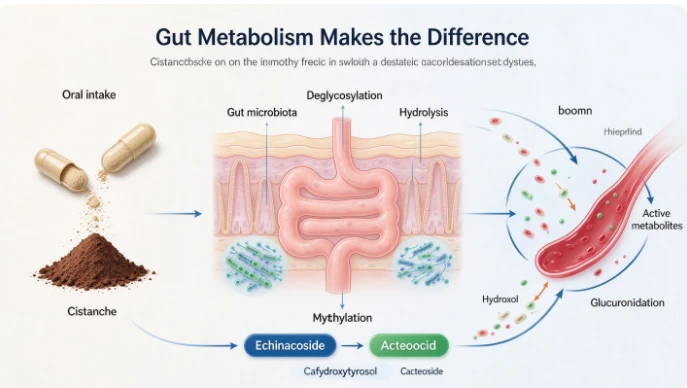
In dogs. When total phenylethanoid glycosides were given by gavage and large-intestinal contents were analyzed, echinacoside was found to undergo deglycosylation in the colon, converting into acteoside. The large intestine is not a passive exit route; it is a reactor.
With human gut bacteria, in vitro. Incubated anaerobically with human intestinal flora, echinacoside was transformed into acteoside, isoacteoside, and chamaedroside. That is a direct demonstration that our own microbiome performs the chemistry.
In simulated gastric and intestinal fluid. Cistanche total glycosides produced 14 parent compounds and 55 metabolites in artificial gastric juice, and 4 parent compounds and 86 metabolites in artificial intestinal juice - via demethylation, methylation, hydroxylation, dehydroxylation, acetylation, sulfation, and glucuronidation. The intestine is where the action is.
In the gut–brain axis work. Cistanche decoction metabolism studies found the PhGs converting mainly to hydroxytyrosol and caffeic acid, with caffeic acid further metabolized by gut flora into 3-hydroxyphenylpropionic acid.
What this means for you. Three practical takeaways:
Gut health is part of the mechanism. An extract cannot "work" in a vacuum. A diverse, functioning microbiome is the conversion engine. This is not a reason to skip the supplement, but it is a reason to treat your gut as part of the protocol.
Small metabolites, big effects. Hydroxytyrosol and caffeic acid are small, absorbable, and demonstrably bone-active. Much of the skeleton-level benefit described in the next sections likely flows through them.
Absorption enhancers and formulation matter. Because the parent glycosides absorb so poorly, how an extract is prepared - particle size, food matrix, whether it is taken with a meal - plausibly influences how much chemistry actually happens. Anyone claiming "99% absorption" of intact echinacoside is either confused or lying.
Bone Biology in Five Minutes
To follow the mechanisms, you need five concepts. None of them require a degree.
Osteoblasts build. These cells secrete collagen and other proteins, then mineralize the matrix with calcium phosphate crystals. They are the construction crew.
Osteoclasts destroy. These are large, multinucleated cells derived from the same lineage as macrophages. They acidify the bone surface and dissolve mineral, then digest the protein matrix. They are the demolition crew.
Remodeling is coupled. You cannot build in a closed system without first clearing space. So demolition and construction are chemically linked: osteoblasts produce signals that control osteoclasts, and osteoclasts release factors that recruit osteoblasts. Break the coupling and you get either too much bone (rare) or too little (common).
The master switch is the RANK–RANKL–OPG axis. Osteoblasts present a protein called RANKL on their surface. Osteoclast precursors carry its receptor, RANK. When RANKL engages RANK, the precursor matures into an active osteoclast. Osteoblasts also secrete OPG (osteoprotegerin), a decoy receptor that grabs RANKL and prevents it from binding RANK. So the OPG/RANKL ratio is the dial: high OPG relative to RANKL means less bone resorption; low OPG relative to RANKL means more.
Mineral supply matters. Bone is roughly 60–70% mineral. Calcium and phosphorus are not optional. Their balance is managed by the skeleton together with calcitonin, parathyroid hormone, and thyroid function. Any disruption in that endocrine triangle disturbs bone growth and repair.
Now, with those five concepts in place, the seven pathways make sense.
Mechanism 1: A Gentle Estrogen-Like Signal
Estrogen is not just a reproductive hormone. It is one of the strongest brakes on bone resorption that the human body produces. When estrogen falls at menopause, that brake loosens, osteoclast activity rises, and bone loss accelerates.
One therapeutic strategy has therefore been to look for plant compounds that can quietly mimic a fraction of estrogen's activity without the risks of hormone replacement.
Using a luciferase reporter gene assay - a standard tool for asking "does this molecule switch on an estrogen-responsive gene?" - researchers tested echinacoside and acteoside from Cistanche and found both antagonized estrogen-induced up-regulation of estrogen response element (ERE) activity, producing measurable phytoestrogenic activity.
Two honest caveats. First, "phytoestrogenic" does not mean "hormone." These compounds bind weakly and act selectively; the signal is mild compared with pharmaceutical estrogen. Second, this is cell-based evidence. It supports a plausible mechanism for postmenopausal bone protection. It does not prove clinical efficacy in women, and it does not mean Cistanche should be treated as hormone therapy.
Where this becomes interesting is in combination: a mild estrogen-like signal plus reduced oxidative stress plus a better OPG/RANKL ratio is three small pushes in the same direction.
Mechanism 2: Keeping Calcium and Phosphorus Where They Belong
Bone is a mineral bank. Calcium and phosphorus are its currency, and the skeleton is one of the main organs regulating their balance - working alongside calcitonin, parathyroid hormone, and thyroid hormones. When that balance wobbles, bone structure and microarchitecture suffer.
Research on the Cistanche metabolite hydroxytyrosol points here. Hydroxytyrosol has been shown to support thyroid cell function, which matters because thyroid dysfunction is a recognized disruptor of bone growth. By helping keep calcium at a steady level during both formation and resorption, it indirectly supports the structural quality of bone.
There is a second, more direct line of evidence. Hydroxytyrosol stimulates calcium deposition in a dose-dependent manner in osteoblast culture systems, and as mineral deposition rises, osteoclast formation is suppressed. In other words, the same molecule pushes the seesaw in both directions - more building, less demolition.
And a third thread involves osteopontin (OPN). OPN is a protein made by osteoblasts; it is one of the classic markers of the osteoblast phenotype, it participates in matrix mineralization, and it helps coordinate osteoblast and osteoclast behavior. Treatment with echinacoside significantly increased OPN gene expression in osteoblasts, with a clear trend toward increased OPN protein secretion.
That is a modest but coherent story: better mineral handling, better matrix protein output.
Mechanism 3: Turning Down Oxidative Stress
Reactive oxygen species (ROS) are the exhaust fumes of normal metabolism. The big three - superoxide anion (O₂⁻), hydrogen peroxide (H₂O₂), and hydroxyl radical (•OH) - account for roughly 95% of the ROS produced in the body.
At low levels, ROS are signaling molecules. At high levels, they are destructive. In bone specifically, excess ROS:
induce apoptosis (programmed death) of osteocytes and osteoblasts,
suppress bone mineralization and new bone formation,
amplify osteoclast-driven resorption.
Put together, that is a direct route to osteoporosis. Oxidative stress is now understood as one of the shared mechanisms linking aging, chronic inflammation, and postmenopausal bone loss.
Here Cistanche's chemistry is almost tailor-made. Echinacoside and acteoside both carry ortho-diphenolic hydroxyl groups on their phenethyl and phenylpropenyl moieties. That arrangement - two hydroxyls sitting next to each other on an aromatic ring - is one of the most efficient motifs in nature for donating an electron to a free radical and neutralizing it.
The metabolites continue the work:
Caffeic acid scavenges superoxide anion and can also inhibit the formation of oxygen radicals, giving it antioxidant capacity in its own right.
Hydroxytyrosol has been shown to lower H₂O₂ levels inside osteoblastic MC3T3-E1 cells.
There is a further connection worth naming: oxidative stress and bone resorption talk to each other through the same NF-κB machinery discussed in the next section. Reducing ROS burden is not a cosmetic benefit. It is a bone-relevant one.

Mechanism 4: The RANK–RANKL–OPG Dial
This is the pathway with the most direct evidence behind it, and the one most bone researchers care about.
Recall the setup: RANKL on osteoblasts binds RANK on osteoclast precursors and drives them to mature. OPG is the decoy that blocks this. The OPG/RANKL ratio determines net resorptive pressure. Nearly every effective osteoporosis drug influences this axis in some way.
What the Cistanche data show:
Echinacoside raises the OPG/RANKL ratio, which in animal models has been associated with reduced postmenopausal bone loss. In a cell-culture experiment where echinacoside-treated T-lymphocyte conditioned medium (10%) was applied to osteoblasts for 72 hours, osteoblast proliferation increased significantly, OPG mRNA went up, and RANKL mRNA went down. That is a shift in exactly the right direction, produced indirectly through immune-cell signaling - a reminder that bone is an immune-adjacent tissue.
Acteoside acts on both sides of the equation: it down-regulates RANK and RANKL expression, reducing resorptive drive.
Caffeic acid works upstream as well, up-regulating the OPG/RANKL system, improving bone remodeling and supporting osteoblast maturation. Caffeic acid has also been reported to inhibit osteoclast formation and differentiation in a concentration-dependent manner, acting on both osteoclast precursor cells and mature osteoclasts.
Then there is the most mechanistically detailed study. In ovariectomized rats - the standard animal model for postmenopausal bone loss - a Cistanche extract was tested against the RANKL/RANK/TRAF6 signaling cascade. The results: down-regulation of IKKβ, NF-κB, and NFAT2, and up-regulation of c-Fos. Translation: the extract blocked RANKL/RANK/TRAF6-driven activation of NF-κB and the PI3K/AKT pathway, while shifting the downstream transcription factors that govern osteoclast identity. The functional outcome was suppressed osteoclast differentiation and reduced bone resorption, with observable therapeutic benefit in the ovariectomized animals.
Notice how this dovetails with the antioxidant story. NF-κB is the same node that ROS activate. Cistanche's polyphenols hit that node from two directions - by quenching the radicals that stimulate it, and by interfering with the RANKL-driven cascade that uses it.
Mechanism 5: BMP2–Smad–Runx2, the Construction Signal
If RANKL is the demolition switch, BMP2–Smad–Runx2 is the construction blueprint. Cistanche appears to act on both.
The pieces:
Bone morphogenetic proteins (BMPs) belong to the TGF-β superfamily and promote skeletal growth and development. BMP2 is a key subtype that regulates osteoblast differentiation.
Smad proteins are the intracellular messengers of the TGF-β family. They carry the signal from the cell membrane into the nucleus, where they team up with other transcription factors.
Runx2 (also called core-binding factor α1, Cbfa1) is the master transcription factor of the osteoblast lineage. It directly and indirectly controls the genes that define an osteoblast.
The cascade runs like this: BMP2 binds its receptor → Smad complexes are activated → Smad complexes up-regulate Runx2 → Runx2 drives osteoblast and chondrocyte differentiation → new bone forms.
Where Cistanche intervenes:
Echinacoside up-regulates BMP2 and Smad4 expression, activating BMP/Smad signaling and promoting proliferation of rat osteoblasts.
Echinacoside-containing serum significantly increased BMP2, Smad1/5/8, ZHX3, Runx2, and OSX at both mRNA and protein levels in bone marrow mesenchymal stem cells (BMSCs). BMSCs are the progenitor pool that gives rise to new osteoblasts, so this is evidence that the compound encourages recruitment of new bone-forming cells, not just activity of existing ones.
If Mechanism 4 is about slowing the wrecking crew, Mechanism 5 is about hiring more builders. Both are needed.
Mechanism 6: MAPK–ERK, the Growth Signal
Mitogen-activated protein kinases (MAPKs) are a family of signaling enzymes with four main branches - ERK, p38, JNK, and ERK5. They relay signals from outside the cell to targets inside it, and in doing so they govern cell growth, development, differentiation, and death.
In bone, MAPK signaling is a recognized route to osteoblast differentiation and a recognized route to osteoclast activation, depending on which branch and which cell type is involved.
Research on echinacoside found that it increased phosphorylation of ERK, p38, and JNK - that is, it switched these kinases on - thereby activating MAPK/ERK signaling and promoting differentiation of rat osteoblasts. The same compound has been reported to promote osteogenic differentiation of adipose-derived stem cells, suggesting a broader pro-osteogenic effect across multiple progenitor populations.
This is a good example of why "which pathway" questions are more useful than "does it work" questions. A compound that lights up MAPK in an osteoblast is doing something quite different from a compound that lights up MAPK in an immune cell. Context is the whole story.
Mechanism 7: FLT3–USP10, the Newer Lead
The most recent pathway in this literature is also the least established - which makes it the most interesting.
FLT3 (FMS-like tyrosine kinase 3) is a transmembrane receptor tyrosine kinase. When activated, it drives cell proliferation. In bone, FLT3 is known to cooperate with M-CSF and RANKL to induce osteoclast differentiation - meaning it feeds the demolition crew.
USP10 is a deubiquitinating enzyme from the ubiquitin-specific protease family. Its relevant job here: USP10 is the deubiquitinase that keeps FLT3 stable. Block USP10's activity and FLT3 gets tagged for degradation.
Research in glucocorticoid-induced osteoporotic rats found that acteoside inhibited USP10/FLT3 pathway activity and down-regulated USP10 and FLT3 protein levels, improving the osteoporotic phenotype. In other words, acteoside removes a stabilizing factor from an osteoclast-supporting receptor, and the receptor degrades.
A note of caution: glucocorticoid-induced osteoporosis is a mechanistically distinct condition from postmenopausal bone loss. Findings here should not be extrapolated to all bone loss without further work. But it is a genuinely novel target, and it hints that Cistanche's PhGs are not one-trick molecules.
Putting the Mechanisms Together: One Plant, Seven Levers
Read the seven pathways in sequence and a pattern emerges:
表格
| Pathway | Direction | Net effect on bone |
|---|---|---|
| Estrogen-like (ERE) | Mild phytoestrogenic signal | Less resorption |
| Ca/P balance | Better mineral handling, more Ca deposition | More mineralization |
| Oxidative stress | Fewer ROS | Less osteoblast/osteocyte death, less resorption |
| RANK–RANKL–OPG | Higher OPG/RANKL ratio | Less osteoclast formation |
| BMP2–Smad–Runx2 | Up-regulated | More osteoblast differentiation |
| MAPK–ERK | Activated | More osteoblast differentiation |
| FLT3–USP10 | Inhibited | Less osteoclast differentiation |
Two things stand out.
First, the effect is bidirectional. Most single-target bone drugs do one thing - block resorption or stimulate formation. Cistanche's PhGs, at least in preclinical models, appear to do both: quiet the demolition crew and support the construction crew. Whether that translates into meaningful clinical benefit is still an open question, but mechanistically it is more like a remodeling modulator than a blunt instrument.
Second, the metabolites may be doing much of the work. Hydroxytyrosol, caffeic acid, and acteoside (which echinacoside converts into in the colon) each show bone-relevant activity on their own. The parent glycosides are largely a delivery system that your gut flora unpacks.
What the Studies Actually Showed - and What They Didn't
Let's be precise about the evidence quality, because this is where most supplement content gets sloppy.
Cell studies demonstrated: increased osteoblast proliferation; increased alkaline phosphatase activity (a marker of osteoblast maturation); increased OPN gene and protein expression; increased mineralization; inhibition of osteoclast formation and differentiation; activation of BMP/Smad, MAPK/ERK, and OPG signaling; inhibition of RANKL-driven NF-κB activation.
Representative details: acteoside at concentrations from 10⁻⁹ to 10⁻⁷ mol/L significantly promoted proliferation of neonatal rat calvarial osteoblasts, and at 10⁻⁷ mol/L significantly raised alkaline phosphatase activity after 72 hours. Echinacoside-treated T-lymphocyte supernatant increased osteoblast proliferation and OPG mRNA while suppressing RANKL mRNA.
Animal studies demonstrated: in ovariectomized rats - the standard model for postmenopausal bone loss - Cistanche extract modulated the RANKL/RANK/TRAF6 axis, suppressed osteoclast differentiation, and produced therapeutic benefit. In glucocorticoid-induced osteoporotic rats, acteoside down-regulated USP10/FLT3 and improved the osteoporotic phenotype. Echinacoside has shown efficacy in rat osteopenia models.
Network pharmacology mapped the compounds - echinacoside, acteoside, decaffeoylacteoside, leonurine, geniposidic acid - onto targets including RUNX2, IL-6, TNF, BGP, OPN, ROS, MAPK, FLT3, and USP10, providing a systematic rationale for multi-target activity.
What is missing: large, well-controlled human trials with bone mineral density or fracture outcomes as endpoints. As of the published literature reviewed here, the human evidence is thin. This is not a reason to dismiss the compound - preclinical evidence of this consistency is exactly how drug candidates get discovered. But it is a reason to be skeptical of anyone promising you a measurable spine-density increase from a bottle.
The correct framing is supportive, not therapeutic: Cistanche PhGs appear to act on the biological machinery of bone remodeling in ways that are consistent with protecting bone over time. That is a meaningful claim. It is not the same as "treats osteoporosis."
From Bench to Bottle: What to Look For in a Cistanche Extract
If you're going to use this, the quality of what you buy determines whether any of the above is relevant to you.
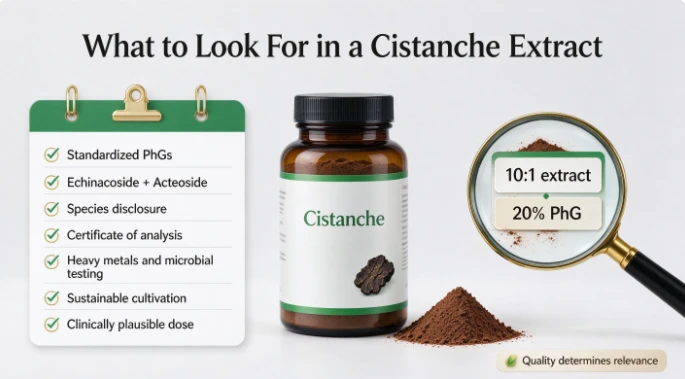
1. Standardization on the right markers. Look for explicit percentages of echinacoside and acteoside (or total phenylethanoid glycosides). "Cistanche extract 10:1" tells you a ratio of raw material to finished powder and nothing about chemistry. A 10:1 extract could contain almost no echinacoside. A standardized 20% PhG extract with a stated echinacoside fraction is a completely different product.
2. Species disclosure. Cistanche deserticola and Cistanche tubulosa are both used, and C. tubulosa dominates cultivated supply. Either can be legitimate, but the label should say which. Vague "Cistanche" claims are a yellow flag.
3. A real certificate of analysis. You want third-party HPLC data on the two marker compounds, plus heavy metals, pesticide residues, and microbial limits. Desert-grown parasitic plants accumulate soil minerals readily, so contaminant testing is not optional.
4. Sourcing. Inner Mongolia, Xinjiang, Qinghai, and Ningxia are the genuine production regions. Sustainable cultivation matters here too: wild Cistanche deserticola is a protected species in China, and reputable supply is cultivated rather than collected from the desert.
5. Form matters. Powders, capsules, and liquid extracts all work in principle, but a fine, well-milled powder disperses better and may present more surface area to gut bacteria. If you use the raw dried stem as a decoction, you are essentially running the same aqueous extraction that the pharmacokinetic studies used - which is reassuring from a "this is how it was tested" standpoint.
6. Dose honesty. The animal studies used meaningful doses - for example, 200 mg/kg of purified echinacoside and acteoside in rats. Scaled by body surface area, that is not a trivial human equivalent. Products that provide 50 mg of a low-standardization powder are not in the same universe as those experiments. If bone support is your goal, you want a clinically plausible amount of standardized material, not a token sprinkle in a proprietary blend.
Cistanche in Context: The Rest of the Bone-Health Stack
No supplement replaces the fundamentals. If you take a Cistanche extract while ignoring these, you are optimizing the wrong variable.
Resistance training. Bone responds to mechanical load. Walking is good for you but does not load the skeleton enough to trigger remodeling in the hip and spine. Squats, deadlifts, carries, step-ups, and impact activities do. This is the single most powerful non-pharmacological bone stimulus available.
Protein. Bone is about half protein by volume. Adequate intake - commonly framed as 1.0–1.2 g per kilogram of body weight for older adults, and higher for those doing resistance training - supplies the raw material for the collagen matrix that mineral gets deposited into.
Vitamin D and K2 status. Vitamin D governs calcium absorption; vitamin K2 is involved in directing calcium into bone rather than soft tissue. Both are common deficiencies and both are cheap to test and correct.
Calcium from food first. Dairy, small fish with bones, tofu set with calcium salts, leafy greens. Supplement only what food does not cover.
Manage the inflammatory load. Chronic low-grade inflammation drives both oxidative stress and RANKL signaling. Sleep, body composition, and dietary pattern all feed into this.
Address the gut. Given that PhG metabolism depends on intestinal flora, a diverse, fiber-rich diet is not a nice-to-have - it is part of how this compound becomes active in the first place.
Used inside that framework, a standardized Cistanche extract is a plausible add-on, not a replacement. Used on its own against a background of poor sleep, low protein, and no loading, it will do very little.

Safety, Interactions, and Who Should Be Careful
Cistanche has a long history as a food and tonic in China, and it is generally regarded as well tolerated. The Shennong Bencao Jing placed it in the top tier precisely because long-term use was considered safe. Modern toxicology in animal models has not flagged major concerns at typical doses.
That said, "traditional and food-derived" is not synonymous with "no considerations." Points worth knowing:
Gastrointestinal effects. Cistanche is mildly laxative by tradition and by observation. People with loose stools or IBS-D may find it unpleasant. Start low.
Hormone-sensitive conditions. Because echinacoside and acteoside show phytoestrogenic activity in cell assays, anyone with a history of estrogen receptor–positive breast cancer, endometrial cancer, or other hormone-sensitive conditions should discuss it with their oncologist before using it. The activity is weak, but caution is appropriate.
Pregnancy and breastfeeding. Insufficient data. Avoid.
Medication interactions. No major documented interactions, but the theoretical overlap with other bone-active agents - bisphosphonates, denosumab, hormone therapy - means you should not stack it casually onto a prescription regimen without telling your physician.
Autoimmune and immunosuppressant contexts. Cistanche has immunomodulatory effects and influences T-lymphocyte signaling in bone. If you take immunosuppressants, get advice first.
Quality risk. The biggest real-world risk with any botanical is contamination and adulteration, not the herb itself. This is an argument for third-party-tested products, not an argument against the herb.
And the honest bottom line: this is not a treatment for osteoporosis. If you have a diagnosed condition, a fragility fracture, or a DEXA T-score in the osteoporotic range, you need medical management. Nothing in this article should be read as a substitute for that.
Frequently Asked Questions
Does Cistanche cure osteoporosis? No. No supplement does. What the preclinical literature supports is that its phenylethanoid glycosides act on several of the biological pathways that govern bone remodeling - osteoclast formation, osteoblast differentiation, oxidative stress, and mineral handling. That is support for bone health over time, not treatment of an established disease.
How long before I notice anything? Bone remodeling is slow. Meaningful changes in bone mineral density take months to years to detect, and you will not "feel" them. Anyone promising noticeable results in two weeks is describing something other than bone.
What dose should I take? There is no established human dose for bone support. Animal studies used substantial doses of purified compounds. A reasonable approach is to follow the label of a standardized product, start low to assess gastrointestinal tolerance, and treat dose-finding as something to discuss with a practitioner rather than guess.
Echinacoside or acteoside - which is better? They are not really competitors. Echinacoside is more abundant and more studied. Acteoside is the more absorbable-adjacent form and is what echinacoside converts into in the colon. A standardized extract containing both, plus the caffeic acid and hydroxytyrosol metabolites generated in the gut, is the realistic delivery system.
Does it matter if I take it with food? Plausibly, yes. Absorption of the parent glycosides is extremely low, and their activity depends heavily on gut metabolism. Taking it with a meal - particularly one containing fermentable fiber - is more consistent with the conditions under which the metabolic conversions were observed than taking it on an empty stomach.
Is "desert ginseng" actually ginseng? No. It is a marketing name. Cistanche is a parasitic desert herb in the broomrape family; ginseng is an unrelated woodland plant in Panax. They share a reputation for tonic effects, not a lineage.
Can I take it with my osteoporosis medication? Ask your physician. There is no documented dangerous interaction, but the pharmacological directions overlap, and combining bone-active agents without supervision is not something to do on your own.
Why does the research talk so much about gut bacteria? Because that is where the chemistry happens. Oral bioavailability of intact echinacoside is under 1%. The compounds are transformed in the colon into smaller, absorbable, still-active metabolites. Your microbiome is effectively a co-therapist.

The Takeaway
Cistanche is one of the more interesting botanicals in the bone-health space, and the reason is specificity. This is not a case of "ancient herb, vague benefits." There is a defined molecular family - the phenylethanoid glycosides - with two named quality markers, a documented metabolic fate in the human gut, and a set of mechanistically detailed interactions with the signaling pathways that control how bone is built and torn down.
The honest summary:
The chemistry is real. Echinacoside and acteoside are standardized, measurable, and pharmacologically active in laboratory systems.
The metabolism is the mechanism. Poor oral bioavailability is not a design flaw; it is why the metabolites - caffeic acid, hydroxytyrosol, acteoside - matter so much.
The pathways are plausible and multi-pronged. Seven distinct mechanisms, all pointing in the same two directions: less resorption, more formation.
The human evidence is not yet there. This is preclinical science, consistently reproduced in cells and animals, awaiting proper clinical trials.
Quality determines relevance. A standardized, contaminant-tested extract with a real certificate of analysis is a different product from an unlabeled 10:1 powder.
Bone is a slow tissue, and it rewards patience and consistency. Mechanical loading, adequate protein, vitamin D and K2 sufficiency, a functioning gut, and control of chronic inflammation do the heavy lifting. A well-standardized Cistanche extract, used within that framework, is a reasonable addition to the plan - one that acts on real biology rather than on a promise.
Disclaimer
This article is provided for educational and informational purposes only and is not medical advice. It summarizes preclinical research, including cell-culture and animal studies, and does not establish safety or efficacy in humans. Cistanche supplements are not intended to diagnose, treat, cure, or prevent any disease, including osteoporosis. If you have a diagnosed bone condition, take prescription medication, are pregnant or breastfeeding, or have a hormone-sensitive condition, consult a qualified healthcare professional before use. Statements about dietary supplements have not been evaluated by regulatory authorities unless explicitly stated.