Cistanche-Based Herbal Therapy For Benign Prostatic Hyperplasia (BPH): Mechanisms And Efficacy
Jul 17, 2025
3. Results
3.1 Effects of Cistanche on Prostate Pathology in BPH Rats
As shown in Table 1, the prostate wet weight, volume, and index in the BPH model group were significantly higher than those in the sham group (P < 0.01), confirming successful model establishment. Compared to the model group, both low- and high-dose Cistanche groups and the finasteride group showed significant reductions in these parameters (P < 0.05, P < 0.01), indicating that Cistanche intervention alleviates prostate pathology in BPH rats. Histopathological analysis through hematoxylin-eosin (HE) staining (Figure 1) revealed that the sham group exhibited normal glandular architecture, with smooth lumens and regular epithelial arrangement. By contrast, the model group showed pronounced glandular hypertrophy, thickening, rough lumens with extensive papillary projections, and increased secretions. Intervention with Cistanche, particularly at higher doses, restored glandular morphology closer to the sham group's levels.
| Table 1. Effects of Cistanche on Prostate Wet Weight, Prostate Volume, and Prostate Index in BPH Rats (x̄ ± s, n = 6) | ||||
|---|---|---|---|---|
| Group | Dose (g·kg⁻¹) | Prostate Wet Weight (g) | Prostate Volume (cm³) | Prostate Index (%) |
| Sham Group | - | 1.212 ± 0.272 | 0.221 ± 0.056 | 0.220 ± 0.065 |
| Model Group | - | 2.404 ± 0.384** | 0.417 ± 0.094** | 0.430 ± 0.075** |
| Finasteride Group | 0.45 × 10⁻³ | 1.451 ± 0.334## | 0.274 ± 0.091## | 0.259 ± 0.064## |
| Low-Dose Cistanche Group | 0.135 | 1.821 ± 0.288## | 0.356 ± 0.082## | 0.325 ± 0.063## |
| High-Dose Cistanche Group | 0.3375 | 1.452 ± 0.289## | 0.276 ± 0.065## | 0.261 ± 0.056## |
Notes:
P < 0.01 compared to the Sham Group.
P < 0.01 compared to the Model Group.

Fig.1 Effect of Gui Zhi Fu Ling Wan on the histomorphology of prostate in BPH rats (HE)

3.2 Effects of Cistanche on Serum Hormonal Levels in BPH Rats
Serum testosterone (T), dihydrotestosterone (DHT), estradiol (E2), and E2/T ratio were measured using ELISA. As presented in Table 2, the model group displayed elevated serum levels of T, DHT, and E2, alongside an increased E2/T ratio compared to the sham group (P < 0.01), suggesting hormonal imbalances in BPH rats. After treatment, the finasteride and both Cistanche groups showed reduced DHT and E2 levels, with a decrease in the E2/T ratio (P < 0.05, P < 0.01). Notably, the high-dose Cistanche group exhibited a more pronounced effect compared to the low-dose group, indicating dose-dependent efficacy.
| Table 2. Effects of Cistanche on T, DHT, E2, and E2/T Ratio in BPH Rats (x̄ ± s, n = 4) | |||||
|---|---|---|---|---|---|
| Group | Dose (g·kg⁻¹) | T (ng·mL⁻¹) | DHT (nmol·L⁻¹) | E2 (pg·mL⁻¹) | E2/T Ratio |
| Sham Group | - | 5.530 ± 0.405 | 3.408 ± 0.387 | 4.742 ± 0.288 | 0.861 ± 0.086 |
| Model Group | - | 8.935 ± 0.894** | 6.514 ± 0.807** | 6.984 ± 0.497** | 0.783 ± 0.097** |
| Finasteride Group | 0.45 × 10⁻³ | 6.114 ± 0.482## | 4.705 ± 0.543## | 5.187 ± 0.405## | 0.849 ± 0.078## |
| Low-Dose Cistanche Group | 0.135 | 7.362 ± 0.556## | 5.452 ± 0.501## | 5.775 ± 0.431## | 0.799 ± 0.083## |
| High-Dose Cistanche Group | 0.3375 | 5.706 ± 0.476## | 4.118 ± 0.420## | 4.944 ± 0.324## | 0.865 ± 0.072## |
Notes:
P < 0.01 compared to the Sham Group.

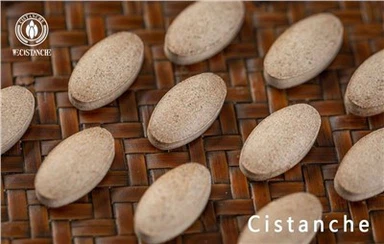
Cistanche Extract Pills For Prostate Health

Fig.2 Effect of Gui Zhi Fu Ling Wan on AR protein expression in prostate tissue of BPH rats(IHC)
3.3 Effects of Cistanche on AR Protein Expression in Prostate Tissues
Androgen receptor (AR) protein, which binds to DHT and regulates prostate cell proliferation, plays a critical role in BPH pathogenesis. Immunohistochemical analysis (Figure 2, Table 3) revealed significantly higher AR expression in the BPH model group compared to the sham group (P < 0.01). Cistanche intervention reduced AR protein expression in a dose-dependent manner (P < 0.05, P < 0.01), with the high-dose group showing superior results.

Supportive Service Of Wecistanche-The largest cistanche exporter in China:
Email:wallence.suen@wecistanche.com
Whatsapp/Tel:+86 15292862950

3.4 Effects of Cistanche on Serum Metabolic Profiles in BPH Rats
Given the high efficacy of the high-dose Cistanche group, serum metabolomic analysis was performed to explore its mechanism. Figure 3A shows that the sham, model, and high-dose Cistanche groups shared 2033 serum metabolites, while 29, 59, and 22 unique metabolites were identified in the sham, model, and high-dose Cistanche groups, respectively. Principal Component Analysis (PCA) and Partial Least Squares Discriminant Analysis (PLS-DA) (Figures 3B-D) demonstrated distinct metabolic profiles among groups, with the high-dose Cistanche group exhibiting closer similarity to the sham group.
Orthogonal Partial Least Squares Discriminant Analysis (OPLS-DA) further confirmed significant differences between groups and identified key differential metabolites (VIP > 1, P < 0.05). Compared to the sham group, 282 metabolites were upregulated and 66 were downregulated in the model group (Figure 5A). In contrast, the high-dose Cistanche group showed 8 upregulated and 50 downregulated metabolites compared to the model group (Figure 5B).
Metabolites such as dehydrosafynol, LysoPA(16:0/0:0), and hyoscyamine were significantly restored by Cistanche, suggesting their potential role in therapeutic effects. Conversely, metabolites like 2-hydroxycinnamaldehyde, phellodendrine, and 5(6)-epoxy prostaglandin E1 were downregulated in the intervention group, indicating their association with disease progression.

Fig.3 Serum metabolic profile analysis of three groups of rat

Fig.4 OPLS-DA analysis of serum metabolic profiles in three groups of rats
4. Discussion
Cistanche, a traditional herb renowned for its "tonifying kidney essence" and "promoting blood circulation," has been increasingly recognized for its efficacy in treating benign prostatic hyperplasia (BPH). This study combined molecular biology and serum metabolomics to elucidate the mechanisms by which Cistanche regulates hormonal imbalances and alleviates pathological changes in BPH.

4.1 Alleviation of Prostate Pathology
Cistanche effectively reduced prostate weight, volume, and index in BPH rats, demonstrating its ability to mitigate hyperplastic changes. Hormonal dysregulation, particularly elevated DHT and an increased E2/T ratio, is a hallmark of BPH. Cistanche intervention restored hormonal balance and reduced AR protein expression, highlighting its dual action on androgenic and estrogenic pathways.
4.2 Serum Metabolomic Insights
Metabolomic analysis revealed that Cistanche modulates key metabolic pathways, including autophagy, riboflavin metabolism, and retrograde endocannabinoid signaling:
Autophagy: A cellular process crucial for maintaining homeostasis, autophagy plays a dual role in BPH. While excessive autophagy may contribute to hyperplasia, controlled inhibition by Cistanche could restore balance.
Riboflavin metabolism: Riboflavin is essential for oxidative enzyme systems. Its dysregulation has been linked to enhanced cellular proliferation, a hallmark of BPH. Cistanche corrected riboflavin metabolic abnormalities, mitigating disease progression.
Endocannabinoid signaling: Elevated endocannabinoid metabolites in BPH tissues may promote inflammation and hyperplasia. Cistanche normalized these metabolites, suggesting an anti-inflammatory mechanism.
4.3 Unique Metabolic Markers
Key metabolites like dehydrosafynol and hyoscyamine were positively correlated with improved hormonal parameters (reduced DHT and E2 levels), suggesting their role in Cistanche's therapeutic effects. Conversely, metabolites associated with disease progression, such as 2-hydroxycinnamaldehyde, were suppressed by Cistanche.
Conclusion
Cistanche demonstrates significant efficacy in treating BPH by regulating hormonal imbalances, reducing prostate hyperplasia, and modulating metabolic pathways. Its multi-targeted mechanism, involving autophagy, riboflavin metabolism, and endocannabinoid signaling, underscores its potential as a natural, effective alternative to conventional therapies like finasteride.