Cistanche Deserticola Improves Sperm Quality Via Nourishing Testis And Epididymis
Mar 14, 2022
Contact: joanna.jia@wecistanche.com / WhatsApp: 008618081934791
Effects of Cistanche deserticola on the morphology and histochemistry of testis and epididymis in mice
Wang Dejun, Sheng Shuqing, Liang Hong
【Abstract】 Objective: To observe the effects of Cistanche deserticola on the morphology and histochemistry of testis and epididymis in mice. Methods: Thirty Kunming male mice were selected and randomly divided into medication group Ⅰ, group Ⅱ, and control group. Gave the stomach with Cistanche deserticola decoction (4g·kg -1·d-1 and 8g·kg -1·d-1), and the control group was gavage with normal saline. Three weeks later, the mice were sacrificed and the sperm count in the semen was determined. Morphological indicators such as viability, running speed, and the content of fructose in seminal plasma. Histochemical observation of testis and epididymis succinate dehydrogenase and non-specific lipase reaction. Results: The above indicators of the drug group were higher than those of the control group. Conclusion: It suggests that Cistanche deserticola does have the effect of strengthening the yang and nourishing the kidney.
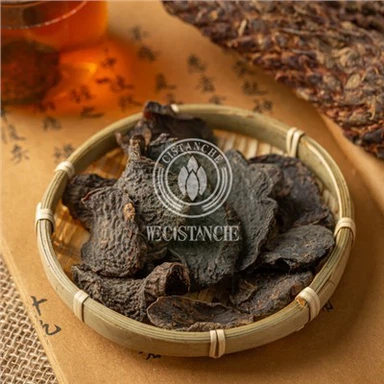
Cistanche deserticola is listed as a plant of the Dang family. It is a blindly valuable tonic, which has the effects of nourishing the kidney, strengthening the yang, strengthening the liver and kidney, and nourishing essence and qi. [1] Cistanche deserticola is the most frequently used drug in the prescriptions for nourishing the kidney and strengthening yang in the past. It is also one of the famous tonic drugs, second only to ginseng [ 2]. In order to further explore the mechanism of Cistanche deserticola, we observed the morphology and histochemistry of the testis and epididymis of mice in the medication group and the control group.

1 Material and methods
1.1 Materials
Medicine: Cistanche deserticola was produced in Alexa, Inner Mongolia, and was identified by the Inner Mongolia Institute for Drug Control, which complies with the regulations of the National Pharmacopoeia. Press Cistanche deserticola extract: water = 100g: 400ml, soak for 30min, heat, and boil, then fry for 30min with a warm fire, pour out the medicinal solution, and re-fry according to the ratio of 100g:200ml. Concentrate the two decoctions to the equivalent of 1g crude drug per milliliter for use.
Animals: Kunming mice, 30 males, weighing 25g -30g. Provided by the Animal Center of Yangzhou University School of Medicine.

Cistanche deserticola can improve sperm quality by nourishing testis and epididymis
1.2 Method
The experimental animals were randomly divided into groups Ⅰ and Ⅱ, with 10 animals in each group. They were given Cistanche deserticola decoction by gavage, and the daily dosage was 4g/kg and 8g/kg, respectively. The control group (10 rats) were given the same volume of normal saline by gavage. It is administered once a day for 3 consecutive weeks. 24 hours after the last administration, the animals were sacrificed.
1.2.1 Observation under microscope Take mouse epididymis [3], place it in 10ml of 37 ℃ normal salines, properly cut into pieces, warm bath for 10 minutes, obtain sperm suspension, and record the sperm density as seen under the microscope according to the white blood cell counting method ( D), sperm viability (A), sperm deformity rate (T) and sperm running speed (V).
1.2.2 Determination of fructose content: take mouse semen using resorcinol color method [4], spectrophotometer at 50 nm wavelength colorimetric, use standard fructose to draw a standard curve after the same treatment, determine the fructose content in semen.
1.2.3 Observation of tissue section: Take mouse testis and epididymis, fix with 4 formalin, embedded in paraffin, section, HE stain, observe histological status under a light microscope.
1.2.4 Histochemical observation: Take the mouse testis and epididymis, fix it in 4 formalin, freeze section, observe the changes of succinate dehydrogenase SDH and non-specific lipase NSE [5].

2 Results
2.1 The effect of Cistanche deserticola on sperm density, viability, running speed, and deformity rate in semen
Table 1 The effect of Cistanche deserticola on sperm D, A, T, V (x ± SD N = 10)

2.2 The effect of Cistanche deserticola on the content of fructose in mouse semen
Table 2 Changes of fructose content in mouse semen (mg/ 100ml x ±SD)

The content of fructose in the medication group was significantly higher than that in the control group, P <0.05
2.3 Histomorphological observation
Control group: The testicular envelope is smooth and complete, and the seminiferous tubules can be seen in the transverse section of the seminiferous tubules. 4 to 5 layers of spermatogonia and spermatocytes, sperm cells, and sperm at different developmental stages are arranged in an orderly manner, forming a variety of morphology of seminiferous epithelium images. Sertoli cells can be seen and their morphology is normal. There are few cells in the interstitium of the testis, and a few interstitial cells are in a fibroblast-like state, with more vacuoles in the cytoplasm, light staining, and accumulation of lipid droplets and pigment. The thickness of the basement membrane around the seminiferous tubules is about 6-8um
Medication group: The seminiferous tubules are intact, with a thickness of about 10 ~ 14um, and there are smooth muscle-like cells in between. The appearance of seminiferous tubules is relatively regular, with all levels of spermatogenic cells in an orderly arrangement, about 6 to 8 layers. Spermatogonia are located at the base, the chromatin is fine-grained, and the staining is deep. There are 1-2 lightly stained areas in the nucleus with obvious nucleoli. The number of primary spermatocytes has increased, and their size is about 17um in diameter. The sperm looks like a tadpole, with its head facing the basement membrane and deep staining. The testicular stromal cells are distributed in clusters, the number increases, and the blood vessels are abundant
2.4 The effect of Cistanche deserticola on succinate dehydrogenase (SDH) and non-specific lipase (NSE) in mouse testis and epididymis
2.4.1 Succinate dehydrogenase (SDH): There are SDH reactions in the cytoplasm of spermatogenic cells at all levels, among which the spermatogonia are stronger, and the mesenchymal cells have a strong reaction (Table 3). SDH-positive particles are scattered in epididymal tube epithelial cells, with more supranuclear areas. The SDH response of the medication group was stronger than that of the control group.
2.4.2 Non-specific lipase (NSE): testis and epididymis have positive reaction particles, especially testicular stromal cells, and supporting cells are strongly positive. The number of positive particles on the basal surface of epididymal duct epithelial cells in the medication group increased (see Table 3).
Table 3 Comparison of the reaction intensity of Cistanche deserticola to SDH and NSE of mouse testis and epididymis

3 Discussion
In this experiment, the decoction of Cistanche deserticola was used to gavage male mice at 4g/kg and 8g/kg for 2 to 3 weeks. The sperm count and viability of the mice increased significantly, the sperm running speed increased, and the sperm deformity rate was The drop. According to histomorphological observation, the spermatogenic function of the testis in the medication group was enhanced, the microenvironment of the epididymal tube was improved, and the fructose content increased. Histochemical studies have shown that SDH and NSE are strongly positive.
Spermatogenesis is a complex multi-phase process, including three stages: mitosis of spermatogonia, maturation, and division of spermatocytes, and metamorphosis of sperm cells. Each stage has its own special type of metabolism. The division and spermatogenesis of spermatogenic cells at all levels in the seminiferous tubules require adequate nutrients and the regulation of endocrine hormones. The traditional medicine of the motherland believes that Cistanche deserticola has a good effect of nourishing the kidney and strengthening yang, and can show androgen and gonadotropin-like effects to regulate the function of the endocrine gland axis [6]. Androgens are essential hormones in the process of spermatogenesis. The epididymis is the microenvironment for the further maturation, development, and differentiation of sperm. In this process, sperm relies on the synergistic effect of epididymal epithelium. The secretion, absorption, and material transport activities of epithelial cells are mainly used to regulate the development and differentiation of sperm in the lumen, as well as storage and storage. The resting microenvironment. The content of fructose in seminal plasma is an important component reflecting epididymal function, and the content of fructose in the medication group was significantly higher than that in the control group. SDH is an enzyme of the succinate oxidase system, which is arranged in chains in the mitochondria. SDH is the first enzyme in this system. It exists in all cells of aerobic respiration and is firmly bound to the mitochondrial membrane. It is the most important dehydrogenase. The enzymes are commonly used in histochemical reactions to reflect the condition of the tricarboxylic acid cycle and become the marker enzymes. NSE activity is related to cholesterol hydrolysis and steroid synthesis and is commonly used to measure the function of testicular stromal cells [7]. The number of drugs with strong positive reactions of SDH and NSE in the testis and epididymis of the medication group was significantly higher than that in the control group, which proved that Cistanche deserticola can indeed promote the spermatogenesis of the testis and improve the microenvironment of the epididymis. It provides a reliable morphological basis for the mechanism of Cistanche deserticola nourishing kidney and aphrodisiac effects.
cistanche deserticola improves sperm quality
References
1. Li Shizhen. Compendium of Materia Medica. Beijing: People's Medical Publishing House, 1977: 727~728.
2. Huang Baomin, Li Xinwu. Research and analysis of ancient prescriptions for anti-aging and longevity. Journal of Hunan University of Traditional Chinese Medicine, 1987; 2( 7) :1~ 2.
3. Edited by Li Yikui. Experimental Methodology of Traditional Chinese Medicine Pharmacology. Shanghai: Shanghai Science and Technology Press, 509~511.
4. Luo Jianhua, editor in chief. Infertility laboratory diagnosis technology. Xuelin Publishing House, 1994:44~46.
5. Chen Xiaomei. Histochemistry Handbook. Beijing: People's Medical Publishing House, 1982: 130,224.
6. He Wei, Shu Xiaofen, Zong Guizhen. Study on the effect of Cistanche deserticola on nourishing kidney and strengthening yang before and after processing. Chinese Journal of Chinese Materia Medica, 1996; 21(9): 534~539.
7. Wang Yifei, Wu Jingmei, Qiu Yixuan. Histochemical indicators for measuring the function of interstitial cells. Journal of Cell Biology, 1980; 2(4): 27-30.