Cistanche Deserticola, The Password For Nourishing The Kidneys in The Desert, How Much Do You Know?
Sep 23, 2025
The mysterious veil of Cistanche deserticola

Desert ginseng (Cistanche deserticola florescence
In the vast and boundless desert filled with yellow sand, there grows an extremely mysterious plant - Cistanche deserticola. It parasitizes the roots of the desert plant Salix matsudana and does not have strict requirements for soil and water, but has unique preferences for its living environment. The climate here is extremely arid, with exceptionally strong sunshine and an annual precipitation of less than 250 millimeters. The temperature changes are as intense as riding a roller coaster, with frequent sandstorms and poor soil development, mostly consisting of medium to fine sand. The soil layer is shallow and rough in texture, neutral or slightly alkaline, with high salt content but extremely lacking in organic matter. However, Cistanche deserticola grows tenaciously in such harsh environments, as if it were a mysterious gift specially bestowed by nature.
The plant of Cistanche deserticola is about 40-160 centimeters tall, with thick fleshy stems that either stand upright or have 2-3 branches from the base. The lower part is wide and thick, with a maximum width of 15 centimeters, gradually becoming thinner upwards. Most of its leaves are arescale-like, carefully arranged scales, pale yellow white in color, without petioles. The lower leaves are tightly clustered, forming a wide oval or triangular oval shape, while the upper leaves are relatively sparse, forming a linear lanceolate shape. Every May to June, Cistanche deserticola will produce spike-shaped inflorescences with unique bracts and bract shapes. The sepals are oval-shaped, and the corollas are cylindrical and bell-shaped, blooming with yellow, white, or light purple flowers, like fairies in the desert, adding a touch of brilliant color to the barren desert. After drying, the flowers turn brown, and there are two vertical bright yellow protrusions inside the tube, adding a touch of mystery.
Cistanche deserticola, also known as Dayun, goblin, and golden bamboo shoots, has the reputation of "desert ginseng" and is extremely precious. In history, it was a precious item presented to the imperial court by various countries in the Western Regions. Its medicinal value is extremely high, and it has been highly valued by medical practitioners throughout history. It is frequently used in kidney tonifying and yang-strengthening prescriptions. Traditional Chinese medicine believes that Cistanche deserticola has a sweet and salty taste, a warm nature, and is beneficial to the kidneys and large intestine meridians. It has the effects of tonifying the kidneys, promoting yang, moistening the intestines, and promoting bowel movements. It can be used to treat conditions such as kidney yang deficiency, insufficient essence and blood, impotence and premature ejaculation, uterine coldness and infertility, and lower back and knee pain. It is like a gentle nursemaid, nourishing yang without dryness and heat, nourishing yin without greasiness and stagnation. It can warm and promote kidney yang to supplement kidney deficiency, and moisten the intestines and abdomen to treat constipation. So, what magical ingredients does Cistanche deserticola contain that give it such powerful kidney tonifying effects? Next, let's delve deeper together.
Exploring the main components of Cistanche deserticola

Main Chemical Constituents of Cistanche deserticola
With the rapid development of modern science and technology, scientists have used advanced instruments and analytical methods to conduct in-depth analysis of the components of Cistanche deserticola. Research has found that Cistanche deserticola is like a treasure trove of ingredients, rich in various beneficial components for human health, including phenylpropanoids, flavonoids, terpenes, polysaccharides, alkaloids, amino acids, trace elements, etc. These ingredients work together to endow Cistanche deserticola with powerful kidney tonifying effects.
Among the numerous components of Cistanche deserticola, phenylpropanoid compounds are undoubtedly one of the most critical kidney tonifying ingredients. Phenylpropanoid compounds include echinacoside, verbascoside, etc. They have various biological activities and can significantly regulate the endocrine and nervous system functions of the human body, thereby achieving the goal of kidney tonifying. Pinecone chrysanthemum glycoside can enhance the activity of superoxide dismutase (SOD), reduce the content of malondialdehyde (MDA), thereby alleviating oxidative stress damage to the kidneys and protecting them. At the same time, it can promote the proliferation and differentiation of osteoblasts, inhibit the activity of osteoclasts, and have a certain preventive and therapeutic effect on osteoporosis caused by kidney deficiency. Mariascoside can regulate the function of the hypothalamic pituitary gonadal axis, promote the secretion of sex hormones, enhance reproductive function, and effectively improve symptoms such as male impotence, premature ejaculation, and female uterine cold infertility.
The polysaccharide components in Cistanche deserticola cannot be ignored. It has various effects such as immune regulation, antioxidant, anti-aging, etc., and has a positive impact on kidney health. Cistanche polysaccharides can activate macrophages, enhance their phagocytic ability, improve the body's immunity, help the body resist various diseases, and reduce the burden on the kidneys. Moreover, polysaccharides from Cistanche deserticola can clear excessive free radicals in the body, reduce oxidative damage, delay the aging of kidney cells, and maintain normal kidney function. In addition, it can regulate blood sugar and lipid levels, improve blood circulation, provide sufficient blood supply to the kidneys, and ensure normal metabolism of the kidneys.

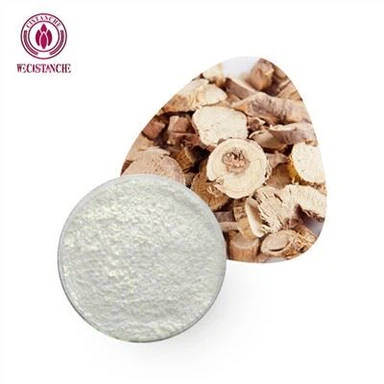
Cistanche extract powder protects kidney function.
In addition, the various amino acids contained in Cistanche deserticola are also an important material basis for nourishing the kidneys. These amino acids are the basic units that make up proteins and are crucial for maintaining normal physiological functions in the human body. They participate in the metabolic process in the body, providing necessary nutritional support for the kidneys and helping to enhance their function. For example, arginine is a precursor substance for the synthesis of nitric oxide, which can dilate blood vessels, increase renal blood flow, improve renal microcirculation, and play an important role in the normal physiological function of the kidneys. Moreover, some amino acids also have antioxidant properties, which can protect kidney cells from oxidative damage and maintain kidney health.
Decrypt key kidney tonifying ingredients
Phenylpropanoid compounds
Phenylpropanoid compounds play a crucial role in the kidney tonifying effects of Cistanche deserticola, with echinacoside and verbascoside being the most prominent representatives.

Echinoside, the main chemical component of Cistanche deserticola
Pinecone chrysanthemum glycoside, as an important phenylpropanoid glycoside compound, has a unique chemical structure with multiple phenolic hydroxyl and sugar groups, which endows it with strong biological activity. Research has shown that pineal glycoside can significantly enhance the activity of superoxide dismutase (SOD). SOD is an important antioxidant enzyme that can catalyze the dismutation reaction of superoxide anion radicals, converting them into oxygen and hydrogen peroxide, effectively clearing excess free radicals in the body and reducing oxidative stress damage to cells. In the kidneys, oxidative stress is one of the important factors leading to the occurrence and development of kidney diseases. Excessive free radicals can attack the cell membrane, proteins, DNA, and other biomolecules of kidney cells, causing damage to cell function and even death. Pinecone chrysanthemum glycoside enhances the activity of SOD, improves the antioxidant capacity of kidney cells, reduces the damage of free radicals to the kidneys, and thus plays a protective role in the kidneys.
Mariascoside also has important kidney tonifying effects, as it can precisely regulate the function of the hypothalamic pituitary gonadal axis. The hypothalamic pituitary gonadal axis is an important axis in the human endocrine system that regulates reproductive function. The hypothalamus secretes gonadotropin-releasing hormone (GnRH), stimulates the pituitary to secrete gonadotropins (FSH and LH), and then regulates the gonad (testis or ovary) to secrete sex hormones (testosterone, estrogen, etc.). Verbascoside can promote the secretion of GnRH in the hypothalamus, enhance the sensitivity of the pituitary gland to GnRH, thereby increasing the secretion of FSH and LH, and further promoting the secretion of sex hormones by the gonads. Sex hormones are crucial for maintaining normal reproductive function. Testosterone in the male body can promote sperm production and development, enhance libido, and sexual function. Function: The estrogen and progesterone in women's bodies are involved in regulating the menstrual cycle, maintaining pregnancy, and other physiological processes. Therefore, verbascoside can effectively improve reproductive system problems caused by kidney deficiency, such as male impotence and premature ejaculation, and female uterine cold infertility, by regulating the function of the hypothalamic pituitary gonadal axis and promoting the secretion of sex hormones.

Effects of cistanche-improve kidney function
Click here to view Cistanche for Kidney disease products
【Ask for more】 Email: Email:cindy.xue@wecistanche.com / WhatsApp: 0086 18599088692 / Wechat: 18599088692
Flavonoids compounds
Flavonoids are a class of natural products with a wide range of biological activities, and there are also various flavonoids in Cistanche deserticola. Their protective and regulatory effects on the kidneys cannot be ignored.
Flavonoids have strong antioxidant properties and contain multiple phenolic hydroxyl groups in their molecular structure. These phenolic hydroxyl groups can provide hydrogen atoms or electrons, which react with oxygen free radicals (such as superoxide anions, hydroxyl radicals) and other reactive oxygen species (ROS) in the body, reducing them to stable molecules, thereby clearing free radicals and reducing oxidative stress damage to the kidneys. Research has found that flavonoids can significantly reduce the content of malondialdehyde (MDA) in kidney tissue. MDA is a product of lipid peroxidation, and the increase in its content reflects an increase in oxidative stress levels in the body. At the same time, flavonoids can also increase the activity of antioxidant enzymes (such as SOD, glutathione peroxidase, etc.) in kidney tissue, further enhancing the antioxidant capacity of the kidneys.
Inflammatory response plays an important role in the occurrence and development of kidney diseases, and flavonoids have significant anti-inflammatory effects. They can alleviate renal inflammation by inhibiting the activation of inflammatory signaling pathways and reducing the release of inflammatory mediators such as interleukin-6 and tumor necrosis factor alpha. For example, in some kidney inflammation models, intervention with flavonoids resulted in a significant decrease in inflammation-related indicators and a significant improvement in pathological damage to kidney tissue. This indicates that flavonoids can protect the kidneys from inflammatory damage and maintain their normal structure and function by inhibiting the inflammatory response.
Polysaccharides
The polysaccharide components in Cistanche deserticola are one of the important material foundations for its kidney tonifying effects. It mainly indirectly assists in kidney tonifying and improves the overall state of the body by regulating immune function.
Polysaccharides can activate macrophages, which are important cells in the immune system with strong phagocytic ability to recognize and engulf invading pathogens, senescent cells, and tumor cells. Cistanche polysaccharides can enhance the activity of macrophages, increase their phagocytic ability, and effectively eliminate harmful substances in the body, thereby improving the body's immunity. When the body's immune system is enhanced, it can better resist the invasion of various diseases and reduce the burden on the kidneys, because the kidneys need to consume a large amount of energy and substances in the process of clearing metabolic waste and toxins in the body. If the body's immune system is low, it is easily affected by factors such as infections, which can increase the burden on the kidneys and affect their function.
In addition, polysaccharides from Cistanche deserticola can regulate the function of immune cells, promote the proliferation and differentiation of T lymphocytes and B lymphocytes, and enhance the cellular and humoral immune functions of the body. T lymphocytes play a crucial role in cellular immunity, capable of recognizing and killing cells infected by pathogens and tumor cells; B lymphocytes mainly participate in humoral immunity and can produce antibodies to neutralize pathogens and toxins. Cistanche polysaccharides regulate the functions of T and B lymphocytes, making the body's immune response more balanced and effective, and helping to maintain kidney health.
Scientific basis for tonifying the kidney with Cistanche deserticola
Modern scientific research has provided solid evidence for the kidney-tonifying effects of Cistanche deserticola. A study by the Chinese Academy of Traditional Chinese Medicine showed that over 60% of people who took extracts of Cistanche deserticola for 12 consecutive weeks showed significant improvements in fatigue, reduced soreness and weakness in the waist and knees, and improved morning spirits. In animal experiments, after feeding rats with extracts of Carnivorous Cistanche deserticola, it was found that their testosterone levels were significantly increased, the sexual fatigue model was significantly improved, and the function of the hypothalamic pituitary gonadal axis was effectively regulated, demonstrating a clear "tonifying yang" effect. This series of studies fully confirms the positive role of Cistanche deserticola in improving kidney function and enhancing reproductive system health.

Chinese herb cistanche-cistanche tea
In fact, the kidney tonifying effect of Cistanche deserticola has not only been discovered in modern times, but has long been recorded in ancient Chinese medical texts. The "Shennong Bencao Jing" lists Cistanche deserticola as a top-grade herb, stating that it "mainly nourishes the five labor and seven injuries, replenishes the middle, removes cold, heat, and pain in the stem, nourishes the five organs, strengthens yin, benefits essence and qi, and treats women's ailments." It clearly points out that Cistanche deserticola has the effects of tonifying the kidneys, benefiting essence and qi, and can be used to treat various diseases caused by kidney deficiency. The Compendium of Materia Medica also records: "Cistanche deserticola has a sweet and mild taste, is non-toxic. It replenishes the five stresses and seven injuries, strengthens yin and benefits essence, has many children, and can treat women's ailments. It can eliminate bladder evil qi, lower back pain, and stop dysentery. Long-term consumption can lighten the body." This further elaborates on the kidney tonifying effect of Cistanche deserticola and its nourishing effect on the body. These ancient books, after thousands of years of practical testing, provide a valuable historical basis for the kidney tonifying effect of Cistanche deserticola.
Correct use of Cistanche deserticola
After understanding the powerful kidney tonifying ingredients of Cistanche deserticola, we will now introduce several common ways to consume Cistanche deserticola.
Soaking Cistanche deserticola in water is the simplest way to consume it. Cut the Cistanche deserticola into thin slices, take 3-5 grams, brew with boiling water, and let it steep for 10-15 minutes before drinking. It can be brewed repeatedly until the taste becomes lighter. Soaking Cistanche deserticola in water is not only convenient and fast, but also can fully release its effective ingredients, playing a role in tonifying the kidneys, promoting yang, moistening the intestines, and promoting bowel movements.
Cooking soup is also a good choice. Using Cistanche deserticola together with ingredients such as pork ribs and chicken can not only enhance the delicious taste of the soup, but also integrate the nutritional components of Cistanche deserticola into the soup, which has a good nourishing effect. When cooking Cistanche and Pork Rib Soup, first blanch the pork ribs to remove their fishy smell. Then, put the ingredients such as Cistanche, pork ribs, ginger slices, and scallions into a clay pot, add an appropriate amount of water, bring to a boil over high heat, then simmer over low heat for 1-2 hours. Finally, add an appropriate amount of salt for seasoning. This soup has the effects of nourishing the kidneys and blood, nourishing yin and moistening dryness, and is suitable for people with kidney deficiency, weakness, and soreness in the waist and knees.
Cistanche can also be used to make wine. After washing and drying, it can be soaked in Baijiu, sealed, and stored for 1-2 weeks before drinking. Cistanche deserticola wine has the effects of tonifying the kidney and yang, dispelling wind and dampness, and has a certain relieving effect on symptoms such as kidney yang deficiency, impotence, premature ejaculation, and cold pain in the waist and knees. However, it should be noted that a high level of Baijiu should be selected when brewing, and the amount of alcohol should be moderate to avoid excessive drinking, causing harm to the body.
However, although Cistanche deserticola is good, it is not suitable for everyone and cannot be consumed casually. Cistanche deserticola is warm in nature, and people with yin deficiency, excessive fire, and constipation should use it with caution to avoid worsening symptoms. In addition, pregnant women, breastfeeding women, and special populations such as children must consult a doctor before consuming Cistanche deserticola. Moreover, the dosage of Cistanche deserticola should be strictly controlled, and it is generally recommended to consume no more than 10 grams per day. If you are taking other medications, be sure to consult a doctor before consuming Cistanche deserticola to avoid drug interactions.