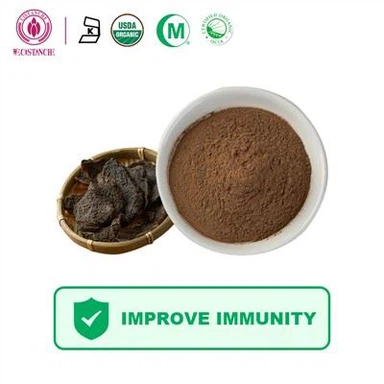
Cistanche Deserticola, The Way To Harvest Desert Ginseng
Nov 07, 2024
1, Characteristics and Value of Cistanche deserticola
Cistanche deserticola, known as the "desert ginseng", is a highly valuable traditional Chinese medicinal herb. It has medicinal values such as tonifying kidney and yang, nourishing essence and blood, moistening intestines and promoting bowel movements. It has significant therapeutic effects on diseases such as impotence, premature ejaculation, infertility, lower back and knee pain, and weakness in both lower limbs caused by kidney yang deficiency and insufficient essence and blood. At the same time, it can effectively treat Yang deficiency and constipation.

Desert living cistanche-improve kidney function
Cistanche deserticola is rich in various ethanolic glycosides, lignans, and more than ten types of amino acids, among which phenylethanolic total glycosides are the main active ingredients, which have the effects of improving sexual function, antioxidation, and anti-aging. It is warm in nature, nourishing the kidneys without harming yin, moisturizing the intestines and promoting bowel movements without harming the body. It is a safe and effective traditional Chinese medicine. Its health benefits are obvious, it can repair and protect nerve cells, enhance memory, and have significant effects on preventing and treating senile dementia and anti-aging.
In terms of ecological environment, Cistanche deserticola is a parasitic plant that parasitizes the roots of desert trees, with low soil requirements, and mostly grows on sandy or fixed sand dunes. Its host is usually drought-tolerant plants such as shuttle. Haloxylon ammodendron is drought-resistant and salt alkali tolerant, suitable for large-scale planting in desertified and desertified land, and can play a good role in windbreak, sand fixation, and soil and water conservation. Cistanche deserticola parasitizes at the roots of Haloxylon ammodendron and together forms a part of the desert ecosystem, which is of great significance for improving the desert ecological environment.

Harvest of Cistanche deserticola
2, Harvesting time and characteristics
(1) Seasonal differences
There are significant differences in the quality of Cistanche deserticola harvested in different seasons. The drinking effect of Cistanche deserticola harvested in autumn and winter is better than that harvested in spring. The Cistanche deserticola harvested in autumn and winter has many characteristics, firstly, it is oily, which makes it more moist in appearance. Secondly, it is soft and resilient, and its unique texture can be felt when touched. In terms of taste, the Cistanche deserticola harvested in autumn and winter has a slightly sweet taste. However, its price is relatively high, with high-quality autumn and winter Cistanche deserticola costing no less than 300 yuan per kilogram. According to data, based on industry experience and feedback from netizens, high-quality Cistanche deserticola is indeed harvested in autumn and winter. For example, the Cistanche deserticola harvested in autumn is also soft after drying, while the Cistanche deserticola harvested in spring is harder after drying. The nutritional value of Cistanche deserticola harvested in autumn is higher than that harvested in spring.
(2) Specific time
Cistanche deserticola has the best quality as a medicinal herb when freshly excavated from April to early May. Spring excavation is more common, and in some areas such as Haibowan District in Wuhai, Inner Mongolia, excavation is carried out from April to June every year. At this time of year, when Cistanche deserticola is unearthed, it should be promptly excavated, and the integrity of Cistanche deserticola should be ensured as much as possible during excavation. To reduce damage to host plants, during excavation, pits should be dug from the outer periphery of the Cistanche deserticola connected to the host to the bottom of the Cistanche deserticola. Without opening the connection point between the Cistanche deserticola and the host, the upper part should be cut 5-8cm upwards from the connection point and then backfilled with soil and lightly compacted. This can ensure that the Cistanche deserticola is inoculated once and has a stable production period of 5-7 years. In Dengkou County, Bayannur City, Inner Mongolia, the harvesting of Cistanche deserticola occurs from late March to late April each spring. Generally, tall and robust ones are selected for harvesting first, while young and weak ones are kept until the frozen soil in autumn or harvested the following year.

Local villagers grow Cistanche deserticola
3, Harvesting methods and precautions
(1) Choose the timing
In the harvesting process of Cistanche deserticola, selecting tall and sturdy ones to harvest first is a more reasonable way. This is because tall and robust Cistanche usually grows for a longer time, accumulates more nutrients, and has relatively higher medicinal value. Retaining young and weak Cistanche deserticola until the frozen soil in autumn or harvesting the following year can contribute to the sustainable development of the Cistanche deserticola population. This can allow young Cistanche deserticola to have more time to grow and accumulate nutrients, providing higher-quality resources for future harvesting.
(2) Operation points
The harvesting of Cistanche deserticola requires certain skills and patience. First, use a shovel to dig vertically downward 20 cm away from the unearthed tidbits. Generally, after digging 40-60 cm deep, the surrounding sand can be gradually removed by hand, and the fleshy stems of Cistanche deserticola can be seen. Next, use a sharp bamboo stick to gently push away the sand around the fleshy stem of Cistanche deserticola until you find the bud tray. During this process, special attention should be paid to avoiding contact between metals and parasitic plants, as metals can cause the entire parasitic plant to rot. After finding the bud tray, hold onto the fleshy stem with one hand and quickly cut it with bamboo slices with the other hand. After excavation, the pit should be quickly backfilled, covered with soil, and compacted, while protecting the adventitious buds on the bud tray. These adventitious buds can grow into Cistanche the following year, and if the parasitic roots and bud discs are well protected, they can grow for at least 5-7 years.
(3) Subsequent processing
In Inner Mongolia, the harvested Cistanche deserticola needs to be further processed. Usually, the inflorescence or the head of the Cistanche deserticola is removed and then dried on a clean beach or roof. Flip it 2-3 times a day to prevent mold growth. After a period of drying, Cistanche deserticola will change from its original color to a flesh brown color, which is called Sweet Big Cloud. This processing method can prolong the storage time of Cistanche deserticola while also ensuring its medicinal value. During the drying process, it is important to choose a clean area to avoid contamination of Cistanche deserticola. At the same time, it is necessary to closely monitor weather changes to prevent rainwater from wetting Cistanche deserticola and affecting its quality.

Cistanche deserticola - a bumper harvest for farmers
4, Processing Technology and Seed Retention
(1) Processing flow
Fresh Cistanche deserticola has a brittle texture, is easy to break, and contains a large amount of water and sugar. It is prone to oxidation and mold growth and requires softening and enzyme-killing treatment first. Push the cleaned Cistanche deserticola into the drying room, adjust the temperature to 70 ℃, and continue drying for eight hours. When the Cistanche deserticola turns from white to brown, slightly curved, and not broken, softening is complete.
Next, clean the Cistanche deserticola using a specialized washing machine. Place 10 kilograms at a time and turn on the switch to inject clean water for 3-15 minutes. Place the cleaned Cistanche deserticola in a stainless steel tray on a stainless steel rack.
When making the raw material of Cistanche deserticola, push the stainless steel cart filled with Cistanche deserticola into the drying room, turn on the power, set the temperature to 50 ℃, and continue drying for 10 hours. At this point, the water content of Cistanche deserticola is only 10%, greatly extending the storage time of the original medicine.
The sliced Cistanche deserticola requires beauty, neatness, no breakage, and uniform thickness, with a slice thickness of 2.5 millimeters and an error of less than 1 millimeter. The slicing work can be completed using a cutting machine.
For the processing of Cistanche deserticola tea, high-quality medicinal herbs, and tea are strictly selected, purified, crushed, stirred, granulated, and dried to make it. Raw materials such as Cistanche deserticola, Goji berries, Polygonatum sibiricum, Epimedium officinalis, and tea are purified according to the formula ratio and crushed into a fine powder of 80-120 mesh. The powder is then mixed with water in a blender to make a soft material, which is then shaken into particles of about 2 mm. The material is dried at a temperature of 50-60 ℃ to reduce its moisture content to 5-8%. The tea is then packaged in a paper bag in a tea packaging machine to produce Cistanche deserticola tea.

Cistanche deserticola slice
Click here to view Cistanche for Kidney disease products
【Ask for more】 Email:cindy.xue@wecistanche.com / Whats App: 0086 18599088692 / Wechat: 18599088692
(2) Seed retention requirements
Both Haloxylon ammodendron seeds and Cistanche deserticola seeds should be kept. When keeping seeds, it is advisable to choose large, plump, and pest-free seeds, dry them to remove impurities and store them for later use. Such seeds have higher germination rates and growth potential, providing a guarantee for the sustainable cultivation of Cistanche deserticola. Meanwhile, properly preserved seeds can also be sown at the appropriate time to ensure the yield and quality of Cistanche deserticola.