Network Pharmacology And Experimental Validation Reveal The Mechanistic Role Of Cistanche Phenylethanoid Glycosides in The Treatment Of NAFLD Via The TNF/PI3K/Akt Pathway
Oct 29, 2025
3. Results
3.1 Network Pharmacology
3.1.1 Active Compounds and Potential Targets
Based on prior research of the project team and information from databases and literature, ten representative compounds with pharmacological activity were selected [10–11]: verbascoside, isoverbascoside, echinacoside, 2′-acetyl-verbascoside, cistanoside A, cistanoside B, salidroside, isocrenatoside II, cistanche glycoside A, and cistanche glycoside F.
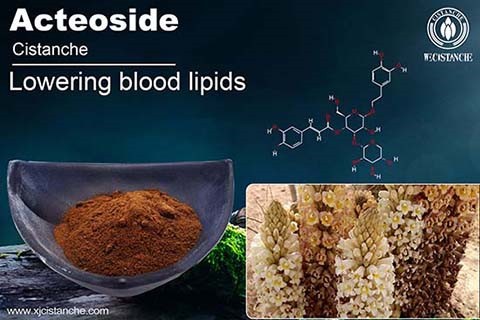
High Content Verbascoside(acteoside) Cistanche Extract for Blood Lipid Treatment
Cistanche extract specs list

Using SwissTargetPrediction, 44 targets were obtained; NetInfer predicted the top 20 targets, yielding 45 targets; SuperPred yielded 118 targets. After merging and removing duplicates, 195 unique targets were identified.
From the GSE89632 dataset, which included 39 NAFLD samples and 24 normal samples, 589 differentially expressed genes were screened. Combining data from GeneCards and DisGeNET, 2,315 NAFLD-related disease genes were obtained after deduplication (Figures 1A–1B). By intersecting compound-related targets with disease targets, 77 overlapping targets were identified as potential therapeutic targets of Cistanche phenylethanoid glycosides against NAFLD (Figure 1C).
These targets were imported into the STRING database with an interaction threshold >0.400. Isolated nodes were removed, and the network was visualized via Cytoscape, resulting in a PPI network with 75 nodes and 408 edges (Figure 1D). Using the "Analyze Network" function in Cytoscape, the top 10 targets based on degree value were identified as core targets: TNF, NFKB1, TLR4, HSP90AA1, ESR1, HIF1A, STAT1, APP, PRKACA, SMAD3.

3.1.2 GO, KEGG, and DO Enrichment Analyses
GO enrichment analysis revealed 93 terms for molecular function (MF), 38 for cellular component (CC), and 989 for biological process (BP). The top 10 entries in each category were visualized (Figure 2). The results indicated that Cistanche phenylethanoid glycosides may exert anti-NAFLD effects through pathways related to inflammation, cytokines, metabolism, and immune response.
DO enrichment identified 833 diseases associated with the targets, with the top 25 visualized (Figure 4), including metabolic, immune, cardiovascular, obesity-related, and hepatic diseases, all closely related to NAFLD.
3.1.3 "Compound–Target–Pathway" Network
Based on KEGG enrichment results, a "compound–target–pathway" network was constructed using Cytoscape 3.9.1. Green squares represent active compounds, blue circles represent targets, and orange V-shaped nodes represent pathways (Figure 5). This illustrates that Cistanche phenylethanoid glycosides exert anti-NAFLD effects through multiple compounds, targets, and pathways, with echinacoside and verbascoside being the most abundant and listed marker compounds in the 2020 edition of the Chinese Pharmacopoeia.
3.1.4 Molecular Docking
The top five core targets in the PPI network (TNF, NFKB1, TLR4, HSP90AA1, ESR1) were docked with the active compounds, and their minimum binding energies were calculated (Figure 6). All docking scores were less than –6 kcal/mol, indicating strong binding affinities. TNF displayed the strongest affinity. Some docking results were visualized using PyMOL (Figure 7).

3.2 Cell Experiments
3.2.1 Effects of FFA on Lipid Accumulation in HepG2 Cells
As shown in Figure 8, increasing FFA concentrations from 0.5 to 2 mmol/L led to an increase in red lipid droplets, which merged into large lipid droplets, indicating successful lipid loading.
3.2.2 Effects of FFA and Cistanche Phenylethanoid Glycosides on Cell Viability
As shown in Figure 9A, FFA concentrations of 1 mmol/L and below had no significant effect on cell viability (P > 0.05); thus, 1 mmol/L was chosen for modeling. As shown in Figure 9B, Cistanche phenylethanoid glycosides up to 200 μg/mL did not significantly affect viability (P > 0.05), but 400 μg/mL significantly inhibited viability (P < 0.01). Therefore, 25, 50, and 100 μg/mL were selected as low, medium, and high doses for treatment.

3.2.3 Effects on Lipid Accumulation
As shown in Figure 10, the model group exhibited significant red lipid droplet accumulation compared to the control group (P < 0.01), confirming successful modeling. Treatment with 50 and 100 μg/mL of Cistanche phenylethanoid glycosides significantly reduced lipid droplet formation (P < 0.01). In Figure 11, TG and TC levels were elevated in the model group (P < 0.01), while all treatment groups showed significantly reduced levels compared to the model group (P < 0.01).
3.2.4 Effects on Mitochondrial Damage
JC-1 dye accumulates in healthy mitochondria and emits red fluorescence; in damaged mitochondria, it remains in monomeric form and emits green fluorescence. As shown in Figure 12, red fluorescence dominated in the control group, while green fluorescence was prominent in the model group. Treatment groups showed reduced green fluorescence and increased red fluorescence, indicating improved mitochondrial membrane potential.
3.2.5 Effects on Intracellular ROS Levels
As shown in Figure 13, the model group displayed significantly increased fluorescence intensity (P < 0.01), indicating elevated ROS. Treatment with Cistanche phenylethanoid glycosides significantly reduced ROS levels at all concentrations (P < 0.01).
3.2.6 Effects on Apoptosis
Hoechst 33342 stains nuclei, with apoptotic nuclei showing bright blue, condensed or fragmented morphology. As seen in Figure 14, the control group had minimal bright fluorescence, whereas the model group showed abundant bright blue apoptotic nuclei. The treatment groups exhibited reduced fluorescence intensity, indicating decreased apoptosis.
3.2.7 Effects on TNF/PI3K/Akt Signaling Pathway and Bax Expression
As shown in Figure 15, compared to the control group, the model group showed significantly elevated expression of TNF-α, PI3K p85, Akt, and Bax proteins (P < 0.05, P < 0.01). Upon treatment:
All Cistanche phenylethanoid glycoside groups showed reduced TNF-α expression (P < 0.01),
The 50 μg/mL group showed reduced PI3K p85 expression (P < 0.01),
The 100 μg/mL group showed reduced Akt and Bax expression (P < 0.05).

4. Discussion
NAFLD is a complex liver disease associated with metabolic disorders, involving lipid metabolism imbalance, insulin resistance, and oxidative stress [12]. In recent years, traditional Chinese medicine (TCM) has shown significant promise in treating NAFLD.
Modern research has revealed that phenylethanoid glycosides from Cistanche can regulate lipid and glucose metabolism in the liver and inhibit oxidative stress, inflammation, and fibrosis [13–15]. The liver uses β-oxidation to metabolize fatty acids and CYP7A1 to convert cholesterol into bile acids for lipid homeostasis [16–18]. In high-fat environments, metabolic imbalance leads to lipid accumulation and NAFLD [19].
This study confirmed that FFA-induced HepG2 cells showed increased lipid droplets and elevated TC and TG levels. Treatment with Cistanche phenylethanoid glycosides significantly reduced lipid droplet formation and TC/TG levels, improving hepatic steatosis.
Mitochondrial dysfunction leads to reduced β-oxidation, excessive ROS production, and lipid peroxidation [20]. ROS further damages mitochondria, worsening steatosis [21]. Our results show that Cistanche phenylethanoid glycosides reduce ROS, improve mitochondrial membrane potential, and alleviate oxidative stress, thereby mitigating fat accumulation.
Network pharmacology indicated that the anti-NAFLD effects involve multiple metabolic and apoptosis-related pathways. Molecular docking showed strong binding affinities between active compounds and targets, especially TNF, suggesting its central role.
The TNF pathway is critical in cell signaling. TNF-α binds to TNFR1, activating death receptor pathways and inducing apoptosis [22]. It also activates the PI3K/Akt pathway through paracrine signaling [23–24]. Abnormal PI3K/Akt signaling is linked to lipid accumulation, inflammation, and fibrosis in NAFLD [25]. Our data show that Cistanche phenylethanoid glycosides inhibit apoptosis and reduce the expression of TNF-α, PI3K, Akt, and Bax, consistent with network predictions, confirming the importance of the TNF/PI3K/Akt pathway.
Conclusion
Cistanche phenylethanoid glycosides regulate NAFLD through multiple processes and pathways, including:
Reducing lipid accumulation,
Inhibiting oxidative stress,
Alleviating mitochondrial damage,
Suppressing apoptosis.
These effects may be closely linked to the TNF/PI3K/Akt signaling pathway. This study provides not only scientific support for the application of Cistanche phenylethanoid glycosides in NAFLD treatment but also a reference for the development and clinical research of new therapeutic drugs.