Cistanche Tubulosa: Desert Ginseng
Jan 21, 2025
Cistanche tubulosa (Cistanche tubulosa), also known as Nanjiang Dayun, Hongliu Dayun, Cistanche tubulosa, and Hongliu, is a parasitic plant belonging to the Orobanchaceae family. It is widely distributed in the desert and semi-desert areas of China, especially in Xinjiang, Inner Mongolia, Gansu and other places. It grows in the desert areas of the desert and often parasitizes on the roots of Populus euphratica, Haloxylon ammodendron, Lycium barbarum and other plants, growing by absorbing the nutrients of the host plants. Cistanche tubulosa is famous for its significant medicinal value and is a precious traditional Chinese medicine commonly used for tonifying the kidney and strengthening yang and anti-aging. It is listed as a national key second-class protected wild plant in China and is vulnerable (IUCN standard).

Scientific Classification
Kingdom: Plantae
Phylum: Tracheophyta
Subphylum: Angiospermae
Class: Magnoliopsida
Order: Lamiales
Family: Orobanchaceae
Tribe: Orobancheae
Genus: Cistanche
Species: Cistanche tubulosa
Cistanche tubulosa has a unique beauty and adaptability in appearance. Its above-ground part is usually 30 to 80 cm high, the plant shape is erect, and it looks like a bunch of chopsticks arranged in a bundle, with a light yellow or light red color. Its stem is tubular, without leaves, only with scales, with few branches and a smooth surface. The inflorescence is spike-shaped, the flowers are small and slender, tubular, and the color ranges from yellow to purple. The flowering period is usually from July to September every year, and a large number of insects are attracted to pollinate during the full flowering period.

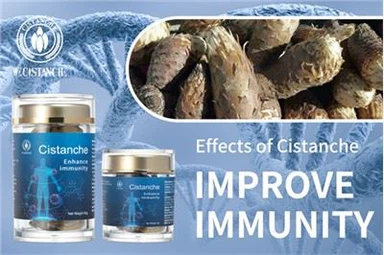
The root of Cistanche tubulosa is its main medicinal part. The rhizome is thick and hard, and the color is usually yellowish-brown. The rhizome contains rich medicinal components, so it is often collected and processed into various medicinal materials for use in different treatment fields.
As a parasitic plant, Cistanche tubulosa has special growth requirements. It usually parasitizes on plants adapted to arid and infertile soils, especially drought-tolerant tree species such as Populus euphratica and Lycium barbarum. These host plants provide the water and minerals needed by Cistanche tubulosa, and Cistanche tubulosa absorbs the nutrients of the host plants through its roots. In the desert environment, Cistanche tubulosa has extremely strong vitality and can grow and reproduce in extremely arid and infertile soils, which also makes it play an important role in the desert ecosystem.

The main distribution area of Cistanche tubulosa is in the northwest of China, especially in the Taklimakan Desert in Xinjiang, the Gobi Desert in Inner Mongolia, and some areas in Gansu and Ningxia. In these areas, Cistanche tubulosa and other desert plants form a special ecological community. The medicinal value of Cistanche tubulosa makes it an important cash crop in these areas.
Cistanche tubulosa, often known as the "Desert Ginseng", has a medicinal history of more than 1,800 years in China. As a precious traditional Chinese medicine, Cistanche tubulosa occupies an important position in traditional Chinese medicine. It has been recorded in "Shennong's Classic of Materia Medica" as early as. It is considered to have powerful effects of tonifying the kidney and strengthening yang, regulating the endocrine system, and anti-aging, and is widely used in the treatment of various diseases.

"Shennong's Classic of Materia Medica" mentioned that Cistanche tubulosa can treat "impotence in men and infertility in women", indicating its tonifying effect on sexual function. Since then, "Compendium of Materia Medica" further described the efficacy of Cistanche tubulosa, saying that it "tonifies without being harsh", that is, it is mild and non-irritating, can moisten the body, tonify without being dry, lubricate without being laxative, and often tonify without showing excessive intensity. Because of its mild and balanced efficacy, Cistanche tubulosa is known as "Cistanche" and is listed as one of the precious traditional Chinese medicines in ancient China.
In more than 20 traditional Chinese medicine classics, Cistanche tubulosa is listed as a tonifying medicine and is a good recipe for tonifying the kidney and strengthening yang and prolonging life. In 2005, the "Chinese Pharmacopoeia" officially included Cistanche tubulosa in the list of medicinal materials, marking its important position in modern Chinese medicine.
Cistanche tubulosa is known as a "good medicine for tonifying the kidney", and its efficacy is highly respected by traditional Chinese medicine. In modern clinical practice of traditional Chinese medicine, Cistanche tubulosa is often used to treat symptoms such as kidney deficiency, impotence, infertility, and constipation. Because Cistanche tubulosa is warm in nature and tastes sweet and salty, it can warm and tonify kidney qi, enhance male sexual function and fertility, and also has a significant regulating effect on women.
With the development of modern science and technology, the medicinal components of Cistanche tubulosa have also been studied more deeply. Studies have shown that Cistanche tubulosa contains a variety of bioactive substances, such as Cistanche polysaccharides, Cistanche glycosides, volatile oils, etc. These components have multiple effects on the body, such as anti-inflammatory, anti-tumor, and regulating the immune system. Therefore, modern medicine has also begun to use it as a natural medicine in the development of various health care products.

Moreover, Cistanche tubulosa has also been applied in the field of cosmetics. Its anti-aging and antioxidant properties make it an important component of some high-end skin care products. More and more studies have shown that Cistanche tubulosa also has a certain effect in delaying skin aging, reducing wrinkles and dullness.
Cistanche tubulosa, as a plant with rich medicinal value, has a wide range of applications in traditional Chinese medicine and modern medicine. With the continuous in-depth research on its pharmacological effects, the potential of Cistanche tubulosa is being recognized by more and more people. The Cistanche tubulosa in the desert not only provides support for biodiversity in the local ecosystem but also contributes natural gifts to human health.
Cistanche and Constipation: A Natural Solution
One of the common concerns among patients is constipation. It can cause a great deal of discomfort, including abdominal pain, bloating, and a general feeling of sluggishness. In modern medicine, constipation can be caused by a variety of factors such as an unbalanced diet, lack of physical activity, and stress.
Cistanche offers a natural and effective way to address constipation. The substances in Cistanche can have a positive impact on the digestive system. It can help to increase the water content in the feces, making it softer and easier to pass. This is especially important for those who struggle with hard and dry stools. Additionally, Cistanche can stimulate the peristalsis of the intestines, promoting the regular movement of feces through the digestive tract. This gentle yet effective action can provide relief for constipation without the harsh side effects that some chemical laxatives may have.
Beyond Constipation: Other Potential Benefits and Considerations
In addition to its constipation-relieving properties, Cistanche holds great potential in other aspects of health. Its ability to enhance immunity and regulate the endocrine system can have a significant impact on overall well-being. By strengthening the immune system, it helps the body fend off diseases more effectively, while its regulatory effect on the endocrine system can help maintain hormonal balance.
The fact that it can improve sexual function and has anti-aging effects also makes it attractive to many people. In a world where people are increasingly concerned about their health and appearance, Cistanche may offer a natural option.
However, it is important to note that like any herbal remedy, Cistanche should be used with caution. While it has many potential benefits, it may interact with certain medications or have different effects on different individuals. For example, it is always advisable to consult with a healthcare professional before using Cistanche, especially if you have underlying health conditions or are taking other medications.
In conclusion, Cistanche is a remarkable herb with a rich history and a promising future in modern health. Its unique properties and potential benefits make it a subject worthy of further exploration. Whether you are interested in its traditional uses or its modern applications, Cistanche has the potential to offer a natural and effective solution for various health concerns. By understanding its value and using it responsibly, we can tap into the power of nature to enhance our well-being. But always remember to prioritize your health and make informed decisions when it comes to using herbal remedies.