Cistanche Tubulosa Extract And Kidney Support, A Multiperspective Review Of Traditional Use, Chemical Basis, And Experimental Evidence
Nov 23, 2026
Abstract
Cistanche tubulosa (Schenk) Wight, a root-parasitic desert plant of the Orobanchaceae family, has been used in traditional Chinese medicine (TCM) for over two millennia as a kidney-yang tonic that nourishes essence and blood. This review examines the kidney-related reputation of Cistanche extract from four complementary perspectives: its traditional classification in TCM, its chemical composition, the experimental pharmacological evidence accumulated to date, and its safety and regulatory context. Phenylethanoid glycosides (PhGs), represented by echinacoside and acteoside, together with Cistanche polysaccharides, are the principal constituents linked to its bioactivities. Preclinical studies have associated PhGs with reproductive and endocrine support, antioxidant defence, renoprotection, anti-fatigue activity, and immunomodulation. Most of these findings derive from animal and in vitro models; high-quality human clinical evidence remains limited. The plant should therefore be regarded as a supportive, complementary botanical rather than a replacement for prescribed therapy.
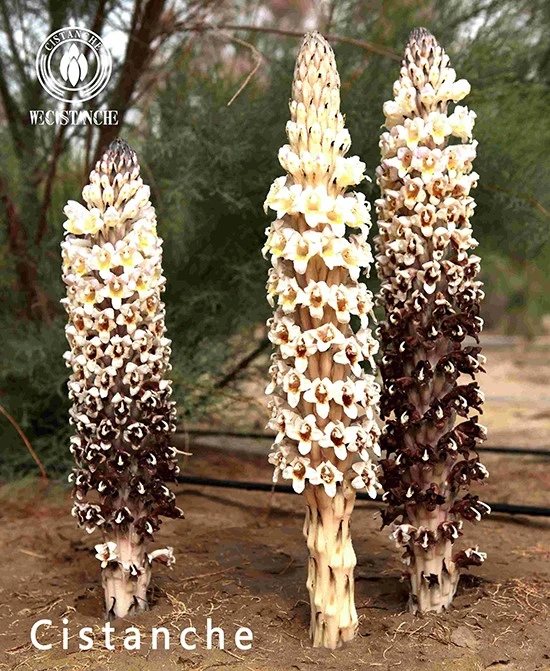
Desert-living cistanche
1. Botanical and Traditional Background
Cistanche tubulosa and Cistanche deserticola Y. C. Ma are the two botanical sources officially recognized as Cistanches Herba in the Chinese Pharmacopoeia. The dried, scaly, fleshy stems grow parasitically on the roots of sand-fixing shrubs such as Haloxylon ammodendron and Tamarix species, mainly in the arid regions of Inner Mongolia, Xinjiang, Gansu, and Qinghai in northwestern China. Because of its desert habitat and tonifying reputation, Cistanche is often referred to as the "ginseng of the desert."
In TCM, the herb is sweet and salty in taste and warm in nature, entering the Kidney and Large Intestine meridians. Its documented functions are to tonify kidney-yang, benefit essence and blood, and moisten the intestines to relieve constipation. It has traditionally been used for patterns of kidney-yang insufficiency and essence-blood deficiency, presenting with impotence and infertility, soreness and weakness of the lower back and knees, feeble sinews and bones, and constipation due to intestinal dryness. First recorded in the Shennong Bencao Jing (Shennong's Classic of Materia Medica) as a superior-grade herb, Cistanche has remained a core component of kidney-tonifying formulas throughout Chinese medical history.

Chinese herb cistanche
It is important to distinguish the TCM concept of the Kidney from the anatomical kidney. In TCM, the Kidney stores essence and governs growth, development, reproduction, and fluid metabolism; kidney tonification therefore addresses a broad constitutional pattern rather than a single organ. Modern renoprotection research, by contrast, concerns the structure and function of the anatomical kidneys. The two frameworks overlap but are not identical.
2. Chemical Basis of the Extract
Phytochemical profiling has identified hundreds of constituents in Cistanche species. The compounds most closely associated with its tonifying and protective activities fall into the following groups.
2.1 Phenylethanoid Glycosides (PhGs)
PhGs are the most extensively studied active constituents of Cistanche and serve as pharmacopoeial quality markers. Representative monomers include echinacoside (ECH), acteoside (also known as verbascoside or verbascoside/maoronghua glycoside, ACT), isoacteoside, 2′-acetylacteoside, tubuloside A, and a series of cistanosides. Echinacoside and acteoside are the two marker compounds specified for content determination in the Chinese Pharmacopoeia. Comparative studies indicate that C. tubulosa generally contains higher levels of PhGs than C. deserticola, whereas the latter is comparatively richer in polysaccharides.
The multiple phenolic hydroxyl groups in the PhG structure confer notable free-radical-scavenging capacity, forming the chemical basis for the antioxidant and cytoprotective effects observed in preclinical studies.

Phenylethanol glycoside is the main active component of Cistanche tubulosa
2.2 Polysaccharides and Other Constituents
Cistanche polysaccharides, composed of glucose, arabinose, galactose, rhamnose, xylose and uronic acids, have been associated with immunomodulatory, antioxidant and neuroprotective activities. The extract also contains betaine, iridoid glycosides, lignans and their glycosides, amino acids, dietary fibre, and minerals such as iron, zinc, manganese and calcium. The overall effect of the extract is generally understood as the combined action of multiple constituents rather than the activity of a single compound.
3. Experimental Evidence
3.1 Reproductive and Endocrine Support
In hydrocortisone-induced kidney-yang deficiency mouse models, total C. tubulosa phenylethanoid glycosides (CPhGs) ameliorated weight loss, shortened erection, capture, and ejaculation latencies, increased capture and ejaculation frequencies, and raised the wet weights of the testis, epididymis, seminal vesicle, and penis. Serum testosterone (T) and upstream luteinizing hormone (LH) were significantly elevated. Western blot analysis showed increased protein expression of CYP11A1 and 3β-hydroxysteroid dehydrogenase (3β-HSD) in testicular tissue, suggesting that PhGs support testosterone biosynthesis through the CYP450–3β-HSD pathway.
In monomer studies, cistanoside A, echinacoside, and acteoside each improved mating parameters, increased sperm count, and ameliorated testicular histopathology in relevant models. Echinacoside has been detected in brain tissue and shown to interact with the androgen receptor (AR), consistent with modulation of the hypothalamic–pituitary–gonadal axis. PhGs also support vascular relaxation through the NO–cGMP pathway, which is relevant to blood supply to reproductive tissues. In an in vitro model of sperm oxidative injury, Cistanche PhGs raised SOD activity, lowered malondialdehyde (MDA) levels, and preserved sperm membrane integrity and function, indicating that antioxidant protection may be a complementary mechanism supporting reproductive outcomes.
3.2 Antioxidant and Anti-Aging Actions
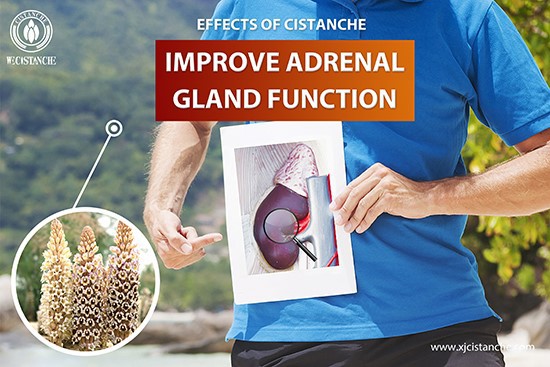
Cistanche tubulosa efficacy: Tonifying the kidney
Click here to view Cistanche for Kidney disease products
【Ask for more】 Email:cindy.xue@wecistanche.com / WhatsApp: 0086 18599088692 / WeChat: 18599088692
Oxidative stress is a shared component of frailty, aging, and many chronic injuries. Cistanche total glycosides and PhGs can directly scavenge superoxide anions and hydroxyl radicals, enhance endogenous antioxidant enzymes including SOD and glutathione peroxidase (GSH-Px), and reduce the lipid peroxidation product MDA. Certain monomers activate the Nrf2/HO-1 pathway, up-regulating cytoprotective enzymes such as heme oxygenase-1 and NQO1. These findings provide an experimental basis for the traditional reputation of Cistanche as an essence-nourishing and longevity-supporting herb.
3.3 Renoprotection
Modern kidney-protection research has been conducted in a range of renal injury models:
• Diabetic nephropathy: aqueous extract of C. tubulosa attenuated excessive PI3K–Akt pathway activation, reduced oxidative stress and inflammation, and lowered apoptosis rates; activities of SOD and GSH-Px increased, while IL-1β, TNF-α and TGF-β decreased.
• Chronic renal injury: echinacoside reduced serum IL-1β and IL-18 and improved renal function, with evidence of inhibition of the p38 MAPK/NF-κB signalling pathway and downstream inflammatory cytokine production.
• Hyperuricemia: acteoside and echinacoside improved renal function, lowered serum uric acid, and promoted uric acid excretion in model rats; they down-regulated serum adenosine deaminase (ADA) and xanthine oxidase (XOD), and modulated the renal urate transporters URAT1, GLUT9, OAT1, and OAT3 at protein and mRNA levels.
• Drug-induced hepatorenal oxidative injury: tubuloside A mitigated diclofenac-induced damage in rats through the Nrf2/HO-1 pathway, reducing oxidative stress, inflammation and apoptosis and lowering blood urea nitrogen and creatinine.
These results indicate that Cistanche extract has research potential in mitigating renal oxidative, inflammatory, and fibrotic signalling. However, the evidence is largely preclinical; whether the effects translate to humans, at what doses, and in which patient groups remains to be established by high-quality clinical trials.
3.4 Anti-Fatigue and Immunomodulation
Cistanche and its PhGs have been reported to increase liver glycogen reserves and reduce the accumulation of blood lactate and urea nitrogen, consistent with an anti-fatigue effect. On the immune side, they may modulate the cAMP/cGMP ratio and enhance macrophage phagocytosis, NK cell activity, T-lymphocyte transformation, and IL-2 levels. These observations align with the traditional role of the herb in tonifying deficiency and supplementing essence and qi.

Effects of cistanche- anti-fatigue
4. Safety and Tolerability
Cistanche has a long traditional record of use and is generally well tolerated. Acute toxicity tests in mice have shown a high tolerable dose of PhG extract with low observed toxicity. Nevertheless, TCM cautions apply: the herb is warm in nature and should not be used alone or long-term by individuals with yin-deficiency fire (e.g., hot flashes, night sweats, dry mouth, warm palms and soles); those with loose stools or weak spleen and stomach should use it cautiously. Adequate safety data on long-term, high-dose consumption are still lacking, and pregnant or breastfeeding women and children should use it only under professional guidance.
5. Limitations and Regulatory Context
Several limitations should be kept in mind. First, most kidney-related conclusions rest on animal and in vitro experiments, and human randomised controlled trials are limited in number and quality. Second, PhGs are polar glycosides with relatively poor oral absorption and rapid metabolism, so in vivo exposure and bioavailability remain active areas of formulation research. Third, the extract is a tonifying and conditioning material; it does not replace antihypertensive, hypoglycaemic, urate-lowering, immunosuppressive or other prescribed therapies, nor the standard management of established kidney disease. Individuals with diagnosed renal disease, abnormal creatinine or eGFR, significant proteinuria, or those taking multiple medications should consult a nephrologist or pharmacist before use. In China, Cistanche was included in the medicine-and-food homologous catalogue following a food safety evaluation; regulatory status for finished supplements differs by country, and products marketed overseas should comply with local food supplement or herbal medicine regulations.

Effects of cistanche-improve kidney function
6. Conclusion
Across traditional TCM experience, phytochemistry and preclinical pharmacology, Cistanche tubulosa extract shows a consistent research profile linked to kidney-yang tonification and essence nourishment. PhGs, particularly echinacoside and acteoside, together with polysaccharides, are the constituents most closely associated with reproductive and endocrine support, antioxidant defence, renoprotection, anti-fatigue activity and immunomodulation. The gap between preclinical promise and proven human efficacy should be acknowledged, and the herb should be integrated into a healthy lifestyle rather than used as a substitute for medical treatment. Further well-designed clinical trials, standardised extracts, and long-term safety studies are needed to define its role in kidney-related health support.
References
[1] Chinese Pharmacopoeia Commission. Pharmacopoeia of the People's Republic of China (Part I): Cistanches Herba.
[2] Li Z, Lin H, Gu L, Gao J, Tzeng C-M. Herba Cistanche (Rou Cong-Rong): One of the Best Pharmaceutical Gifts of Traditional Chinese Medicine. Frontiers in Pharmacology. 2016;7:41.
[3] Morikawa T, Xie H, Pan Y, et al. A Review of Biologically Active Natural Products from a Desert Plant Cistanche tubulosa. Chemical & Pharmaceutical Bulletin. 2019;67(7):675-689.
[4] Tureyen A, Demirel HH, Demirkapi EN, Eryavuz AM, Ince S. Tubuloside A, a phenylethanoid glycoside, alleviates diclofenac-induced hepato-nephro oxidative injury via Nrf2/HO-1. Journal of Cellular and Molecular Medicine. 2023;27(21):3404-3413.
[5] Luo FX, Li JM, Gao L, et al. Uric acid lowering effect and mechanism of acteoside and echinacoside extracted from Cistanche tubulosa. Chinese Journal of Pharmacology. 2025.
[6] Research progress on the bioavailability and delivery systems of Cistanche phenylethanoid glycosides. Science and Technology of Food Industry. 2025.
[7] Review on Cistanches Herba: primary and secondary metabolites, pharmacological activities and medicine-food dual use. Chinese Herbal Medicines. 2025.
[8] Peking University State Key Laboratory of Natural and Biomimetic Drugs. Report on the Cistanche whole-industry-chain development project, 2026.