Cistanches Herba, From An Endangered Species To A Big Brand Of Chinese Medicine --Part I
Mar 15, 2022
Contact: joanna.jia@wecistanche.com / WhatsApp: 008618081934791
Yuelin Song1,2 et al
Abstract
Cistanches Herba (CH, Chinese name: Roucongrong), is a very precious, tonic Chinese medicine. Cistanche deserticola and Cistanche tubulosa are the two commonly used species and authenticated in Chinese Pharmacopoeia. Due to the parasitic nature of Cistanche plants, the wild source was once endangered and listed in Appendix II of the Convention on International Trade in Endangered Species of Wild Fauna and Flora. However, after continuously struggling in the past decades, CH (Cistanches Herba) has grown up to a big brand of Chinese medicine featured with the cultivation area as 1.26 million mu, the annual output as 6000 tons, and the related industrial output value as more than 20 billion China Yuan, attributing to large‐scale cultivation and in‐depth phytochemical and pharmacological investigations. Noteworthily, great achievements have been reached concerning the research and development of relevant products, such as modern drugs, traditional Chinese medicine prescriptions, and dietary supplements. The current review summarizes the research progresses concerning the distribution and cultivation, phytochemistry, pharmacology, metabolism, and product development of CH (Cistanches Herba) in the past decades, and the emerging challenges and developing prospects are discussed as well.
KEYWORDS
big brand Chinese medicine, Cistanches Herba, cultivation, echinacoside, health product

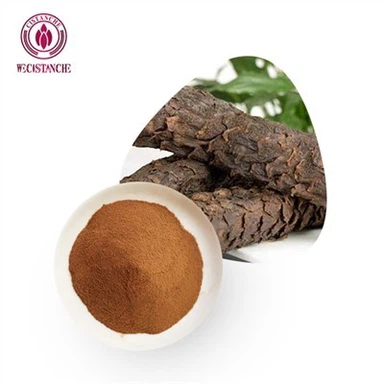
Cistanche tubulosa has many effects, click here to know more
1 | INTRODUCTION
Cistanches Herba (CH, Chinese name: Roucongrong) is one of the most famous tonic Chinese medicines, and it is first archived as a 'first‐class' variety in Shen Nong's Chinese Materia Medica. This herbal medicine is one of the 'Nine Main Chinese Herbs' and is honored as 'Ginseng of the Deserts' attributing to its promising health benefits. It is also a mysterious folk medicine because of some interesting tales in history, and the most famous one is that CH (Cistanches Herba) saved the Genghis Khan's army when crossing the deserts. CH (Cistanches Herba) consists of the dried succulent stems of Cistanche species traditionally used in the desert regions. Among them, Cistanche deserticola and Cistanche tubulosa are the two most frequently used ones and documented in Chinese Pharmacopoeia since 2005 Edition. CH (Cistanches Herba) serves as one of the most commonly utilized herbal medicines for the treatments of kidney deficiency, impotence, female infertility, morbid leucorrhea, profuse metrorrhagia, and senile constipation in traditional Chinese medicinal practices. Modern pharmacological investigations have disclosed that CH (Cistanches Herba) owns a broad pharmacological spectrum, such as improving sexual function, prolonging life span (antiaging), and advancing learning/memory ability (antidementia), as well as promoting feces excretion. Particularly, CH (Cistanches Herba) is featured as a superior choice to treat neurodegenerative diseases according to a classical traditional Chinese medicine (TCM) theory known as 'tonifying marrow through promoting kidney'.

Cistanche species are perennial parasitic plants and principally attached at the roots of some sand‐fixing plants, for example, Tamarix species, Haloxylon ammodendron, Haloxylon persicum, and so forth (Figure 1A, B). Because of the unbalance between the exhausting wild source and the increasing market demands in the 1970s and 1980s, Cistanche plants were on the verge of extinction. Cistanche deserticola, particularly, has been listed in Appendix II (Endangered species scientific commission) of the Convention on International Trade in Endangered Species (CITES) of Wild Fauna and Flora, thus hampering the development of CH‐related industry. To tackle the resource shortage of CH (Cistanches Herba) as well as to meet the demands from new drug and health product development, great efforts have been devoted by scientists from all over the world toward the extensive resource censor and large‐scale cultivation of Cistanche plants in the past decades. Noteworthily, attributing to the continuous efforts from Prof. Tu's group as well as other research teams, the cultivation technical barriers for parasitic plants have been broken through serially, and the large‐scale popularization of Cistanche plants with stable and high yield has been successfully spread. Currently, the medicinal resources have been completely settled and the wild resources have been well protected, providing a prerequisite for the sustainable development of the CH (Cistanches Herba) industry. Moreover, the in‐depth phytochemical investigations and widely pharmacological evaluations synergistically drive the relevant product research and development. In the past decades, significant progress has occurred in all areas of CH, and a couple of reviews concerning phytochemistry, chemical analysis, and pharmacology evaluations are available. However, all of the existing reviews are failed to provide a holistic view for the research and development of CH (Cistanches Herba) in regards to not only the scientific studies, but also cultivation and the relevant product development; hence, the current paper aims to summarize the research progresses in terms of the distributions and cultivation, phytochemistry, pharmacology, metabolism, and product development in the past decades, especially emphasizing the growing of CH (Cistanches Herba) from an endangered species toward a big brand of Chinese medicine. Afterward, future scientific investigations and in‐depth commercial exploitation are discussed as well.


2 | BOTANICAL DESCRIPTION, DISTRIBUTION, AND CULTIVATION
The genus Cistanche Hoffmg. et Link (Orobanchaceae) contains approximately 20 species worldwide. Most Cistanche species serve as the folk medicinal sources in the desert regions, and usually, these folk medicines share an identical name as Cistanches Herba. Cistanche plants mainly grow in arid lands and warm deserts in Eurasia, such as Iran, Afghanistan, Pakistan, Mongolia, and Northwestern China. Given the absence of chlorophyll, all Cistanche species are perennial parasitic plants and generally adhered at the roots of some sand‐fixing plants, for example, Tamarix species, Haloxylox ammodendron, H. persicum, Kalidium foliated, Nitraria tangutorum, and so forth, to absorb desired nutrients. After systematic resource sensor and extensive plant taxonomy investigations, the botanists from China ultimately concluded that there are four species together with one variant distributed in China, viz. Cistanche deserticola Y.C. Ma, Cistanche tubulosa (Schenk) R. Wight, C. Sinensis G. Beck, C. salsa (C. A. Mey.) G. Beck, and Cistanche salsa var. albiflora P.F. Tu et Z.C. Lou.
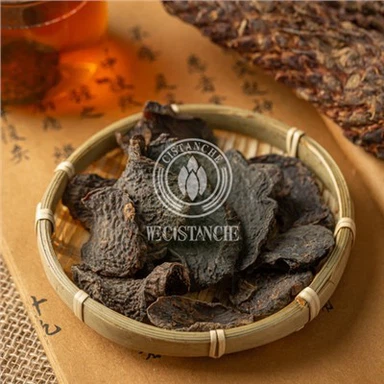
Traditionally, only Cistanche deserticola was employed in TCM practices inferred from TCM Classics1 where the habitats of Cistanche deserticola were described. Recently, Cistanche deserticola has been recommended as an edible herbal medicine by the National Health Commission of China. This species is solely distributed in China, mainly in Northwestern China, such as Inner Mongolia, Xinjiang, and Gansu provinces. This plant is primarily found in the deserts up to an altitude of 225–1150 m. The fresh stems of Cistanche deserticola are usually 40–160 cm long, 2–10 cm in diameter unbranched or 2–4 cm branched. The longest stem archived by the Guinness Book of World Records is as long as 1.74 m, and this specimen is exhibited in the Museum of Hongkong Baptist University. In the habitat, some CH (Cistanches Herba) can actually reach 2–3 m in length. Bloom usually occurs in May, and the flower colors include white, yellow, purple, and so on (Figure 1C). Perennial plants in the desert, such as Haloxylon ammodendron and H. persicum, are the most frequently observed hosts of Cistanche deserticola. Because of the rapid increments of the market demands in the past decades, the wild source of Cistanche deserticola was over‐exploited, and even worse, the hosts have also been rapidly declining in many regions owing to the role as firewood for the local herdsmen. Around the 1970s and 1980s, Cistanche deserticola was once on the verge of extinction and involved in the “second grade” nationally protected plants in China as well as CITES: Appendix II (Endangered species scientific commission). To meet the increasing demands of C. deserticola in the foreign and domestic TCM markets, attention has been devoted to searching areas being suitable for Cistanche deserticola cultivation, and the deserts in Northwestern China are demonstrated as the exact choice. Afterward, continuous efforts have been also made toward tackling the holoparasitic properties, and now, Cistanche deserticola has been widely cultivated in several plantations in Inner Mongolia, Ningxia, Xinjiang, and Gansu provinces. Currently, dramatic achievements have been reached for the cultivation of Cistanche plants, and the supply pressure has been significantly alleviated.

On the other side, attention has been also paid to the pursuit of succedaneums for Cistanche deserticola to partially share the market load. Because of the sustainable efforts made by Tu et al. toward chemical profile and pharmacological comparison between Cistanche tubulosa and Cistanche deserticola, the former one has been claimed as an eligible succedaneum for Cistanche deserticola, and the role has been authorized by Chinese Pharmacopoeia via listing Cistanche tubulosa as one of the two original sources of CH since 2005 Edition. Cistanche tubulosa is mainly distributed in the south of Xinjiang, mainly in the south edge of the Taklimakan Desert, such as the Hotan district. In general, the hosts of Cistanche tubulosa are Tamrix plants. Similar to Cisatnche deserticola, C. tubulosa mainly grows in the deserts up to an altitude of 225–1150 m. The stem size of Cistanche tubulosa is usually stubbier than that of Cistanche deserticola, with a length between 5–25 cm and a diameter between 2.5–10 cm (Figure 1D). The yellowish‐white leaves are scale‐like and stem‐ovate, triangular-ovate, lanceolate, or linear‐lanceolate with a length of 5–15 mm and a width of 5–25 mm. In cylindrical spica, merely 15–50 cm part reaches out of the ground. Bloom also occurs in May, and the flower colors include white, yellow, purple, and so on. Noteworthily, the most significant difference between Cistanche deserticola and Cistanche tubulosa is the distribution pattern of vascular bundles. The vascular bundles of C. tubulosa are loosely scattered across the stems, whereas annular vascular bundles with great waves usually occur for C. deserticola (Figure 1E). The scientists from China have also paid attention to finding the appropriate areas for Cistanche tubulosa growing. The potentially suitable choices were predicted using MaxEnt and ArcGIS models by Huang's group, and the fit‐for‐purpose regions of C. tubulosa include southern Xinjiang Autonomous Region in China, northern Africa, Arabian Peninsula, and central Asia because the cultivation of this species requires relatively sufficient water compared to Cistanche deserticola. In recent years, Prof. Tu's group has widely cultivated Cistanche tubulosa and its host namely Tamarix plants for 170,000 mu in Yutian, a well‐known county on the ancient “Silk Road.” They innovatively integrate the concepts of desert control and resolving the endangered TCM resource simultaneously, and also owing to the efforts from different governments, institutes, and scholars, ecology‐oriented extensive popularization of the hosts of Cistanche plants has reached approximately 5,120,000 and 1,260,000 mu of which was inoculated with Cistanche plants, mainly in the deserts of Alexa League along with Khotan Prefecture, resulting in the crude material yield as many as 6000 ton/year. This is a worldwide miracle for parasitic plant cultivation. The habitats of CH (Cistanches Herba) are mainly in the deserts and arid areas, where are generally remote and poor areas. With the popularization of CH (Cistanches Herba), the incomes of the local farmers and herdsmen are dramatically improved, and the cocultivation of Cistanche plants and their hosts has therefore been regarded as an efficient strategy for targeted poverty alleviation.
In the past few years, great efforts have been made to boost the seed germination of Cistanche plants for the sake of advancing the survival rate. Low-temperature stratification has been demonstrated to be necessary for seed germination, and norflurazon and fluridone, either of which is a synthetic inhibitor of abscisic acid, are able to stimulate seed germination via regulating the concentration of abscisic acid as well as the strigolactones. Some preliminary evaluations have also demonstrated that the root exudates of the hosts, such as Tamarix plants, Haloxylon ammodendron, H. persicum, and so forth, play the dominant roles to stimulate the seed germination, as well as the haustellum generation, and the soil microbe around the roots offers the complementary contributions. The exploration of the underlying molecular mechanisms involved in the entire inoculation course is undergoing in our group as well as some other research teams. Because of the benefits from the breakthroughs regarding seed germination, some innovative cultivation techniques have been also developed such as seed pelleting after fluridone‐treatment, to increase the inoculation rate from less than 20% to more than 95%, and the acre yield of Cistanche tubulosa has grown from 18 to 300 kg. In the near future, when the parasitic mechanisms between Cistanche plants and their hosts are completely clarified, the cultivation yield will be further advanced. Moreover, the standard of operation has also been protocoled, involving: (1) grading seeds and germ hits; (2) alternate 'wide‐narrow rowledge' planting style; and (3) “seeding at autumn and harvesting at next autumn” cycle. As a result, more than 2300 mu plantation base of Cistanche tubulosa in Yutian County, Xinjiang, has been certificated by the good agricultural practice authentication, and the cultivation farm of Cistanche tubulosa is also recommended as organic agriculture by Amway. Overall, the goal of sustainable, great cultivation outcomes at the prerequisite of desert control has been already achieved. The grand view of the cultivation farms for both Cistanche tubulosa and Cistanche deserticola is shown in Figure 1F, and excitingly, the regions that were once the deserts have now been turned into the oasis.

3 | PHYTOCHEMICAL INVESTIGATIONS
Phytochemical investigations regarding Cistanche plants were initiated in the 1980s, and so far, more than 150 compounds have been purified and structurally identified. Among them, a variety of chemical families have been included, such as phenylethanoid glycosides (PhGs), benzyl glycosides, iridoids, lignans, oligosaccharides, and polysaccharides. In particular, PhGs are drawing the most attention from all over the world because of their promising pharmacological characteristics and extensive distributions in the plant kingdom. The distribution pattern of all components in different species is illustrated in Table 1, such as 120 ones isolated from C. deserticola; 75 ones from Chinese Cistanche tubulosa; ones from Pakistani Cistanche tubulosa; 31ones from C. salsa; ones from C. phelypaea; and 20 ones from C. Sinensis. Noteworthily, a large array of chemical components has been isolated and identified from Cistanche plants in our group in the past 20 years.

3.1 | Phenylethanoid glycosides
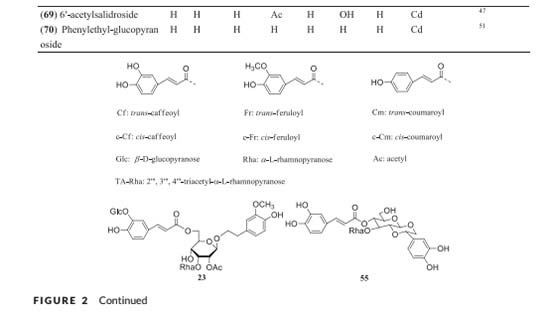
PhGs occupy the primary chemical cluster of Cistanche species, and 70 such compounds have been identified. Of them, four ones are aminoglycosides, and 41 and 25 ones can be further sorted into glycosides and triglycerides, respectively. All chemical structures are illustrated in Figure 2. PhGs are usually featured with the structural properties including (1) the phenylethanoid disaccharide acts as the backbone; (2) the sugar moiety is composed of glucose and rhamnose with a Rha (1 → 3) Glc linkage manners; (3) the substitute such as coumaroyl or caffeoyl group directly binds to the glucose residue through C‐4 or C‐6 site; (4) regarding a given trisaccharide glycoside, an additional glucose or rhamnose residue usually occurs at C‐6 site of the inner glucose residue; and (5) acetyltransferase usually attacks C‐2 site of the inner glucose to give birth to an additional acetyl substitution.


3.2 | Benzyl glycosides
The difference between a given benzyl glycoside and PhG just occurs at the replacement of a phenethyl group with a benzyl moiety. Up to now, six compounds (Figure 3) belonging to this chemical cluster, in total, have been identified from Cistanche plants, including three benzyl glycosides (e.g., salsaside A, salsaside B, and salsaside Ca/Cb) from Cistanche salsa, and four ones (viz. salsa side B, 3,4‐dimethoxybenzyl‐β‐D‐glucoside, 4‐hydroxy benzyl‐β‐D‐glucoside, and benzylglucopyranoside) from Cistanche deserticola. Their structures are usually featured as that the glucose residue links directly to the benzyl alcohol aglycone via the anomeric carbon and a coumaroyl or caffeoyl substitution usually occurs at the C‐4 or C‐6 site of the glucose residue.

3.3 | Iridoids and iridoid glycosides
Indeed, iridoids and iridoid glycosides are widely distributed in plant kingdoms, and their presence in Cistanche plants has been also revealed. A total of 26 such compounds, including four iridoids and 22 iridoid glycosides, have been isolated as yet from Cistanche species (Table 2; Figures 4 and 5). They usually bear structural properties as below: (1) glucosyl substitution occurs at C‐1 site of the iridoid backbone of aglycone; (2) H‐5 and H‐9 protons usually show β‐configuration; (3) hydroxyl groups are usually located at C‐8 and C‐10 sites; and (4) sometimes, dehydration occurs for the hydroxy groups of C‐10 and C‐1 (or C‐3) to produce an epoxy substructure.


3.4 | Monoterpenes and monoterpene glycosides
A couple of monoterpenes together with monoterpene glycosides, seven ones in total, such as 8‐hydroxygeraniol‐1‐ O‐β‐D‐glucopyranoside (103), kankanoside E (104), (2E,6Z)‐8‐β‐D‐glucopyranosyloxy‐2,6‐dimethyl‐2,6‐octadecenoic acid (105), 8‐hydroxygeraniol‐8‐O‐β‐D‐glucopyranoside (106), betulalbuside A (107), (2E,6R)‐8‐hydroxy‐2,6‐dimethyl‐2‐octanoic acid (108), and 8‐hydroxygeraniol (109), have been also reported from Cistanche plants. The chemical structures including two monoterpenes and five monoterpene glycosides are illustrated in Figure 6.

3.5 | Lignans and lignan glycosides
As the primary building blocks for the plant cell walls, lignans, and lignan glycosides can be found in most herbs. Two lignans together with 14 lignan glycosides have been characterized by far from Cistanche plants (Figures 7 and 8). Most ones are the ditetrahydrofuran lignans. It is worthwhile to mention that the distributions of the lignans and lignan glycosides can be significantly improved accompanied by the lignification of the stems after blooming in May.


3.6 | Oligosaccharides and their esters
As described above, saccharides, coumaroyl/caffeoyl group, and phenethyl moiety are the building blocks of PhGs.When the phenethyl moiety and/or coumaroyl/caffeoyl groups are absent, saccharides and their esters can be formed. As expected, several such components, 11 ones in total, have been identified from Cistanche plants, including cistanoside F (126), cistanoside I (127), cistantubulose A1 (128), cistantubulose A2 (129), kankanose (130) (Figure 9), D‐glucose (131), D‐fructose (132), galactitol (133), D‐mannitol (134), sucrose (135), and 2S,3S,4S‐trihydroxypentanoic acid (136). However, the occurrence of galactitol in Cistanche plants has been repudiated by Liu et al. via matching the breakdown graph with the authentic compound of D‐mannitol.

3.7 | Polysaccharides
In the 1990s, the research concerning saccharides mainly focused on the purification and compositional characterization of monosaccharides. In recent years, the achievements of modern chromatographic and spectroscopic techniques benefit the characterization of polysaccharides and their derivatives. So far, a total of 14polysaccharides have been identified from Cistanche deserticola (Table 3), namely pectic polysaccharide P1 (137), pectic polysaccharide P2 (138), pectic polysaccharide P3 (139), cistan A (140), mannoglucan(141), arabinogalactan (ACDP‐2, 142), linear glucan (CDP‐4, 143), glucan‐1 (144), glucan‐2 (145),glucan‐3 (146), SPA (147), CDA‐1A (148), RG‐I polysaccharide (CDA‐3B, 149), and CDA‐0.05 (150).75
Moreover, some other components containing a nitrogen atom, such as adenosine (151), 2, 5‐dioxo‐4‐imidazolidinyl‐carbamic acid (152), 2‐methanol‐5‐hydroxy‐pyridine (153), succinimide (154), nicotinamide (155), betaine (156), N, N‐dimethyl glycine methyl ester (157), and allantoin (158), have also been identified from Cistanche plants, and their chemical structures are exhibited in Figure 10.


Cistanche deserticola
4 | IN‐DEPTH QUALITATIVE AND QUANTITATIVE ANALYSES OF CHEMICAL COMPONENTS
Click here for information about Part II of this article.
From: ' Cistanches Herba, from an endangered species to a big brand of Chinese medicine ' by Yuelin Song1,2 et al
---Med Res Rev. 2021;41:1539–1577. wileyonlinelibrary.com/journal/med © 2021 Wiley Periodicals LLC DOI: 10.1002/med.21768