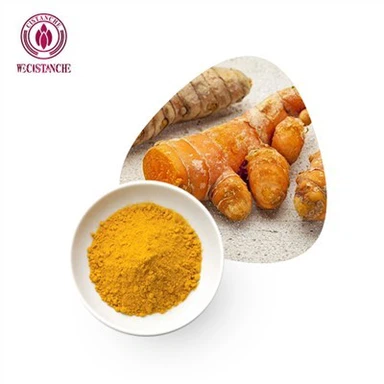
Clinical Observation And Mechanism Exploration Of The Intervention Of Tonifying Kidney And Nourishing Essence Method (mainly Cistanche Tubulosa) in Elderly Dementia
May 27, 2026
Alzheimer's disease (AD) is a neurodegenerative disease with the core characteristics of progressive cognitive decline, memory decline, and behavioral abnormalities. Its incidence rate increases year by year with the aging of the population, which seriously affects the quality of life of patients, and increases the burden of family and social medical care. At present, there is no specific treatment in clinical practice. Traditional Chinese medicine believes that the core pathogenesis of senile dementia is kidney essence deficiency and insufficient marrow sea, and the method of tonifying the kidney and nourishing essence is one of its core treatment principles. Cistanche tubulosa, as a classic traditional Chinese medicine for tonifying the kidneys and nourishing the essence, is warm but not hot, and nourishing but not steep. It has the effects of filling the marrow, nourishing the brain, and strengthening the mind. It is the core medication for intervening in elderly dementia with the method of tonifying the kidneys and nourishing the essence.

Benefits of Cistanche tubulosa: Anti-Alzheimer's disease
Theoretical Basis of Traditional Chinese Medicine
Traditional Chinese Medicine etiology and pathogenesis of senile dementia
Traditional Chinese medicine believes that the occurrence of senile dementia is closely related to factors such as aging, kidney essence deficiency, emotional disorders, irregular diet, and prolonged illness and injury. The core pathogenesis is kidney essence deficiency, insufficient marrow and sea, and phlegm and blood stasis obstructing the collaterals. The book "Su Wen: On the Theory of Inverse Regulation" states: "If the kidneys do not produce, the marrow cannot be filled." The book "Su Wen: The Formation of the Five Organs" points out that "all marrow belongs to the brain," clarifying the close relationship between the kidneys, marrow, and brain - the kidneys store essence, essence produces marrow, marrow gathers in the brain, and the brain is a sea of marrow. If the kidney essence is sufficient, the sea of marrow will be filled, the brain will be unobstructed, and cognitive function will be normal; On the contrary, aging and physical decline can lead to kidney essence deficiency, marrow deficiency, and loss of brain and body nourishment. In addition, emotional disorders and an irregular diet can cause phlegm and blood stasis, which can block the brain and body. Qi and blood cannot nourish the brain and body marrow, ultimately leading to symptoms such as cognitive decline, forgetfulness, and dementia.
Modern research in traditional Chinese medicine further proposes that abnormal "kidney storage qi" is the initiating factor and core pathogenesis that runs through the entire process of senile dementia. The "qi" of "kidney storage qi" refers to memory, which is based on kidney essence. If the kidney essence is sufficient, the qi will be healthy, and the memory will be normal. If the kidney essence is deficient, the qi will decline, memory will decrease, and even dementia may develop. At the same time, kidney deficiency can further affect the spleen, liver, and other organs. Spleen deficiency can produce phlegm, liver depression, and qi stagnation, which can cause blood stasis. Prolonged accumulation of phlegm and blood stasis can turn heat into fire and become toxin, aggravating brain damage and forming a pathological evolution process of "kidney deficiency phlegm stasis toxin damage", providing clear theoretical support for the application of kidney tonifying and essence nourishing methods.

Effects of Cistanche: Improve Kidney Function
The medicinal properties and efficacy of Cistanche tubulosa and its core role in nourishing the kidneys and essence
Cistanche tubulosa is a dried fleshy stem with scaled leaves from the plants Cistanche tubulosa or Cistanche tubulosa in the family Rhamnaceae. It is mainly produced in areas such as Hotan, Xinjiang, and is one of the "Nine Immortal Herbs". Its medicinal properties are sweet, salty, and warm, and it is beneficial for the kidneys and large intestine meridians. Its core functions include nourishing kidney yang, nourishing essence and blood, filling marrow and nourishing brain, moistening intestines, and promoting bowel movements. The "Compendium of Materia Medica" records that it is a "medicine that nourishes the gate of life, nourishes kidney qi, and replenishes essence and blood", and has the characteristics of "warm but not hot, nourishing but not steep, warm but not dry, smooth but not leaking". It is an ideal medicinal herb for tonifying kidney essence, especially suitable for long-term use.
In the treatment of elderly dementia with the method of tonifying the kidney and nourishing essence, Cistanche tubulosa, as the main herb, has two core functions: firstly, it directly nourishes the kidney essence, fills the marrow and brain, improves the syndrome of insufficient marrow sea, fundamentally restores the physiological function of the brain, and alleviates core symptoms such as memory loss and cognitive impairment; The second is to indirectly regulate the functions of the spleen, liver and other organs by tonifying the kidney and nourishing essence, helping the spleen to transport and dissolve phlegm, soothing the liver and regulating qi to remove blood stasis, reducing the pathological factors of phlegm and blood stasis blocking the brain. At the same time, its warming effect on the kidney can avoid the long-term deficiency of kidney essence, leading to cold coagulation and qi stagnation, taking into account the principle of treating both symptoms and root causes, laying the foundation for subsequent combination therapy. It is highly compatible with the treatment principles of tonifying the kidney and nourishing essence, filling the marrow and promoting brain circulation, and is the core medication for intervening in elderly dementia with this treatment method.

Dragon Herbs Cistanche
Clinical observation on the intervention of tonifying the kidney and nourishing essence method (mainly Cistanche tubulosa) in elderly dementia
Clinical data
General Information
Eighty elderly dementia patients admitted to the Traditional Chinese Medicine department of a certain hospital were selected, all of whom met the Western diagnostic criteria for Alzheimer's disease in the "Chinese Dementia and Cognitive Impairment Diagnosis and Treatment Guidelines (2020 Edition)", as well as the syndrome differentiation criteria for kidney essence deficiency and marrow sea deficiency in traditional Chinese medicine. Their clinical manifestations included decreased memory, cognitive function, soreness and weakness in the waist and knees, dizziness and tinnitus, dull expression, slow response, pale tongue coating, and thin and weak pulse. Exclude patients with severe heart, liver, kidney, and other organ diseases, mental illness, acute phase of cerebrovascular disease, and severe cognitive impairment who cannot cooperate with observation. Patients were divided into a control group and an observation group using a random number table method, with 40 cases in each group.
There were 22 males and 18 females in the control group, aged 65-82 years, with an average of (73.5 ± 4.2) years. The disease course was 1-5 years, with an average of (2.8 ± 1.1) years. There were 21 males and 19 females in the observation group, aged 66-83 years, with an average of (74.1 ± 4.5) years. The disease course was 1-6 years, with an average of (2.9 ± 1.2) years. There was no statistically significant difference (P>0.05) in general information (gender, age, disease course) between the two groups of patients, indicating comparability.
treatment
The control group received routine Western medicine treatment: oral administration of donepezil tablets, 5mg each time, once a day, taken before bedtime, and symptomatic supportive treatment such as nourishing nerves and improving cerebral circulation. The treatment course was 12 weeks.
Based on treatment in the control group, the observation group was treated with traditional Chinese medicine, mainly composed of Cistanche tubulosa, for tonifying the kidney and nourishing the essence. The core formula consists of 15g Cistanche tubulosa (the main medicine), 12g Rehmannia glutinosa, 10g Cornus officinalis, 10g Goji berries (the main medicine, assisting in tonifying the kidney and nourishing the essence, filling the marrow and nourishing the brain), 10g Angelica sinensis and 8g Chuanxiong (the auxiliary medicine, promoting blood circulation and removing blood stasis, unblocking the meridians and opening the orifices), and 6g licorice (the main medicine. Differential diagnosis and adjustment: For those with obvious dizziness and tinnitus, add 10g Tianma and 8g Chrysanthemum; for those with severe soreness and weakness in the waist and knees, add 10g Eucommia ulmoides and 10g Achyranthes; for those with obvious dull expression, add 10g Acorus tatarinowii and 8g Yuanzhi; for those with dry stool, add 10g Huoma Ren. Take one dose daily, decoct 400mL of juice in water, and take twice in the morning and evening. The treatment course is 12 weeks.
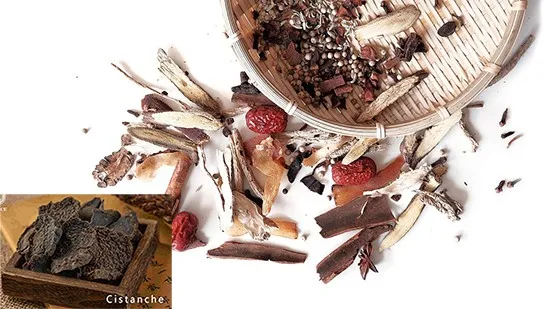
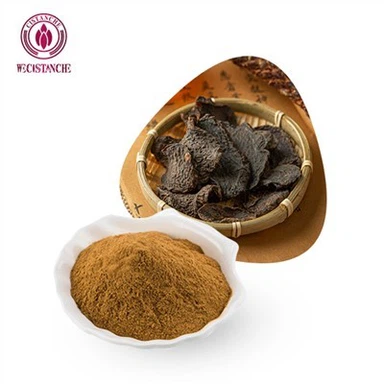
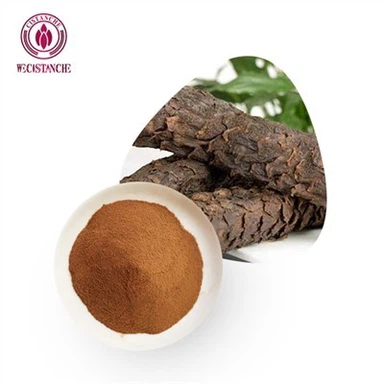
Chinese medicinal materials, such as Cistanche tubulosa,
observation indicators
① Cognitive function: assessed using the Mini-Mental State Examination (MMSE), which includes dimensions such as orientation, memory, attention, calculation, and language ability. The total score is 30 points, with higher scores indicating better cognitive function; ② Daily living ability: assessed using the Activities of Daily Living (ADL) scale, with a total score of 100 points. The higher the score, the stronger the daily living ability; ③ Traditional Chinese Medicine Syndrome Points: Based on the key points of syndrome differentiation for kidney essence deficiency and marrow sea deficiency, a syndrome score table is developed, including symptoms such as memory loss, soreness and weakness of the waist and knees, dizziness and tinnitus, dull expression, and delayed response. Each symptom is classified into none (0 points), mild (1 point), moderate (2 points), and severe (3 points) according to its severity. The higher the total score, the more severe the syndrome; ④ Adverse reactions: Observe the occurrence of gastrointestinal reactions, dizziness, insomnia, and other adverse reactions in two groups of patients during treatment.
Criteria for efficacy evaluation
According to the "Guidelines for Clinical Research of Traditional Chinese Medicine New Drugs", the efficacy evaluation criteria are formulated as follows: significant effect: MMSE score increased by ≥ 6 points, ADL score increased by ≥ 20 points, TCM syndrome score decreased by ≥ 70%, and clinical symptoms significantly improved; Effective: MMSE score increased by 3-5 points, ADL score increased by 10-19 points, TCM syndrome score decreased by 30% -69%, and clinical symptoms improved; Invalid: MMSE score increased by<3 points, ADL score increased by<10 points, TCM syndrome score decreased by<30%, clinical symptoms did not improve or even worsened. Total effective rate = (number of significantly effective cases+number of effective cases)/total cases x 100%.
clinical outcomes
Comparison of clinical efficacy between the two groups
After 12 weeks of treatment, the observation group showed significant improvement in 18 cases, effectiveness in 19 cases, and ineffectiveness in 3 cases, with a total effective rate of 92.5%; In the control group, 10 cases showed significant improvement, 17 cases were effective, and 13 cases were ineffective, with a total effective rate of 67.5%. The total effective rate of the observation group was significantly higher than that of the control group, and the difference was statistically significant (P<0.05), indicating that the clinical efficacy of the combination of kidney tonifying and essence nourishing therapy with Cistanche tubulosa and Western medicine in the treatment of elderly dementia is better than that of Western medicine alone.
Comparison of MMSE and ADL scores between the two groups before and after treatment
Before treatment, there was no statistically significant difference in MMSE and ADL scores between the two groups (P>0.05); After 12 weeks of treatment, both groups showed a significant increase in MMSE scores and ADL scores compared to before treatment. The MMSE and ADL scores in the observation group were significantly higher than those in the control group, and the difference was statistically significant (P<0.05). This suggests that the kidney tonifying and essence nourishing method, mainly using Cistanche tubulosa, can effectively improve the cognitive function and daily living ability of elderly dementia patients.
Comparison of Traditional Chinese Medicine Syndrome Points between Two Groups Before and After Treatment
Before treatment, there was no statistically significant difference in the scores of traditional Chinese medicine syndrome between the two groups (P>0.05); After 12 weeks of treatment, both groups showed a significant decrease in traditional Chinese medicine syndrome scores compared to before treatment, and the observation group showed a significantly greater decrease in traditional Chinese medicine syndrome scores than the control group, with statistical significance (P<0.05). This suggests that the kidney nourishing and essence nourishing method, mainly based on Cistanche tubulosa, can effectively improve the symptoms of kidney essence deficiency and marrow sea deficiency in elderly dementia patients.
Comparison of two groups of adverse reactions
During the treatment period, there were 2 cases of gastrointestinal discomfort and 1 case of dizziness in the observation group, with an adverse reaction rate of 7.5%; In the control group, there were 6 cases of gastrointestinal discomfort, 3 cases of dizziness, and 2 cases of insomnia, with an adverse reaction rate of 27.5%. The incidence of adverse reactions in the observation group was significantly lower than that in the control group, and the difference was statistically significant (P<0.05), which is consistent with the conclusions of related studies that Cistanche tubulosa has fewer adverse reactions and higher safety. This suggests that the kidney tonifying and essence nourishing method mainly based on Cistanche tubulosa, has good safety and can reduce adverse reactions in Western medicine treatment.
Exploration of the mechanism of action of tonifying the kidney and nourishing essence method (mainly Cistanche tubulosa) in intervening in elderly dementia
Combining modern pharmacological research with traditional Chinese medicine theory, the mechanism of action of the kidney tonifying and essence nourishing method, mainly based on Cistanche tubulosa, in intervening in elderly dementia is not a single pathway, but rather a synergistic effect through multiple targets and links. It not only conforms to the treatment principle of "tonifying the kidney, filling the marrow, and opening up the brain and orifices" in traditional Chinese medicine, but also conforms to the understanding of the pathogenesis of elderly dementia in modern medicine, mainly reflected in the following aspects.
Regulating kidney essence deficiency, improving marrow sea deficiency, and repairing brain function
Traditional Chinese Medicine believes that kidney essence deficiency is the core pathogenesis of Alzheimer's disease, and brain marrow insufficiency is a key factor in cognitive decline. As a royal medicine, the core active ingredients of Cistanche tubulosa, such as echinacoside and verbascoside, can directly nourish the kidney essence, promote the production of kidney essence, and further nourish the brain marrow, improve the syndrome of insufficient brain marrow, restore the function of the brain's "spiritual home", and alleviate symptoms such as memory loss and cognitive impairment. Modern research has confirmed that Cistanche tubulosa can increase the number of neurons in the hippocampal CA1 region of brain tissue, alleviate pathological changes in hippocampal neurons, and improve the ultrastructure of the hippocampus. The hippocampus is the core brain area for learning and memory, and its structural integrity and normal function directly affect cognitive ability. This is highly consistent with the theory of "kidney generates marrow and connects the brain" in traditional Chinese medicine, providing morphological support for the intervention of kidney tonifying and essence nourishing methods in elderly dementia.

cistanche-prevent Alzheimers disease
Click here to view Cistanche Improving Memory Preventing Alzheimer's Disease products
【Ask for more】 Email:cindy.xue@wecistanche.com / WhatsApp: 0086 18599088692 / Wechat: 18599088692
Inhibit β - amyloid deposition and abnormal phosphorylation of tau protein, alleviate nerve damage
The deposition of beta amyloid protein (Aβ) and abnormal phosphorylation of tau protein are the most typical pathological features of Alzheimer's disease. The senile plaques formed by A β aggregation and the neurofibrillary tangles formed by excessive phosphorylation of tau protein can directly damage neuronal cell membranes, induce neuronal apoptosis, disrupt neural circuits in the brain, and lead to cognitive dysfunction, which is one of the core mechanisms of Alzheimer's disease. Modern pharmacological research has found that active ingredients such as echinacoside and verbascoside in Cistanche tubulosa can inhibit the production and aggregation of A β, reduce A β deposition, and inhibit abnormal phosphorylation of tau protein, thereby reducing the formation of neurofibrillary tangles, reducing neuronal damage, protecting the function of nerve cells in the brain, and delaying cognitive decline. This is also one of the important molecular mechanisms for its intervention in elderly dementia.
Antioxidant stress and anti-inflammatory effects, protecting nerve cells
Oxidative stress and neuroinflammatory response are important auxiliary mechanisms in the onset of Alzheimer's disease. Excessive oxidative stress and sustained activation of the inflammatory response in the brain can exacerbate neuronal damage and accelerate disease progression. Cistanche tubulosa and its active ingredients have significant antioxidant and anti-inflammatory effects, which can increase the activity of superoxide dismutase (SOD) and glutathione peroxidase in the brain, reduce the content of malondialdehyde (MDA) and reactive oxygen species (ROS), eliminate free radicals in the body, reduce lipid peroxidation damage, and protect nerve cells from oxidative stress; At the same time, it can inhibit the activation of microglia and astrocytes, reduce neuroinflammatory reactions, downregulate the expression of inflammatory factors, alleviate inflammation mediated nerve damage, thereby protecting brain function and improving cognitive impairment. This is consistent with relevant research results, further verifying the pharmacological basis of Cistanche tubulosa intervention in elderly dementia.
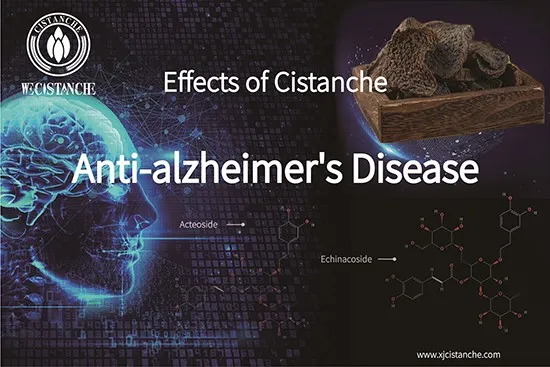
cistanche-prevent Alzheimers disease
Regulating cholinergic system function and improving learning and memory abilities
Dysfunction of the cholinergic system is an important cause of cognitive decline in elderly dementia. Cholinergic neurons in the cerebral cortex and hippocampus are responsible for regulating cognitive functions such as learning and memory. In elderly dementia patients, a large number of cholinergic neurons are lost, and acetylcholine (ACh) synthesis is reduced, leading to cognitive decline. Cistanche tubulosa can enhance the activity of acetylcholinesterase (AChE) and cholinergic acetyltransferase (ChAT) in the brain by regulating the function of the cholinergic system, increasing the synthesis and release of acetylcholine, improving the function of cholinergic neurons, thereby enhancing learning and memory abilities, and alleviating symptoms such as memory loss and cognitive impairment. This is also one of its important mechanisms for intervening in elderly dementia, which echoes the efficacy of traditional Chinese medicine's "tonifying the kidney and nourishing the essence, strengthening the brain and mind", achieving an organic combination of traditional Chinese medicine theory and modern pharmacology.
Regulating the cAMP signaling pathway to promote the expression of neurotrophic factors
Based on network pharmacology and animal experiments, it has been found that Cistanche tubulosa can significantly increase the expression levels of cAMP, PKA, and P-CREB proteins in the brain by regulating the cAMP signaling pathway, thereby promoting the expression of downstream neurotrophic factors (such as BDNF). BDNF can promote the growth, differentiation, and survival of neurons, repair damaged neurons, improve the morphology and function of hippocampal neurons, and enhance learning and memory abilities. This provides a new molecular mechanism supporting Cistanche tubulosa's intervention in elderly dementia, and further elucidates the modern biological basis of the kidney tonifying and essence nourishing method of "nourishing the marrow with essence and nourishing the brain with marrow", providing direction for further in-depth research in the future.
As a neurodegenerative disease with multiple causes and mechanisms, the treatment of senile dementia needs to take into account both the symptoms and the progression of the disease. Western medicine treatment mainly focuses on symptomatic support. Although it can temporarily improve cognitive function, it has limitations such as multiple adverse reactions and poor long-term efficacy; Traditional Chinese medicine takes the "holistic concept" and "syndrome differentiation and treatment" as its core. Starting from the etiology and pathogenesis, it adopts the method of nourishing kidney essence and nourishing brain marrow through intervention, which can fundamentally nourish kidney essence, nourish brain marrow, and balance phlegm and blood stasis, achieving the same treatment for both symptoms and root causes, and has unique advantages.
As the core medication of the kidney tonifying and essence nourishing method, Cistanche tubulosa is suitable for long-term use by elderly patients with kidney essence deficiency due to its warm but not dry, and nourishing but not severe properties. Clinical observations have shown that the combination of Cistanche tubulosa and Western medicine in the treatment of elderly dementia can significantly improve clinical efficacy, improve patients' cognitive function and daily living ability, alleviate traditional Chinese medicine syndromes, and have a low incidence of adverse reactions and good safety. This is consistent with relevant clinical research results, highlighting the clinical value and application prospects of this treatment method. Modern pharmacological research further reveals that Cistanche tubulosa can protect nerve cells and repair brain function by inhibiting A β deposition, abnormal phosphorylation of tau protein, antioxidant and anti-inflammatory effects, regulating cholinergic system function, regulating cAMP signaling pathway, and other multi-target and multi-link mechanisms. This provides a solid modern scientific basis for its clinical application and also achieves the organic integration of traditional Chinese medicine theory and modern pharmacological research, enriching the integrated treatment ideas of traditional Chinese and Western medicine for elderly dementia.
However, there are still certain limitations in current related research: firstly, the clinical observation sample size is small, the treatment course is short, and there is a lack of large sample and long-term follow-up studies. The stability and long-term effects of the therapeutic effect need to be further verified; Secondly, research on the mechanism of action has mostly focused on animal experiments and basic studies, with relatively little molecular mechanism research at the clinical level, which has not fully elucidated the specific pathway of action of the kidney tonifying and essence nourishing method (mainly Cistanche tubulosa) in the human body; Thirdly, further exploration is needed to optimize the compatibility of traditional Chinese medicine formulas and innovate the administration methods (such as making granules or capsules) to improve patient compliance.
In the future, the clinical sample size should be expanded and long-term follow-up studies should be conducted to further verify the clinical efficacy and safety of the kidney tonifying and essence nourishing method mainly based on Cistanche tubulosa; At the same time, combining modern research methods such as network pharmacology and molecular biology, we will deeply explore the specific molecular mechanisms of its intervention in elderly dementia, clarify the relationship between the active ingredients of Cistanche tubulosa and the targets related to elderly dementia, and provide scientific basis for optimizing the compatibility of prescriptions; In addition, it is also possible to explore the combined application of kidney tonifying and essence tonifying method, acupuncture and moxibustion, rehabilitation training and other therapies, innovate the drug delivery mode, optimize the treatment scheme, further improve the treatment effect, provide more new ideas and new methods for the prevention and treatment of senile dementia, promote the standardized and scientific development of integrated traditional Chinese and western medicine in treating senile dementia, and better serve the health needs of elderly patients.