Comparative Analysis Of The Differences And Advantages And Disadvantages Between The Proportion Extract And Content Extract Of Cistanche Tubulosa
Aug 27, 2026
As a traditional precious medicinal and edible ingredient, Cistanche tubulosa is known as the "Desert Ginseng". Its core active ingredients include phenylethanolic glycosides, echinacosides, verbascoside, polysaccharides, etc. It has multiple effects such as nourishing and regulating, strengthening the body, and is widely used in pharmaceutical preparations, functional health products, and nourishing foods. With the iterative upgrading of plant extraction technology, the mainstream extracts of Cistanche tubulosa on the market are mainly divided into two categories: proportional extracts and content extracts.

superman herbs cistanche
Most practitioners and consumers easily confuse the two types of products, mistakenly thinking that there is only a difference in concentration, but in fact, there are essential differences between the two in terms of core definition, production process, ingredient standards, quality stability, cost pricing, and applicable scenarios. Both types of extracts have their own advantages and disadvantages, suitable for different market demands and product positioning, and there is no absolute distinction between good and bad.
The essential difference between core definition and judgment criteria
The judgment criteria are the core basis for distinguishing the proportion extract and content extract of Cistanche tubulosa, and also the root cause of all differences between the two types of products. The quantitative logic and judgment system of the two are completely independent, forming two mature industry product standards.
(1) Proportion extract of Cistanche tubulosa
The proportion extract of Cistanche tubulosa, also known as the ratio extract, is a basic and universal category in the plant extraction industry. The core judgment standard is the raw material concentration ratio, which is based solely on the ratio of the weight of the raw medicinal material to the weight of the finished extract. The mainstream specifications in the industry include 10:1, 20:1, and 30:1, which specifically refer to dried meat stems of native Cistanche tubulosa weighing 10 times, 20 times, and 30 times. After impurity removal, extraction, concentration, and drying, they are made into 1 kilogram of finished extract.

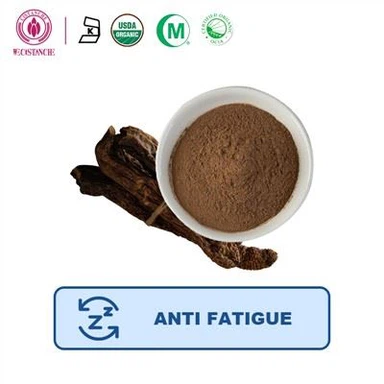
cistanche extract powder
The core logic of proportional extraction is "material concentration", and the core production goal is to remove components that are difficult for the human body to absorb, such as crude fiber, excess water, and ineffective impurities, from the raw materials, and enrich various natural nutrients in Cistanche tubulosa. This category only specifies the production concentration ratio and basic physical and chemical indicators (fineness, moisture, ash content, microorganisms, heavy metals), and does not lock in the specific content values of core active ingredients. As long as the concentration ratio of the finished product meets the standard and the basic safety indicators are qualified, it is considered a compliant product, and there is no need to specifically control the content of core active ingredients such as echinacoside and total phenylethanolic acid.
(2) Extract of Cistanche tubulosa content
The content extract of Cistanche tubulosa, also known as standardized quantitative extract, is a high-end refined extraction category that completely abandons the judgment logic of magnification concentration. It uses the precise content of core active ingredients in the finished product as the only judgment standard and is a refined raw material defined based on ingredient data. The industry standard is based on the core indicators of echinacoside, verbascoside, and total phenylethanolic acid. Common specifications include echinacoside at 20%, 40%, and 50%, and total phenylethanolic acid at 30% and 85%. All specifications are accurately detected and calibrated by high-performance liquid chromatography (HPLC).

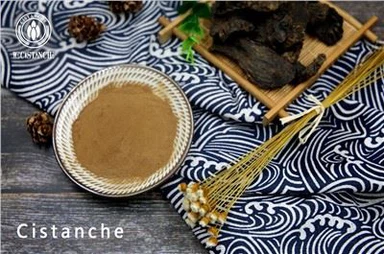
Cistanche tubulosa extract
The core logic of content extraction is "precise quantification of ingredients", and the production core goal is targeted enrichment and purification of core functional ingredients, eliminating ineffective impurities and redundant matrices, and strictly locking in the active ingredient content of each batch of finished products. Regardless of the production feeding ratio, as long as the core component detection value of the finished product meets the standard, it is a qualified product of the corresponding specification. The accuracy and stability of the components are the core requirements of this category.
Differences in Production Process and Quality Stability
The complexity and refinement of the production process directly determine the stability of the components, batch consistency, and product purity of the two types of extracts, and are also the core causes of the quality gap between the two.
(1) Production process and quality characteristics of proportional extract
The proportion extract of Cistanche tubulosa adopts the standardized basic extraction process commonly used in the industry, with a mature process, simple operation, and a high degree of automation. The overall process is: raw material screening of Cistanche tubulosa → cleaning and impurity removal → pure water or ethanol immersion extraction → low-temperature vacuum concentration → spray drying → screening and packaging. The entire process only completes the basic processes of impurity removal, concentration, and drying, without any fine chemical processes such as secondary purification, targeted enrichment of components, and component calibration.
Due to process limitations, there are natural shortcomings in the stability of the components of the proportional extract. There are differences in the origin, growth cycle, harvest season, and climate environment of the native raw materials of Cistanche tubulosa, and the natural active ingredient content itself will fluctuate. However, the proportion extract only controls the concentration ratio and does not standardize the calibration of the active ingredients. Therefore, there may be reasonable fluctuations in the content of core components such as echinacoside and polysaccharides in extracts from different batches, and the consistency of components between batches is weak. But this process has a short production cycle, low losses, stable production capacity, and can achieve large-scale mass production.

Cistanche tubulosa extract
(2) Production process and quality characteristics of content extract
On the basis of the basic extraction process, the extract of Cistanche tubulosa content has added multiple refined purification processes, making the production process more complex and the threshold higher. The complete process includes: high-quality raw material selection → multi-stage impurity removal cleaning → gradient ethanol segmented extraction → low-temperature concentration → column chromatography separation and purification → targeted component enrichment → component ratio calibration → sterile drying → precision screening → detection and packaging.
This process uses techniques such as column chromatography and segmented extraction to accurately separate ineffective fibers, impurities, and redundant matrices, and selectively enrich core active ingredients such as echinacoside and phenylethanolic acid. At the same time, the proportion of ingredients is manually calibrated to minimize batch differences. The finished product needs to undergo multiple refinement processes, resulting in higher purity of active ingredients, fewer impurities, minimal differences in ingredient values between batches, and strong quality stability and consistency, completely avoiding quality fluctuations caused by natural differences in raw materials. However, complex processes result in high production losses, long cycles, high equipment precision requirements, and limited production capacity.
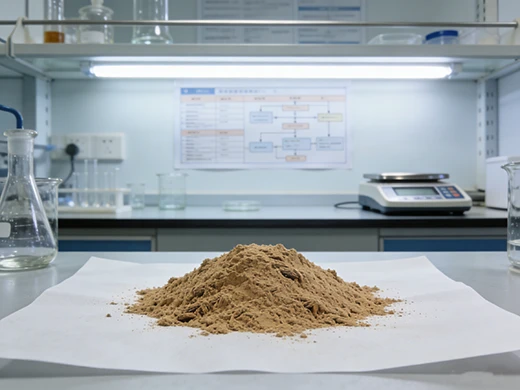
Cistanche tubulosa extract
Differences in testing standards and compliance
The testing standards are an important basis for distinguishing the market positioning and compliance level of two types of extracts, directly determining the applicable scenarios and market entry thresholds of the product.
(1) Proportional Extract Testing Standards
Proportional extract is a basic universal raw material with a low industry testing threshold. The testing items mainly focus on basic safety and physicochemical indicators, and only require testing of conventional indicators such as product appearance, powder fineness, moisture content, ash content, heavy metals, and total microbial colony count. There is no need for quantitative testing of core active ingredients such as echinacoside and verbascoside.
The compliance criteria for products are loose. As long as the concentration ratio meets the standard and the basic safety indicators comply with industry standards, they can be sold from the factory without the need for active ingredient testing reports. The testing process is simple, cost-effective, and efficient, suitable for the large-scale circulation needs of the mass market.

Cistanche tubulosa experiment
(2) Content Extraction Testing Standards
Content extract belongs to high-end standardized raw materials, which implement strict quantitative testing standards and are representative of high-compliance raw materials in the industry. The finished product must be accurately quantified by high-performance liquid chromatography (HPLC), with clear labeling of the specific content of core components such as echinacoside, verbascoside, and total phenylethanolic glycosides. Each batch of products must provide a dedicated and traceable third-party testing report.
In addition to quantitative testing of core components, the product also requires full coverage of basic safety indicator testing. The dual testing standards greatly improve the compliance, safety, and authenticity of the product, and the data can be traced and verified, fully meeting the strict admission requirements of high-end markets, export trade, and pharmaceutical-grade products.
In-depth analysis of the core advantages and disadvantages of two types of extracts
Based on differences in definition, process, testing, and quality, proportional extracts and content extracts form a completely different system of advantages and disadvantages, adapting to different market demands and product development scenarios.
(1) Advantages and disadvantages of proportional extract of Cistanche tubulosa
Core advantages:

cistanche powder
Click here to view Cistanche Tubulosa Extract Natural Supplement Powder
【Ask for more】 Email:cindy.xue@wecistanche.com / WhatsApp: 0086 18599088692 / WeChat: 18599088692
Firstly, it has extremely high cost-effectiveness and significant cost advantages. The production process of proportional extract is simple, with low losses, sufficient production capacity, and low testing costs. The comprehensive production cost is much lower than that of content extract, and the terminal price is affordable. It is currently the most cost-effective raw material for deep processing of Cistanche tubulosa in the market, suitable for large-scale and low-cost product development.
Secondly, the ingredients are comprehensive and retain the natural active system. This extract only removes ineffective impurities and retains all natural nutritional components such as polysaccharides, flavonoids, amino acids, and trace elements native to Cistanche tubulosa. The composition spectrum is more complete, taking into account multiple synergistic nourishing effects, which is in line with the traditional Chinese medicine concept of "holistic regulation" and will not cause nutritional deficiencies due to the purification of a single component.
Thirdly, it has wide adaptability and mature mass production capabilities. The product has good water solubility, uniform and delicate texture, and can be directly applied without complex processing. It is suitable for mass end products such as solid beverages, compressed candies, ordinary nourishing gift boxes, and daily dietary supplements. The production line has strong adaptability and can meet the needs of large-scale and normalized production.
Fourthly, the market compliance threshold is low, and the liquidity is strong. The product meets the basic raw material standards for domestic ordinary food and health food, with a simple filing process and no need for complex ingredient verification procedures. It has a wide market circulation range and a large audience base.
Core disadvantages:

Main Chemical Constituents of Cistanche tubulosa
Firstly, the content of active ingredients is unstable, and there are significant differences between batches. Due to natural differences in raw materials, the content of core functional ingredients in different batches of products fluctuates greatly, making it difficult to accurately control the intake of active ingredients. The stability of efficacy is weak, making it difficult to support precise efficacy claims.
Secondly, the purity of the active ingredients is low, and the targeted efficacy is weak. Compared to the purified content extract, the core active ingredient concentration of the proportional extract is lower, and the efficacy intensity per unit weight of the product is limited, with a relatively gentle onset of action, which cannot meet the high-intensity and precise conditioning needs.
Thirdly, it cannot meet high-end compliance requirements. Due to the lack of fixed ingredient content standards and precise detection data support, it cannot be used in high-threshold scenarios such as pharmaceutical preparations, high-end functional health products, and customized export products, resulting in a lower market limit for the product.
(2) Advantages and disadvantages of extract from Cistanche tubulosa content
Core advantages:
Firstly, the ingredients are precise and stable, and the efficacy is controllable and quantifiable. The core active ingredient content is fixed, with minimal batch differences. The effective ingredient content of each batch of products can be accurately traced, enabling precise control of product efficacy intensity and human intake. The stability and reliability of efficacy are extremely high, supporting precise and specialized efficacy claims.
Secondly, the active ingredients have high purity and strong targeted efficacy. Through targeted purification and enrichment, the concentration of core functional components such as pineal chrysanthemum glycosides and total phenylethanolic glycosides has been significantly increased, eliminating a large amount of ineffective matrices. The unit dose has stronger efficacy and faster onset, accurately adapting to the core functional requirements of nourishing and consolidating the essence of Cistanche tubulosa.
Thirdly, it has a high compliance level and is suitable for high-end scenarios. Relying on comprehensive testing reports and accurate ingredient data, it can meet the entry standards of high-threshold markets such as pharmaceutical preparations, high-end functional health products, cross-border exports, high-end customized tonics, medical beauty and health raw materials, etc. The product added value and market upper limit are extremely high.
Fourthly, the degree of quality standardization is high. The entire process of production, testing, and quality control is standardized and refined, and product quality is not affected by natural differences in raw materials. The brand stability and market reputation are better, making it suitable for the layout of high-end branded products.

Cistanche facial mask
Core disadvantages:
Firstly, the production cost is high, and the cost-effectiveness is low. The complex purification process, strict raw material screening, and high testing costs result in a comprehensive selling price of the product that is much higher than that of the proportional extract, and the terminal product is priced too high, with a relatively narrow audience range.
Secondly, the natural ingredient spectrum is slightly lacking. In order to purify the core active ingredients, some secondary natural nutrients will be lost during the purification process. Compared to proportional extracts, it is impossible to fully preserve the natural nutritional system of Cistanche tubulosa, and the overall conditioning is slightly insufficient in comprehensiveness.
Thirdly, production capacity is limited, and the supply cycle is longer. The refined production process has high losses, long cycles, and high equipment requirements, making it impossible to achieve unlimited gauge modular mass production. When purchasing in large quantities, the supply cycle is longer, and the flexibility of the supply chain is slightly inferior to that of proportional extraction.
Comparison of precise applicable scenarios for two types of extracts
By combining the advantages, disadvantages, and product characteristics of the two types of extracts, a clear market division has been formed, which accurately adapts to end products of different levels and needs, and is a complementary rather than a substitute industry category.
(1) Applicable scenarios for the proportion extract of Cistanche tubulosa
Featuring high cost-effectiveness, comprehensive nourishment, and popular appeal, it is suitable for mass terminal scenarios that do not require precise efficacy quantification and focus on daily health and conditioning. Specifically, it includes: regular dietary supplement powder, solid beverage of Cistanche tubulosa, compressed candy, regular nourishing and health gift box, daily substitute tea, affordable health products for the public, etc. This type of product does not require precise labeling of the content of a single active ingredient. It focuses on mild conditioning and long-term maintenance, pursuing cost-effectiveness and market popularity. Proportional extracts are the best choice.

(2) Applicable scenarios for the extract of Cistanche tubulosa content
Featuring precise efficacy, stable quality, and high-end compliance, it is suitable for scenarios with clear quantitative requirements for efficacy, high compliance standards, and branded high-end layout. Specifically, it includes: pharmaceutical preparations, high-end functional health foods, cross-border export customized raw materials, high-end medical beauty and health products, precision conditioning tonics, scientific research experimental formula raw materials, etc. This type of scenario requires strict requirements for ingredient stability, data traceability, and efficacy accuracy, and standardized content extracts must be selected.

cistanche powder
Summary and Suggestions for Choosing Applications
Overall, the core difference between the proportion extract and content extract of Cistanche tubulosa is essentially the positioning difference between basic nourishment for the masses and high-end precision efficacy. Proportional extracts are based on the core standard of concentration ratio, with a simple process, high cost-effectiveness, comprehensive ingredients, and suitability for the mass market. The shortcomings are unstable ingredients and no quantifiable standards for efficacy; The content extract is based on precise ingredients as the core standard, with stable quality, precise efficacy, strong compliance, and adaptability to the high-end market. The shortcomings are high cost and slightly insufficient integrity of natural ingredients.
In practical application and selection, there is no need to blindly pursue high purity and high specifications. It is necessary to make precise choices based on one's own needs: products that focus on affordable prices for the general public, daily health care, and bulk distribution should be prioritized, and proportional extracts should be used to balance cost and basic health benefits; Products that focus on high-end brands, precise conditioning, pharmaceutical grade quality, and export compliance must use extracts to ensure product efficacy stability and market compliance.
For industry practitioners, clearly distinguishing the characteristics and adaptation scenarios of two types of extracts can accurately match product positioning, control production costs, and avoid compliance risks; For consumers, recognizing the differences between the two can effectively avoid being misled by the concept of "high concentration, high purification", and make rational choices based on their own health needs, achieving precise, efficient, and reasonable health consumption. In the future, with the refined development of the big health industry, the two types of extracts will continue to play their respective roles, deeply cultivating the popular and high-end precision markets respectively, and jointly improving the deep processing industry system of Cistanche tubulosa.