Comparison Of Quality Of Cistanche Deserticola Harvested In Different Seasons Based On Intelligent Sensory Technology And Chemometrics
Oct 14, 2025
Abstract
Objective: To evaluate the quality differences of Cistanche deserticola harvested in spring and autumn using intelligent sensory technology combined with chemometric methods, providing a reference for its production and quality control.
Methods: The chromaticity values of C. deserticola samples were measured using a portable colorimeter, and odor profiles were analyzed with an electronic nose. The contents of iridoids and phenylethanoid glycosides were quantified via HPLC, and polysaccharide contents were also determined. Comprehensive analysis was carried out using Pearson correlation, orthogonal partial least squares discriminant analysis (OPLS-DA), and other chemometric tools to distinguish the differences between spring- and autumn-harvested samples.
Results: The main odor differences between spring and autumn samples were associated with nitrogen oxides and terpene components. Chromatically, the L* and b* values of spring-harvested samples were higher, indicating a brighter and more yellow appearance compared to the darker autumn-harvested samples. In terms of texture, the hardness (N-value) of autumn-harvested C. deserticola was significantly lower than that of spring-harvested samples, indicating a softer texture. The contents of key active components-geniposidic acid, loganic acid, echinacoside, cistanoside A, and verbascoside-were significantly higher in autumn-harvested samples, with respective increases of 2.1, 4.1, 3.1, 3.4, and 1.4 times compared to spring-harvested ones. Although the polysaccharide content in autumn samples was slightly lower, the difference was not statistically significant.
Conclusion: C. deserticola harvested in autumn has a darker color, softer texture, and higher levels of key active components such as phenylethanoid glycosides and iridoids, compared to those harvested in spring. These findings provide valuable insights for the seasonal quality evaluation of C. deserticola.
Keywords: Cistanche deserticola Y.C. Ma; harvesting season; quality; appearance traits; phenylethanoid glycosides; iridoids; geniposidic acid; loganic acid; echinacoside; cistanoside A; verbascoside

cistanche Base
1. Introduction
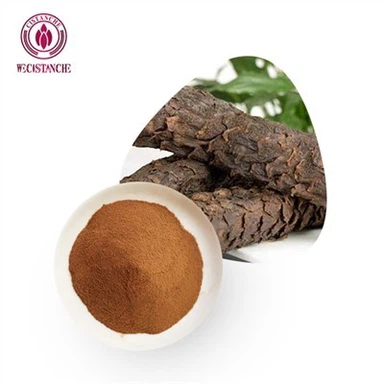
Cistanche deserticola is a parasitic plant of the Orobanchaceae family. It is traditionally used in Chinese medicine and listed as a premium-grade herb in the Shennong's Classic of Materia Medica. High-quality C. deserticola is often described as having pine cone-like scales, a plump and oily appearance, soft texture, and sweet flavor.
Its main active chemical constituents include phenylethanoid glycosides and polysaccharides, which contribute to antioxidant, hepatoprotective, neuroprotective, and memory-enhancing effects. Iridoids, another major component group, exhibit antibacterial, anti-inflammatory, and analgesic properties.
According to the Chinese Pharmacopoeia (2020 edition), C. deserticola should be harvested either in early spring (before sprouting) or late autumn (before frost). These are referred to as Spring Cistanche and Autumn Cistanche, respectively. Previous studies have shown significant seasonal differences in the content of echinacoside and verbascoside, with higher values in autumn. Other studies also noted seasonal variations in polysaccharide content and other glycosides.
However, comprehensive and objective comparisons of C. deserticola quality across seasons remain limited. This study aims to fill that gap using intelligent sensory tools (colorimeter, electronic nose), HPLC analysis for active components, and chemometric evaluation.

cistanche harvest season
2. Materials and Instruments
2.1 Materials
Samples were harvested from C. deserticola plants collected in Alxa Left Banner, Inner Mongolia and Minqin County, Gansu Province, during their medicinal maturity stages (October–November 2023 and April–May 2024). All samples were authenticated by Prof. Jin Ling of Gansu University of Chinese Medicine. Post-harvest, samples were dried at 50°C, ground, and sieved (No. 4 sieve) for analysis.
2.2 Instruments
NH310+ Portable Colorimeter (3NH, China)
PEN3 Electronic Nose (AIRSENSE, Germany)
GY-4 Fruit Texture Analyzer (AIDBORG, China)
LC-2023C-Plus HPLC System (Shimadzu, Japan)
Analytical Balance, Ultrasonic Cleaner, and other lab equipment

3. Methods and Results
3.1 Intelligent Sensory Analysis
3.1.1 Odor Detection via Electronic Nose
Samples (1.0 g) were placed in 10 mL headspace vials and allowed to equilibrate for 5 min before analysis. The main sensors responding to odor were W5S, W1W, W2W, and W1S-indicating sensitivity to terpenes, aromatics, nitrogen oxides, and sulfur compounds.
Autumn-harvested samples showed stronger signals for nitrogen oxides, while spring samples had higher levels of terpenes, indicating distinct seasonal odor profiles.
3.1.2 Color Measurement
Using the NH310+ colorimeter (D65 light, 10° view angle), L*, a*, and b* values were recorded.
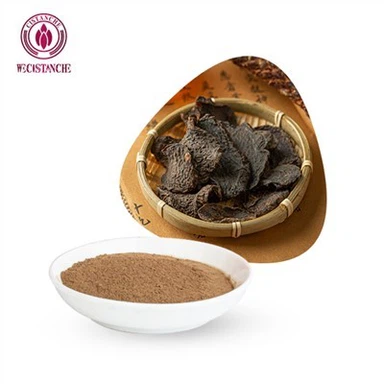
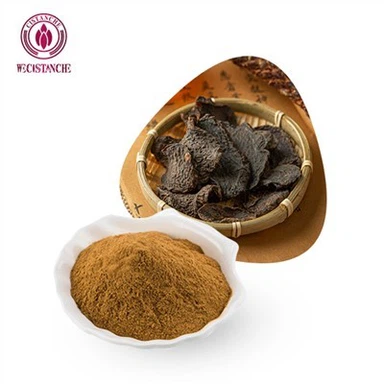
Spring samples had higher L* (brightness) and b* (yellowness) values, while autumn samples appeared darker. PCA analysis confirmed significant seasonal separation based on color metrics.
3.1.3 Texture Testing
Hardness was measured using a fruit texture analyzer. Autumn samples had significantly lower hardness (N = 37.87) compared to spring samples (N = 75.80), indicating a softer texture in autumn.

3.2 HPLC Fingerprint and Active Component Analysis
3.2.1 Fingerprint Establishment
Fifteen batches were analyzed using HPLC with a ZORBAX Eclipse XDB-C18 column and gradient elution. Reference compounds included geniposidic acid, loganic acid, echinacoside, cistanoside A, verbascoside, among others.
The similarity of chromatographic fingerprints among all batches was above 0.9, indicating stable quality regardless of season.
3.2.2 Quantification of Active Components
Active compounds were quantified and compared between seasons. Autumn samples showed significantly higher levels of:
Geniposidic acid (2.1× spring)
Loganic acid (4.1× spring)
Echinacoside (3.1× spring)
Cistanoside A (3.4× spring)
Verbascoside (1.4× spring)
No significant differences were found for 8-epiloganic acid or acetyl-verbascoside.

cistanche factory
4. Conclusion and Outlook
The quality of Cistanche deserticola is significantly influenced by the harvesting season. Autumn-harvested samples are darker, softer, and richer in active iridoids and phenylethanoid glycosides. These findings offer a scientific basis for the optimal harvesting time and quality control of C. deserticola.
In a follow-up study, we will further examine the polysaccharide content variations across seasons, using advanced quantification techniques to assess their contribution to the overall quality and efficacy of C. deserticola.