Daratumumab, A New Approach For The Treatment Of Proliferative Glomerulonephritis With Monoclonal IgG Deposition
Oct 11, 2024
Proliferative glomerulonephritis with monoclonal immunoglobulin deposition (PGNMID) is a disease that can affect the kidneys. In 2004, Nasr proposed that PGNMID should be classified as a monoclonal gammopathy (MGRS). In this disease, monoclonal immunoglobulins are deposited in the glomeruli, causing complement activation, glomerulonephritis, and proliferation. The clinical features of PGNMID include proteinuria, hematuria, renal insufficiency, and peripheral edema, which are nonspecific compared with other renal diseases.

Click to Cistanche for kidney disease
Unfortunately, there is a lack of standardized treatment options for the management of PGNMID. Traditional treatment options are renin-angiotensin receptor system antagonists (RASi) and immunosuppressants, and their efficacy remains controversial. Therefore, new treatment options are urgently needed to fill the corresponding gaps.
Daratumumab was originally approved for the treatment of multiple myeloma, and it has also attracted attention in the field of renal disease due to its mechanism of action of targeting CD38-expressing plasma cells. Recently, a case from Guizhou Hospital in my country suggested that daratumumab can treat PGNMID with IgG deposition.
Renal biopsy and hematological examination
Renal biopsy showed sclerosis in 2 of 8 glomeruli, and 6 glomeruli showed moderate diffuse proliferation of mesangial cells and interstitium with endothelial cell proliferation. Immunofluorescence showed clump-like and diffuse C3, Clq, IgG, and x light chain deposition in the glomerular mesangial area. IgG subclass staining showed strong positive IgG3, weak to negative staining of IgG1, IgG2, IgG4, and A light chains. The above results are consistent with IgG3 PGNMID.

No monoclonal antibodies were detected in the initial bone marrow biopsy, and bone marrow flow cytometry showed that plasma cells accounted for about 0.15% of the total nucleated cells, and the immunophenotypes CD38, CD138, and CD19 were all positive. The results of serum protein electrophoresis, serum-free light chain test, and urine protein electrophoresis were all normal.
B cell subsets and immunophenotypes
B cell subsets and immunophenotypes were evaluated at 2, 6, and 12 weeks of treatment. The results showed that the absolute numbers of naive B cells (CD19+, CD27-, and IgD+), marginal zone B cells (CD19+, CD27-, and IgD+), memory B cells (CD19+, CD27+, and CD38-), transitional B cells (CD19+, CD24+, and CD38+), and plasmablasts (CD19+ and CD38+) decreased. Of note, the absolute counts of transitional B cells (CD19+, CD24+, and CD38+) and plasmablasts (CD19+ and CD38+) were unmeasurable at the second and third evaluations.
Treatment
The patient had a history of hypertension for more than 10 years and was treated with oral valsartan (80 mg/d). At admission, the patient's serum creatinine and proteinuria were 0.81 mg/dL and 1.07 g/d, respectively, indicating stage 2 chronic kidney disease (CKD), so the patient was treated with valsartan (80 mg/d) and prednisone (50 mg/d). However, after 1 month of treatment, the patient's proteinuria and serum creatinine levels remained almost unchanged. Therefore, the patient was treated with daratumumab (400 mg/d, for 2 consecutive days), with a total of 800 mg. After receiving daratumumab treatment, the dose of prednisone was halved (25 mg/d), and valsartan remained unchanged. Methylprednisolone sodium succinate 20 mg and calcium gluconate 1 g were given intravenously before each infusion, and promethazine hydrochloride 25 mg was injected intramuscularly at the same time. Daratumumab treatment was successfully completed without allergic reactions. However, 2 weeks after treatment, the patient developed a lung infection and was discharged after active anti-infection treatment.
No.4 Follow-up
One month before daratumumab treatment (i.e., hormone + valsartan treatment), the patient's urine red blood cells increased to 3+ and urine protein increased to 2.27g/d. After daratumumab treatment, the patient's urine red blood cells dropped to 2+, and at 16 weeks, it was weakly positive. One month after daratumumab treatment, the patient's edema completely subsided, proteinuria was 0.55g/d, and serum creatinine was 1.26mg/dL. After 3 months of treatment, the patient's condition further improved, proteinuria dropped to 0.18g/d, and serum creatinine dropped to 0.86mg/dL.

Unfortunately, after discharge, the patient was lost to follow-up and re-examined in our hospital in May 2024. At this time, she clinically showed facial and lower limb edema. Laboratory tests showed serum creatinine of 1.28mg/dL, proteinuria of 1.24g/d, serum albumin level of 33.2g/L, and urine test showed red blood cells 3+. The patient's PGNMID disease progression was initially suspected.
Case discussion
PGNMID is a unique glomerular injury, and the most common IgG deposition subtype is IgG3. Unlike other subtypes, IgG3 has a higher charge and molecular therapy, can self-aggregate through FC-C, and has a strong complementary positioning ability.
Currently, PGNMID patients receiving traditional treatment regimens have poor renal remission rates and poor prognoses. A retrospective study in 2009 suggested that among 9 PGNMID patients, only 2 achieved complete remission, 2 achieved partial remission, and 1 patient progressed to end-stage renal disease (ESRD.) Among PGNMID patients receiving immunosuppressants, 11% of patients achieved complete remission and 33% achieved partial remission. 1/6 patients will progress to ESRD.
Recently, Gumber et al. found that monoclonal antibodies may have the ability to treat PGNMID and improve the clinical manifestations of patients. However, the current challenge of using this therapy in clinical practice is that it is impossible to monitor circulating biomarkers to guide patients in choosing specific monoclonal antibodies and how to use them. Previous studies have shown that only 35% to 40% of pathogenic substances were detected in bone marrow biopsies of PGNMID patients, which can provide guidance for the selection and dosage of specific monoclonal antibodies. Patients who cannot undergo bone marrow biopsy or do not detect pathogenic substances in bone marrow biopsy, can only rely on chemotherapy experience for medication. Given that IgG is the most common type of deposition, anti-plasma cell drugs are recommended.
Some experts agree that chemotherapy should be performed on PGNMID patients with CKD ≥ 3, and individualized drug treatment regimens should be selected as much as possible. Guard et al. found that rituximab treatment was better in CD20-positive PGNMID patients. Previous studies have shown that 5 of 7 such patients achieved complete remission and 2 achieved partial remission after receiving rituximab treatment, and the efficacy was better than other existing drugs.
Daratumumab is also another treatment option worthy of attention. In a phase 2 study, 10 patients with PGNMID received at least one dose (16 mg/kg) of daratumumab. After 12 months of follow-up, the results showed that all patients had improved renal function, of which 4 patients achieved complete remission and 6 achieved partial remission. The safety was acceptable, and the main serious adverse event was a serious infection. It is worth noting that one patient had significant improvement in proteinuria and serum creatinine after only one infusion of daratumumab, which lasted for at least 12 months. Overall, daratumumab is one of the alternative options for the treatment of PGNMID.
For this patient, based on the results of B cell subsets and immune phenotype examinations, we selected daratumumab for treatment, monitored corresponding markers such as CD38, and established the timing of daratumumab discontinuation. In the future, systematic clinical studies of daratumumab for the treatment of PGNMID should be carried out to optimize the use strategy of daratumumab.
How Does Cistanche Treat Kidney Disease?
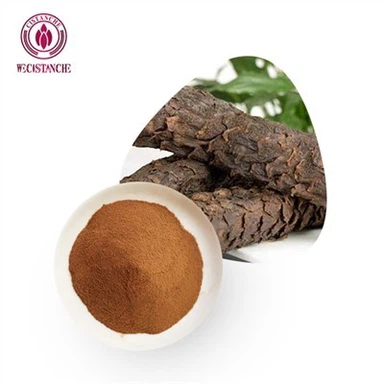
Cistanche is a traditional Chinese herbal medicine used for centuries to treat various health conditions, including kidney disease. It is derived from the dried stems of Cistanche deserticola, a plant native to the deserts of China and Mongolia. The main active components of cistanche are phenylethanoid glycosides, echinacoside, and acteoside, which have been found to have beneficial effects on kidney health.
Kidney disease, also known as renal disease, refers to a condition in which the kidneys are not functioning properly. This can result in a buildup of waste products and toxins in the body, leading to various symptoms and complications. Cistanche may help treat kidney disease ase through several mechanisms.
Firstly, cistanche has been found to have diuretic properties, meaning it can increase urine production and help eliminate waste products from the body. This can help relieve the burden on the kidneys and prevent the buildup of toxins. By promoting diuresis, cistanche may also help Reduce high blood pressure, a common complication of kidney disease.
Moreover, cistanche has been shown to have antioxidant effects. Oxidative stress, caused by an imbalance between the production of free radicals and the body's antioxidant defenses, plays a key role in the progression of kidney disease. ies help neutralize free radicals and reduce Oxidative stress, thereby protecting the kidneys from damage. The phenylethanoid glycosides found in cistanche have been particularly effective in scavenging free radicals and inhibiting lipid peroxidation.

Additionally, cistanche has been found to have anti-inflammatory effects. Inflammation is another key factor in the development and progression of kidney disease. Cistanche's anti-inflammatory properties help reduce the production of pro-inflammatory cytokines and inhibit the activation of mandatory pathways for inflammation, thus alleviating inflammation in the kidneys.
Furthermore, cistanche has been shown to have immunomodulatory effects. In kidney disease, the immune system can be dysregulated, leading to excessive inflammation and tissue damage. Cistanche helps regulate the immune response by modulating the production and activity of immune cells, such as T cells and macrophages. This immune regulation helps reduce inflammation and prevent further damage to the kidneys.
Moreover, cistanche has been found to improve renal function by promoting the regeneration of renal tubes with cells. Renal tubular epithelial cells play a crucial role in the filtration and reabsorption of waste products and electrolytes. In kidney disease, these cells can be damaged, leading to damaged renal function. Cistanche's ability to promote the regeneration of these cells helps restore proper renal function and improve overall kidney health.
In addition to these direct effects on the kidneys, cistanche has been found to have beneficial effects on other organs and systems in the body. This holistic approach to health is particularly important in kidney disease, as the condition often affects multiple organs and systems. che has been shown to have protective effects on the liver, heart, and blood vessels, which are commonly affected by kidney disease. By promoting the health of these organs, cistanche helps improve overall kidney function and prevent further complications.
In conclusion, cistanche is a traditional Chinese herbal medicine used for centuries to treat kidney disease. Its active components have diuretic, antioxidant, anti-inflammatory, immunomodulatory, and regenerative effects, which help improve renal function and protect the kidneys from further damage. , cistanche has beneficial effects on other organs and systems, making it a holistic approach to treating kidney disease.