Optimization Of Ultrasonic-Assisted Sugar Infiltration And Quality Evaluation Of Desert Cistanche (Cistanche Deserticola) Preserved Fruit
Sep 30, 2026
Summary
Desert Cistanche (Cistanche deserticola Y. C. Ma) is a distinctive medicine–food homology resource from Northwest China's sandy regions, valued for both ecology and nutrition. Turning it into preserved fruit snacks can extend the value chain from raw herb to consumer-ready functional foods.
In this study, we optimized an ultrasonic-assisted sugar infiltration (osmotic infusion) process for Desert Cistanche slices using single-factor experiments and a Box–Behnken response surface design, followed by sensory and quality evaluation. The optimized process produced preserved fruit with a golden-yellow appearance, uniform moisture, a soft-chewy and springy bite, no hard center, and clean sweetness without off-flavors.
Cistanche Factory Process
Click to learn more

Optimal conditions:
Sugar permeation time: 60 min
Sugar permeation temperature: 50 °C
Ultrasonic power: 90 W
Impact on sensory score (high → low):
Time > Ultrasonic power > Temperature
This work provides a practical processing reference for functional Cistanche preserved fruit and supports high-value utilization of Desert Cistanche resources.
Keywords (SEO): Desert Cistanche preserved fruit, Cistanche deserticola snack, ultrasonic sugar infiltration, ultrasound osmotic dehydration, medicine–food homology, phenylethanoid glycosides, echinacoside, acteoside, functional preserved fruit, Cistanche processing technology
1. Why Develop Desert Cistanche into Preserved Fruit?
1.1 What is Desert Cistanche (Cistanche deserticola)?
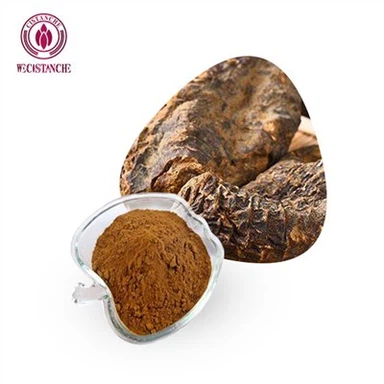
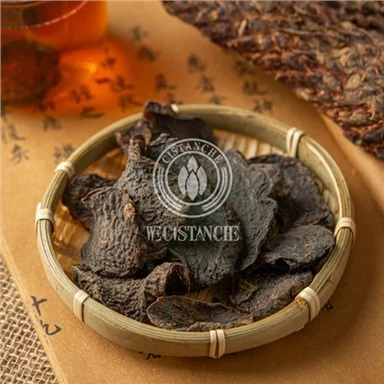
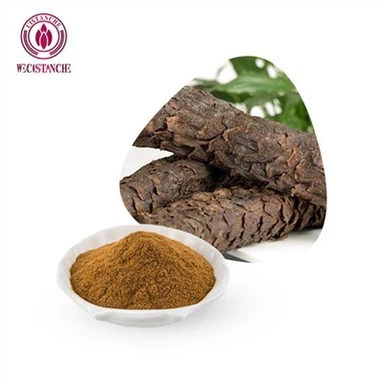
Cistanche deserticola is a perennial parasitic herb in the Orobanchaceae family, mainly parasitizing Haloxylon ammodendron roots. It is a high-value traditional Chinese medicinal material, with fleshy scales arranged neatly on the outside.
Globally, about 20 Cistanche species occur mainly across arid regions of Eurasia and North Africa. In China, the two common types are Desert Cistanche and Tubulosa Cistanche.
Importantly for product developers: Desert Cistanche was officially included in China's "medicine–food homology" list on November 17, 2023, which strengthens its positioning for functional foods and daily-health snack formats.
1.2 Functional value and major bioactives (why consumers care)
Desert Cistanche is known for rich nutritional and functional components, including:
Phenylethanoid glycosides (PhGs) (often represented by acteoside/verbascoside and echinacoside)
Polysaccharides
Iridoids
Lignans
Trace elements
These compounds are frequently associated (in research contexts) with antioxidant, anti-inflammatory, anti-apoptotic, and memory-support potential-making Cistanche a promising ingredient for modern functional snacks.
Table 1. Sensory scoring criteria for desert C. deserticola preserved fruit
| Item (20 points each) | Scoring criteria | Score range |
|---|---|---|
| Taste/Flavor | Sweet–sour balanced; rich and mellow flavor; pleasant sweetness | 16–20 |
| Sweet taste present but flavor is slightly bland; no aftertaste | 10–15 | |
| Overly sweet or overly sour; poor flavor | 0–9 | |
| Texture/Mouthfeel | Moderate softness; good mouthfeel; compact/elastic tissue | 16–20 |
| Slightly soft or slightly firm; good mouthfeel; relatively compact tissue | 10–15 | |
| Too hard or too soft; poor mouthfeel; coarse tissue | 0–9 | |
| Appearance | Good plumpness/fullness | 16–20 |
| Relatively good plumpness | 10–15 | |
| Poor plumpness | 0–9 | |
| Color | Light yellow; uniform; no sugar crystallization ("sandiness") | 16–20 |
| Dark yellow; relatively uniform; none or slight sugar crystallization | 11–15 | |
| Dark yellow; non-uniform; obvious sugar crystallization | 0–9 | |
| Aroma | Strong and pure fruity aroma; no off-odors; long-lasting aroma | 16–20 |
| Lighter fruity aroma or slightly caramel-like; no off-odors | 10–15 | |
| No fruity aroma, or sour/burnt/sulfur-like off-odors | 0–9 |
2. Why Ultrasonic Sugar Infiltration for Preserved Fruit?
Preserved fruit is a classic category in China and remains popular, especially reduced-sugar versions. During preserved fruit manufacturing, sugar infiltration is essential to:
inhibit microbial growth (preservation effect)
improve flavor and mouthfeel
stabilize texture
Common infiltration technologies include:
microwave sugar infiltration
vacuum sugar infiltration
ultrasonic sugar infiltration
Microwave methods can lead to poorer color and higher browning. Vacuum infiltration offers fast, uniform penetration. Ultrasound, however, is widely used because it can create microscopic channels and accelerate mass transfer between tissue water and the infusion solution-often improving comprehensive quality.
Table 2. Factors and levels for the Box–Behnken design
| Level | A: Sugar permeation time (min) | B: Sugar permeation temperature (°C) | C: Ultrasonic power (W) |
|---|---|---|---|
| -1 | 50 | 45 | 80 |
| 0 | 60 | 50 | 90 |
| 1 | 70 | 55 | 100 |
3. Materials, Instruments, and Processing Flow (Factory-Friendly)
3.1 Raw materials
Desert Cistanche from Hotan, Xinjiang, China
70 °Brix concentrated apple juice (used as the sugar solution; lab-prepared)
3.2 Key reagents
Vitamin C, citric acid, sodium chloride, gallic acid, ethanol, Folin reagent, sodium carbonate, rutin, sodium nitrite, aluminum nitrate, sodium hydroxide, oxalic acid, and 2,6-dichlorophenolindophenol (all analytical grade).
3.3 Equipment (industrial relevance)
Main instruments used include:
ultrasonic processor (KH-800KDB)
drying oven
texture analyzer
colorimeter
GC–MS and LC–MS systems for aroma and bioactives
potentiometric titrator, UV–Vis spectrophotometer, centrifuge
Table 3. Results of the response surface experiment
| Run | A (coded / actual, min) | B (coded / actual, °C) | C (coded / actual, W) | Sensory score |
|---|---|---|---|---|
| 1 | 0 (60) | -1 (45) | 1 (100) | 77.4 |
| 2 | -1 (50) | 0 (50) | 1 (100) | 77.8 |
| 3 | 1 (70) | 0 (50) | -1 (80) | 73.2 |
| 4 | -1 (50) | 1 (55) | 0 (90) | 76.2 |
| 5 | 1 (70) | -1 (45) | 0 (90) | 79.8 |
| 6 | 0 (60) | -1 (45) | -1 (80) | 76.2 |
| 7 | 0 (60) | 0 (50) | 0 (90) | 86.0 |
| 8 | 1 (70) | 1 (55) | 0 (90) | 73.6 |
| 9 | 0 (60) | 0 (50) | 0 (90) | 87.8 |
| 10 | -1 (50) | -1 (45) | 0 (90) | 74.0 |
| 11 | 0 (60) | 0 (50) | 0 (90) | 85.4 |
| 12 | -1 (50) | 0 (50) | -1 (80) | 73.8 |
| 13 | 0 (60) | 0 (50) | 0 (90) | 86.2 |
| 14 | 0 (60) | 1 (55) | 1 (100) | 76.4 |
| 15 | 0 (60) | 0 (50) | 0 (90) | 83.8 |
| 16 | 1 (70) | 0 (50) | 1 (100) | 77.6 |
| 17 | 0 (60) | 1 (55) | -1 (80) | 75.8 |
4. Processing Method: Desert Cistanche Preserved Fruit
4.1 Workflow
Selection → Washing → Slicing → Blanching → Sugar infiltration (ultrasound-assisted) → Drying
4.2 Operating points (core production details)
Select uniform, undamaged Cistanche; wash gently to prevent tissue rupture and juice loss.
Peel and slice the Cistanche into uniform slices.
Steam blanch at 100 °C for 120 s.
Use 70 °Brix concentrated apple juice as the infusion solution; perform ultrasonic-assisted sugar infiltration under different conditions.
Dry in an oven at 80 °C for 3 h.
Table 4. Analysis of variance (ANOVA) for the regression model
| Source | Sum of squares | df | Mean square | F-value | P-value | Significance |
|---|---|---|---|---|---|---|
| Model | 379.52 | 9 | 42.17 | 17.74 | 0.0005 | Significant |
| A | 0.720 | 1 | 0.720 | 0.3028 | 0.5992 | |
| B | 3.64 | 1 | 3.64 | 1.53 | 0.2556 | |
| C | 13.00 | 1 | 13.00 | 5.47 | 0.0519 | |
| AB | 17.64 | 1 | 17.64 | 7.42 | 0.0296 | |
| AC | 0.040 | 1 | 0.040 | 0.0168 | 0.9004 | |
| BC | 0.090 | 1 | 0.090 | 0.0379 | 0.8513 | |
| A² | 122.55 | 1 | 122.55 | 51.55 | 0.0002 | |
| B² | 86.98 | 1 | 86.98 | 36.58 | 0.0005 | |
| C² | 98.84 | 1 | 98.84 | 41.57 | 0.0004 | |
| Residual | 16.64 | 7 | 2.38 | |||
| Lack of fit | 8.29 | 3 | 2.76 | Not significant | ||
| Pure error | 8.35 | 4 | 2.09 | |||
| Total | 396.16 | 16 |
Model statistics: R2=0.958R^2 = 0.958R2=0.958, Radj2=0.904R^2_{\text{adj}} = 0.904Radj2=0.904, Rpre2=0.6322R^2_{\text{pre}} = 0.6322Rpre2=0.6322
Std. dev.: 1.54; Mean: 78.88; C.V. (%): 1.95
5. Sensory Evaluation (Product-Led Optimization)
Sensory evaluation followed GB/T 10782-2021 using a scoring method. Ten trained panelists evaluated the product; results were averaged.
For commercial development, this is important: sensory score is a practical, consumer-facing index that directly reflects whether the product is attractive in appearance, aroma, taste, and texture.
Table 5. Color analysis of desert cistanche preserved fruit
| Parameter | Value |
|---|---|
| L* | 50.46 ± 0.42 |
| a* | -0.71 ± 0.01 |
| b* | 15.25 ± 0.38 |
| ΔE | 46.40 ± 1.02 |
6. Key Pre-Optimization Steps: Slice Thickness and Blanching Time
6.1 Best slice thickness: 4 mm
Slice thickness was tested at 2, 3, 4, 5, 6, and 7 mm while keeping other conditions constant.
If slices are too thin: structure is damaged, excessive sugar penetration causes overly soft mouthfeel, shrinkage, loss of flavor compounds, and lower yield after drying.
If slices are too thick: sugar infiltration becomes difficult; the center is under-sweetened, texture becomes hard, and color may be less appealing.
Best result: 4 mm thickness, with the highest sensory score (81.2). The product was plump, light yellow, moderately sweet, and pleasantly chewy while maintaining Cistanche character.
6.2 Best blanching time: 20 min
Blanching time was tested at 5, 10, 15, 20, 25, 30 min.
Too short: enzyme inactivation is insufficient; residual polyphenol oxidase promotes browning and darkening; tissue remains dense and resists sugar infiltration; taste can be raw/astringent.
Too long: tissue softens excessively; water-holding declines; collapse and shrink occur; soluble nutrients and flavor compounds leach out; chewiness decreases.
Best result: 20 min, yielding a plump appearance, light yellow color, balanced sweetness, and flexible texture.
Table 6. Analysis of aromatic compounds in desert cistanche preserved fruit
| No. | RT (min) | Relative content (%) | Compound (English) | Molecular formula | CAS No. |
|---|---|---|---|---|---|
| 1 | 13.62 | 33.9929 ± 0.1680 | 1-Octanol | C₈H₁₈O | 111-87-5 |
| 2 | 15.07 | 3.1072 ± 0.1401 | Isooctanol | C₈H₁₈O | 26952-21-6 |
| 3 | 17.21 | 0.9097 ± 0.0099 | 1-Octene | C₈H₁₆ | 111-66-0 |
| 4 | 18.56 | 47.1520 ± 0.1178 | Nonanal | C₉H₁₈O | 124-19-6 |
| 5 | 21.72 | 1.0031 ± 0.0016 | Cyclopentadecanol | C₁₅H₃₀O | 4727-17-7 |
| 6 | 22.52 | 0.4175 ± 0.0026 | 5,6-Epoxy-β-ionone | C₁₃H₂₀O₂ | 23267-57-4 |
| 7 | 23.43 | 6.7981 ± 0.0249 | Undecanal | C₁₁H₂₂O | 112-44-7 |
| 8 | 23.98 | 0.8613 ± 0.0181 | 1-Tetradecanol | C₁₄H₃₀O | 112-72-1 |
| 9 | 26.73 | 0.3909 ± 0.0102 | Dodecanal | C₁₂H₂₄O | 112-54-9 |
| 10 | 27.62 | 0.3438 ± 0.0092 | Decane | C₁₀H₂₂ | 124-18-5 |
| 11 | 30.12 | 0.8872 ± 0.0066 | Cyclopentadecane | C₁₅H₃₀ | 4727-17-7 |
| 12 | 31.97 | 0.7857 ± 0.0039 | Pentadecane | C₁₅H₃₂ | 629-62-9 |
| 13 | 32.50 | 0.1622 ± 0.0021 | Dodecane | C₁₂H₂₆ | 112-40-3 |
| 14 | 40.06 | 1.2256 ± 0.0203 | Pentadecane | C₁₅H₃₂ | 629-62-9 |
| 15 | 42.70 | 0.4593 ± 0.0074 | Eicosane | C₂₀H₄₂ | 112-95-8 |
| 16 | 46.27 | 0.2887 ± 0.0127 | Methyl palmitate | C₁₇H₃₄O₂ | 112-39-0 |
7. Optimization of Ultrasonic-Assisted Sugar Infiltration (Core of the Study)
7.1 Single-factor experiments (trend discovery)
Baseline conditions: sugar infiltration time 40 min, temperature 40 °C, ultrasonic power 70 W.
Test factors and levels:
Time: 20, 30, 40, 50, 60, 70 min
Temperature: 30, 35, 40, 45, 50, 55 °C
Ultrasonic power: 50, 60, 70, 80, 90, 100 W
Observed trends:
Sensory score increased and then decreased with longer time; peak at 60 min.
Sensory score increased then decreased with temperature; peak at 50 °C. Higher temperature increases membrane permeability and reduces solution viscosity, enhancing mass transfer-but overly high conditions can harm quality.
Sensory score rose with power in the 60–90 W range and peaked at 90 W.
7.2 Response surface methodology (Box–Behnken design)
Based on single-factor results and to reduce sugar crystallization ("sand returning") while maintaining sensory quality, the sugar solution mass fraction was set at 70%.
Three factors were selected:
A: infiltration time
B: infiltration temperature
C: ultrasonic power
A quadratic regression model was established for sensory score YYY in terms of A, B, and C, showing strong statistical significance and good fit. The analysis indicated that the effects were not purely linear: interactions and non-linear terms were significant.
Factor importance (high → low):
Time > Power > Temperature
7.3 Optimal processing parameters (rounded for production)
Model-predicted optimum was approximately:
60.5 min, 49.6 °C, 91.3 W
For practical manufacturing control, conditions were rounded to:
Time: 60 min
Temperature: 50 °C
Ultrasonic power: 90 W
Validation experiments showed excellent agreement between predicted and measured sensory scores (relative error about 0.4%), indicating the model can guide production.
Table 7. Texture analysis of desert cistanche preserved fruit
| Parameter | Value |
|---|---|
| Peel hardness (N) | 0.241 ± 0.038 |
| Springiness (mm) | 0.822 ± 0.297 |
| Flesh brittleness (g·s) | 245.997 ± 19.908 |
| Firmness (g·s) | 0.001 ± 0.012 |
8. Quality Evaluation of the Optimized Preserved Fruit
8.1 Color characteristics
Colorimeter results (L*, a*, b*) indicated an overall yellow-brown tone with moderate brightness and minimal green tint-consistent with typical preserved fruit processing characteristics.
TCM Cistanche extract application

8.2 Volatile aroma composition (GC–MS)
Volatile components were identified and classified into six categories:
aldehydes
alcohols
alkenes
alkanes
ketones
esters
Key sensory interpretation for product development:
Aldehydes (dominant): nonanal, undecanal, dodecanal
These medium-chain fatty aldehydes have low odor thresholds and contribute fatty-sweet, citrusy, waxy, and floral notes. In preserved fruit systems, they often arise from lipid oxidation and/or Maillard-type pathways under heating and high sugar.
Alcohols: iso-octanol, 1-octanol, cyclopentadecanol, 1-tetradecanol
Shorter-chain alcohols add mild sweet/green/citrus notes and roundness. Longer-chain alcohols have low volatility and act as fixatives, supporting lasting aroma.
Alkene: 1-octene
Contributes fresh green notes, helping reduce perceived oiliness.
Alkanes: decane, pentadecane, eicosane
Generally low-aroma, acting more as inert background/volatile carriers.
Ketone: 5,6-epoxy-β-ionone
A classic floral compound with violet-like, sweet fruity, and woody tones, enhancing elegance and complexity.
Ester: methyl palmitate
Typically weak waxy/fruity background; limited direct impact but contributes to the overall matrix.
Overall, the optimized product showed a rich, rounded aroma dominated by aldehydes, supported by floral/fruity nuance and longer-lasting after-notes-suggesting good aroma quality for snack commercialization.
8.3 Texture profile
Under the optimized process:
the surface showed low hardness (soft exterior)
elasticity was moderate (partial recovery after compression)
the flesh was extremely soft with very low firmness
From a product design standpoint, this indicates a soft-chewy style preserved fruit, but also suggests that structural reinforcement (if needed) may require adjustments in drying curve, slice thickness distribution control, or post-infusion setting.
8.4 Physicochemical properties
Results indicated:
moisture content met relevant national standards; drying level was appropriate
dehydration ratio was moderate
rehydration performance was excellent (consistent with a looser internal structure)
soluble solids increase improved sweetness and mouthfeel
total acidity was moderate
vitamin C content was low (likely due to thermal sensitivity during processing)
Overall, the physicochemical quality was good, with vitamin C being the weaker point-common in heat-processed preserved fruit.
8.5 Functional components (bioactive retention)
The preserved fruit retained measurable functional components:
total phenylethanoid glycosides (PhGs): about 0.797%
total flavonoids and total polyphenols were detected
total sugar was high (49.21 g/100 g), consistent with preserved fruit characteristics
This supports the feasibility of producing a functional-style Cistanche preserved fruit that maintains signature bioactive markers while delivering snack-friendly taste.
Table 8. Physicochemical properties of desert C. deserticola preserved fruit
| Item | Value |
|---|---|
| Moisture content (%) | 23.19 ± 0.42 |
| Water loss rate (%) | 20.7 ± 0.6 |
| Rehydration ratio (%) | 128.3 ± 0.6 |
| Increase in soluble solids (%) | 34.5 ± 0.6 |
| Total acidity (g/kg) | 13.60 ± 0.26 |
| Vitamin C (mg/100 g) | 1.10 ± 0.03 |
9. Conclusions (What this means for Cistanche factories and product teams)
Using Desert Cistanche as the raw material, we developed a functional preserved fruit product using an ultrasonic-assisted sugar infiltration approach. By combining single-factor experiments and Box–Behnken response surface optimization with sensory scoring as the core indicator, the best process was confirmed as:
60 min infiltration time
50 °C infiltration temperature
90 W ultrasonic power
The product produced under these conditions exhibited:
natural golden-yellow color, uniform appearance, moist texture
clean sweetness without off-flavors
soft, chewy, springy bite without a hard core
overall excellent sensory quality
The established regression model fit well and can be used for stable process control and scale-up guidance. As the medicine–food homology industry continues to grow, Desert Cistanche preserved fruit shows strong commercial potential and can help integrate desert ecological industries with modern functional food manufacturing.
Table 9. Bioactive compounds in desert C. deserticola preserved fruit
| Item | Value |
|---|---|
| Acteoside / Verbascoside (%) | 0.158 ± 0.014 |
| Echinacoside (%) | 0.639 ± 0.034 |
| Total flavonoids (%) | 1.072 ± 0.005 |
| Total polyphenols (%) | 0.07788 ± 0.001 |
| Total sugars (g/100 g) | 49.21 ± 0.160 |