Determining Acteoside And Echinacoside Of Cistanche Tubulosa
Apr 27, 2023
[Abstract] Objective: To build the method of determination (efficacy component stateside and echinacea- side) in Cistanche Tubulosa by high-performance liquid chromatography. To compare the main component content in two habitats, four hosts, and four batches in Cistanche tubulosa. To provide scientific evidence for u- the utilization of the sorts of Cistanche tubulosa. Methods: Using Kromasil C18 (4.6 mm×250 mm, 5 μm) chromatographic column; Mobile phase: methanol, acetonitrile-1% acetic acid (14∶9∶77); Flow rate: 1.0 mL·min-1; Detection wavelength of 334 nm; Column temperature was 30 ℃ Results: Two components had a good linear range of standard curve in the test (r=0.999,9). The average recovery rate is 96.89% and 100.7%, and RSD% was 0.91% and 1.96%. The results of the analysis showed that there was a significant difference among the main efficacy component content (stateside and echinacoside) in different regions, batches, and hosts in Cistanche tubulosa. Conclusion: The method is simple, accurate, and reproducible. It provides the experimental basis for the medicinal value of Cistanche tubulosa.
[Keywords] Cistanche tubulosa; Acteoside; Echinacoside; contents determination
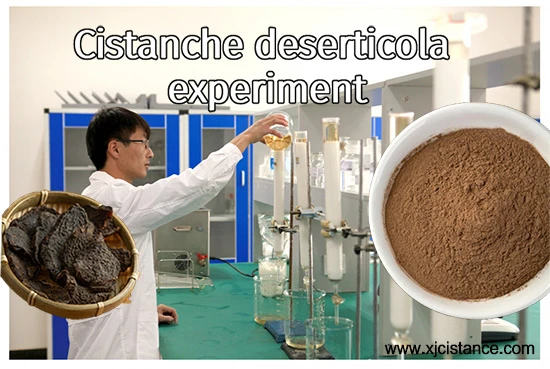
Cistanche deserticola experiment
Click here to view Cistanche products
【Ask for more】 Email:cindy.xue@wecistanche.com / Whats App: 0086 18599088692 / Wechat: 18599088692
Cistanche deserticola was first recorded in the "Shennong Materia Medica Classic" and is one of the most frequently used drugs in kidney tonifying and yang strengthening prescriptions. In recent years, the large-scale excavation of Cistanche deserticola has led to a rapid reduction in wild resources. As a substitute for Cistanche deserticola, the tubular flower Cistanche deserticola produced in Xinjiang has accounted for 60% of the country's supply.
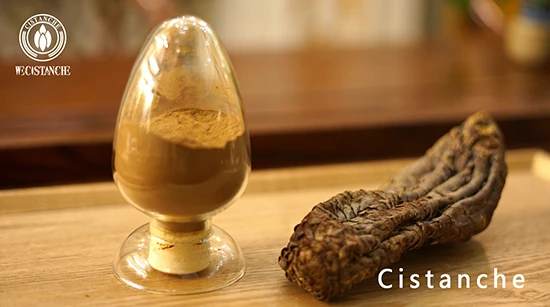
Cistanche powder
Phenylethanol glycosides such as echinacoside and ergosterol glycosides are one of the main pharmacological components of Cistanche tubulosa. Echinoside has neuroprotective effects [3], osteoprotective effects [4], and anti-aging effects [5]. Ergosteroside has the effects of improving memory impairment, treating Alzheimer's disease, and having androgen-like effects. Tubular Cistanche: also known as Hongliu Dayun, hosted by various plants of Tamarix L. [8-9]. The author used the HPLC method to determine the content of the above two components in Cistanche deserticola. The determination method and results provide a scientific basis for the quality control and medicinal value of this drug.
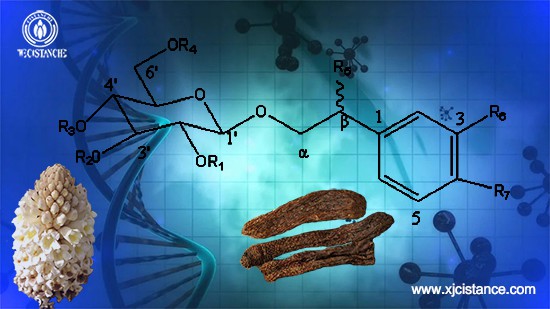
Phenylethanol glycoside is the main active component of Cistanche deserticola
1 Instrument and test drug
Reagent and test drug: Echinacetin (batch number 111670-200401), ergosterol (batch number 111530-200505), reference substance provided by the China Institute for the Control of Pharmaceutical and Biological Products. Acetonitrile and methanol are chromatographically pure, while water is ultrapure water; All other reagents are analytical pure. All medicinal materials of Cistanche deserticola were collected and identified by Professor Ju Aihua from Inner Mongolia Medical University. Instrument: American Agilent 1100 high-performance liquid chromatography.
2 Methods and Results
2.1 Chromatographic conditions and system adaptability test
Chromatographic column: Kromasil C18 chromatographic column (4.6 mm × 250 mm,5 μ m); Mobile phase: acetonitrile methanol 1% acetic acid solution (9:14:77); The detection wavelength is 334 nm; Flow rate: 1.0 mL · min-1; Column temperature 30 ℃; Injection volume 20 μ L。 The theoretical number of plates should not be less than 5000 based on the calculation of echinacea glycosides. The separation degree of the two pharmacological components is good, with a separation degree greater than 1.5 from adjacent peaks. (See Figure 1-3)
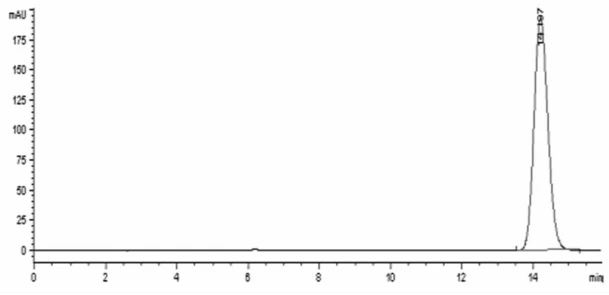
Figure 1 Chromatogram of Echinacetin Reference Substance

Figure 2 Chromatogram of ergosterol reference substance

Figure 3 Chromatogram of Cistanche deserticola
2.2 Preparation of sample solution
Accurately weigh about 0.5 g of Cistanche deserticola powder (sieved through a 60 mesh sieve) and place it in a 100 mL brown conical flask. Accurately add 50 mL of mobile phase, weigh the mass, sonicate for 40 minutes, and place it at room temperature; Weigh the mass again, use the mobile phase to compensate for the weight loss, shake well, filter, take the filtrate again, and set it aside.
2.3 Preparation of reference solution
Accurately weigh an appropriate amount of Echinacetin and ergosterol reference materials, and add mobile phase to prepare a solution containing approximately 0.14 mg of Echinacetin and 0.10 mg of ergosterol per 1 mL, respectively.
2.4 Linear relationship inspection
Precisely weigh 6.4 mg of echinacea reference substance and 3.0 mg of ergosterol reference substance respectively, place them in a 10 mL volumetric flask, dilute them with mobile phase, and shake them evenly; Accurately suck 0.1, 0.25, 0.5, 1.0, 2.0 and 3.0 mL respectively into a 5 mL volumetric flask, dilute to the scale with mobile phase, and shake up; Respectively absorb 20 μ Inject L sample and measure according to the above chromatographic conditions. The Y-axis represents the peak area, and the X-axis represents the injection volume. Draw a standard curve. The measured data shows that the amount of Echinacetin is 0.26 μ g~7.75 μ There is a good linear relationship between peak area and injection volume between g, and the regression equation is Y=831.41X21.88, R2=0.9999; The amount of ergosterol glycoside is 0.30 μ g~7.50 μ There is a good linear relationship between peak area and injection volume between g, and the regression equation is Y=671.53X+158.71, R2=0.9999.

Echinoside, the main chemical component of Cistanche deserticola
2.5 Precision test
Accurately weigh 0.5 g of the above medicinal powder, prepare the test solution according to the method described in "2.2", inject 6 consecutive times, and record the peak areas of the 2 components. The RSD% of the peak area of its echinacoside is 1.46%; The content of ergosterol glycoside is 1.62%.
2.6 Stability test
Take 0.5 g of sample powder and prepare the test solution according to the method described in "2.2". Inject the sample at 0, 1, 2, 4, 8, and 12 hours after preparation. The results showed that the RSD% of the peak area of Echinacetin was 1.5%; The content of ergosterol glycoside is 2.0%.
2.7 Repeatability test
Accurately weigh 6 samples of powder from the same batch produced in Minfeng, Hotan, Xinjiang, each weighing approximately 0.5g. Prepare and measure the peak area according to the method under "2.2". Calculate the RSD% of the peak area of echinacoside in 6 samples as 1.85% and ergosterol as 1.93%.
2.8 Sample Addition and recovery test
Accurately weigh 6 medicinal powder samples from the same batch produced in Minfeng, Hotan, Xinjiang, with each sample weighing approximately 0.1 g. Add a certain amount of Echinacetin and ergosterol, and prepare the test solution according to the method described in "2.2". The average recovery rates were 96.89% and 100.7%, respectively, with RSD% being 0.91% and 1.96%, respectively. (See Tables 1-2)
Table 1 Results of Pineapple Juice Glucoside Recovery Test

Table 2 Results of ergosterol glycoside recovery test

2.9 Sample Determination
Take the medicinal powder of Cistanche deserticola from each tube and operate according to the method in "2.2". The measured results are shown in Table 3.
Table 3 Determination of Echinacetin and Ergosteroside in Cistanche deserticola

3 Discussion
3.1 Selection of mobile phase
Two sets of mobile phases were compared: 1) methanol acetonitrile 1% acetic acid solution (14:9:77); (2) Methanol: 1% formic acid (21.5:78.5). The results showed that elution with mobile phase (1) resulted in moderate relative retention time, fewer impurity peaks, and good separation of the two components.
3.2 Selection of extraction conditions
The effects of different extraction methods (heating reflux, ultrasound) and extraction times (40 min, 50 min) on the content of active ingredients were compared using mobile phase as the extraction solvent. Finally, it was found that although the highest content was measured after heating and refluxing for 50 minutes, there was no choice due to poor peak shape. The content measured by ultrasound for 40 minutes and ultrasound for 50 minutes is similar, so ultrasound for 40 minutes was selected as the extraction condition.
3.3 Research has shown

Chinese herb cistanche
That different hosts and habitats have significant differences in the content of echinacoside and ergosterol in Cistanche deserticola, indicating that the quality of the medicinal material is significantly affected by the location and host. Therefore, the systematic study of the correlation between the origin, host, and the quality of the medicinal material of Cistanche tubulosa is of great significance for selecting the optimal host plants and evaluating the quality of Cistanche tubulosa.
reference
[1] Chen Fei, Chen Zhuo, Xing Xuefei, et al. Research progress on Cistanche deserticola [J]. Drug Evaluation Research, 2013, 36 (6): 469-475
[2] Song Hailong, Jia Xiaoguang, Xie Haihui. Research progress on the chemical components of Cistanche tubulosa [J]. Xinjiang Traditional Chinese Medicine, 2010, 28 (01): 76-78
[3] ZHU M,LUC,LIW. Transient exposure to echinacoside is sufficient to activate Trk signaling and protect neu- ronal cells from rotenone [J].J Neurochem,2013,124(4): 571-580. [4] LIF YANG X,YANG Y,etal.Antiosteoporotic activity of echinacoside in ovariectomized rats [J].Phytomedicine, 2013,20(6):549-557.
[5] XIE H,ZHU H,CHENG C,et al. Echinacoside retards cellular senescence of human fibroblastic cells MRC-5[J]. Pharmazie,2009,64(11):752-754.
[6] Park Jinghua, Pu Xiaoping, Ma Jian, et al. The improvement of scopolamine induced memory acquisition disorder by coeliaoside [J]. Chinese Pharmacological Bulletin, 2001, 17 (6): 625-626
[7] Lai Qinghai, Wang Linlin, Ding Hui, et al. Research progress on the treatment of osteoporosis with Cistanche deserticola [J]. Journal of Liaoning University of Traditional Chinese Medicine, 2016, 18 (3): 102-104
[8] Wang Changlin, Guo Yuhai, Tu Pengfei, et al. RAPD analysis of parasitic Cistanche deserticola on different species of Tamarix [J]. Chinese Journal of Traditional Chinese Medicine, 2009, 34 (3): 264-268
[9] Huang Xiaofang, Xu Rong, Chen Jun, et al. Research status and prospects on habitat characteristics, parasitic mechanisms, and nutrient transport of Cistanche deserticola [J] Chinese Journal of Traditional Chinese Medicine, 2012, 37 (19): 2831-2835